
Restaurant in Tokyo, Japan
Tohakuan Karibe
250ptsBib Gourmand soba, residential Setagaya, budget prices.

About Tohakuan Karibe
A 2024 Michelin Bib Gourmand soba shop in Setagaya where chef Karibe Masakazu hand-mills buckwheat from Nagano and Niigata to produce both nihachi and juwari noodles at ¥-tier prices. This is Tokyo's most compelling craft-soba value case — a deliberate detour from central Tokyo that pays off at lunch. Booking is easy; the Setagaya address is the only real barrier.
Verdict: A Michelin Bib Gourmand Soba Counter Worth the Detour to Setagaya
Tohakuan Karibe holds a 2024 Michelin Bib Gourmand and a Google rating of 4.2 across 234 reviews — two data points that, together, tell you something useful: this is a serious soba shop that delivers quality at a price point well below what you'd expect from a Michelin-recognised kitchen in Tokyo. At the ¥ price range, it is one of the more convincing arguments for leaving central Tokyo and heading southwest to Setagaya. If hand-milled buckwheat from Nagano and Niigata prepared by a chef who checks moisture by hand is the kind of detail that matters to you, book this.
The Experience: What You're Actually Booking
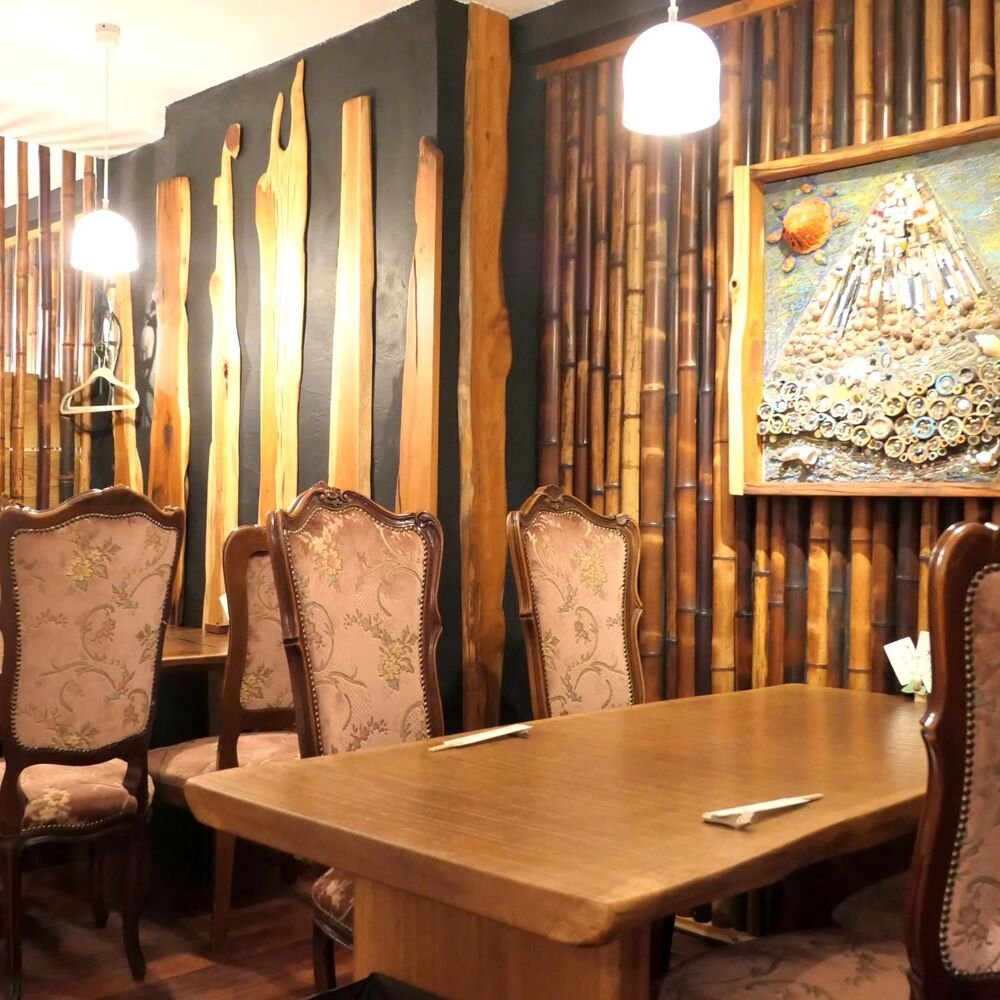
The visual register here is soba-shop traditional. Think natural tones, the clean geometry of lacquered trays, and noodles that arrive pale and composed — nothing theatrical, nothing designed to photograph. What chef Karibe Masakazu produces is precise in the way that craft-driven work tends to be: he sources unpolished buckwheat from two separate prefectures and grinds them together, adjusting for moisture to yield both nihachi (80% buckwheat, 20% wheat) and juwari (100% buckwheat) noodles. The difference between the two is worth understanding before you sit down. Nihachi has a softer bite and slightly more elasticity; juwari is more intensely flavoured, more fragile, and more demanding to make. That Karibe produces both to Michelin Bib Gourmand standard at a ¥-tier price is the reason this venue has a 234-review track record.
The menu follows soba-shop convention. Seiro , cold noodles served with a dipping broth built on katsuobushi , is the format to order if you want to taste the buckwheat most clearly. Kake, where the noodles are steeped in hot katsuobushi broth, suits colder months and gives the stock more presence. Side dishes run to soba-house classics: Pacific herring simmered low and slow over days, and a deep-fried preparation of seafood and buckwheat flour wrapped in nori. These are not afterthoughts. They are the kind of considered accompaniments that make a solo lunch feel complete without overspending.
Lunch vs. Dinner: The Value Case at Tohakuan Karibe
This is where the editorial angle sharpens. Traditional soba shops in Japan are almost always a lunch proposition, and Tohakuan Karibe fits that pattern. Soba is a daytime food culturally and practically , noodles made fresh from stone-milled buckwheat are leading eaten shortly after preparation, and the rhythm of a soba kitchen is built around the lunch service. If Karibe follows the standard model (hours are not confirmed in our data, so verify before you go), an early lunch is the moment when the noodles are at their freshest and the room is likely at its most composed.
For a special occasion at the ¥ price tier, a deliberate weekday lunch at Tohakuan Karibe beats most of Tokyo's mid-range dinner options on value. You are not getting tableside ceremony or a wine list, but you are getting Michelin-level ingredient sourcing and technique for what amounts to the cost of a casual restaurant meal. If your occasion calls for conversation rather than spectacle, and if both people at the table appreciate craft food without needing a tasting-menu format to frame it, this is a better choice than spending two to three times as much at a more performative venue. For formal celebrations or business meals where the room and the service ritual matter as much as the food, look elsewhere in our full Tokyo restaurants guide.
Getting There and Booking
The address , 4 Chome-23-19 Kasuya, Setagaya City , places Tohakuan Karibe in a residential part of southwest Tokyo, away from the tourist circuits of Shinjuku, Ginza, or Shibuya. This is a deliberate detour, not a convenient stop. Booking difficulty is rated easy, which makes sense for a neighbourhood soba shop operating at this price point. That said, Bib Gourmand recognition does drive interest, and it is worth reserving in advance if you are building an itinerary around it. Phone and website details are not confirmed in our data , check current listings before visiting.
If you are combining this with other Tokyo soba, Edosoba Hosokawa and Akasaka Sunaba are both worth knowing. Azabukawakamian and Hamacho Kaneko round out the Tokyo soba set if you are serious about comparing across the category. For a wider Japan soba perspective, Ayamedo in Osaka and Chikuyuan Taro no Atsumori in Kyoto are the reference points.
Practical Details
| Venue | Cuisine | Price | Booking Difficulty | Michelin Recognition |
|---|---|---|---|---|
| Tohakuan Karibe | Soba | ¥ | Easy | Bib Gourmand 2024 |
| Edosoba Hosokawa | Soba | ¥–¥¥ | Easy–Moderate | Michelin starred |
| Akasaka Sunaba | Soba | ¥–¥¥ | Easy | Bib Gourmand |
| Hamacho Kaneko | Soba | ¥ | Easy | Not confirmed |
For broader Tokyo dining context, see our guides to Tokyo hotels, Tokyo bars, and Tokyo experiences. If you are travelling beyond the capital, consider HAJIME in Osaka, Gion Sasaki in Kyoto, akordu in Nara, Goh in Fukuoka, 1000 in Yokohama, and 6 in Okinawa.
Compare Tohakuan Karibe
| Venue | Awards | Price | Value |
|---|---|---|---|
| Tohakuan Karibe | With the temperament of an artist, the chef places everything in its proper proportion. Gathering unpolished buckwheat from Nagano and Niigata, he grinds the two together, checking moisture by hand to produce nihachi and juwari noodles. Soba and broth are served in harmony: as seiro, accompanied by soup redolent of katsuobushi, or as kake, steeped in hot katsuobushi broth. Side dishes are soba-shop favourites, such as Pacific herring simmered for days or seafood and buckwheat flour wrapped in nori and deep-fried.; Michelin Bib Gourmand (2024) | ¥ | — |
| Harutaka | Michelin 3 Star, World's 50 Best | ¥¥¥¥ | — |
| L'Effervescence | Michelin 3 Star, World's 50 Best | ¥¥¥¥ | — |
| RyuGin | Michelin 3 Star, World's 50 Best | ¥¥¥¥ | — |
| HOMMAGE | Michelin 2 Star, World's 50 Best | ¥¥¥¥ | — |
| Crony | Michelin 2 Star, World's 50 Best | ¥¥¥¥ | — |
Side-by-side comparison to help you decide where to book.
Frequently Asked Questions
What should I order at Tohakuan Karibe?
Focus on the soba itself: chef Karibe Masakazu grinds Nagano and Niigata buckwheat by hand to produce both nihachi (80/20 wheat blend) and juwari (pure buckwheat) noodles. Seiro — cold noodles with a katsuobushi-forward dipping broth — is the clearest way to assess the noodle quality, while kake delivers the same buckwheat in hot broth. The soba-shop side dishes, including herring simmered for days and nori-wrapped seafood fritters, are worth adding if you want a fuller meal.
What should I wear to Tohakuan Karibe?
This is a traditional soba shop, not a fine-dining room, so clean casual is appropriate. No dress code applies at a ¥-range Bib Gourmand counter in a residential Setagaya neighbourhood. Comfortable clothes you can sit in for a relaxed lunch are all you need.
Can I eat at the bar at Tohakuan Karibe?
Counter or bar seating is common at traditional Tokyo soba shops of this type, but the venue record does not specify seating configurations at Tohakuan Karibe. Given its residential location and traditional soba-shop format, solo diners are well accommodated in this category generally — arriving at opening when the restaurant is quietest is the safest approach if you are on your own.
What are alternatives to Tohakuan Karibe in Tokyo?
Tohakuan Karibe is a ¥-range, Bib Gourmand soba counter in southwest Tokyo. If you want to stay in the soba category but prefer a more central location, look at established shops in Kanda or Yotsuya. For a step up in format and price, RyuGin in Roppongi delivers high-end Japanese cuisine with considerably more ceremony. HOMMAGE and L'Effervescence move into French-influenced fine dining and sit at a different price and occasion tier entirely.
Is Tohakuan Karibe worth the price?
Yes, clearly. A 2024 Michelin Bib Gourmand at ¥ pricing is one of the stronger value arguments in Tokyo dining: you are getting buckwheat sourced from Nagano and Niigata, hand-ground and moisture-checked by the chef, at soba-shop prices. The detour to Setagaya is the only real cost, and for anyone serious about soba, it is easy to justify. If you want elaborate multi-course service or a central location, this is not the format — but on its own terms, it delivers.
Recognized By

More restaurants in Tokyo
- SézanneOccupying the seventh floor of the Four Seasons Hotel Tokyo at Marunouchi, Sézanne earned its first Michelin star within months of opening in July 2021 and now holds three. British chef Daniel Calvert applies French technique to Japanese ingredients, producing a prix-fixe format that Tabelog has recognised with Silver awards every year from 2023 through 2026. It ranked 4th in Asia's 50 Best Restaurants in 2025 and 15th globally in 2024.
- SazenkaSazenka is the address for Chinese cuisine in Tokyo at its most technically demanding. Chef Tomoya Kawada's wakon-kansai approach — Japanese seasonal ingredients applied through Chinese culinary technique — has earned consecutive Tabelog Gold Awards from 2019 to 2026, a #71 ranking on the World's 50 Best 2025, and 99 points from La Liste 2026. At JPY 50,000–59,999 per head, it is one of the hardest tables in the city to book and worth the effort.
- NarisawaNarisawa is Tokyo's most credentialled innovative tasting menu restaurant — two Michelin stars, Asia's 50 Best number 12, and a Tabelog Silver award — running at JPY 80,000–99,999 per head. Book for a milestone occasion, confirm vegetarian or vegan needs in advance, and reserve at least two to three months out. With 15 seats and reservation-only access, this is one of Tokyo's hardest tables to secure.
- FlorilègeFlorilège delivers two Michelin stars and an Asia's 50 Best #17 ranking at a dinner price of ¥22,000 — competitive for Tokyo at this level. Chef Hiroyasu Kawate's plant-forward tasting menus around an open-kitchen counter at Azabudai Hills make this the strongest choice for contemporary French dining in Tokyo if theatrical, produce-led cooking is what you want. Book well in advance; availability is near-impossible at short notice.
- DenDen holds two Michelin stars, a World's 50 Best top-25 Asia ranking, and a Tabelog Silver Award running back to 2017 — and it books out within hours of the two-month reservation window opening. Chef Zaiyu Hasegawa's daily-changing seasonal omakase runs JPY 30,000–39,999 at dinner in a relaxed house-restaurant setting near Gaiemmae. Book by phone only, noon–5 PM JST. Lunch is irregular; plan around dinner.
- MyojakuMyojaku is a 2-Michelin-star, 14-course French-leaning omakase in Nishiazabu holding a 4.47 Tabelog score, Tabelog Silver 2025–2026, and Asia's 50 Best #45 (2025). Chef Hidetoshi Nakamura's water-forward, no-dashi approach shifts meaningfully with the seasons — making timing your reservation as important as getting one. Budget JPY 50,000–59,999 per head plus 10% service charge; reservations only, near-impossible to secure.
Related editorial
- Best Fine Dining Restaurants in ParisFrom three-Michelin-star icons to the next generation of Parisian chefs pushing boundaries, these are the restaurants that define fine dining in the world's culinary capital.
- Best Luxury Hotels in RomeFrom rooftop terraces overlooking ancient ruins to Michelin-starred hotel dining, these are the luxury hotels that make Rome unforgettable.
- Best Cocktail Bars in KyotoFrom sleek lounges to hidden speakeasies, Kyoto's cocktail scene blends Japanese precision with global influence in ways you won't find anywhere else.
Save or rate Tohakuan Karibe on Pearl
Keep this venue in your Pearl passport, rate it after you visit, and track it alongside every other place you collect.