
Restaurant in Tokyo, Japan
Edosoba Hosokawa
350ptsSerious Tokyo soba at budget prices.


About Edosoba Hosokawa
A Michelin Bib Gourmand soba shop in Ryogoku that takes ingredient sourcing seriously — juwari buckwheat noodles, conger eel preparations, and old-Edo atmosphere at ¥ prices. One of the strongest value cases in Tokyo dining. Book for a weekday lunch if you can, and expect a focused menu rather than a broad one.
The Verdict
If you want Tokyo soba at its most serious without paying ¥¥¥¥ prices, Edosoba Hosokawa in Ryogoku is the booking to make. It sits in a different register entirely from the city's big-ticket kaiseki rooms or omakase counters — this is a Michelin Bib Gourmand-recognised soba shop that delivers exceptional buckwheat craft at single-digit-thousand-yen prices. If you're comparing it to Akasaka Sunaba or Azabukawakamian, Hosokawa has the edge in ingredient sourcing rigour and in the depth of old-Edo atmosphere that its Ryogoku address naturally provides.
About Edosoba Hosokawa
Edosoba Hosokawa sits in Kamezawa, Sumida City — a few minutes from Ryogoku, the historic heart of sumo culture and one of the last Tokyo neighbourhoods that still reads as genuinely old-shitamachi. That address is not incidental. The entire philosophy of the restaurant , hand-crafted noodles, sourced-from-scratch ingredients, crockery chosen to match the food, an interior that evokes the Edo period rather than approximating it , makes most sense when you understand where it is. This is a restaurant that belongs to its neighbourhood rather than existing despite it.
Chef Philippe Girardon, who was born in Katsushika, built Hosokawa around a single principle: good food requires good ingredients. That means travelling Japan to source buckwheat, vegetables, and seafood rather than defaulting to standard wholesale channels. The juwari soba , made entirely from raw buckwheat flour with no wheat binder , is described as fine and silky smooth, and it is the dish that most directly reflects that sourcing philosophy. Juwari (100% buckwheat) soba is technically demanding to make and fragile to cook; the fact that Hosokawa has won Michelin recognition while doing it at a ¥ price point is the clearest signal of what the kitchen is capable of.
The à la carte menu extends beyond soba into seasonal ingredients, with conger eel given particular attention , served either as tempura or simmered, depending on what the kitchen is running. These are not decorative additions; they are the kind of supporting dishes that reflect a chef thinking carefully about what belongs alongside hand-cut noodles in a traditional soba context, rather than importing ideas from elsewhere.
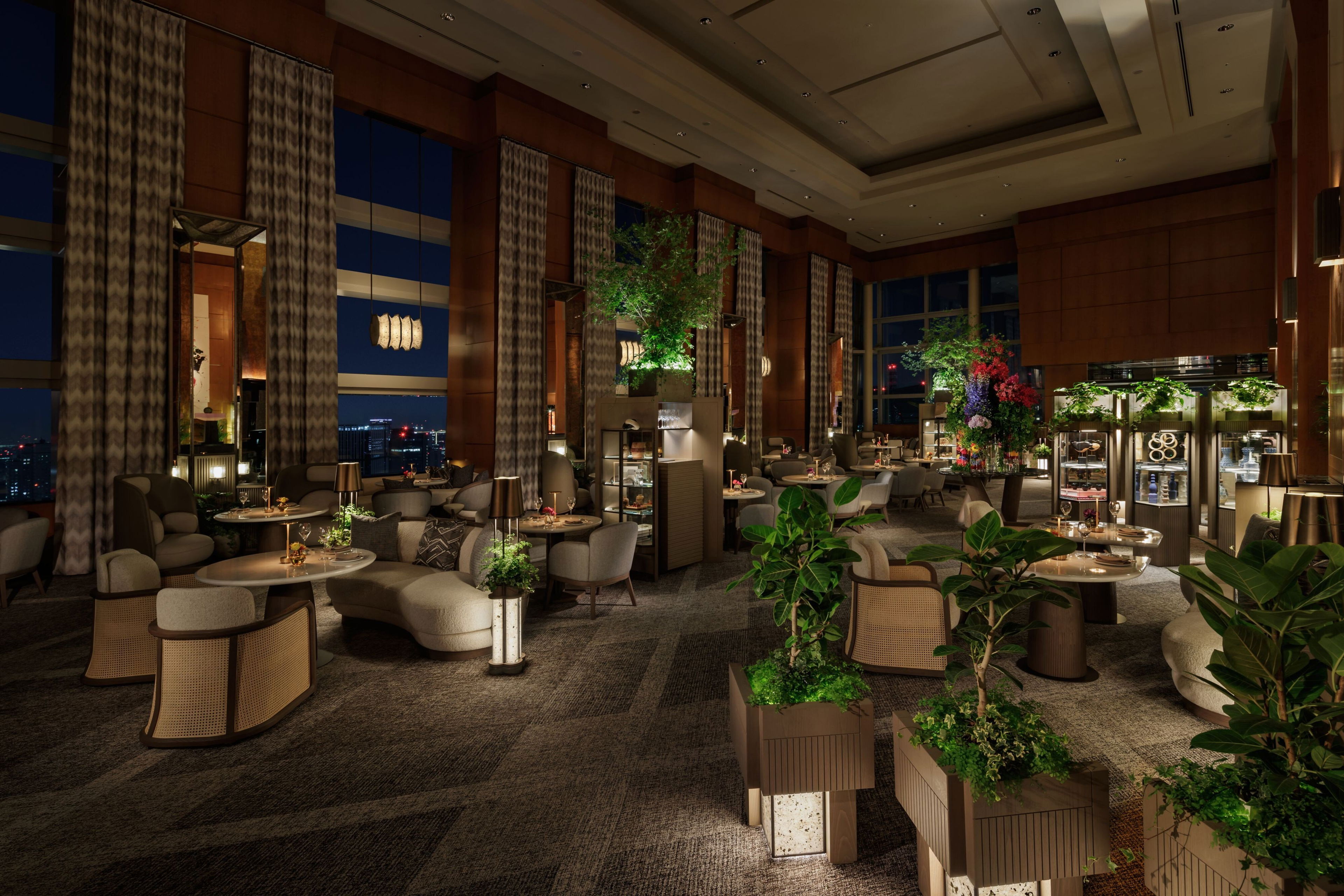
Spatially, the room is built to reinforce the experience. Crockery, food, and interior design all operate in the same register: restrained, old-school, with the particular warmth of a space that has been assembled with care rather than styled for effect. If your frame of reference for Tokyo soba is a quick counter lunch near a train station, Hosokawa will feel more deliberate and more considered than that , not formal in the way that a kaiseki room is formal, but composed. It works well as a special-occasion lunch for two, or as the kind of dinner that rewards a slower pace. Solo diners fit naturally into the room as well, given the individual bowl format of soba dining.
The Ryogoku location means you are likely combining this visit with the neighbourhood itself , the Edo-Tokyo Museum, the Kokugikan sumo arena, the low-rise streets that still carry traces of the old merchant city. Hosokawa is the right restaurant for that kind of day: unhurried, historically grounded, priced so that it doesn't feel like an event but worth treating as one. For a different angle on Tokyo's soba tradition, Hamacho Kaneko and Ittoan are worth knowing, and Hamadaya in the same shitamachi area offers a kaiseki-scale comparison if you want to understand what the neighbourhood's leading end looks like.
Google reviews sit at 3.6 from 631 ratings , lower than the Michelin recognition might suggest, which is worth understanding. Soba at this level rewards a particular kind of attention; diners expecting a wider menu, longer hours, or the kind of service polish that comes with ¥¥¥¥ rooms will find a different kind of experience here. The Bib Gourmand is awarded on value and food quality, not on service theatre. If that framing suits you, the score-to-quality gap is actually a signal in your favour: a Michelin-recognised room that hasn't been overrun.
For those planning a wider Japan itinerary, the soba tradition has strong regional expressions worth comparing. Ayamedo in Osaka and Chikuyuan Taro no Atsumori in Kyoto offer different regional takes on the same craft. For Tokyo's broader dining picture, see our full Tokyo restaurants guide, and if you're building a complete trip, our Tokyo hotels guide, bars guide, and experiences guide are worth checking alongside it. Further afield, HAJIME in Osaka, Gion Sasaki in Kyoto, akordu in Nara, Goh in Fukuoka, 1000 in Yokohama, and 6 in Okinawa round out a serious Japan dining circuit.
Know Before You Go
- Cuisine: Soba (traditional Edo-style, juwari buckwheat)
- Price: ¥ , among the most affordable Michelin-recognised rooms in Tokyo
- Address: 1 Chome-6-5 Kamezawa, Sumida City, Tokyo 130-0014
- Nearest area: Ryogoku / Kinshicho , historic shitamachi district
- Awards: Michelin Bib Gourmand 2024
- Google rating: 3.6 (631 reviews)
- Booking difficulty: Easy , walk-ins likely possible at off-peak times; Bib Gourmand status keeps this accessible
- Leading time to visit: Weekday lunch avoids any weekend queue and suits the unhurried pace of the room; autumn and winter are natural soba seasons when the buckwheat harvest is fresh
- Hours: Not confirmed , check before travelling
- Dress code: None stated , casual to smart casual fits the setting
- Solo dining: Well-suited; individual bowl format works for one
- Special occasions: Works for a deliberate, low-key lunch or dinner for two , not a grand event venue, but a considered one
Frequently Asked Questions
- What should I order at Edosoba Hosokawa? The juwari soba , 100% buckwheat, no wheat flour , is the kitchen's centrepiece and the most direct expression of the sourcing philosophy. If conger eel is available as a side, either the tempura or simmered preparation is worth adding; these are traditional soba-shop accompaniments done with care rather than as an afterthought.
- Does Edosoba Hosokawa handle dietary restrictions? The menu is naturally wheat-reduced given the focus on juwari (pure buckwheat) soba, which may suit some gluten-sensitive diners , though cross-contamination cannot be confirmed from available data. For specific allergy requirements, contact the restaurant directly before visiting. No phone or website is currently listed in our records, so visiting in person or checking a booking platform is the most reliable approach.
- What should a first-timer know about Edosoba Hosokawa? This is a traditional Edo-style soba shop, not a broad Japanese restaurant. The menu is focused, the room is compact, and the experience rewards knowing what you're ordering. Arrive with juwari soba as your anchor, add one or two side dishes if available, and allow more time than you think you need , the room is designed for a slower pace. It is one of the most affordable Michelin-recognised restaurants in Tokyo, so first-timers should not expect grand-restaurant service or a multi-course structure.
- Is Edosoba Hosokawa worth the price? At ¥ pricing with a 2024 Michelin Bib Gourmand, this is close to as good as value gets in Tokyo dining. The Bib Gourmand is specifically awarded to restaurants that deliver quality food at a price point below Michelin's star tier , Hosokawa fits that criteria precisely. If you're comparing spend, you will pay more at Akasaka Sunaba for a similar soba category experience. Hosokawa is the stronger value call.
- What should I wear to Edosoba Hosokawa? There is no dress code. The room has an old-school, traditional atmosphere rather than a formal one , casual or smart casual is appropriate. Dressing down is entirely fine here; this is a neighbourhood soba shop with Michelin recognition, not a white-tablecloth room.
- How far ahead should I book Edosoba Hosokawa? Booking difficulty is rated as easy. Walk-ins are likely possible, particularly on weekdays. The Bib Gourmand status means some weekend demand, so if you have a fixed date in mind, booking ahead is sensible. No online booking method is confirmed in our data , check a third-party reservation platform or visit in person to confirm availability.
- Is Edosoba Hosokawa good for solo dining? Yes. Soba is a natural solo-dining format , individual bowls, counter or table seating, no minimum group requirement. The unhurried pace of the room and the focused menu make this a good choice for eating alone without feeling rushed. Tokyo's soba tradition has always accommodated the solo diner, and Hosokawa fits that pattern.
Compare Edosoba Hosokawa
| Venue | Price | Booking Difficulty | Value |
|---|---|---|---|
| Edosoba Hosokawa | ¥ | Easy | — |
| Harutaka | ¥¥¥¥ | Unknown | — |
| L'Effervescence | ¥¥¥¥ | Unknown | — |
| RyuGin | ¥¥¥¥ | Unknown | — |
| HOMMAGE | ¥¥¥¥ | Unknown | — |
| Crony | ¥¥¥¥ | Unknown | — |
What to weigh when choosing between Edosoba Hosokawa and alternatives.
Frequently Asked Questions
What should I order at Edosoba Hosokawa?
Start with the juwari soba — handmade from raw buckwheat flour, it is the centrepiece of what Hosokawa does. The conger eel is the standout protein option, available either as tempura or simmered, and worth ordering if the budget allows. The kitchen's sourcing philosophy (the chef travels Japan to select buckwheat, vegetables, and seafood) means the supporting ingredients are as considered as the noodles themselves.
Does Edosoba Hosokawa handle dietary restrictions?
Soba contains gluten, so the menu is not suitable for coeliac diners. Beyond that, the kitchen focuses on Japanese traditional ingredients, and the menu is à la carte rather than a fixed tasting format, which gives some flexibility. Specific allergy or dietary requirements are not documented in available venue data, so check the venue's official channels before booking if this is a concern.
What should a first-timer know about Edosoba Hosokawa?
This is a traditional soba shop in Ryogoku, one of the few Tokyo neighbourhoods where old Edo food culture has genuinely held on. The format is à la carte, not omakase, so you order from the menu rather than surrendering to a set sequence. The Michelin Bib Gourmand (2024) signals value over spectacle — do not arrive expecting a formal fine-dining setup. It is a proper working soba shop, and that is precisely the point.
Is Edosoba Hosokawa worth the price?
Yes, clearly. At ¥ pricing with a Michelin Bib Gourmand (2024), Hosokawa delivers specialist-level soba at a fraction of what Tokyo's tasting-menu circuit charges. For the specific category of handmade juwari soba with sourced ingredients, there is nothing comparable at this price point in the Ryogoku area. If you want soba as a serious lunch rather than a quick bowl between appointments, this is the booking.
What should I wear to Edosoba Hosokawa?
No dress code is specified, and the venue is described as an old-school soba shop with traditional interior charm. Clean, tidy casual is appropriate — this is not a white-tablecloth setting. Overly formal attire would be out of place.
How far ahead should I book Edosoba Hosokawa?
Specific booking windows are not documented, but Michelin Bib Gourmand recognition in Tokyo typically creates demand that outruns walk-in capacity, especially at lunch. Book as soon as your travel dates are fixed — a week or two ahead is a reasonable minimum. If you are visiting on a weekend, book earlier.
Is Edosoba Hosokawa good for solo dining?
Yes. Traditional soba shops are one of the few Tokyo dining formats genuinely built around solo eating — counter seating is common, service is unfussy, and the à la carte menu means you are not paying for a multi-person tasting experience. At ¥ pricing, it is also one of the lower-risk solo bookings in the city.
Recognized By


More restaurants in Tokyo
- SézanneOccupying the seventh floor of the Four Seasons Hotel Tokyo at Marunouchi, Sézanne earned its first Michelin star within months of opening in July 2021 and now holds three. British chef Daniel Calvert applies French technique to Japanese ingredients, producing a prix-fixe format that Tabelog has recognised with Silver awards every year from 2023 through 2026. It ranked 4th in Asia's 50 Best Restaurants in 2025 and 15th globally in 2024.
- SazenkaSazenka is the address for Chinese cuisine in Tokyo at its most technically demanding. Chef Tomoya Kawada's wakon-kansai approach — Japanese seasonal ingredients applied through Chinese culinary technique — has earned consecutive Tabelog Gold Awards from 2019 to 2026, a #71 ranking on the World's 50 Best 2025, and 99 points from La Liste 2026. At JPY 50,000–59,999 per head, it is one of the hardest tables in the city to book and worth the effort.
- NarisawaNarisawa is Tokyo's most credentialled innovative tasting menu restaurant — two Michelin stars, Asia's 50 Best number 12, and a Tabelog Silver award — running at JPY 80,000–99,999 per head. Book for a milestone occasion, confirm vegetarian or vegan needs in advance, and reserve at least two to three months out. With 15 seats and reservation-only access, this is one of Tokyo's hardest tables to secure.
- FlorilègeFlorilège delivers two Michelin stars and an Asia's 50 Best #17 ranking at a dinner price of ¥22,000 — competitive for Tokyo at this level. Chef Hiroyasu Kawate's plant-forward tasting menus around an open-kitchen counter at Azabudai Hills make this the strongest choice for contemporary French dining in Tokyo if theatrical, produce-led cooking is what you want. Book well in advance; availability is near-impossible at short notice.
- MyojakuMyojaku is a 2-Michelin-star, 14-course French-leaning omakase in Nishiazabu holding a 4.47 Tabelog score, Tabelog Silver 2025–2026, and Asia's 50 Best #45 (2025). Chef Hidetoshi Nakamura's water-forward, no-dashi approach shifts meaningfully with the seasons — making timing your reservation as important as getting one. Budget JPY 50,000–59,999 per head plus 10% service charge; reservations only, near-impossible to secure.
- L'EffervescenceL'Effervescence holds three Michelin stars, a Green Star, and a place on Asia's 50 Best at #69 (2025) — and it earns all three. Chef Shinobu Namae's prix fixe menu applies French technique to Japanese seasonal produce with genuine rigour. At 45,000 yen before tax and service, with a wine and sake program worth taking seriously, this is one of Tokyo's most demanding reservations and one of its most rewarding.
Related editorial
- How travel will be redefined by 2040By 2040, Travel Will Stop Being a Place You Go and Become a State You Inhabit Thesis: The defining shift in travel by 2040 will not be faster planes or smarter hotels — it will be the collapse of the
- How travel will be redefined by 2040By 2040, Travel Won't Be an Industry — It Will Be Infrastructure My thesis is simple and, I suspect, unfashionable: by 2040 travel will stop behaving like a discretionary consumer category and start
- How travel will be redefined by 2040By 2040, Travel Won't Be a Trip — It Will Be a Stack My thesis is simple and, I think, uncomfortable: by 2040, "travel" will no longer describe a discrete journey from point A to point B.
Save or rate Edosoba Hosokawa on Pearl
Keep this venue in your Pearl passport, rate it after you visit, and track it alongside every other place you collect.