
Restaurant in Tokyo, Japan
Sobakappo Nagano
255ptsKappo-style soba at an honest price.

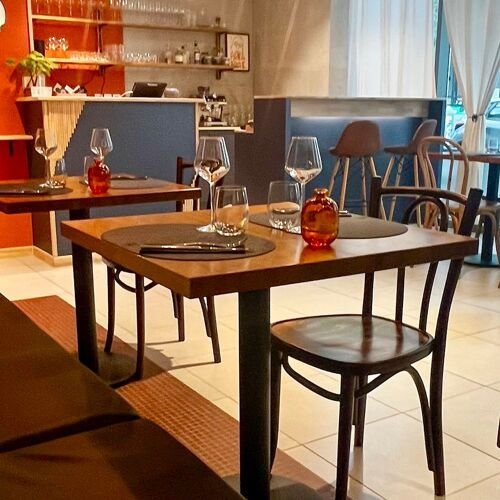
About Sobakappo Nagano
Sobakappo Nagano in Sumida City holds a Michelin Plate (2025) and a 4.9 Google rating, and it earns both at the ¥¥ price point. The chef's kappo-influenced format builds a full meal of sake-paired small dishes before arriving at two distinct soba styles — making this a genuine special-occasion option for diners who want more than a bowl, without the ¥¥¥¥ commitment of a kaiseki counter.
Is Sobakappo Nagano worth booking for a special occasion?
Yes — and more decisively than you might expect from a soba restaurant at the ¥¥ price point. Sobakappo Nagano, in the Higashimukojima neighbourhood of Sumida City, holds a Michelin Plate (2025) and a 4.9 Google rating across 73 reviews, which is an unusually tight signal of consistency for a venue this size. This is not a casual noodle shop. The chef draws on a background in broader Japanese cuisine to build a meal where soba is the culmination, not the whole story — a format that makes the restaurant genuinely suited to celebration dinners and considered date nights, not just quick lunches.
What makes Sobakappo Nagano different
The name says everything: sobakappo combines soba craft with kappo-style Japanese cooking, meaning multi-course, chef-led dining rather than a single-item counter experience. The kitchen produces cooked vegetable stews, marinated salads, and combination platters of small dishes designed to pair with sake , including simmered herring in sweet soy sauce and marinated grilled shrimp, according to the Michelin record. These are not afterthoughts. They are a deliberate progression that earns the soba its place at the end of the meal rather than treating it as a standalone bowl.
Soba itself comes in two distinct forms: seiro soba, served on a traditional wickerwork tray, and a coarser-ground variety with a heavier texture and more pronounced buckwheat flavour. Critically, the noodles are made differently depending on the grain's terroir , the regional character of the buckwheat is treated as a variable worth accentuating, not standardising away. For a diner who has eaten soba casually, this approach will register as a meaningful step up in intention and execution.
Lunch vs dinner at Sobakappo Nagano
The kappo structure of this restaurant makes the lunch-versus-dinner question more consequential here than at a typical soba-ya. At most soba restaurants in Tokyo, the daytime and evening menus are near-identical, and the value calculus is simple: lunch is cheaper and the noodles are the same. At Sobakappo Nagano, the multi-dish format means that an evening visit , where the full progression of small plates, sake pairings, and two soba varieties can be explored at a proper pace , delivers a materially different experience from a midday meal.
If your goal is a special occasion dinner, the evening format is the right choice. The combination platters and sake accompaniments have more room to breathe when you are not watching a clock. For a first visit on a tighter schedule or budget, lunch remains an honest entry point to the soba itself, but you will be leaving the more distinctive part of the kitchen's offer untested. The ¥¥ pricing means that even an evening visit is well below the cost of a comparable-length meal at a kappo or kaiseki restaurant in central Tokyo , a meaningful advantage when planning a celebration that does not require a ¥¥¥¥ commitment.
Location and access
Sobakappo Nagano sits in Higashimukojima, Sumida City , east of the Sumida River, away from the tourist-heavy circuits of Ginza, Shinjuku, or Shibuya. This is a working residential neighbourhood, and getting here takes a deliberate effort. That distance is, in practice, a minor consideration for anyone willing to travel for a specific meal, and Sumida is accessible by the Tobu Skytree Line. The restaurant's setting is consistent with a place that has earned its following through cooking rather than location convenience. For visitors staying in east Tokyo or near Asakusa, the journey is short; for those based in Minato or Shibuya, factor in 30-40 minutes each way.
Ratings and recognition
The Michelin Plate (2025) indicates food quality that inspects well and merits attention without yet carrying star-level expectations or pricing. The 4.9/5.0 Google rating from 73 verified reviews is a strong signal for a restaurant this size , at low review volumes, a 4.9 average implies near-total satisfaction rather than statistical averaging. Together, these signals suggest a venue that over-delivers for its price tier. For comparison, Michelin-starred soba restaurants in Tokyo typically operate at ¥¥¥ or above; Sobakappo Nagano sits below that threshold while attracting equivalent recognition at the Plate level.
Practical details
Booking: Booking difficulty is rated Easy, making this a realistic option even for visitors who plan ahead by only a week or two. Given the small-format nature of the restaurant, reservations are still advisable for evening visits and for groups. Budget: ¥¥ , expect a meal cost that is moderate by Tokyo dining standards, and significantly below what a comparable multi-course experience costs at a kappo or kaiseki venue. Dress: No formal dress code is listed; smart casual is appropriate and consistent with the neighbourhood and price tier. Groups: The combination platter format suits pairs and small groups leading; larger groups should confirm capacity in advance.
How It Compares
Other soba restaurants worth considering in Tokyo
If you want to compare before booking, Akasaka Sunaba, Azabukawakamian, Edosoba Hosokawa, and Hamacho Kaneko each offer a different take on Tokyo soba. For a broader Japanese dining evening in the same price neighbourhood, Hamadaya is worth examining. Outside Tokyo, Ayamedo in Osaka and Chikuyuan Taro no Atsumori in Kyoto are the closest regional comparisons for soba craft. For high-end Japanese dining elsewhere in Japan, see HAJIME in Osaka, Gion Sasaki in Kyoto, akordu in Nara, Goh in Fukuoka, 1000 in Yokohama, and 6 in Okinawa.
For full dining, hotel, bar, winery, and experience coverage of Tokyo, see our full Tokyo restaurants guide, our full Tokyo hotels guide, our full Tokyo bars guide, our full Tokyo wineries guide, and our full Tokyo experiences guide.
Frequently asked questions
- Is the tasting menu worth it at Sobakappo Nagano? The multi-course sobakappo format is the reason to come here, and at ¥¥ pricing it delivers strong value relative to what a comparable progression costs at a kappo or kaiseki venue. The combination platters, sake-pairing dishes, and two styles of soba together constitute a complete meal with a clear point of view. If you want a single bowl of soba efficiently, there are faster and cheaper options nearby. If you want soba as the payoff of a proper meal, the format justifies itself.
- What should a first-timer know about Sobakappo Nagano? This is not a noodle shop with table service bolted on. The kappo format means you are eating a structured sequence of dishes, and the soba arrives at the end. First-timers should know that choosing between seiro soba (lighter, on a wickerwork tray) and coarse-ground soba is a real decision worth making consciously , ask when you arrive if you are unsure. The restaurant is in Sumida City rather than central Tokyo, so plan your journey. Booking ahead is advisable even though availability is relatively accessible.
- What should I wear to Sobakappo Nagano? No dress code is on record, and at the ¥¥ price point in a Sumida neighbourhood restaurant, smart casual is the right call. You do not need to dress for a Ginza kaiseki counter. Clean, neat clothes that you would wear to a considered dinner , rather than a business lunch or a tourist meal , are appropriate and will not feel out of place.
- Can I eat at the bar at Sobakappo Nagano? Seating configuration is not confirmed in the available data. Japanese restaurants in this format often have a small counter as well as table seating, but confirming directly before visiting is advisable. In Tokyo's kappo-style restaurants generally, counter seating when available gives a closer view of preparation , if that matters to you, it is worth requesting at booking.
- Is Sobakappo Nagano good for a special occasion? Yes, particularly for a date or a small celebration where the ¥¥¥¥ price of a kaiseki dinner is more than you want to spend. The structured meal format, the sake-pairing small dishes, and the craft approach to soba noodles all give the evening a sense of intention that a standard restaurant does not. The Michelin Plate recognition and the 4.9 Google rating give reasonable confidence that the kitchen will deliver on a night that matters. For a larger group celebration, confirm capacity in advance.
Compare Sobakappo Nagano
| Venue | Cuisine | Price | Awards | Booking Difficulty | Value |
|---|---|---|---|---|---|
| Sobakappo Nagano | Soba | ¥¥ | The name ‘Sobakappo’ encapsulates the chef’s career. He draws on his experience in Japanese cuisine to patiently craft stews and salads of cooked vegetables. Combination platters feature an impressive variety of small dishes designed to complement sake, including simmered herring in sweet soy sauce and marinated grilled shrimp. Soba comes in two varieties: seiro soba served on a wickerwork tray or coarse-ground soba. Noodles are made differently according to terroir, accentuating differences in flavour. A soba apprenticeship: laughing, struggling and loving with soba.; Michelin Plate (2025) | Easy | — |
| Harutaka | Sushi | ¥¥¥¥ | Michelin 3 Star, World's 50 Best | Unknown | — |
| L'Effervescence | French | ¥¥¥¥ | Michelin 3 Star, World's 50 Best | Unknown | — |
| RyuGin | Kaiseki, Japanese | ¥¥¥¥ | Michelin 3 Star, World's 50 Best | Unknown | — |
| HOMMAGE | Innovtive French, French | ¥¥¥¥ | Michelin 2 Star, World's 50 Best | Unknown | — |
| Crony | Innovative, French | ¥¥¥¥ | Michelin 2 Star, World's 50 Best | Unknown | — |
How Sobakappo Nagano stacks up against the competition.
Frequently Asked Questions
Is the tasting menu worth it at Sobakappo Nagano?
Yes, at the ¥¥ price point it overdelivers for what you get. The kappo format means you receive a sequence of small dishes — simmered herring, marinated grilled shrimp, cooked vegetable salads — designed to pair with sake, before the soba arrives as a considered finale. That structure justifies the meal as an event rather than a quick lunch stop. For straight soba without the surrounding courses, Akasaka Sunaba or Edosoba Hosokawa are simpler alternatives.
What should a first-timer know about Sobakappo Nagano?
Arrive expecting a chef-led, multi-course format, not a standard soba-ya where you order a bowl and leave. The restaurant earned a Michelin Plate in 2025, signalling food quality that rewards attention. The noodles come in two forms — seiro soba on a wickerwork tray or coarse-ground soba — and the kitchen treats terroir as a real variable in how noodles are made. Booking ahead is rated easy, so planning a week or two out is sufficient.
What should I wear to Sobakappo Nagano?
The Higashimukojima address and ¥¥ pricing point to a relaxed neighbourhood setting rather than a formal dining room. Neat, comfortable clothes are appropriate; there is no indication from the venue's format or price range that formal dress is expected or required. Avoid overly casual beachwear-level dress given the Michelin Plate recognition, but a jacket is not necessary.
Can I eat at the bar at Sobakappo Nagano?
The kappo format traditionally centres on a counter where the chef works in front of guests, which is the likely configuration here given the sobakappo concept. Counter seating at a kappo-style restaurant is typically the preferred spot, not a fallback — it puts you closest to the preparation. Specific seating arrangements are not detailed in available records, so confirm when booking.
Is Sobakappo Nagano good for a special occasion?
Yes — it is a more considered choice for a special occasion than most ¥¥ soba restaurants because the kappo structure creates a proper progression rather than a single dish. The Michelin Plate (2025) gives it credibility without the pricing pressure of a starred venue. For a more formal milestone dinner, RyuGin or L'Effervescence carry more ceremonial weight; Sobakappo Nagano suits occasions where the emphasis is on craft and intimacy over spectacle.
Recognized By

More restaurants in Tokyo
- SézanneOccupying the seventh floor of the Four Seasons Hotel Tokyo at Marunouchi, Sézanne earned its first Michelin star within months of opening in July 2021 and now holds three. British chef Daniel Calvert applies French technique to Japanese ingredients, producing a prix-fixe format that Tabelog has recognised with Silver awards every year from 2023 through 2026. It ranked 4th in Asia's 50 Best Restaurants in 2025 and 15th globally in 2024.
- SazenkaSazenka is the address for Chinese cuisine in Tokyo at its most technically demanding. Chef Tomoya Kawada's wakon-kansai approach — Japanese seasonal ingredients applied through Chinese culinary technique — has earned consecutive Tabelog Gold Awards from 2019 to 2026, a #71 ranking on the World's 50 Best 2025, and 99 points from La Liste 2026. At JPY 50,000–59,999 per head, it is one of the hardest tables in the city to book and worth the effort.
- NarisawaNarisawa is Tokyo's most credentialled innovative tasting menu restaurant — two Michelin stars, Asia's 50 Best number 12, and a Tabelog Silver award — running at JPY 80,000–99,999 per head. Book for a milestone occasion, confirm vegetarian or vegan needs in advance, and reserve at least two to three months out. With 15 seats and reservation-only access, this is one of Tokyo's hardest tables to secure.
- FlorilègeFlorilège delivers two Michelin stars and an Asia's 50 Best #17 ranking at a dinner price of ¥22,000 — competitive for Tokyo at this level. Chef Hiroyasu Kawate's plant-forward tasting menus around an open-kitchen counter at Azabudai Hills make this the strongest choice for contemporary French dining in Tokyo if theatrical, produce-led cooking is what you want. Book well in advance; availability is near-impossible at short notice.
- DenDen holds two Michelin stars, a World's 50 Best top-25 Asia ranking, and a Tabelog Silver Award running back to 2017 — and it books out within hours of the two-month reservation window opening. Chef Zaiyu Hasegawa's daily-changing seasonal omakase runs JPY 30,000–39,999 at dinner in a relaxed house-restaurant setting near Gaiemmae. Book by phone only, noon–5 PM JST. Lunch is irregular; plan around dinner.
- MyojakuMyojaku is a 2-Michelin-star, 14-course French-leaning omakase in Nishiazabu holding a 4.47 Tabelog score, Tabelog Silver 2025–2026, and Asia's 50 Best #45 (2025). Chef Hidetoshi Nakamura's water-forward, no-dashi approach shifts meaningfully with the seasons — making timing your reservation as important as getting one. Budget JPY 50,000–59,999 per head plus 10% service charge; reservations only, near-impossible to secure.
Similar venues by awards
Related editorial
- Best Fine Dining Restaurants in ParisFrom three-Michelin-star icons to the next generation of Parisian chefs pushing boundaries, these are the restaurants that define fine dining in the world's culinary capital.
- Best Luxury Hotels in RomeFrom rooftop terraces overlooking ancient ruins to Michelin-starred hotel dining, these are the luxury hotels that make Rome unforgettable.
- Best Cocktail Bars in KyotoFrom sleek lounges to hidden speakeasies, Kyoto's cocktail scene blends Japanese precision with global influence in ways you won't find anywhere else.
Save or rate Sobakappo Nagano on Pearl
Keep this venue in your Pearl passport, rate it after you visit, and track it alongside every other place you collect.