
Restaurant in Tokyo, Japan
Mutsukari
855ptsVegetable-forward kaiseki for second-visit Tokyo diners.


About Mutsukari
Mutsukari is a vegetable-forward kaiseki room in Ginza where Chef Yoshihisa Akiyama's shojin-ryori background drives the menu. At ¥¥¥, it sits a tier below the most expensive Ginza rooms while delivering an OAD top-400-ranked experience. Best for returning kaiseki diners who want a kitchen with a genuine point of view rather than a formal procession.
Who Should Book Mutsukari — and When
If you have already eaten kaiseki in Tokyo at the more formal houses and want something that rewards a second look, Mutsukari in Ginza is worth your next reservation. This is the right table for a diner who already knows the format and is ready to engage with a kitchen that treats vegetables as a structural argument, not a garnish. It is not the place for a first kaiseki experience — the cooking is idiosyncratic enough that you will get more from it if you arrive with some frame of reference. For a milestone dinner, an anniversary, or a deliberate return visit to Ginza after you have already done the obvious rooms, this is where to go.
A Kitchen Built Around What Grows
Chef Yoshihisa Akiyama's background in shojin-ryori , the austere vegetarian cooking of Buddhist temples , shapes every plate at Mutsukari in ways that separate it from the standard kaiseki repertoire. This is not a vegetarian restaurant, but the vegetable is consistently the most considered element on the table. Where most kaiseki kitchens treat seasonal produce as the expected backdrop, Akiyama's training pushes it to the foreground. Dishes documented from the kitchen include ohitashi, a boiled vegetable preparation, and nikogori, a jellied broth of meat or fish, alongside deep-fried and grilled courses. Sashimi arrives dressed with vinegar and nori jelly. What is described by observers as a tapas-like presentation rhythm means courses arrive in a sequence that feels more spontaneous than the locked progression of a traditional kaiseki meal.
The sourcing logic here is legible on the plate. The kitchen has built its identity around what Japanese agricultural seasons actually produce , giant radishes in a yuba soup, turnip and tofu and persimmon and apple and rice cake in a single bowl, baked tomato tofu with Chinese cabbage, an aspic of seasonal vegetables. These are not decorative choices. They reflect a procurement philosophy in which the ingredient leads and the technique follows. At ¥¥¥ pricing, this is positioned a tier below the ¥¥¥¥ rooms that dominate the leading end of Ginza dining, which makes the sourcing discipline more meaningful: the kitchen is not leaning on the most expensive ingredients to carry the experience.
The Open Kitchen as Part of the Offer
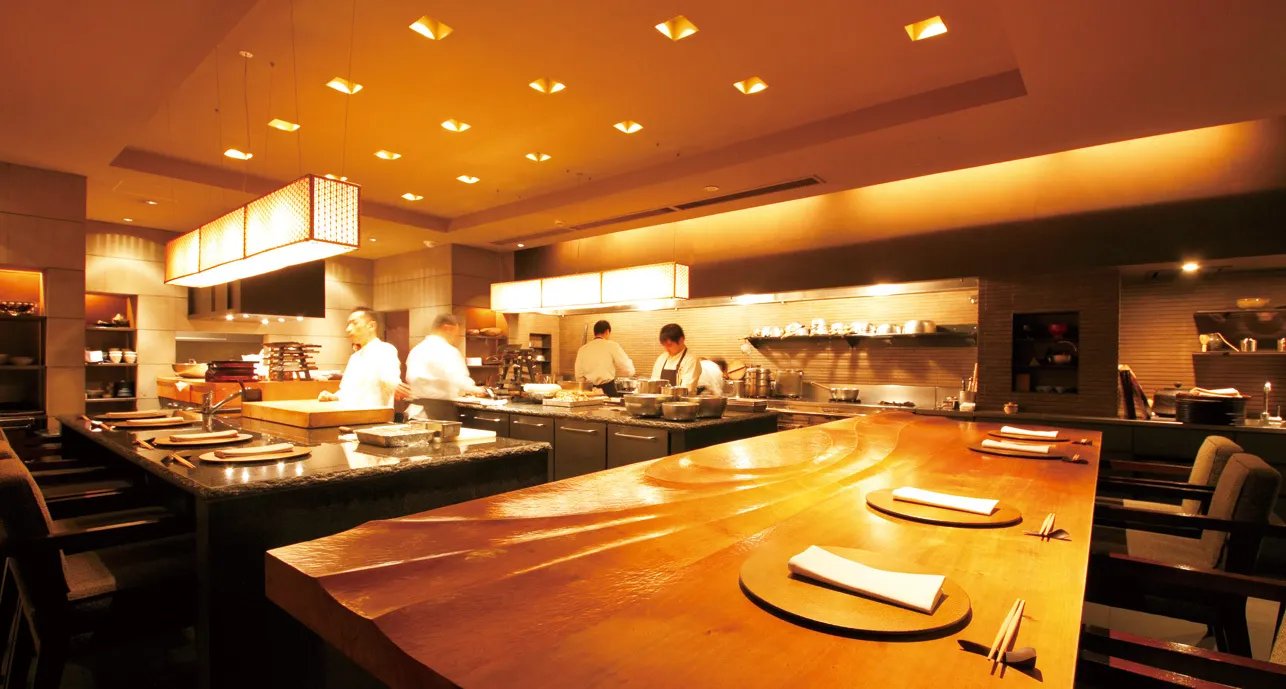
The open kitchen is central to the room's design and to how the experience reads. Akiyama runs his team with visible discipline , kitchen staff work in red armbands and white uniforms, and the cooking is observable from the dining room. For a returning guest, this is part of what changes on a second visit: you have the vocabulary to watch what is happening and make connections between the preparation and the plate. If you are coming back, position yourself where you can see the pass. The cooking process is not theatre for its own sake; it is information about how the dishes are constructed.
Ratings and Recognition
Mutsukari holds a Google rating of 4.6 across 230 reviews, which for a dinner-only kaiseki room in Ginza indicates consistent execution rather than occasional brilliance. The Opinionated About Dining survey, one of the most peer-reviewed rankings in fine dining, placed Mutsukari at number 367 among all Japanese restaurants in 2025 and number 361 in 2024 , a position that reflects a stable, respected kitchen rather than a venue riding a moment. OAD rankings weight professional and experienced diner opinion heavily, which makes a top-400 position in Japan meaningful given the density of strong competition.
Know Before You Go
- Price tier: ¥¥¥ (dinner only)
- Hours: Monday to Friday 5:30–11 pm; Saturday 5–11 pm; closed Sunday
- Location: Ginza 5-chome, Chuo City, Tokyo (Ginza Pony Group Building)
- Booking difficulty: Easy , reservations are available without the weeks-long lead times required at ¥¥¥¥ Ginza rooms
- Cuisine format: Kaiseki with a vegetable-forward, shojin-ryori-influenced approach; tapas-style course presentation
- Kitchen: Open kitchen, observable from the dining room
- Closed: Sundays
How Mutsukari Fits Into Tokyo Dining More Broadly
Ginza is one of the most competitive restaurant districts in Japan. If you are planning a longer stay in Tokyo, the full Tokyo restaurants guide covers the range. For kaiseki specifically, Ginza Kojyu and Ginza Shinohara operate in the same neighbourhood at higher price points. Kanda and Kohaku are worth considering if you want to compare kaiseki approaches across the city. For the Kyoto tradition, Hyotei and Kikunoi Honten are the reference points. Elsewhere in Japan, HAJIME in Osaka, Gion Sasaki in Kyoto, akordu in Nara, Goh in Fukuoka, 1000 in Yokohama, and 6 in Okinawa each represent the range of serious Japanese cooking worth planning around. For Tokyo hotels, bars, and experiences surrounding a Mutsukari visit, see the Tokyo hotels guide, Tokyo bars guide, Tokyo wineries guide, and Tokyo experiences guide.
Frequently Asked Questions
- Is Mutsukari worth the price? At ¥¥¥, yes , particularly if you are comparing it against the ¥¥¥¥ kaiseki rooms in Ginza. The cooking has a clear point of view built around vegetable sourcing and shojin-ryori technique, and the OAD top-400 ranking in Japan confirms that experienced diners rate it seriously. If you want the most formal kaiseki expression, rooms like Ginza Kojyu or RyuGin at ¥¥¥¥ may suit you better. But for the price tier, Mutsukari delivers a distinctive kitchen with a real identity.
- Is lunch or dinner better at Mutsukari? Dinner is your only option , Mutsukari does not serve lunch. Service runs from 5:30 pm on weekdays (5 pm on Saturdays), and the kitchen closes at 11 pm. Plan for a full evening.
- What should I wear to Mutsukari? No dress code is specified in the venue data, but the Ginza address and ¥¥¥ price tier suggest smart casual at minimum. In the context of a Ginza kaiseki room recognised by OAD, arriving in formal or business attire is appropriate and will not feel out of place.
- Can I eat at the bar at Mutsukari? The kitchen is open and observable from the dining room, which means counter or bar-adjacent seating may be available. The open kitchen format is part of the experience Mutsukari is known for in Ginza, so requesting a position near the kitchen is worth asking about when you book.
- Can Mutsukari accommodate groups? Seat count is not published, but the kaiseki format and Ginza location suggest an intimate room. For groups larger than four, contact the restaurant directly when booking. Tokyo has a range of larger-format Japanese dining rooms if group logistics are a priority , the full Tokyo restaurants guide covers those options.
Compare Mutsukari
| Venue | Cuisine | Price | Awards | Booking Difficulty | Value |
|---|---|---|---|---|---|
| Mutsukari | Kaiseki, Japanese | ¥¥¥ | The chef leads his team of cooks like the lead goose guiding its flock in flight. Clad in red armbands and snow-white kitchen uniforms, the kitchen team embodies the spirit of Japan. The accent on vegetables echoes the chef’s experience in shojin-ryori, the vegetarian regimen of Buddhist monks. Mutsukari’s repertoire varies widely, from ohitashi, a boiled vegetable side dish, and nikogori, jellied broth of meat or fish, to various deep-fried and grilled foods. Sashimi is dressed with a vinegar and nori jelly. Casual variations make for delightful idiosyncrasies.; The open kitchen is the centre of this restaurant where all the actions of the chefs can be followed. Chef Yoshihisa Akiyama serves his dishes in tapas form, and they are visual gems and taste bombs, in which the vegetable plays an important role. That can be Yuba, a soup with giant radishes, or a bowl of soup with turnips, tofu, khaki, apple and rice cake; or baked tomato tofu with Chinese cabbage or an aspic of seasonal vegetables.; The open kitchen is the centre of this restaurant where all the actions of the chefs can be followed. Chef Yoshihisa Akiyama serves his dishes in tapas form, and they are visual gems and taste bombs, in which the vegetable plays an important role. That can be Yuba, a soup with giant radishes, or a bowl of soup with turnips, tofu, khaki, apple and rice cake; or baked tomato tofu with Chinese cabbage or an aspic of seasonal vegetables.; Opinionated About Dining Top Restaurants in Japan Ranked #367 (2025); Opinionated About Dining Top Restaurants in Japan Ranked #361 (2024); Michelin 1 Star (2024); Opinionated About Dining Top Restaurants in Japan Highly Recommended (2023) | Easy | — |
| Harutaka | Sushi | ¥¥¥¥ | Michelin 3 Star, World's 50 Best | Unknown | — |
| L'Effervescence | French | ¥¥¥¥ | Michelin 3 Star, World's 50 Best | Unknown | — |
| RyuGin | Kaiseki, Japanese | ¥¥¥¥ | Michelin 3 Star, World's 50 Best | Unknown | — |
| HOMMAGE | Innovtive French, French | ¥¥¥¥ | Michelin 2 Star, World's 50 Best | Unknown | — |
| Crony | Innovative, French | ¥¥¥¥ | Michelin 2 Star, World's 50 Best | Unknown | — |
Side-by-side comparison to help you decide where to book.
Frequently Asked Questions
Can Mutsukari accommodate groups?
Group bookings at Mutsukari are not straightforward given the open-kitchen counter format, which is central to the experience. Parties of two or three fit this format well. For larger groups, check the venue's official channels — the Ginza address is 5 Chome-5-19, Ginza Pony Group Building, and availability for bigger tables is not confirmed in available data.
Can I eat at the bar at Mutsukari?
The open kitchen counter is the core seating arrangement at Mutsukari, so sitting at the bar is effectively the intended experience here. Chef Akiyama's team works in full view, and that visibility is part of why the room works — you are watching the food being made, not just waiting for it to arrive.
What should I wear to Mutsukari?
Mutsukari is a dinner-only kaiseki room in Ginza at ¥¥¥ pricing, so a relaxed but polished approach to dress is appropriate — clean, composed, nothing overly casual. Ginza restaurants at this tier generally expect guests to signal some effort without requiring formal attire.
Is lunch or dinner better at Mutsukari?
Mutsukari is dinner-only, open Monday through Saturday from 5:30 pm (5 pm on Saturdays), closed Sundays. There is no lunch service to compare. Plan accordingly if you are building a Tokyo itinerary around it.
Is Mutsukari worth the price?
At ¥¥¥ and ranked #367 in Japan by Opinionated About Dining (2025), Mutsukari is worth booking if vegetable-forward kaiseki with a shojin-ryori influence interests you — it is a specific offer, not a crowd-pleaser. If you want a more conventional kaiseki format with prestige credentials, RyuGin or Harutaka serve that need more directly.
Hours
- Monday
- 5:30–11 pm
- Tuesday
- 5:30–11 pm
- Wednesday
- 5:30–11 pm
- Thursday
- 5:30–11 pm
- Friday
- 5:30–11 pm
- Saturday
- 5–11 pm
- Sunday
- Closed
Recognized By


More restaurants in Tokyo
- SézanneOccupying the seventh floor of the Four Seasons Hotel Tokyo at Marunouchi, Sézanne earned its first Michelin star within months of opening in July 2021 and now holds three. British chef Daniel Calvert applies French technique to Japanese ingredients, producing a prix-fixe format that Tabelog has recognised with Silver awards every year from 2023 through 2026. It ranked 4th in Asia's 50 Best Restaurants in 2025 and 15th globally in 2024.
- SazenkaSazenka is the address for Chinese cuisine in Tokyo at its most technically demanding. Chef Tomoya Kawada's wakon-kansai approach — Japanese seasonal ingredients applied through Chinese culinary technique — has earned consecutive Tabelog Gold Awards from 2019 to 2026, a #71 ranking on the World's 50 Best 2025, and 99 points from La Liste 2026. At JPY 50,000–59,999 per head, it is one of the hardest tables in the city to book and worth the effort.
- NarisawaNarisawa is Tokyo's most credentialled innovative tasting menu restaurant — two Michelin stars, Asia's 50 Best number 12, and a Tabelog Silver award — running at JPY 80,000–99,999 per head. Book for a milestone occasion, confirm vegetarian or vegan needs in advance, and reserve at least two to three months out. With 15 seats and reservation-only access, this is one of Tokyo's hardest tables to secure.
- FlorilègeFlorilège delivers two Michelin stars and an Asia's 50 Best #17 ranking at a dinner price of ¥22,000 — competitive for Tokyo at this level. Chef Hiroyasu Kawate's plant-forward tasting menus around an open-kitchen counter at Azabudai Hills make this the strongest choice for contemporary French dining in Tokyo if theatrical, produce-led cooking is what you want. Book well in advance; availability is near-impossible at short notice.
- DenDen holds two Michelin stars, a World's 50 Best top-25 Asia ranking, and a Tabelog Silver Award running back to 2017 — and it books out within hours of the two-month reservation window opening. Chef Zaiyu Hasegawa's daily-changing seasonal omakase runs JPY 30,000–39,999 at dinner in a relaxed house-restaurant setting near Gaiemmae. Book by phone only, noon–5 PM JST. Lunch is irregular; plan around dinner.
- QuintessenceQuintessence is Tokyo's most consistently decorated French restaurant: three Michelin stars held through 2025, a La Liste score of 96.5 points, and a Tabelog Gold run from 2017 to 2024. Dinner runs ¥60,000–¥79,999 all in with wine. Book the first seating (5 PM) well ahead — Near Impossible to secure — and come for classical French cooking executed with sustained precision in a secluded Gotenyama setting.
Related editorial
- Asia's 50 Best Restaurants 2026: The Chairman and Wing Go 1-2 from the Same BuildingThe Chairman takes No. 1 and Wing climbs to No. 2 at Asia's 50 Best Restaurants 2026. Both operate from the same Hong Kong building. Here's what it means.
- Four Seasons Yachts Debut: 95 Suites, 11 Restaurants, and a March 2026 Maiden VoyageFour Seasons I launches March 20, 2026, with 95 suites, a one-to-one staff ratio, and 11 onboard restaurants. Worth tracking if you want hotel-grade service at sea.
- LA Michelin Guide 2026: Seven New Restaurants from Tlayudas to Uzbek DumplingsMichelin's March 2026 California Guide update adds six LA restaurants and one Montecito newcomer, spanning Oaxacan tlayudas, Uzbek manti, and Korean-Italian pasta.
Save or rate Mutsukari on Pearl
Keep this venue in your Pearl passport, rate it after you visit, and track it alongside every other place you collect.