
Restaurant in Tokyo, Japan
Ginza Shinohara
1,805ptsCounter kaiseki with a decade of Gold awards.


About Ginza Shinohara
Ginza Shinohara is a 13-seat kaiseki counter in Ginza with a ten-year Tabelog Gold streak, two Michelin stars, and a Tabelog score of 4.61. Budget ¥40,000–¥49,999 per person all-in, book by phone three months out, and go only if you are committed to the counter format. This is one of Tokyo's most credentialled Japanese cuisine rooms — but reservations are near impossible.
Thirteen seats, a counter-only room, and a bill around ¥40,000–¥50,000 per person: that is the deal at Ginza Shinohara
Before you decide whether to pursue a reservation here, understand what you are committing to. Dinner runs across two seatings (17:00 and 20:30), lunch is counter-only on Tuesdays, Thursdays, and Saturdays, and the baseline food-only course is ¥35,000 (tax included), with seasonal supplements pushing the final bill toward the ¥40,000–¥49,999 range confirmed by Tabelog reviewers. This is a significant spend for a meal in Tokyo, even by Ginza standards. The question is whether the experience justifies it — and for a kaiseki meal of this credential level, the answer is yes, but only if you are genuinely committed to the format.
Ginza Shinohara opened in October 2016, transplanting a celebrated Shiga-based kaiseki tradition into the basement of a Ginza building two minutes from Ginza 1-chome Station. It has held the Tabelog Gold Award every year from 2017 through 2026, a consecutive run that few Tokyo restaurants match. Its Tabelog score sits at 4.61 out of 5 — among the highest-rated Japanese cuisine restaurants in the city. La Liste awarded 93 points in 2026. Opinionated About Dining ranked it 35th among Japan's leading restaurants in 2025, up from 44th in 2024 and 51st in 2023, indicating a trajectory, not a plateau. Michelin has recognised it with two stars. For first-timers uncertain whether the awards translate to a real difference in the room, they do: this is a restaurant that earns its rankings consistently across independent systems.
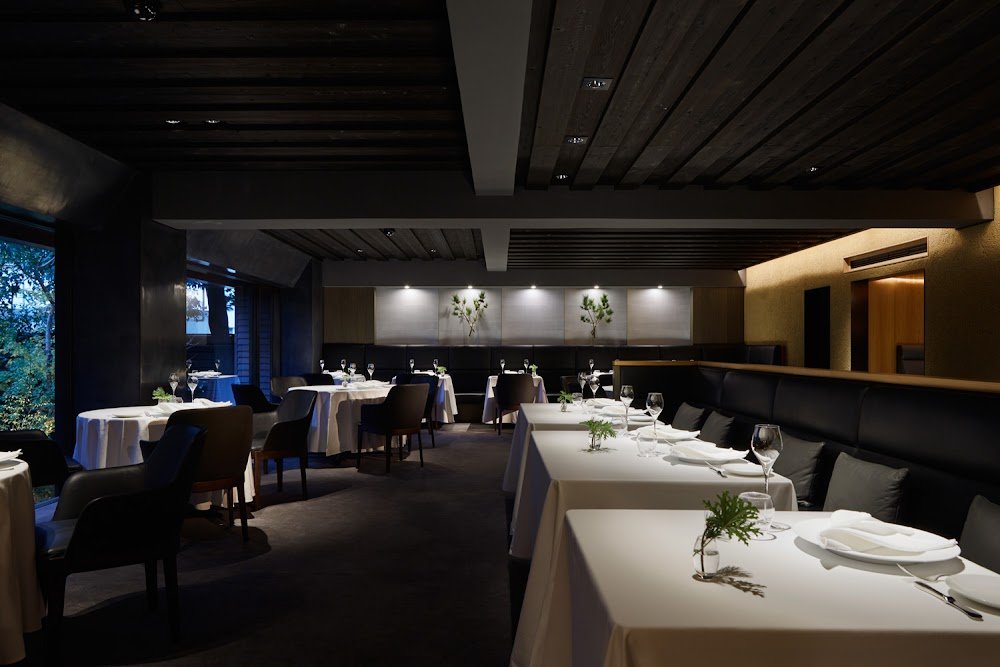
The room itself sets expectations before the first course arrives. All 13 seats face a counter. There are no private rooms, no semi-private corners, no tables for groups. The counter format means every guest watches the kitchen work at close range, and the visual presentation of the hassun , the seasonal platter that anchors kaiseki structure , is a direct part of the meal. La Liste's notes describe the hassun platters as "lavish yet delicate," which is accurate to the kaiseki tradition: a wide, flat platter arranged with several small preparations, visually composed to reflect the current season. For a first-timer, this is the moment the format makes sense. What arrives on that platter will be shaped by what is happening in the seasonal calendar right now, and it will look different in autumn from how it looks in spring or summer.
Chef Takemasa Shinohara's culinary grounding spans Kyoto kaiseki technique and the rural cooking traditions of his native Shiga prefecture , a combination that distinguishes this kitchen from more formally austere kaiseki rooms in Tokyo. Game meat including boar and bear appears on the menu as an expression of satoyama culture (the interface between mountain wilderness and cultivated land). Koka rice cooked in Shigaraki earthenware is a recurring reference to the chef's regional roots. For a first-timer, this means the menu carries more character and specificity than a textbook kaiseki progression: you are eating a point of view, not just a sequence of techniques. Whether that resonates will depend on how much you value narrative in a meal versus technical precision alone. If pure technique is your measure, Harutaka or RyuGin offer different entry points at the same price tier.
On the question of takeout and delivery: kaiseki does not travel. The format is inseparable from the counter, the sequencing, the service timing, and the visual presentation of each course. There is no delivery option here, and it would be a category error to look for one. If you are considering Ginza Shinohara, you are considering a seated counter meal in a specific room at a specific time. That is the only version that exists.
The service register is described across multiple review sources as attentive without being theatrical , detail-oriented, gracious, unhurried. For a first-timer at this price point, that matters practically: you will not feel rushed between courses, and the counter setting means questions about ingredients or preparation are easy to ask and generally welcomed.
Drink options are sake and wine. Electronic payment and QR code payments are not accepted; credit cards (Visa, Mastercard, JCB, Amex) are. A service charge applies on leading of listed prices, excluding tax. Children under high school age are not admitted. These are not incidental details , know them before you book.
For Tokyo kaiseki context, it is worth noting that the broader category includes strong alternatives. Kanda, Kohaku, and Ginza Kojyu operate in comparable territory. Kutan offers a slightly different kaiseki register. Outside Tokyo, Gion Sasaki in Kyoto and Hyotei and Kikunoi Honten in Kyoto represent kaiseki in its home setting, which some diners find more resonant. If you are building a Japan itinerary, also consider HAJIME in Osaka, akordu in Nara, and Goh in Fukuoka as part of a wider dining plan across the country. Our full Tokyo restaurants guide covers the category further, alongside our Tokyo hotels guide, Tokyo bars guide, and Tokyo experiences guide.
Know Before You Go
- Price: ¥35,000 per person (food only, tax included) as the base course; total spend typically ¥40,000–¥49,999 with supplements and service charge
- Seats: 13 counter seats only , no tables, no private rooms
- Reservations: Reservation only; bookings open up to three months in advance; phone reservations accepted only 12:00–15:00
- Phone: +81-3-6263-0345
- Hours: Mon, Wed, Fri dinner only (17:00–23:00); Tue, Thu, Sat lunch (12:00–15:00) and dinner (17:00–23:00); Sunday closed; dinner has two seatings at 17:00 and 20:30; lunch has three seatings from 12:00
- Location: 2 Chome-8-17 Ginza, B1 , 2 minutes walk from Ginza 1-chome Station, 3 minutes from Ginza Station
- Payment: Credit cards accepted (Visa, Mastercard, JCB, Amex); no electronic money; no QR code payments
- Age restriction: High school students and above only (16+)
- Smoking: Non-smoking throughout
- Parking: Not available
- Drinks: Sake and wine
- Booking difficulty: Near impossible , plan three months ahead at minimum
Awards and Recognition
- Tabelog Gold Award: 2017–2026 (ten consecutive years)
- Tabelog score: 4.61
- Tabelog Japanese Cuisine Tokyo Top 100: 2021, 2023, 2025
- Michelin 2 Stars (2024)
- La Liste: 93 points (2026), 93.5 points (2025)
- Opinionated About Dining Japan: ranked 35th (2025), 44th (2024), 51st (2023)
Frequently Asked Questions
- Is Ginza Shinohara good for solo dining? Yes , the 13-seat counter format is well-suited to solo diners. You sit directly in front of the kitchen, the pacing is controlled by the house, and there is no social awkwardness of a table set for one. Solo is arguably the optimal configuration here: you get full counter access and the kitchen's attention without the coordination overhead of a group.
- Is the tasting menu worth it at Ginza Shinohara? At ¥35,000 base (climbing to ¥40,000–¥49,999 all-in), the course is worth it if kaiseki is the format you want and you are visiting Tokyo with a serious dining agenda. The consecutive ten-year Tabelog Gold run, two Michelin stars, and a rising Opinionated About Dining rank combine to make this one of the most credentialled kaiseki counters in the city. If you want a more experimental multi-course format at the same price tier, RyuGin is the closer comparison.
- Can I eat at the bar at Ginza Shinohara? The entire restaurant is a counter , all 13 seats face the kitchen directly. There is no separate bar area and no table seating. Every seat is effectively a counter seat, so the question of whether to sit at the counter is answered for you from the moment you book.
- Is Ginza Shinohara worth the price? For a kaiseki meal with a ten-year consecutive Tabelog Gold record, two Michelin stars, and a La Liste score of 93 points, the ¥40,000–¥49,999 per-person cost is in line with Tokyo's top-tier Japanese restaurants. It is not a bargain, and it is not priced below comparable counters like Ginza Kojyu or Kanda. The differentiation here is the Shiga-inflected menu identity , game meat, regional rice, the specific character of the hassun , which makes this counter distinct from a more classically Kyoto-aligned kaiseki room. Worth it if that specificity matters to you.
- What should I order at Ginza Shinohara? There is no à la carte. The meal is a set course (¥35,000, food only, tax included), with optional seasonal supplements. The kitchen decides the progression. Your job is to note any dietary restrictions in advance and let the counter experience unfold. The hassun seasonal platter and the earthenware rice course are the structural anchors of the meal.
- Does Ginza Shinohara handle dietary restrictions? The database does not confirm specific dietary accommodation policies. Given the prix-fixe format and the use of game meat, seafood, and seasonal ingredients, it is important to communicate any restrictions clearly at the time of booking by phone (+81-3-6263-0345, reachable 12:00–15:00 only). Do not assume substitutions are available; confirm directly before reserving.
- What should I wear to Ginza Shinohara? No dress code is specified in the database, but at ¥40,000–¥49,999 per person in Ginza, smart casual at minimum is the right call. The room is intimate and counter-facing, which means what you wear is visible throughout the meal. Business casual or above is appropriate; very casual dress would read as out of place. For reference, this is a Michelin two-star kaiseki counter, not a casual ramen shop.
Also explore: 1000 in Yokohama, 6 in Okinawa, and our full Tokyo wineries guide for a broader picture of Japan's fine dining and drinking scene.
Compare Ginza Shinohara
| Venue | Price | Booking Difficulty | Value |
|---|---|---|---|
| Ginza Shinohara | ¥¥¥¥ | Near Impossible | — |
| Harutaka | ¥¥¥¥ | Unknown | — |
| L'Effervescence | ¥¥¥¥ | Unknown | — |
| RyuGin | ¥¥¥¥ | Unknown | — |
| HOMMAGE | ¥¥¥¥ | Unknown | — |
| Crony | ¥¥¥¥ | Unknown | — |
A quick look at how Ginza Shinohara measures up.
Frequently Asked Questions
Is Ginza Shinohara good for solo dining?
Yes, and it is arguably the format the room is designed for. Every one of the 13 seats is at the counter, so solo diners get an unobstructed view of service and are treated the same as any other booking. At ¥40,000–¥50,000 per head, the per-person cost does not change with party size, which removes the usual solo premium anxiety. For solo kaiseki in Tokyo, Shinohara competes directly with RyuGin on the counter-dining experience.
Is the tasting menu worth it at Ginza Shinohara?
For kaiseki, yes. The set course starts at ¥35,000 (tax included) with seasonal add-ons available, and the venue has held Tabelog Gold every year from 2017 through 2026, scored 4.61, and earned 2 Michelin stars — that consistency is the case for booking. If you want flexibility to order à la carte or skip courses, this is not the right format; the kaiseki structure is fixed and that is the point.
Can I eat at the bar at Ginza Shinohara?
All 13 seats at Ginza Shinohara are counter seats, so every guest is effectively eating at the counter. There is no separate bar area and no à la carte option alongside the tasting course. Drinks are sake (nihonshu) and wine; electronic money and QR code payments are not accepted, so bring a credit card.
Is Ginza Shinohara worth the price?
At ¥40,000–¥50,000 per head, it sits in the upper tier of Tokyo kaiseki, but the credential stack justifies it: Tabelog Gold for ten consecutive years, a 4.61 score, Michelin 2 stars, 93 points from La Liste 2026, and a top-35 ranking in Opinionated About Dining Japan 2025. For that budget in Ginza, you are paying for a room that has maintained that level consistently since opening in 2016, not for a single celebrated season.
What should I order at Ginza Shinohara?
There is no à la carte menu. The format is a single set course — food only at ¥35,000 (tax included) — with optional additional seasonal dishes available on top. Your only decision is whether to add the seasonal supplement and what to drink from the sake and wine list.
Does Ginza Shinohara handle dietary restrictions?
The venue database does not record a formal dietary restriction policy. Given that the entire experience is a pre-set kaiseki course built around seasonal Japanese ingredients, dietary substitutions may be limited. check the venue's official channels by phone between 12:00 and 15:00 before booking to confirm whether your requirements can be accommodated — the phone number listed on Tabelog is 03-6263-0345.
What should I wear to Ginza Shinohara?
No dress code is specified in the venue data, but the setting — a basement counter in Ginza, ¥40,000–¥50,000 per head, Michelin 2 stars — points clearly toward neat, considered dress. Anything you would wear to a formal business dinner in the area will be appropriate. Very casual clothing would read as out of place at this price point and in this neighbourhood.
Hours
- Monday
- 5–11:30 pm
- Tuesday
- 12–3 pm, 5–11:30 pm
- Wednesday
- 5–11:30 pm
- Thursday
- 12–3 pm, 5–11:30 pm
- Friday
- 5–11:30 pm
- Saturday
- 12–3 pm, 5–11:30 pm
- Sunday
- Closed
Recognized By


More restaurants in Tokyo
- SézanneOccupying the seventh floor of the Four Seasons Hotel Tokyo at Marunouchi, Sézanne earned its first Michelin star within months of opening in July 2021 and now holds three. British chef Daniel Calvert applies French technique to Japanese ingredients, producing a prix-fixe format that Tabelog has recognised with Silver awards every year from 2023 through 2026. It ranked 4th in Asia's 50 Best Restaurants in 2025 and 15th globally in 2024.
- SazenkaSazenka is the address for Chinese cuisine in Tokyo at its most technically demanding. Chef Tomoya Kawada's wakon-kansai approach — Japanese seasonal ingredients applied through Chinese culinary technique — has earned consecutive Tabelog Gold Awards from 2019 to 2026, a #71 ranking on the World's 50 Best 2025, and 99 points from La Liste 2026. At JPY 50,000–59,999 per head, it is one of the hardest tables in the city to book and worth the effort.
- NarisawaNarisawa is Tokyo's most credentialled innovative tasting menu restaurant — two Michelin stars, Asia's 50 Best number 12, and a Tabelog Silver award — running at JPY 80,000–99,999 per head. Book for a milestone occasion, confirm vegetarian or vegan needs in advance, and reserve at least two to three months out. With 15 seats and reservation-only access, this is one of Tokyo's hardest tables to secure.
- FlorilègeFlorilège delivers two Michelin stars and an Asia's 50 Best #17 ranking at a dinner price of ¥22,000 — competitive for Tokyo at this level. Chef Hiroyasu Kawate's plant-forward tasting menus around an open-kitchen counter at Azabudai Hills make this the strongest choice for contemporary French dining in Tokyo if theatrical, produce-led cooking is what you want. Book well in advance; availability is near-impossible at short notice.
- DenDen holds two Michelin stars, a World's 50 Best top-25 Asia ranking, and a Tabelog Silver Award running back to 2017 — and it books out within hours of the two-month reservation window opening. Chef Zaiyu Hasegawa's daily-changing seasonal omakase runs JPY 30,000–39,999 at dinner in a relaxed house-restaurant setting near Gaiemmae. Book by phone only, noon–5 PM JST. Lunch is irregular; plan around dinner.
- MyojakuMyojaku is a 2-Michelin-star, 14-course French-leaning omakase in Nishiazabu holding a 4.47 Tabelog score, Tabelog Silver 2025–2026, and Asia's 50 Best #45 (2025). Chef Hidetoshi Nakamura's water-forward, no-dashi approach shifts meaningfully with the seasons — making timing your reservation as important as getting one. Budget JPY 50,000–59,999 per head plus 10% service charge; reservations only, near-impossible to secure.
Similar venues by awards
Related editorial
- Best Fine Dining Restaurants in ParisFrom three-Michelin-star icons to the next generation of Parisian chefs pushing boundaries, these are the restaurants that define fine dining in the world's culinary capital.
- Best Luxury Hotels in RomeFrom rooftop terraces overlooking ancient ruins to Michelin-starred hotel dining, these are the luxury hotels that make Rome unforgettable.
- Best Cocktail Bars in KyotoFrom sleek lounges to hidden speakeasies, Kyoto's cocktail scene blends Japanese precision with global influence in ways you won't find anywhere else.
Save or rate Ginza Shinohara on Pearl
Keep this venue in your Pearl passport, rate it after you visit, and track it alongside every other place you collect.