
Restaurant in Tokyo, Japan
Menya Shichisai
200ptsOAD-ranked ramen in working Tokyo.

About Menya Shichisai
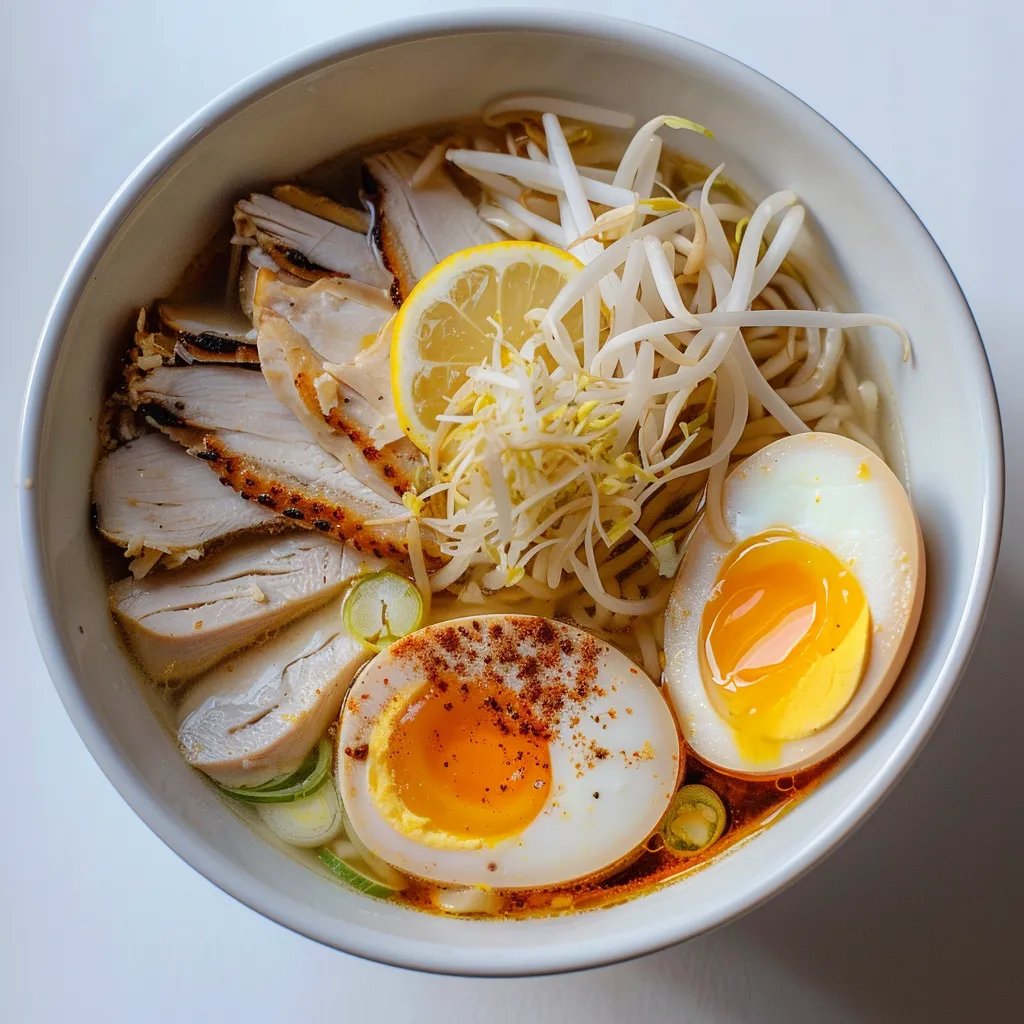
Menya Shichisai has ranked in Opinionated About Dining's Casual Japan top 20 for three consecutive years, making it one of Tokyo's most consistently recognised ramen shops. Located in Hatchobori, it runs a split-shift schedule with no reservations required — walk in, queue if needed, and expect a focused, efficient bowl-first experience at a typical ramen price point.
Should You Book Menya Shichisai?
If you've eaten here before and are deciding whether to return, the short answer is yes — and the ranking data backs that up. Menya Shichisai has held a position in the Opinionated About Dining Casual Japan top 20 for three consecutive years (ranked #13 in 2023, #19 in 2024, #20 in 2025), which tells you this is a ramen shop with a consistent track record rather than a flash-in-the-pan opening. For a second visit, the question isn't whether the food is worth it — it's whether you're going at the right time and ordering with more intention than the first time around.
The Case for Menya Shichisai
Menya Shichisai sits in Hatchobori, a Chuo City neighbourhood that skews toward office workers and local regulars rather than tourists. The room signals that immediately: you're not walking into a designed experience here. What you see is a working ramen shop , counter seating, a focused menu, and a kitchen visible enough to make the operation feel transparent. That visual clarity is part of the point. This is a place where the bowl is the event, not the surroundings.
The service model at a shop ranked this consistently in OAD's casual Japan list earns its place precisely because it doesn't try to do more than it should. Ramen service in Tokyo is typically efficient and minimal , orders placed quickly, bowls delivered fast, turnover expected. Menya Shichisai operates in that tradition, and at the price point of a ramen lunch or dinner (typically under ¥2,000 per person for most Tokyo shops at this tier), you are not paying for tableside ceremony. What you are paying for is precision in the bowl, and that's where the value sits. Compared to a kaiseki dinner at RyuGin or a high-end sushi counter like Harutaka, Menya Shichisai delivers a fundamentally different service register , but within its own format, it performs at a level that justifies repeated visits.
The Google rating of 4.0 across 2,644 reviews is worth contextualising: for a ramen shop with this volume of traffic, a stable 4.0 suggests reliable consistency rather than occasional brilliance. That's actually what you want from a neighbourhood ramen shop you plan to return to.
When to Go and How to Plan
Menya Shichisai runs a split-shift schedule every day of the week: lunch from 11am to 3pm, dinner from 5pm to 10pm Monday through Friday, and 5pm to 9pm on weekends. The lunch window is longer and, for a spot in a business district like Hatchobori, likely busier on weekdays when the surrounding offices fill the area. If you're visiting on a weekday, arriving close to 11am or after 1:30pm will generally mean a shorter wait. Weekend evenings close an hour earlier, so plan accordingly if you're coming from elsewhere in the city.
Booking is not required and walk-ins are the norm for a shop at this level , queue and wait if there's a line, or time your arrival to avoid the peak lunch rush. No reservation system means no booking difficulty, which is genuinely useful if your Tokyo itinerary is flexible. Compare that to the weeks-in-advance planning required for the French and kaiseki restaurants in Tokyo's top tier, and Menya Shichisai is one of the more accessible high-quality dining options in the city.
For ramen specifically in the broader Tokyo scene, Chukasoba Ginza Hachigou and Chukasoba KOTETSU are worth knowing as alternatives, while Afuri offers a lighter yuzu shio style if you want a different profile. Fuunji is the go-to if tsukemen is what you're after. Each of these sits in a similar price bracket, so the decision comes down to style preference and neighbourhood logistics rather than budget.
If you're building a broader Japan itinerary, ramen comparisons extend beyond Tokyo: Chinese Noodles ROKU in Kyoto and Chukasoba Mugen in Osaka are worth noting as regional alternatives if you're moving between cities. For the full Tokyo dining picture beyond ramen, see our full Tokyo restaurants guide, and for accommodation and bars around Chuo City, our Tokyo hotels guide and Tokyo bars guide are useful companions.
Other Japan dining worth planning around if your trip extends further: HAJIME in Osaka, Gion Sasaki in Kyoto, akordu in Nara, Goh in Fukuoka, 1000 in Yokohama, and 6 in Okinawa.
Quick reference: Hatchobori, Chuo City | Mon–Fri 11am–3pm, 5–10pm | Sat–Sun 11am–3pm, 5–9pm | Walk-in only | OAD Casual Japan Top 20 (2023–2025)
Compare Menya Shichisai
| Venue | Price | Value |
|---|---|---|
| Menya Shichisai | — | |
| Harutaka | ¥¥¥¥ | — |
| RyuGin | ¥¥¥¥ | — |
| L'Effervescence | ¥¥¥¥ | — |
| HOMMAGE | ¥¥¥¥ | — |
| Florilège | ¥¥¥ | — |
What to weigh when choosing between Menya Shichisai and alternatives.
Frequently Asked Questions
What should I order at Menya Shichisai?
Specific menu items aren't documented in available data, but Menya Shichisai is a ramen specialist that has ranked in OAD's Top 20 Casual Japan list for three consecutive years (2023–2025), so the core bowl is the reason to come. Ask at the counter what the day's feature is — ramen shops at this level typically run a short, focused menu where most options are worth ordering.
Is Menya Shichisai good for a special occasion?
Only if your idea of a special occasion is a genuinely great bowl of ramen rather than a celebratory dinner format. There's no prix-fixe, no wine list, and almost certainly no private dining. What you get is one of the most consistently ranked ramen shops in Japan — OAD placed it at #13 in 2023, #19 in 2024, and #20 in 2025 — which for ramen enthusiasts is occasion enough.
Can I eat at the bar at Menya Shichisai?
Counter seating is standard at Tokyo ramen shops of this type, so bar-style dining is likely the primary format here. Solo diners and pairs are well suited to that setup. Seating specifics aren't documented, but walk-in counter service is the norm for Hatchobori lunch spots in this category.
Does Menya Shichisai handle dietary restrictions?
No dietary accommodation data is on record for Menya Shichisai. Ramen broths at this level of craft typically involve pork, chicken, or seafood bases that are central to the dish, making significant substitutions difficult. If dietary restrictions are a concern, confirm directly before visiting — the address is 2 Chome-13-2 Hatchobori, Chuo City.
Is lunch or dinner better at Menya Shichisai?
Lunch (11am–3pm) is the practical choice for most visitors: the neighbourhood skews toward office workers, so an early lunch arrival before 12:30pm or a late sitting after 2pm avoids the peak crowd. Dinner runs until 10pm on weekdays (9pm on weekends), which gives more flexibility if you're travelling across the city. Neither session has documented quality differences — both serve the same menu.
What are alternatives to Menya Shichisai in Tokyo?
If you're chasing OAD-ranked ramen specifically, cross-reference the 2025 Casual Japan list for shops ranked above #20 and within your neighbourhood. If you want a contrast in format, Tokyo also has strong tsukemen and tantanmen specialists that operate in a similar price bracket. Menya Shichisai's consistency across three OAD ranking cycles makes it a lower-risk choice than a newer shop with a single strong year.
What should I wear to Menya Shichisai?
Wear whatever you're already in. Menya Shichisai is a ramen shop in a working office district — Hatchobori is not a tourist or fine-dining neighbourhood. Business casual from a nearby meeting is fine; so is a jacket from sightseeing. There are no dress expectations documented or implied by the venue type.
Hours
- Monday
- 11 am–3 pm, 5–10 pm
- Tuesday
- 11 am–3 pm, 5–10 pm
- Wednesday
- 11 am–3 pm, 5–10 pm
- Thursday
- 11 am–3 pm, 5–10 pm
- Friday
- 11 am–3 pm, 5–10 pm
- Saturday
- 11 am–3 pm, 5–9 pm
- Sunday
- 11 am–3 pm, 5–9 pm
Recognized By

More restaurants in Tokyo
- SézanneOccupying the seventh floor of the Four Seasons Hotel Tokyo at Marunouchi, Sézanne earned its first Michelin star within months of opening in July 2021 and now holds three. British chef Daniel Calvert applies French technique to Japanese ingredients, producing a prix-fixe format that Tabelog has recognised with Silver awards every year from 2023 through 2026. It ranked 4th in Asia's 50 Best Restaurants in 2025 and 15th globally in 2024.
- SazenkaSazenka is the address for Chinese cuisine in Tokyo at its most technically demanding. Chef Tomoya Kawada's wakon-kansai approach — Japanese seasonal ingredients applied through Chinese culinary technique — has earned consecutive Tabelog Gold Awards from 2019 to 2026, a #71 ranking on the World's 50 Best 2025, and 99 points from La Liste 2026. At JPY 50,000–59,999 per head, it is one of the hardest tables in the city to book and worth the effort.
- NarisawaNarisawa is Tokyo's most credentialled innovative tasting menu restaurant — two Michelin stars, Asia's 50 Best number 12, and a Tabelog Silver award — running at JPY 80,000–99,999 per head. Book for a milestone occasion, confirm vegetarian or vegan needs in advance, and reserve at least two to three months out. With 15 seats and reservation-only access, this is one of Tokyo's hardest tables to secure.
- FlorilègeFlorilège delivers two Michelin stars and an Asia's 50 Best #17 ranking at a dinner price of ¥22,000 — competitive for Tokyo at this level. Chef Hiroyasu Kawate's plant-forward tasting menus around an open-kitchen counter at Azabudai Hills make this the strongest choice for contemporary French dining in Tokyo if theatrical, produce-led cooking is what you want. Book well in advance; availability is near-impossible at short notice.
- DenDen holds two Michelin stars, a World's 50 Best top-25 Asia ranking, and a Tabelog Silver Award running back to 2017 — and it books out within hours of the two-month reservation window opening. Chef Zaiyu Hasegawa's daily-changing seasonal omakase runs JPY 30,000–39,999 at dinner in a relaxed house-restaurant setting near Gaiemmae. Book by phone only, noon–5 PM JST. Lunch is irregular; plan around dinner.
- MyojakuMyojaku is a 2-Michelin-star, 14-course French-leaning omakase in Nishiazabu holding a 4.47 Tabelog score, Tabelog Silver 2025–2026, and Asia's 50 Best #45 (2025). Chef Hidetoshi Nakamura's water-forward, no-dashi approach shifts meaningfully with the seasons — making timing your reservation as important as getting one. Budget JPY 50,000–59,999 per head plus 10% service charge; reservations only, near-impossible to secure.
Similar venues by awards
Related editorial
- Best Fine Dining Restaurants in ParisFrom three-Michelin-star icons to the next generation of Parisian chefs pushing boundaries, these are the restaurants that define fine dining in the world's culinary capital.
- Best Luxury Hotels in RomeFrom rooftop terraces overlooking ancient ruins to Michelin-starred hotel dining, these are the luxury hotels that make Rome unforgettable.
- Best Cocktail Bars in KyotoFrom sleek lounges to hidden speakeasies, Kyoto's cocktail scene blends Japanese precision with global influence in ways you won't find anywhere else.
Save or rate Menya Shichisai on Pearl
Keep this venue in your Pearl passport, rate it after you visit, and track it alongside every other place you collect.