
Restaurant in Kyoto, Japan
Chinese Noodles ROKU
350ptsMichelin-recognised ramen at street-food prices.

About Chinese Noodles ROKU
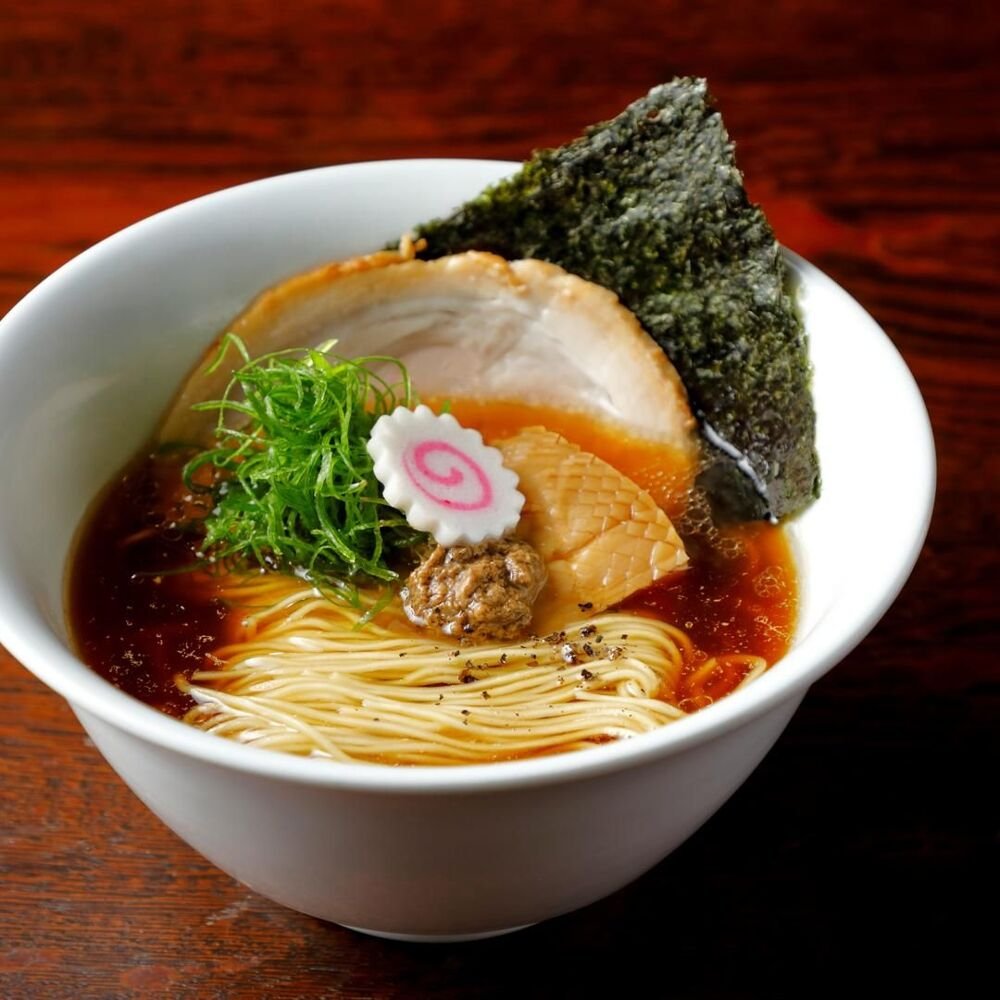
Chinese Noodles ROKU holds back-to-back Michelin Bib Gourmand recognition (2024, 2025) for chef Yuji Iwasaki's clear bone-stock ramen, built from duck, chicken, venison, and pork with dried longan fruit as a defining Chinese medicinal accent. At ¥ pricing, it delivers serious broth technique without the commitment of a kaiseki evening. Easy to book and located inside GOOD NATURE STATION in Shimogyo Ward.
Who Should Book Chinese Noodles ROKU
If you want a Michelin-recognised bowl of ramen in Kyoto without committing to a four-figure kaiseki evening, ROKU is the right call. It suits couples marking a low-key anniversary, solo travellers who want to eat well without ceremony, and food-focused visitors who are serious about broth construction. The price point (¥) means you can eat here twice on what you would spend once at Gion Sasaki. That is not a knock on kaiseki — it is a reminder that ROKU is playing a different and more accessible game, and winning Michelin's Bib Gourmand in both 2024 and 2025 confirms it is winning that game well.
The Broth Architecture
Chef Yuji Iwasaki, working under the Velrosier banner, takes a bone-stock foundation — duck, chicken, venison, pork , and layers it with dried ingredients in a way that reads less like a single ramen recipe and more like a sequence of flavour decisions stacked on leading of one another. The clear soup format (chintan-style) is the most instructive lens here: achieving depth in a transparent broth requires precision at every stage, because there is no opacity to hide behind. Where many ramen shops stop at kombu and katsuobushi for their umami base, ROKU incorporates dried longan fruit, a Chinese medicinal ingredient, alongside other dried components. That one addition signals the kitchen's orientation: this is a cook who has studied Chinese cuisine seriously enough to reach for ingredients that most ramen chefs would not recognise on a shelf.
The aromatic signature of the kitchen follows from those dried ingredients. Dried longan has a faint caramel-floral quality that mingles with bone-rendered fat and the clean mineral note of a well-skimmed stock. You encounter the smell before the bowl arrives. For a special occasion framing, that moment of anticipation is part of the experience rather than incidental to it.
ROKU's 'add-on' seasoning approach , where the base broth is deepened through sequential additions rather than a single seasoning stage , is structurally similar to the progression logic of a tasting menu, even if the format is a single bowl. Each layer was decided independently before being resolved into a unified result. That is the kind of cooking intelligence Michelin's Bib Gourmand programme is designed to surface: serious technique at an accessible price.
Booking and Logistics
ROKU is located inside GOOD NATURE STATION in Shimogyo Ward, a mixed-use complex in central Kyoto, which makes it easier to find than many standalone ramen shops occupying narrower residential streets. Booking difficulty is rated Easy by Pearl, which puts it in a different category from the multi-week waits at some of Kyoto's starred restaurants. That said, Bib Gourmand recognition for two consecutive years will have increased footfall, and timing your visit outside peak lunch and dinner windows is worth factoring in. No advance booking data is confirmed in our records, so verify current reservation options directly at the venue or via a hotel concierge.
Know Before You Go
- Cuisine: Ramen (Chinese-influenced, clear bone-stock broth)
- Price range: ¥ (budget-friendly; accessible for repeat visits)
- Awards: Michelin Bib Gourmand 2024, Michelin Bib Gourmand 2025
- Chef: Yuji Iwasaki (Velrosier)
- Location: GOOD NATURE STATION, Shimogyo Ward, Kyoto
- Google rating: 4.1 from 408 reviews
- Booking difficulty: Easy
- Dress code: Casual , no dress requirements for a ramen counter at this price point
- Hours: Not confirmed , verify before visiting
- Phone / website: Not confirmed in our records , check GOOD NATURE STATION listings or ask your hotel
How It Compares
ROKU in the Kyoto Ramen Field
For ramen specifically in Kyoto, the comparison set matters. KOBUSHI Ramen, Kombu to Men Kiichi, Mendokoro Janomeya, Menya Inoichi, and Muginoyoake all operate in the same city and price tier. What separates ROKU is the dual Bib Gourmand recognition and the Chinese medicinal ingredient framework that gives the broth a distinct identity. If you are building a Kyoto ramen itinerary across multiple days, ROKU earns its place as the Michelin-confirmed anchor of that list , not because the others are weak, but because the award provides an external quality checkpoint that simplifies a first-visit decision.
For context on how Kyoto's dining scene sits within Japan's broader restaurant geography, see our guides to HAJIME in Osaka, Harutaka in Tokyo, akordu in Nara, Goh in Fukuoka, and 1000 in Yokohama. If ramen is your focus beyond Kyoto, Afuri in Tokyo and Afuri Ramen in Portland both offer useful reference points for yuzu-forward clear broths that share some stylistic DNA with ROKU's chintan approach. Further afield, 6 in Okinawa demonstrates how Chinese culinary influence continues to shape southern Japanese cooking in ways that resonate with what Iwasaki is doing in Kyoto.
Frequently Asked Questions
- Can I eat at the bar at Chinese Noodles ROKU? Counter or bar seating is common in Japanese ramen shops, and given ROKU's format and price point, solo counter dining is a reasonable expectation. However, specific seating configuration is not confirmed in our records. If you are dining alone and want counter seating, arrive at a quieter time and ask on arrival.
- Is the tasting menu worth it at Chinese Noodles ROKU? ROKU does not operate a tasting menu in the formal multi-course sense. The menu architecture is built into the bowl itself: the layered bone-stock broth with dried longan and sequential seasoning additions functions as a compressed progression of flavour decisions rather than separate courses. At ¥ pricing with Bib Gourmand recognition for two consecutive years, the value proposition is clear , you get Michelin-calibre technique without tasting-menu pricing.
- Can Chinese Noodles ROKU accommodate groups? No confirmed seat count is available in our records. Ramen shops in Japan are typically compact, and GOOD NATURE STATION's layout may impose practical limits on large groups. For parties of four or more, calling ahead is advisable. For large group dining with more reliable private space, the ¥¥¥¥ kaiseki venues like Kyokaiseki Kichisen are better equipped, though at significantly higher cost.
- What should I wear to Chinese Noodles ROKU? No dress code applies at a ¥-tier ramen counter. Smart casual is more than sufficient. If you are combining ROKU with an evening at a formal venue, you can dress for the evening out and eat here beforehand without any conflict.
- Is Chinese Noodles ROKU worth the price? Yes, straightforwardly. The ¥ price range paired with back-to-back Bib Gourmand awards (2024, 2025) and a 4.1 Google rating from 408 reviews makes this one of the more defensible value decisions in Kyoto dining. You are paying ramen prices for a broth that required the kind of ingredient knowledge most ramen kitchens do not have.
- Is Chinese Noodles ROKU good for a special occasion? It depends on what kind of occasion you are marking. For a casual celebration between people who are serious about food, yes , the broth has the technical depth to make the meal feel considered rather than ordinary, and the price point removes any financial pressure from the evening. For a formal anniversary or business dinner where table service, wine, and room ambiance are part of the occasion, look at cenci or Ifuki instead. ROKU is the right special occasion choice when the occasion is about the food itself rather than the surrounding theatre.
Explore More in Kyoto
Browse our full Kyoto restaurants guide, our full Kyoto hotels guide, our full Kyoto bars guide, our full Kyoto wineries guide, and our full Kyoto experiences guide.
Compare Chinese Noodles ROKU
| Venue | Cuisine | Awards | Booking Difficulty | Value |
|---|---|---|---|---|
| Chinese Noodles ROKU | Ramen | Ramen, soup and other Chinese foods are the soul of this ramen shop by Velrosier. The chef draws soup stock from bones of duck, chicken, venison and pork. Clear soup owes its depth to umami from a medley of dried foods; dried longan fruit, a Chinese medicinal herb, is a touch only a gourmet of Chinese cuisine would think of. The manifold layers of flavour derive from Roku’s ‘add-on’ approach to seasoning.; Michelin Bib Gourmand (2025); Michelin Bib Gourmand (2024) | Easy | — |
| Gion Sasaki | Kaiseki, Japanese | Michelin 3 Star | Unknown | — |
| cenci | Italian | Michelin 1 Star, World's 50 Best | Unknown | — |
| Ifuki | Kaiseki | Michelin 2 Star | Unknown | — |
| Kyokaiseki Kichisen | Japanese | Michelin 2 Star | Unknown | — |
| Kyo Seika | Chinese | Michelin 1 Star | Unknown | — |
A quick look at how Chinese Noodles ROKU measures up.
Frequently Asked Questions
Can I eat at the bar at Chinese Noodles ROKU?
Seating details are not confirmed in available venue data, so it's worth checking on arrival. ROKU is a ramen shop format under the Velrosier banner inside GOOD NATURE STATION, which typically means counter seating is part of the layout. Arrive early to secure a spot, particularly at peak lunch and dinner hours.
Is the tasting menu worth it at Chinese Noodles ROKU?
ROKU does not operate a tasting menu format — this is a ramen shop, priced in the ¥ bracket and recognised by Michelin's Bib Gourmand for value rather than multi-course dining. The draw is the broth itself: a bone stock built from duck, chicken, venison, and pork, deepened with dried longan fruit and other dried ingredients. Order the ramen and let the broth do the work.
Can Chinese Noodles ROKU accommodate groups?
Ramen shops in this format typically run tight on space, and ROKU's location inside GOOD NATURE STATION does not suggest a large private-dining setup. Groups of more than four may face a wait or need to split. For a group Michelin meal in Kyoto with dedicated space, a kaiseki venue is a better structural fit — ROKU works best for pairs or solo diners.
What should I wear to Chinese Noodles ROKU?
This is a Bib Gourmand ramen counter priced at ¥ — come as you are. There is no dress expectation beyond what you'd wear walking around Kyoto's Shimogyo Ward. Leave the formal wear for the kaiseki reservation later in the trip.
Is Chinese Noodles ROKU worth the price?
Yes, without qualification. A Michelin Bib Gourmand two years running (2024 and 2025) at ¥ pricing is about as strong a value signal as Kyoto dining offers. Chef Yuji Iwasaki's layered duck-venison-pork-chicken broth with dried longan fruit seasoning is the kind of technical work you'd pay multiples of this price for in a formal setting. For cost-per-quality, ROKU outperforms most of the Kyoto ramen field.
Is Chinese Noodles ROKU good for a special occasion?
Not in the traditional sense. ROKU is a ramen shop inside a mixed-use complex — it does not provide the ceremony or pacing of a kaiseki dinner. That said, if the occasion is 'eating something genuinely well-crafted in Kyoto without a reservation six months out,' ROKU delivers. For a milestone dinner with full table service and atmosphere, look to Gion Sasaki or Kichisen instead.
Recognized By

More restaurants in Kyoto
- OgataOgata is a 16-seat kaiseki counter in Shimogyo, Kyoto, holding two Michelin stars and ten years of Tabelog Gold recognition. Dinner runs JPY 60,000–79,999 before drinks and a 10% service charge. Booking is near impossible without months of advance planning, but for serious kaiseki at the counter, it earns its place on any shortlist.
- MizaiMizai holds three Michelin stars and a sustained Tabelog track record across nearly a decade, with dinner running to ¥80,000–¥99,999 per person all-in. Chef Hitoshi Ishihara structures the meal around the spirit of the tea ceremony in a 15-seat room inside Maruyama Park. Book for a serious special occasion; reservations are near-impossible to secure without months of advance planning.
Related editorial
- Best Fine Dining Restaurants in ParisFrom three-Michelin-star icons to the next generation of Parisian chefs pushing boundaries, these are the restaurants that define fine dining in the world's culinary capital.
- Best Luxury Hotels in RomeFrom rooftop terraces overlooking ancient ruins to Michelin-starred hotel dining, these are the luxury hotels that make Rome unforgettable.
- Best Cocktail Bars in KyotoFrom sleek lounges to hidden speakeasies, Kyoto's cocktail scene blends Japanese precision with global influence in ways you won't find anywhere else.
Save or rate Chinese Noodles ROKU on Pearl
Keep this venue in your Pearl passport, rate it after you visit, and track it alongside every other place you collect.