
Restaurant in Tokyo, Japan
Chukasoba Ginza Hachigou
425ptsFoie gras wontons, no tare, Bib Gourmand.


About Chukasoba Ginza Hachigou
A French-trained chef applies consommé technique and foie gras wontons to ramen in Ginza — at ¥ pricing. Michelin Bib Gourmand 2024 and OAD Casual Japan #4 in 2025 confirm the kitchen is operating well above its price tier. Easy to book, high on craft, and one of the better value decisions in Tokyo's dining calendar.
Verdict: A French-trained chef's ramen in Ginza — and it earns every star
Picture a counter seat in a quiet first-floor room in Ginza, a bowl arriving that looks, at a glance, like refined Chinese soba. Then the soup hits and something is noticeably different: no sauce, no seasoning shortcut, just a broth built like a consommé — layered, clean, and balanced against the salt of cured ham. This is what Chukasoba Ginza Hachigou does, and it is one of the more considered bowls of ramen available in Tokyo right now. At a ¥ price point, the decision is not difficult. Book it.
What Makes It Worth Your Time
Chef Cheong Keng Lei has taken a deliberate structural approach to ramen that is rare in the category. The defining move is the removal of tare , the concentrated seasoning sauce that underpins almost every bowl of ramen you have eaten. In its place, the soup is extracted for flavour in the manner of a French consommé, then calibrated for salinity using cured ham. The result is a broth with a different kind of depth: not the punchy, layered hit of a great tonkotsu, but something more restrained and technically precise.
The wontons extend that logic. Filled with foie gras and truffle paste, they read like a classical French preparation dropped into a Chinese-Japanese format. That could easily tip into gimmick territory , but the price tier keeps expectations grounded and the execution, by all available evidence from a Michelin Bib Gourmand recognition in 2024 and a climb to #4 on Opinionated About Dining's Casual Japan ranking in 2025 (up from #18 in 2024 and #20 in 2023), suggests the kitchen is improving, not coasting.
What Hachigou is building, in effect, is a full-course meal compressed into a single bowl. That framing is not marketing copy , it is a useful way to understand what you are paying for and whether it matches your expectations. If you want a traditional shoyu or tonkotsu reference point, go to Afuri or Fuunji. If you want to see what happens when someone applies serious culinary training to the format, Hachigou is the more interesting choice in Ginza.
The Space and Who It Suits
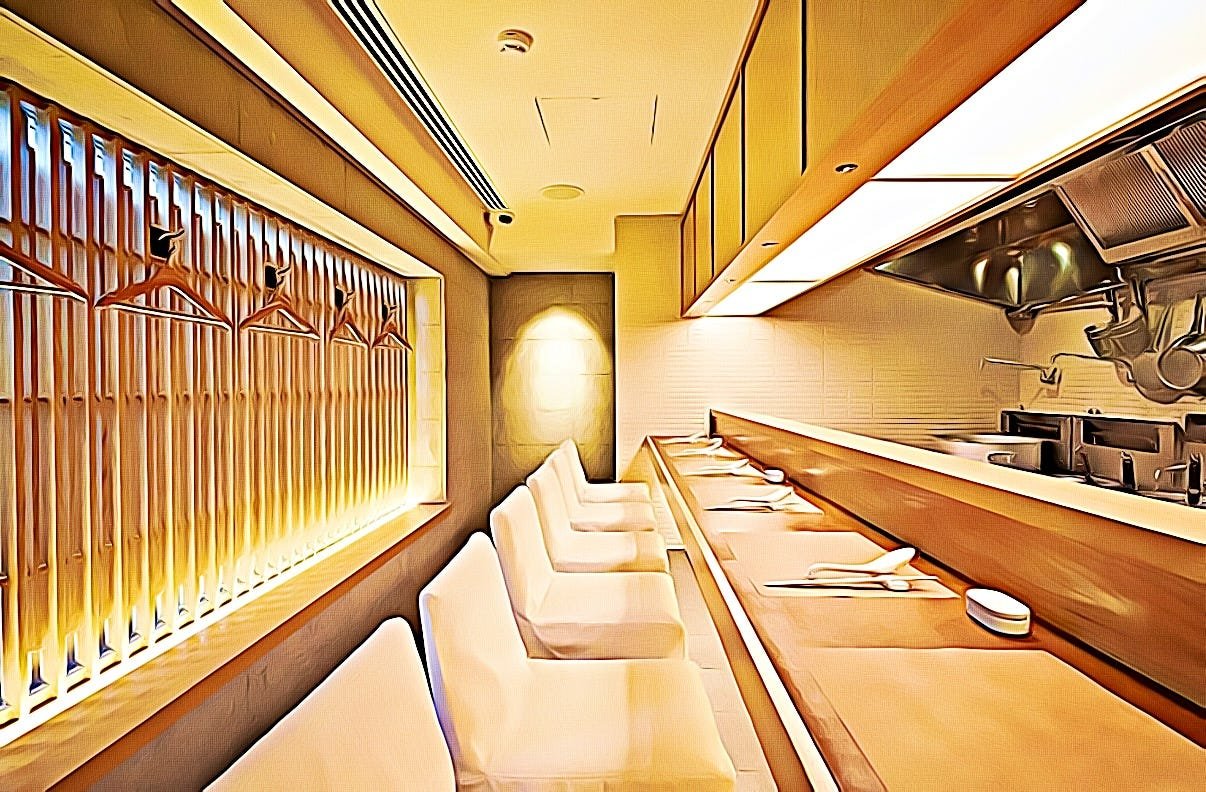
The address is a first-floor unit in the Daiichi Hanabusa Building in Ginza 3-chome, which places it in one of Tokyo's most polished shopping and dining corridors. The spatial register here matters for a special occasion calculation: this is not a standing ramen counter in a train station basement, but it is also not a white-tablecloth room. Expect a compact, counter-forward setup appropriate for a solo meal, a date, or a deliberate lunch between appointments. The Ginza location means the surrounding neighbourhood provides a full special-occasion frame , pre or post dining in that area rarely disappoints.
For a celebration dinner, Hachigou works well as a considered, low-friction choice: the price is low enough that the meal feels like a discovery rather than an obligation, and the food is technically interesting enough to drive real conversation. It is a better date lunch than dinner for most visitors, since the surrounding Ginza context is more animated in daylight. For a business meal where the objective is a shared, slightly surprising experience at a reasonable cost, it fits well , though groups should check capacity before planning, as seat count is not confirmed in available data.
Service and Price Point
The service philosophy at a venue like this is worth thinking through before you go. At ¥ pricing, you are not buying the kind of attentive, paced-meal service you would receive at L'Effervescence or RyuGin. What the price point does buy is access to a kitchen operating well above its apparent tier. The Michelin Bib Gourmand designation is specifically calibrated to recognise this ratio , good cooking at a price that does not require justification. At Hachigou, the service is functional and the room is modest, and that is the right trade for what the bowl delivers. You are not paying for ceremony; you are paying for craft.
That distinction matters if you are considering Hachigou for a special occasion. The food will carry the moment; the room and service will not add theatre. If theatre is what the occasion requires, pair this with a better venue for drinks beforehand or dessert after. If the meal itself is the point, Hachigou will hold its own against most options at twice the price in this city.
How Hachigou Sits in Tokyo's Ramen Field
For ramen specifically, the Tokyo field is wide. Chukasoba KOTETSU and Hakodate Shioramen Goryokaku offer different regional and stylistic reference points. Chuogo Hanten Mita sits in a different format entirely. What Hachigou does that most of its peers do not is apply a documented culinary methodology , French training, consommé extraction, luxury filling ingredients , to a bowl that costs a fraction of what those techniques normally command. The Opinionated About Dining trajectory, three consecutive years of ranking with a clear upward move in 2025, suggests this is a kitchen that reviewers are watching closely.
For visitors building a Tokyo dining itinerary, Hachigou makes sense as a daytime or early-evening slot that does not compete with your higher-spend evening reservations. It fits neatly alongside a broader Tokyo exploration , see our full Tokyo restaurants guide, Tokyo hotels guide, and Tokyo bars guide for planning context. If you are extending the trip, comparable craft-forward dining is available at HAJIME in Osaka, Gion Sasaki in Kyoto, and Goh in Fukuoka. For ramen benchmarks outside Japan, Akahoshi Ramen in Chicago and Afuri Ramen in Portland offer useful comparisons on what the format can achieve outside Tokyo.
Quick reference: Ginza, Tokyo | Cuisine: Ramen (French-influenced) | Price: ¥ | Booking difficulty: Easy | Michelin Bib Gourmand 2024 | OAD Casual Japan #4 (2025) | Google: 4.3 / 5 (1,876 reviews)
Frequently Asked Questions
- Is Chukasoba Ginza Hachigou worth the price? Yes, straightforwardly. At ¥ pricing, you are getting a bowl built on French-trained technique , consommé-method broth, foie gras and truffle wontons , at a cost that requires no justification. The Michelin Bib Gourmand is awarded precisely for this ratio of quality to price. Compared to spending ¥¥¥¥ at HOMMAGE or Crony, Hachigou delivers a very different experience, but the value case here is stronger than almost anything else in its price band.
- Is the tasting menu worth it at Chukasoba Ginza Hachigou? The concept is a single bowl framed as a full-course meal , not a multi-course tasting menu in the conventional sense. That is the point: the chef's aim is to compress fine-dining logic into one serving. If you are expecting a progression of dishes, adjust expectations. If you are curious whether one bowl can carry that ambition, the answer from three years of award recognition is yes.
- How far ahead should I book Chukasoba Ginza Hachigou? Booking difficulty is rated Easy, which means you are unlikely to need weeks of advance planning. That said, the OAD #4 ranking for 2025 will attract attention, so booking a few days ahead for a specific time slot is sensible. Walk-in availability is not confirmed, so do not rely on it for a time-sensitive visit.
- What should I wear to Chukasoba Ginza Hachigou? No dress code is specified, and at ¥ pricing in a casual ramen format, smart casual is more than sufficient. The Ginza location means you may be arriving from or heading to somewhere that requires a smarter outfit , that will not look out of place here either.
- Does Chukasoba Ginza Hachigou handle dietary restrictions? This is not confirmed in available data. The kitchen uses foie gras, truffle, and cured ham as core components, so the menu is not suited to pescatarian, vegetarian, or pork-free requirements without direct confirmation from the venue. Contact them before visiting if restrictions apply.
- Can Chukasoba Ginza Hachigou accommodate groups? Seat count is not confirmed, but the venue is a compact, first-floor counter operation in Ginza. Large groups , six or more , should verify capacity directly before planning. For small groups of two to four, the format works well. For a celebration dinner with a larger party, a venue with a private room option, such as Harutaka, may be a better fit.
Compare Chukasoba Ginza Hachigou
| Venue | Cuisine | Awards | Booking Difficulty | Value |
|---|---|---|---|---|
| Chukasoba Ginza Hachigou | Ramen | Aiming to provide a full-course meal in a bowl, the chef infuses Chinese soba with his experience in French cuisine for a unique touch. Most revolutionary is the absence of sauce. The soup is crafted by extracting flavours as if for a consommé and then perfectly balancing them with the saltiness of cured ham. The wontons are filled with a paste of foie gras and truffles. He combines all the Western ingredients he has mastered over the years into a single bowl.; Opinionated About Dining Casual in Japan Ranked #4 (2025); Opinionated About Dining Casual in Japan Ranked #18 (2024); Michelin Bib Gourmand (2024); Opinionated About Dining Casual in Japan Ranked #20 (2023) | Easy | — |
| Harutaka | Sushi | Michelin 3 Star, World's 50 Best | Unknown | — |
| L'Effervescence | French | Michelin 3 Star, World's 50 Best | Unknown | — |
| RyuGin | Kaiseki, Japanese | Michelin 3 Star, World's 50 Best | Unknown | — |
| HOMMAGE | Innovtive French, French | Michelin 2 Star, World's 50 Best | Unknown | — |
| Crony | Innovative, French | Michelin 2 Star, World's 50 Best | Unknown | — |
What to weigh when choosing between Chukasoba Ginza Hachigou and alternatives.
Frequently Asked Questions
Does Chukasoba Ginza Hachigou handle dietary restrictions?
The menu is built around a very specific concept — foie gras and truffle wontons, cured ham-seasoned consommé broth — so substitutions are unlikely to be accommodated without breaking the dish entirely. If you have serious allergies or avoid pork, ham, or foie gras, this is not a safe assumption-free booking. check the venue's official channels before reserving, as no phone or website is listed in public records.
How far ahead should I book Chukasoba Ginza Hachigou?
Book as early as possible. After ranking #4 on Opinionated About Dining Casual Japan in 2025 and holding a Michelin Bib Gourmand, demand has grown sharply. Counter-seat ramen spots at this recognition level in Tokyo typically fill within hours of reservation windows opening. Same-day availability is possible on slower weekday openings, but do not rely on it.
Is Chukasoba Ginza Hachigou worth the price?
At ¥ pricing — which places it at the affordable end of the Tokyo dining spectrum — yes, with almost no qualification. You are getting a Michelin Bib Gourmand-recognised bowl with foie gras, truffle, and French consommé technique for what amounts to a budget meal in Ginza terms. For the cooking ambition on display, this is one of the better value propositions in Tokyo's ramen category.
What should I wear to Chukasoba Ginza Hachigou?
This is a ramen counter in a first-floor building unit, not a white-tablecloth dining room. The ¥ price point and format mean casual clothes are entirely appropriate. Being in Ginza does not change that — the experience is a refined bowl, not a formal meal.
Is the tasting menu worth it at Chukasoba Ginza Hachigou?
There is no multi-course tasting menu here — the concept is a single bowl designed as a full-course meal in itself. Chef Cheong Keng Lei's entire idea is compression: French technique, foie gras, truffle, and a consommé-style soup delivered in one dish. That format is either exactly what you want or it is not, and at ¥ pricing, the risk of finding out is low.
Can Chukasoba Ginza Hachigou accommodate groups?
This is a small counter operation in a first-floor unit in Ginza 3-chome, not a venue with private dining or flexible room configurations. Groups larger than 3 or 4 will likely face a split seating or a wait. If a group meal with a shared table and conversation is the priority, consider a different format — Hachigou is better suited to pairs or solo diners who want to focus on the bowl.
Recognized By


More restaurants in Tokyo
- SézanneOccupying the seventh floor of the Four Seasons Hotel Tokyo at Marunouchi, Sézanne earned its first Michelin star within months of opening in July 2021 and now holds three. British chef Daniel Calvert applies French technique to Japanese ingredients, producing a prix-fixe format that Tabelog has recognised with Silver awards every year from 2023 through 2026. It ranked 4th in Asia's 50 Best Restaurants in 2025 and 15th globally in 2024.
- SazenkaSazenka is the address for Chinese cuisine in Tokyo at its most technically demanding. Chef Tomoya Kawada's wakon-kansai approach — Japanese seasonal ingredients applied through Chinese culinary technique — has earned consecutive Tabelog Gold Awards from 2019 to 2026, a #71 ranking on the World's 50 Best 2025, and 99 points from La Liste 2026. At JPY 50,000–59,999 per head, it is one of the hardest tables in the city to book and worth the effort.
- NarisawaNarisawa is Tokyo's most credentialled innovative tasting menu restaurant — two Michelin stars, Asia's 50 Best number 12, and a Tabelog Silver award — running at JPY 80,000–99,999 per head. Book for a milestone occasion, confirm vegetarian or vegan needs in advance, and reserve at least two to three months out. With 15 seats and reservation-only access, this is one of Tokyo's hardest tables to secure.
- FlorilègeFlorilège delivers two Michelin stars and an Asia's 50 Best #17 ranking at a dinner price of ¥22,000 — competitive for Tokyo at this level. Chef Hiroyasu Kawate's plant-forward tasting menus around an open-kitchen counter at Azabudai Hills make this the strongest choice for contemporary French dining in Tokyo if theatrical, produce-led cooking is what you want. Book well in advance; availability is near-impossible at short notice.
- DenDen holds two Michelin stars, a World's 50 Best top-25 Asia ranking, and a Tabelog Silver Award running back to 2017 — and it books out within hours of the two-month reservation window opening. Chef Zaiyu Hasegawa's daily-changing seasonal omakase runs JPY 30,000–39,999 at dinner in a relaxed house-restaurant setting near Gaiemmae. Book by phone only, noon–5 PM JST. Lunch is irregular; plan around dinner.
- QuintessenceQuintessence is Tokyo's most consistently decorated French restaurant: three Michelin stars held through 2025, a La Liste score of 96.5 points, and a Tabelog Gold run from 2017 to 2024. Dinner runs ¥60,000–¥79,999 all in with wine. Book the first seating (5 PM) well ahead — Near Impossible to secure — and come for classical French cooking executed with sustained precision in a secluded Gotenyama setting.
Similar venues by awards
Related editorial
- Asia's 50 Best Restaurants 2026: The Chairman and Wing Go 1-2 from the Same BuildingThe Chairman takes No. 1 and Wing climbs to No. 2 at Asia's 50 Best Restaurants 2026. Both operate from the same Hong Kong building. Here's what it means.
- Four Seasons Yachts Debut: 95 Suites, 11 Restaurants, and a March 2026 Maiden VoyageFour Seasons I launches March 20, 2026, with 95 suites, a one-to-one staff ratio, and 11 onboard restaurants. Worth tracking if you want hotel-grade service at sea.
- LA Michelin Guide 2026: Seven New Restaurants from Tlayudas to Uzbek DumplingsMichelin's March 2026 California Guide update adds six LA restaurants and one Montecito newcomer, spanning Oaxacan tlayudas, Uzbek manti, and Korean-Italian pasta.
Save or rate Chukasoba Ginza Hachigou on Pearl
Keep this venue in your Pearl passport, rate it after you visit, and track it alongside every other place you collect.