
Restaurant in Tokyo, Japan
Hakozakicho Sumito
230ptsIngredient-driven counter worth booking ahead.

About Hakozakicho Sumito
A Michelin Plate sushi counter in Nihonbashi with a 4.8 Google rating and ¥¥¥ pricing that makes it one of Tokyo's more accessible serious omakase options. The chef's market-first approach and documented technical precision, including item-specific nikiri and calibrated rice temperatures, deliver quality that punches above the price tier. Easy to book relative to Ginza's starred competition.
A 4.8-rated sushi counter in Nihonbashi that earns its Michelin Plate through ingredient discipline, not theatre
Start with the number that matters: 4.8 stars across 78 Google reviews. For a basement counter in Nihonbashihakozakicho, that kind of consistent approval signals something more than novelty. Hakozakicho Sumito holds a 2025 Michelin Plate, placing it in the tier of restaurants the Guide considers technically accomplished and worth your time, even if a star has not yet followed. At ¥¥¥ pricing, it sits a full price band below the city's starred omakase elite, which makes it one of the more considered choices for a special occasion that does not require a ¥¥¥¥ outlay.
The Case for Booking
The chef's operating philosophy is documented in the Michelin record and it is worth taking seriously: market visits happen even on days when nothing is being purchased. That level of relationship-building with Toyosu wholesalers translates directly into the quality of what arrives on the counter. The tuna progression alone, from fatty toro wrapped in nori through lean akami, medium-fatty chutoro, and otoro, reflects a kitchen that understands the fish as a spectrum rather than a single product to be showcased and forgotten.
Two technical details in the Michelin notes are easy to overlook but genuinely useful for setting expectations. First, sushi rice temperature is adjusted individually to suit each topping, which is the kind of rice-to-fish calibration that separates a considered counter from a production-line one. Second, the nikiri (a reduced blend of soy sauce, mirin, sake, and broth) is varied by item rather than applied uniformly. These are not marketing claims; they are the specific practices the Michelin inspectors cited as reasons to include the restaurant. For a diner assessing whether the ¥¥¥ spend is justified, they are the right details to weigh.
Atmosphere and Setting
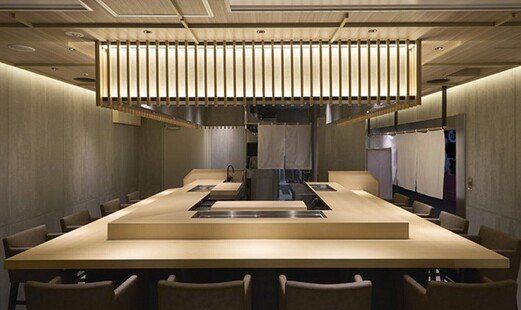
The venue is in a basement floor of a building in Nihonbashihakozakicho, a part of central Tokyo that sits between the louder draw of Ginza and the business density of the waterfront. The neighbourhood is quiet by Tokyo standards, which is relevant if you are planning a dinner where conversation matters. Basement sushi counters in this part of the city tend toward focused, low-noise environments where the emphasis is on the food rather than the room's energy. This is not the place for a group that wants a high-energy evening; it is the place for a meal where you want to pay attention.
For a special occasion, that restraint is an advantage. A date night, a business dinner, or a celebration where the quality of the food is the point will all land well here. The format, a sushi counter with an omakase-style progression, creates a natural structure for the evening without requiring hosts or guests to navigate a complex menu.
What to Know Before You Go
Seat count is not confirmed in available data, but basement counters of this type in Tokyo typically seat between eight and fourteen guests. Booking is rated Easy, which means you are unlikely to be fighting for a reservation weeks out the way you would at the city's starred counters. That is a practical advantage worth noting: Michelin Plate quality at ¥¥¥ pricing with accessible availability is not a combination that holds indefinitely as a venue's reputation grows.
No booking method, phone number, or website is listed in available data. The most reliable approach for a venue of this type in Tokyo is to use a restaurant reservation platform or ask your hotel concierge to assist, particularly if you are arriving without Japanese language support. Hours are not confirmed, so confirming service times before travel is advisable.
Dress code is not stated, but at ¥¥¥ pricing with Michelin recognition, smart casual is a safe baseline. Anything you would wear to a serious dinner in London or New York will read correctly here.
How It Compares to Nearby Tokyo Options
For broader dining in Tokyo, our full Tokyo restaurants guide covers the full range of options across price tiers. If you are planning a trip that extends beyond the capital, HAJIME in Osaka and Gion Sasaki in Kyoto are worth considering alongside your Tokyo itinerary. For sushi specifically outside Japan, Sushi Shikon in Hong Kong and Shoukouwa in Singapore represent the strongest regional comparisons. Within Tokyo's sushi tier, Harutaka, Sukiyabashi Jiro Roppongiten, Sushi Kanesaka, Edomae Sushi Hanabusa, and Hiroo Ishizaka each occupy different positions on the price and prestige curve. You can also explore Tokyo hotels, Tokyo bars, and Tokyo experiences to build out the full trip. For dining elsewhere in Japan, akordu in Nara, Goh in Fukuoka, 1000 in Yokohama, and 6 in Okinawa round out the national picture.
Practical Details
| Detail | Hakozakicho Sumito | Harutaka | Sushi Kanesaka |
|---|---|---|---|
| Price tier | ¥¥¥ | ¥¥¥¥ | ¥¥¥¥ |
| Michelin recognition | Plate (2025) | Starred | Starred |
| Booking difficulty | Easy | Hard | Hard |
| Google rating | 4.8 (78 reviews) | Not listed | Not listed |
| Location | Nihonbashi, Chuo | Ginza | Ginza |
| Format | Omakase counter | Omakase counter | Omakase counter |
FAQ
Is Hakozakicho Sumito good for a special occasion?
- Yes, particularly if you want a focused, counter-format meal without paying ¥¥¥¥ prices.
- The omakase structure handles the pacing for you, which makes it well-suited to celebrations or business meals where you want the food to lead.
- It is a stronger occasion choice than a generic mid-range restaurant but requires less financial commitment than the starred counters in Ginza.
Can I eat at the bar at Hakozakicho Sumito?
- The format is a sushi counter, so seating at the bar is the standard experience rather than an alternative option.
- Counter seating at venues like this in Tokyo means you are watching the chef work directly, which is part of what you are paying for.
- There is no confirmed à la carte option; the progression is omakase-style.
What are alternatives to Hakozakicho Sumito in Tokyo?
- For a step up in prestige and price, Harutaka and Sushi Kanesaka are the Ginza benchmarks, both at ¥¥¥¥ and significantly harder to book.
- For something closer in price tier, Edomae Sushi Hanabusa is worth comparing directly.
- If you want to move outside sushi entirely, RyuGin at ¥¥¥¥ covers kaiseki at the leading of the Tokyo market.
What should a first-timer know about Hakozakicho Sumito?
- The venue is in a basement in Nihonbashihakozakicho, a quieter part of Chuo not on most tourist routes. Factor in navigation time.
- The format is omakase, meaning the chef sets the menu. You are not choosing individual pieces from a list.
- At ¥¥¥ pricing with Easy booking availability, this is a reasonable entry point into Tokyo's serious sushi counter scene without the reservation stress of the starred venues.
- Confirm hours before you go; they are not publicly listed in available data.
Can Hakozakicho Sumito accommodate groups?
- Seat count is not confirmed, but basement counters of this type typically seat eight to fourteen. Large groups are unlikely to fit without a private arrangement.
- For a party of two to four, this is a practical choice. For six or more, contact the venue directly to confirm capacity before committing.
- No phone number or website is listed in available data; use a hotel concierge or reservation platform to make contact.
Is Hakozakicho Sumito worth the price?
- At ¥¥¥ with a 2025 Michelin Plate and a 4.8 Google rating from 78 reviews, the value case is strong relative to the starred alternatives at ¥¥¥¥.
- The documented kitchen practices (market relations, rice temperature adjustment, item-specific nikiri) are consistent with what you expect from a venue charging more.
- If your question is whether ¥¥¥ sushi in Tokyo is worth it generally, the answer is yes when the technical execution is at this level.
Is the tasting menu worth it at Hakozakicho Sumito?
- The omakase progression is where the kitchen's strengths are concentrated: the tuna sequence, the rice calibration, and the varied nikiri application are all confirmed by the Michelin inspectors who awarded the Plate.
- If you are paying ¥¥¥ for a single meal in Tokyo, this is a counter where the kitchen's philosophy justifies the format.
- For comparison, Sukiyabashi Jiro Roppongiten charges ¥¥¥¥ for a similarly structured experience with a starred credential attached.
What should I wear to Hakozakicho Sumito?
- No dress code is stated, but smart casual is the right baseline for a ¥¥¥ Michelin-recognised counter in Tokyo.
- Avoid strong fragrance, which is a practical consideration at any close-seating sushi counter where the fish's aroma is part of the experience.
- What you would wear to a serious dinner in any major city will be appropriate here.
Compare Hakozakicho Sumito
| Venue | Cuisine | Price | Booking Difficulty |
|---|---|---|---|
| Hakozakicho Sumito | Sushi | ¥¥¥ | Easy |
| Harutaka | Sushi | ¥¥¥¥ | Unknown |
| L'Effervescence | French | ¥¥¥¥ | Unknown |
| RyuGin | Kaiseki, Japanese | ¥¥¥¥ | Unknown |
| HOMMAGE | Innovtive French, French | ¥¥¥¥ | Unknown |
| Crony | Innovative, French | ¥¥¥¥ | Unknown |
What to weigh when choosing between Hakozakicho Sumito and alternatives.
Frequently Asked Questions
Is Hakozakicho Sumito good for a special occasion?
Yes, with caveats. The Michelin Plate recognition and the chef's documented obsession with sourcing — market visits even on non-buying days — give the meal a sense of occasion that goes beyond a standard sushi booking. At ¥¥¥ pricing, it is priced for a special dinner rather than a casual one. That said, it is a basement counter, not a grand-room experience, so if the setting matters as much as the food, factor that in.
Can I eat at the bar at Hakozakicho Sumito?
Almost certainly yes. Counters of this type in Tokyo's basement dining rooms are built around the bar format — you sit facing the chef, which is the intended experience here. The chef's approach, adjusting rice temperature per topping and varying nikiri by item, is best appreciated at the counter where you can observe the process. Walk-in availability is not confirmed, so book ahead to guarantee a seat.
What are alternatives to Hakozakicho Sumito in Tokyo?
Harutaka in Ginza is the obvious peer comparison at a similar or higher price tier — more established name recognition, harder to book. If you want broader Japanese cuisine rather than a sushi-only format, RyuGin offers a more theatrical kaiseki experience at a higher price point. For something closer in philosophy but with a different cuisine focus, HOMMAGE is worth considering. Sumito's advantage is the Michelin Plate credential at ¥¥¥ pricing in a less saturated neighbourhood.
What should a first-timer know about Hakozakicho Sumito?
The chef's credo is 'Ingredients First', which in practice means the menu follows what is best at market, not a fixed sequence you can preview. Expect tuna in multiple forms — from fatty toro in nori to lean akami and chutoro nigiri — as the documented centrepiece. The venue is in a basement (B1F) in Nihonbashihakozakicho, not a high-profile Ginza address, so factor in navigation time. No website or phone is publicly listed, so reservations will likely require a third-party booking platform or hotel concierge.
Can Hakozakicho Sumito accommodate groups?
Basement sushi counters in Tokyo typically seat eight to fourteen guests total, which means a group of four or more will occupy a significant share of the room. Confirm capacity and group booking policy through your booking channel before arriving with more than two people. Large groups are not the format this type of venue is designed for.
Is Hakozakicho Sumito worth the price?
At ¥¥¥, it sits in mid-to-upper sushi pricing for Tokyo. The Michelin Plate (2025) confirms the food clears a documented quality threshold. The chef's sourcing discipline — adjusting nikiri, rice temperature, and cut per topping — is the kind of detail that separates a technically serious counter from a price-for-ambience booking. If ingredient-led omakase is what you are paying for, this delivers on that premise. If you need a marquee address or showroom setting to justify the spend, look elsewhere.
Is the tasting menu worth it at Hakozakicho Sumito?
The omakase format here is driven by what the chef sources at market, with tuna as the documented anchor across multiple cuts and preparations. The Michelin record specifically calls out the range from otoro to akami and the precision of rice and nikiri adjustments per piece. That level of intentionality makes the tasting format worth it for guests who want to eat across a sequence rather than order individual pieces. Specific pricing and menu structure are not publicly confirmed, so verify current details when booking.
Recognized By

More restaurants in Tokyo
- SézanneOccupying the seventh floor of the Four Seasons Hotel Tokyo at Marunouchi, Sézanne earned its first Michelin star within months of opening in July 2021 and now holds three. British chef Daniel Calvert applies French technique to Japanese ingredients, producing a prix-fixe format that Tabelog has recognised with Silver awards every year from 2023 through 2026. It ranked 4th in Asia's 50 Best Restaurants in 2025 and 15th globally in 2024.
- SazenkaSazenka is the address for Chinese cuisine in Tokyo at its most technically demanding. Chef Tomoya Kawada's wakon-kansai approach — Japanese seasonal ingredients applied through Chinese culinary technique — has earned consecutive Tabelog Gold Awards from 2019 to 2026, a #71 ranking on the World's 50 Best 2025, and 99 points from La Liste 2026. At JPY 50,000–59,999 per head, it is one of the hardest tables in the city to book and worth the effort.
- NarisawaNarisawa is Tokyo's most credentialled innovative tasting menu restaurant — two Michelin stars, Asia's 50 Best number 12, and a Tabelog Silver award — running at JPY 80,000–99,999 per head. Book for a milestone occasion, confirm vegetarian or vegan needs in advance, and reserve at least two to three months out. With 15 seats and reservation-only access, this is one of Tokyo's hardest tables to secure.
- FlorilègeFlorilège delivers two Michelin stars and an Asia's 50 Best #17 ranking at a dinner price of ¥22,000 — competitive for Tokyo at this level. Chef Hiroyasu Kawate's plant-forward tasting menus around an open-kitchen counter at Azabudai Hills make this the strongest choice for contemporary French dining in Tokyo if theatrical, produce-led cooking is what you want. Book well in advance; availability is near-impossible at short notice.
- DenDen holds two Michelin stars, a World's 50 Best top-25 Asia ranking, and a Tabelog Silver Award running back to 2017 — and it books out within hours of the two-month reservation window opening. Chef Zaiyu Hasegawa's daily-changing seasonal omakase runs JPY 30,000–39,999 at dinner in a relaxed house-restaurant setting near Gaiemmae. Book by phone only, noon–5 PM JST. Lunch is irregular; plan around dinner.
- QuintessenceQuintessence is Tokyo's most consistently decorated French restaurant: three Michelin stars held through 2025, a La Liste score of 96.5 points, and a Tabelog Gold run from 2017 to 2024. Dinner runs ¥60,000–¥79,999 all in with wine. Book the first seating (5 PM) well ahead — Near Impossible to secure — and come for classical French cooking executed with sustained precision in a secluded Gotenyama setting.
Similar venues by awards
Related editorial
- Strata San Jose Restaurant Opens With a $75 Prix FixeM.O. Hospitality opens Strata on May 13 in downtown San Jose: a five-course seasonal prix fixe for $75, with caviar upgrades and a wine program by Eos & Nyx sommelier David Castleberry.
- Hwaro NYC Tasting Menu: $295, 22 Seats, Hidden Inside a SteakhouseChef Sungchul Shim's 22-seat Korean fine dining counter inside Gui is one of NYC's most personal — and most carefully considered — tasting menus at $295.
- Asia's 50 Best Restaurants 2026: The Chairman and Wing Go 1-2 from the Same BuildingThe Chairman takes No. 1 and Wing climbs to No. 2 at Asia's 50 Best Restaurants 2026. Both operate from the same Hong Kong building. Here's what it means.
Save or rate Hakozakicho Sumito on Pearl
Keep this venue in your Pearl passport, rate it after you visit, and track it alongside every other place you collect.