
Restaurant in Tokyo, Japan
Hiroo Ishizaka
450ptsOne Michelin star. Book six weeks out.

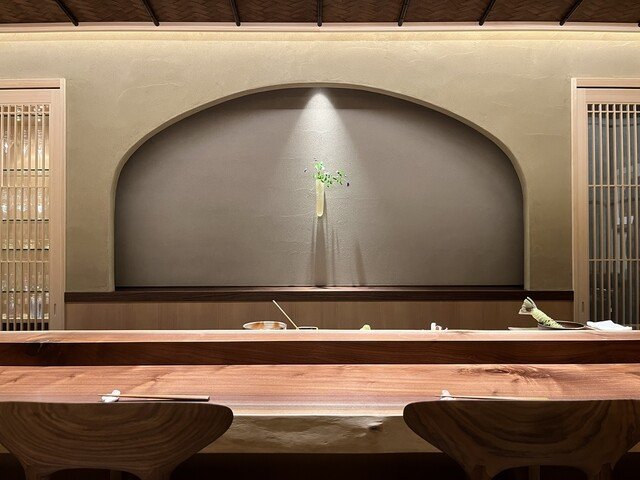
About Hiroo Ishizaka
A Michelin one-star sushi counter in Hiroo, Shibuya, Hiroo Ishizaka delivers a precisely structured omakase at the ¥¥¥ tier — one of Tokyo's better value positions for verified craft. The sequence moves from sashimi through vegetarian courses into nigiri, with sourcing choices that signal genuine kitchen intent. Book at least a month ahead; this is not a walk-in counter.
Verdict
Hiroo Ishizaka earns its Michelin star honestly. This is a sushi counter in Shibuya's Hiroo district that rewards the effort of securing a seat: the omakase sequence is technically precise, the pacing is deliberate, and the menu shows enough creative confidence — botan shrimp, shiitake from Minamiuonuma — to distinguish it from the many competent-but-interchangeable counters filling Tokyo's ¥¥¥ sushi tier. If you are a food-focused traveller who wants Michelin-verified craft without paying ¥¥¥¥ prices, book here. If you want the maximum prestige of Tokyo's upper sushi tier, look at Harutaka instead.
Portrait
The first piece of tuna arrives early in the meal at Hiroo Ishizaka, and that is not incidental. In Tokyo's sushi culture, the opening tuna is a statement of intent , the cut and temperature reveal where a chef's standards sit before a word is exchanged. Here, the sequence is structured to make that declaration clearly. The omakase begins with side dishes and sashimi, moves through bar snacks, then shifts register with a run of vegetarian preparations before the nigiri counter takes over. It is a format that builds anticipation rather than front-loading it, and it reflects the kind of architectural thinking that separates a considered omakase from a rote one.
The kitchen's signal strengths are in sourcing and restraint. Botan shrimp , prized for their sweetness and soft texture , appear alongside shiitake mushrooms from Minamiuonuma, a production region in Niigata Prefecture known for the quality of its mountain-grown fungi. These are not the kinds of ingredient choices that land by accident; they point to a chef who has spent years sharpening his understanding of what makes a topping work technically, not just aesthetically. The tamago that closes the nigiri run is light and gently flavoured, the kind of tamagoyaki that functions as a palate-cleansing full stop rather than an afterthought.
Hiroo as a neighbourhood adds context worth knowing before you book. It sits in Shibuya ward but operates at a quieter register than much of the district , residential, embassy-adjacent, home to a cluster of restaurants that serve a clientele not chasing social media visibility. That environment tends to produce dining rooms where the meal is the point. Hiroo Ishizaka fits that profile: this is a counter for people who want to eat well, not to be seen doing so.
The Google rating of 5.0 from 29 reviews is a small sample but directionally consistent: the guests who find their way here leave satisfied. The 2024 Michelin single star provides the more durable quality signal , it confirms that the kitchen's standards are reproducible, not just occasionally impressive. For travellers building a Tokyo dining itinerary, a one-star counter in the ¥¥¥ tier is often the most efficient value position: quality is institutionally verified, pricing has not yet reached the stratosphere of two- and three-star venues.
Booking difficulty is high. Hiroo Ishizaka is not the kind of counter where you call the week before. Plan your reservation well in advance , ideally a month or more out if travelling from abroad , and treat it as a fixed anchor around which the rest of your itinerary bends. Walk-ins are not a realistic option at a Michelin-starred omakase of this calibre. If you are exploring the broader Tokyo sushi scene, consider pairing this reservation with a visit to Sushi Kanesaka or Sukiyabashi Jiro Roppongiten for a study in how different counters approach the same tradition. For something with a more neighbourhood sensibility, Edomae Sushi Hanabusa and Jizozushi are worth considering.
For travellers extending beyond Tokyo, Japan's regional sushi and kaiseki scenes offer strong alternatives. HAJIME in Osaka and Gion Sasaki in Kyoto operate at different price points and cuisine registers but share the same commitment to technical precision. Further afield, Sushi Shikon in Hong Kong and Shoukouwa in Singapore serve as useful reference points for what Tokyo-trained sushi craft looks like when transplanted outside Japan.
Pearl's full Tokyo restaurants guide covers the broader field. If you are building a complete trip, the Tokyo hotels guide, Tokyo bars guide, and Tokyo experiences guide will help you fill in the rest.
Ratings at a Glance
- Michelin Stars (2024): 1 Star
- Google Rating: 5.0 (29 reviews)
- Price Tier: ¥¥¥
- Cuisine: Sushi (Omakase)
Booking
Booking difficulty is high. Reserve at least four weeks ahead; international travellers should aim for six to eight weeks. There is no walk-in option at a counter operating at this standard. Check whether your hotel concierge can assist , in Tokyo, a well-connected concierge at a major property can occasionally access reservations that are not visible through standard booking channels. The venue is located on the second floor of HIROO VILLAGE in Hiroo, Shibuya.
Practical Details
| Detail | Hiroo Ishizaka | Harutaka | Edomae Sushi Hanabusa |
|---|---|---|---|
| Price Tier | ¥¥¥ | ¥¥¥¥ | Not specified |
| Michelin Stars | 1 Star (2024) | Check Pearl page | Check Pearl page |
| Cuisine | Sushi, Omakase | Sushi, Omakase | Edomae Sushi |
| Booking Difficulty | Hard | Very Hard | Moderate |
| Location | Hiroo, Shibuya | Ginza area | Tokyo |
| Format | Omakase counter | Omakase counter | Counter |
Compare Hiroo Ishizaka
| Venue | Cuisine | Price | Booking Difficulty |
|---|---|---|---|
| Hiroo Ishizaka | Sushi | ¥¥¥ | Hard |
| Harutaka | Sushi | ¥¥¥¥ | Unknown |
| RyuGin | Kaiseki, Japanese | ¥¥¥¥ | Unknown |
| L'Effervescence | French | ¥¥¥¥ | Unknown |
| HOMMAGE | Innovtive French, French | ¥¥¥¥ | Unknown |
| Florilège | French | ¥¥¥ | Unknown |
A quick look at how Hiroo Ishizaka measures up.
Frequently Asked Questions
What should I wear to Hiroo Ishizaka?
Dress neatly and conservatively. This is a Michelin-starred sushi counter in a second-floor address in Hiroo, not a casual neighbourhood spot. Avoid strong fragrances, which can interfere with the progression of the omakase. Business casual or above is a safe call; the sushi counter format rewards understated presentation over formal dress.
Is Hiroo Ishizaka good for solo dining?
Yes, and arguably the format suits solos best. The counter seating at an omakase venue gives a single diner direct sight lines to the chef's work and full attention from the room. Solo diners also tend to find reservations easier to secure than groups at high-demand counters.
Can I eat at the bar at Hiroo Ishizaka?
The omakase format at Hiroo Ishizaka is counter-based by design, so the bar is the dining experience rather than an alternative to it. There is no walk-in bar menu; the full omakase set is the only format available, and a reservation is required to access it.
Is Hiroo Ishizaka worth the price?
At ¥¥¥ and with a 2024 Michelin star, Hiroo Ishizaka sits in a price band where Tokyo has strong competition. The omakase sequence — opening tuna, botan shrimp, shiitake from Minamiuonuma, and tamago — reflects craft built over many years. If you are comparing value against other one-star counters in Tokyo, the distinctive ingredient choices give Hiroo Ishizaka a genuine point of difference rather than a generic programme.
Is the tasting menu worth it at Hiroo Ishizaka?
Yes, for diners who want a structured omakase with a deliberate sequence. The menu moves from side dishes through sashimi and bar snacks to a vegetarian interlude before nigiri, which is a considered pacing rather than a perfunctory transition. The tuna opener and unusual choices like botan shrimp and Minamiuonuma shiitake signal that the kitchen is not running a generic programme. If you prefer à la carte or want to control your order, this format is not for you.
Is Hiroo Ishizaka good for a special occasion?
Yes, provided the group is small. The counter format and Michelin-starred omakase make it a credible choice for a significant dinner for two or a solo celebration. Large groups should look elsewhere; a sushi counter is not built for parties wanting to share a table dynamic. Book six to eight weeks ahead for any date that matters.
Recognized By

More restaurants in Tokyo
- SézanneOccupying the seventh floor of the Four Seasons Hotel Tokyo at Marunouchi, Sézanne earned its first Michelin star within months of opening in July 2021 and now holds three. British chef Daniel Calvert applies French technique to Japanese ingredients, producing a prix-fixe format that Tabelog has recognised with Silver awards every year from 2023 through 2026. It ranked 4th in Asia's 50 Best Restaurants in 2025 and 15th globally in 2024.
- SazenkaSazenka is the address for Chinese cuisine in Tokyo at its most technically demanding. Chef Tomoya Kawada's wakon-kansai approach — Japanese seasonal ingredients applied through Chinese culinary technique — has earned consecutive Tabelog Gold Awards from 2019 to 2026, a #71 ranking on the World's 50 Best 2025, and 99 points from La Liste 2026. At JPY 50,000–59,999 per head, it is one of the hardest tables in the city to book and worth the effort.
- NarisawaNarisawa is Tokyo's most credentialled innovative tasting menu restaurant — two Michelin stars, Asia's 50 Best number 12, and a Tabelog Silver award — running at JPY 80,000–99,999 per head. Book for a milestone occasion, confirm vegetarian or vegan needs in advance, and reserve at least two to three months out. With 15 seats and reservation-only access, this is one of Tokyo's hardest tables to secure.
- FlorilègeFlorilège delivers two Michelin stars and an Asia's 50 Best #17 ranking at a dinner price of ¥22,000 — competitive for Tokyo at this level. Chef Hiroyasu Kawate's plant-forward tasting menus around an open-kitchen counter at Azabudai Hills make this the strongest choice for contemporary French dining in Tokyo if theatrical, produce-led cooking is what you want. Book well in advance; availability is near-impossible at short notice.
- DenDen holds two Michelin stars, a World's 50 Best top-25 Asia ranking, and a Tabelog Silver Award running back to 2017 — and it books out within hours of the two-month reservation window opening. Chef Zaiyu Hasegawa's daily-changing seasonal omakase runs JPY 30,000–39,999 at dinner in a relaxed house-restaurant setting near Gaiemmae. Book by phone only, noon–5 PM JST. Lunch is irregular; plan around dinner.
- MyojakuMyojaku is a 2-Michelin-star, 14-course French-leaning omakase in Nishiazabu holding a 4.47 Tabelog score, Tabelog Silver 2025–2026, and Asia's 50 Best #45 (2025). Chef Hidetoshi Nakamura's water-forward, no-dashi approach shifts meaningfully with the seasons — making timing your reservation as important as getting one. Budget JPY 50,000–59,999 per head plus 10% service charge; reservations only, near-impossible to secure.
Related editorial
- Best Fine Dining Restaurants in ParisFrom three-Michelin-star icons to the next generation of Parisian chefs pushing boundaries, these are the restaurants that define fine dining in the world's culinary capital.
- Best Luxury Hotels in RomeFrom rooftop terraces overlooking ancient ruins to Michelin-starred hotel dining, these are the luxury hotels that make Rome unforgettable.
- Best Cocktail Bars in KyotoFrom sleek lounges to hidden speakeasies, Kyoto's cocktail scene blends Japanese precision with global influence in ways you won't find anywhere else.
Save or rate Hiroo Ishizaka on Pearl
Keep this venue in your Pearl passport, rate it after you visit, and track it alongside every other place you collect.