
Restaurant in Tokyo, Japan
Edomae Sushi Hanabusa
450ptsOld-school Edomae counter. Book early.

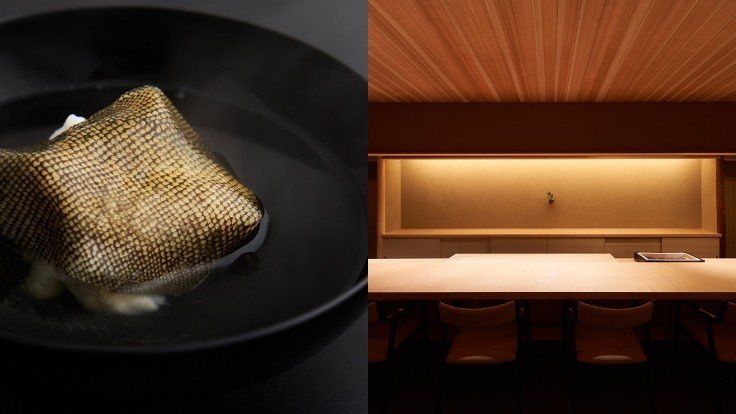
About Edomae Sushi Hanabusa
Edomae Sushi Hanabusa is a Michelin 1 Star (2024) counter in Akasaka operating from a strict traditional philosophy: red-vinegar rice, Tokyo Bay fish, and a menu structured around tuna from first piece to last. At the ¥¥¥¥ tier, it delivers technically precise old-school Edomae with generous portions. Book six to eight weeks ahead — this one fills fast.
A Michelin-starred Edomae counter in Akasaka worth the price and the planning
At the ¥¥¥¥ tier, Tokyo offers no shortage of serious sushi, and Edomae Sushi Hanabusa earns its place among them. This is a Michelin 1 Star (2024) counter in Minato's Akasaka district that works from a clear, committed philosophy: the chef's lineage traces to an Edo-era food stall, his rice is seasoned with red vinegar and salt in the old Tokyo style, and his stated maxim — "everything begins and ends with tuna" — is not marketing copy but an operational reality you taste from the first piece to the last. If you want modern sushi with creative detours, book elsewhere. If you want to eat Edomae sushi as it was practised before the format got polished into abstraction, Hanabusa is worth serious consideration.
What the counter actually delivers
The setting is described as old-timey, and that framing is accurate in the leading sense: this is not a room designed to perform nostalgia but one that simply never left. The chef forms sushi with economy of movement, pressing the rice gently so it holds together without compressing , the result is sushi rice that gives immediately rather than sitting heavy. That technique is harder than it looks and rarer than it should be at this price point. The rice itself is seasoned with red vinegar, which gives it a darker hue and a mild acidity that supports rather than competes with the fish. Fatty tuna comes first, as the opening statement the chef believes it to be. Gizzard shad , kohada , is flagged as essential, a species that divides opinion but that serious Edomae practitioners treat as a test of skill: the curing has to be exact or it overwhelms everything. Thick tuna rolls close the meal as they would have at the Edo-era stall this counter descends from. Portions are generous by Tokyo omakase standards, which at this price tier is worth noting.
The aroma at a counter like this is a useful signal before the first piece arrives: the clean, sharp edge of vinegared rice warming, the faint mineral note of fresh fish, the absence of anything cooked or smoked competing for attention. It tells you immediately that the kitchen's priorities are in order.
Who should book this, and under what conditions
If you have been once and are deciding whether to return, the answer depends on what you came away wanting more of. If the tuna was the high point, it will be again , the "everything begins and ends with tuna" philosophy means the kitchen's leading attention follows its leading fish. If you found the old-school format satisfying but want to compare it against a slightly more contemporary Edomae approach, Harutaka is the natural peer: also ¥¥¥¥, also technically precise, but with marginally more stylistic range. For a broader sense of how Hanabusa sits within Tokyo's serious sushi tier, the Sukiyabashi Jiro Roppongiten and Sushi Kanesaka counters offer instructive comparisons: both are operating from similar Edomae principles but with their own house interpretations of rice seasoning and pacing. If the format you want is less formal, Jizozushi is worth knowing about at a lower price tier.
Solo diners are well served at a traditional counter like this , the format is built for it, and there is no social awkwardness in a room where the meal is structured and the chef provides its rhythm. Groups of four or more should confirm seat availability carefully, as traditional omakase counters in Tokyo typically seat between six and twelve, and occupying half the counter as a group changes the atmosphere for other guests.
Booking and practical details
This is a hard booking. Michelin recognition at the ¥¥¥¥ tier in Akasaka, with a counter format and a chef whose approach has genuine historical grounding, means demand consistently outruns availability. Reservations: Book a minimum of four to six weeks in advance; for preferred sittings, eight weeks is more realistic. The venue has no website or phone number listed in available data , reservations are most reliably made through a hotel concierge if you are staying at a Minato or central Tokyo property, or through a specialist dining reservation service. Budget: ¥¥¥¥ in Tokyo's omakase tier currently places most counters at ¥30,000–¥60,000 per person; confirm the current price at time of booking as this range shifts with season and availability. Dress: Smart casual is the practical floor; the counter's traditional character rewards a degree of formality without requiring it. Location: 9 Chome-1-7 Akasaka, Minato City , centrally accessible by Tokyo Metro from most central neighbourhoods. Google rating: 4.2 across 105 reviews.
For broader context on eating and staying in this part of Japan: our full Tokyo restaurants guide covers the tier in detail, and our Tokyo hotels guide can help you position accommodation close to Akasaka. Our Tokyo bars guide is useful if you are planning an evening around the meal. If you are travelling beyond Tokyo, comparable serious dining is available at HAJIME in Osaka, Gion Sasaki in Kyoto, and Goh in Fukuoka. For sushi at this level elsewhere in Asia, Sushi Shikon in Hong Kong and Shoukouwa in Singapore are the reference points. Closer to Tokyo, 1000 in Yokohama is worth a detour. For something different in format, Hiroo Ishizaka operates in the same city at a different register. Our guides to Tokyo wineries and Tokyo experiences round out the picture, and akordu in Nara and 6 in Okinawa are listed for those extending their itinerary further.
Compare Edomae Sushi Hanabusa
| Venue | Awards | Price | Value |
|---|---|---|---|
| Edomae Sushi Hanabusa | The chef learned his craft at a sushi shop with roots as an Edo-era food stall. He loves the fish of Tokyo Bay, focusing on the preparation of the sushi toppings. Sushi rice is seasoned with red vinegar and salt. The old-timey counter and the chef’s maxim, ‘everything begins and ends with tuna’, attest to his old-school approach. Fatty flesh of tuna is the first item; gizzard shad an essential one. With economy of movement, he forms his sushi gently, so the sushi rice melts in the mouth. Generous portions and thick tuna rolls are part of the same Edo heritage.; Michelin 1 Star (2024) | ¥¥¥¥ | — |
| Harutaka | Michelin 3 Star, World's 50 Best | ¥¥¥¥ | — |
| RyuGin | Michelin 3 Star, World's 50 Best | ¥¥¥¥ | — |
| L'Effervescence | Michelin 3 Star, World's 50 Best | ¥¥¥¥ | — |
| HOMMAGE | Michelin 2 Star, World's 50 Best | ¥¥¥¥ | — |
| Florilège | Michelin 2 Star, World's 50 Best | ¥¥¥ | — |
A quick look at how Edomae Sushi Hanabusa measures up.
Frequently Asked Questions
What should I wear to Edomae Sushi Hanabusa?
Dress neatly and conservatively. The counter is old-school in ethos — a Michelin-starred room rooted in Edo-era tradition — so avoid strong fragrances, which can interfere with the fish. Business casual sits comfortably here; the atmosphere rewards respect for the format rather than fashion statements.
How far ahead should I book Edomae Sushi Hanabusa?
Book at least four to six weeks out, possibly longer. Michelin 1 Star recognition at the ¥¥¥¥ tier in Akasaka, with a counter format and limited seats, means availability closes fast. If you are visiting Tokyo on a fixed itinerary, lock this in before you book your flights.
Does Edomae Sushi Hanabusa handle dietary restrictions?
This is a traditional Edomae counter built around a specific philosophy: the chef's maxim is 'everything begins and ends with tuna,' with gizzard shad as an essential course. That heritage approach leaves little room for substitutions. Severe fish allergies or vegetarian requirements make this the wrong venue — this is a counter for people who eat everything the sea offers.
Is the tasting menu worth it at Edomae Sushi Hanabusa?
At ¥¥¥¥, yes — provided the Edomae format is what you are after. The value case rests on the chef's grounding in Edo-era technique: red vinegar-seasoned rice, generous portions, thick tuna rolls, and a preparation style designed so the rice melts in the mouth. If you want modern creativity or a contemporary aesthetic, this is not the room; if you want traditional Tokyo sushi executed with conviction and backed by a 2024 Michelin star, it earns its price.
Is Edomae Sushi Hanabusa good for solo dining?
Counter-format sushi is one of the few dining formats that actively favours solo diners, and Hanabusa is no exception. Sitting directly opposite the chef, watching the economy of movement as each piece is formed, is the intended experience here. Solo is arguably the right way to do this one.
Can I eat at the bar at Edomae Sushi Hanabusa?
The venue is a counter format, so the counter is the dining room — there is no separate bar seating or ancillary area. Every seat is at the counter, which means every guest gets the same direct sightline to the chef and the same pacing through the meal.
What should a first-timer know about Edomae Sushi Hanabusa?
This is a purist Edomae counter, not an introduction to contemporary Tokyo sushi. The chef's lineage traces to an Edo-era food stall, and the menu reflects that: tuna leads, gizzard shad is non-negotiable, and the approach is traditional rather than experimental. First-timers should arrive knowing the format, having made a reservation well in advance, and ready to let the chef set the pace — this is a 2024 Michelin Star counter in Akasaka, not a drop-in lunch spot.
Recognized By

More restaurants in Tokyo
- SézanneOccupying the seventh floor of the Four Seasons Hotel Tokyo at Marunouchi, Sézanne earned its first Michelin star within months of opening in July 2021 and now holds three. British chef Daniel Calvert applies French technique to Japanese ingredients, producing a prix-fixe format that Tabelog has recognised with Silver awards every year from 2023 through 2026. It ranked 4th in Asia's 50 Best Restaurants in 2025 and 15th globally in 2024.
- SazenkaSazenka is the address for Chinese cuisine in Tokyo at its most technically demanding. Chef Tomoya Kawada's wakon-kansai approach — Japanese seasonal ingredients applied through Chinese culinary technique — has earned consecutive Tabelog Gold Awards from 2019 to 2026, a #71 ranking on the World's 50 Best 2025, and 99 points from La Liste 2026. At JPY 50,000–59,999 per head, it is one of the hardest tables in the city to book and worth the effort.
- NarisawaNarisawa is Tokyo's most credentialled innovative tasting menu restaurant — two Michelin stars, Asia's 50 Best number 12, and a Tabelog Silver award — running at JPY 80,000–99,999 per head. Book for a milestone occasion, confirm vegetarian or vegan needs in advance, and reserve at least two to three months out. With 15 seats and reservation-only access, this is one of Tokyo's hardest tables to secure.
- FlorilègeFlorilège delivers two Michelin stars and an Asia's 50 Best #17 ranking at a dinner price of ¥22,000 — competitive for Tokyo at this level. Chef Hiroyasu Kawate's plant-forward tasting menus around an open-kitchen counter at Azabudai Hills make this the strongest choice for contemporary French dining in Tokyo if theatrical, produce-led cooking is what you want. Book well in advance; availability is near-impossible at short notice.
- DenDen holds two Michelin stars, a World's 50 Best top-25 Asia ranking, and a Tabelog Silver Award running back to 2017 — and it books out within hours of the two-month reservation window opening. Chef Zaiyu Hasegawa's daily-changing seasonal omakase runs JPY 30,000–39,999 at dinner in a relaxed house-restaurant setting near Gaiemmae. Book by phone only, noon–5 PM JST. Lunch is irregular; plan around dinner.
- QuintessenceQuintessence is Tokyo's most consistently decorated French restaurant: three Michelin stars held through 2025, a La Liste score of 96.5 points, and a Tabelog Gold run from 2017 to 2024. Dinner runs ¥60,000–¥79,999 all in with wine. Book the first seating (5 PM) well ahead — Near Impossible to secure — and come for classical French cooking executed with sustained precision in a secluded Gotenyama setting.
Related editorial
- Asia's 50 Best Restaurants 2026: The Chairman and Wing Go 1-2 from the Same BuildingThe Chairman takes No. 1 and Wing climbs to No. 2 at Asia's 50 Best Restaurants 2026. Both operate from the same Hong Kong building. Here's what it means.
- Four Seasons Yachts Debut: 95 Suites, 11 Restaurants, and a March 2026 Maiden VoyageFour Seasons I launches March 20, 2026, with 95 suites, a one-to-one staff ratio, and 11 onboard restaurants. Worth tracking if you want hotel-grade service at sea.
- LA Michelin Guide 2026: Seven New Restaurants from Tlayudas to Uzbek DumplingsMichelin's March 2026 California Guide update adds six LA restaurants and one Montecito newcomer, spanning Oaxacan tlayudas, Uzbek manti, and Korean-Italian pasta.
Save or rate Edomae Sushi Hanabusa on Pearl
Keep this venue in your Pearl passport, rate it after you visit, and track it alongside every other place you collect.