
Restaurant in Tokyo, Japan
Fujisushi
230ptsEat what you want, when you want it.

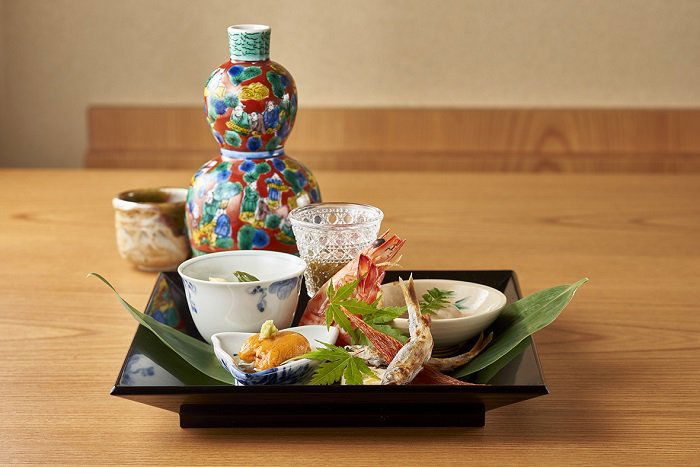
About Fujisushi
A Michelin Plate-recognised sushi counter in Higashiazabu where you order what you want, in whatever order you like — a deliberate contrast to Tokyo's omakase-heavy scene. At ¥¥¥ pricing with a 4.7 Google rating, it's one of the more accessible serious sushi options in Minato. Easy to book, solo-friendly, and worth returning to precisely because the experience changes each time.
Verdict
Fujisushi in Higashiazabu earns its Michelin Plate (2025) by doing something almost countercultural in Tokyo's sushi scene: it lets you eat exactly what you want, in the order you want, at a price point that doesn't require a financial plan. If you've already done one of the city's omakase counters and want to spend a second visit eating freely rather than deferring to a fixed sequence, this is the right room. Book it early in the week for the smoothest experience, and come hungry enough to order more than one piece.
The Room
The physical space at Fujisushi is compact and counter-focused, the kind of setup that frames the chef's work rather than the diner's status. In Higashiazabu's PARKSIDE BLD, the proportions keep things personal without becoming cramped. There's no theatrical reveal, no parade of lacquerware on extended linen. What you get instead is a clean line of sight to the counter, close enough that the rice-to-fish ratio of every piece is visible before it reaches you. For solo diners, that proximity is the point. For pairs, the counter seating creates the right kind of focused attention on what's in front of you rather than on the theatre of the room. The spatial logic here is about access, not architecture.
What Makes the Visit Worth Repeating
The return-visit case for Fujisushi rests on a single operational detail: the sushi rice is polished just before cooking. That's not marketing language — it's a technical commitment that affects texture and flavour in every piece. On a first visit, you're absorbing the format. On a second, you order differently, move through the selection with more confidence, and probably eat better for it. The a la carte model also means a second visit has a genuinely different shape to the first, which isn't true of fixed-menu counters where the experience repeats unless the season has turned.
Fact that dropping in for a single piece is not just tolerated but actively acceptable also changes the calculus. You're not locked into a two-hour commitment. Come after a meeting in Minato, order three pieces and a sake, and leave. Or stay longer. The lack of a formal booking difficulty barrier (this is an easy-to-book venue by Tokyo standards) means a spontaneous second visit is actually plausible in a city where most serious sushi counters require weeks of lead time.
Lunch vs Dinner: Where the Value Sits
At ¥¥¥ pricing, Fujisushi sits below the ¥¥¥¥ tier that dominates serious sushi in Tokyo, which makes the lunch-versus-dinner question largely a personal scheduling call rather than a financial one. That said, lunch tends to deliver better value at this price tier across the city: shorter waits, slightly more relaxed service pacing, and a counter that's unlikely to fill with the same pressure as a Friday or Saturday evening. If you want to make the most of the a la carte format without feeling any rush to vacate, a weekday lunch is the move. Evening visits work well for those pairing pieces with sake across a longer sitting, but the casual drop-in culture that defines this venue is easier to access during daylight hours.
Compared to the lunch experience at higher-end Edomae counters like Edomae Sushi Hanabusa, Fujisushi's daytime offering gives you more control over pace and spend. You're not anchored to a set sequence. That freedom is the trade-off for a less curated progression, and depending on what you value, it's not a trade-off at all.
Context: Where Fujisushi Sits in Tokyo's Sushi Scene
Tokyo's sushi spectrum runs from neighborhood standbys to reservation-only counters that require months of planning. Fujisushi sits in a specific and genuinely useful tier: serious enough to hold a Michelin Plate, accessible enough to visit without a fixed menu commitment. For food-focused visitors who want to spend time across the city's different dining registers, it anchors the more relaxed end of a thoughtful sushi itinerary. Pair it with a counter-format experience at Harutaka or Sukiyabashi Jiro Roppongiten on the same trip and you get a useful range of what Tokyo sushi actually looks like across formats and price points.
If you're building a wider Japan dining itinerary beyond the capital, the contrast is instructive: HAJIME in Osaka and Gion Sasaki in Kyoto each represent the fixed-format end of Japanese fine dining. Fujisushi represents something closer to the working lunch counter ideal that Tokyo does well when it's not performing for international acclaim. Its Google rating of 4.7 across 25 reviews is a thin data set, but consistently high scores at this review volume usually signal a regulars-driven room rather than a tourist-cycle one. That's a good sign.
For those exploring Tokyo's sushi options more broadly, Sushi Kanesaka and Hiroo Ishizaka offer a useful counterpoint at different price tiers and formats. Our full Tokyo restaurants guide covers the range in more detail, and if you're planning a complete trip, our Tokyo hotels guide, bars guide, and experiences guide are worth reading alongside it.
Practical Details
Fujisushi is located at Higashiazabu 3-7-11, PARKSIDE BLD 101, Minato City, Tokyo. Booking is direct by the standards of this city. Phone and online booking details are not listed in public records at time of writing, so approach via walk-in or check directly with the venue on arrival or through hotel concierge. Minato's Higashiazabu neighbourhood is well-served by Tokyo transit, and the venue's address within a ground-floor retail unit makes it easy to locate. Sake is available, small dishes supplement the nigiri selection, and single-piece orders are welcome. Dress expectations lean informal; this is not a venue where code matters. For sushi lovers comparing regional options further afield, Sushi Shikon in Hong Kong and Shoukouwa in Singapore represent how the Edomae format travels across Asia, useful context if you're building a multi-city itinerary. Further Japanese options worth considering include akordu in Nara, Goh in Fukuoka, 1000 in Yokohama, and 6 in Okinawa if you're moving through the country. Tokyo's wineries guide is available at joinpearl.co/wineries/tokyo.
Is Fujisushi good for solo dining?
Yes, and arguably the leading way to visit. The counter format in a compact room makes solo dining natural rather than awkward, and the a la carte model means you order precisely what you want at your own pace. At ¥¥¥ pricing, a solo session here is one of the more cost-controlled ways to eat serious sushi in Tokyo without committing to a full omakase spend.
Does Fujisushi handle dietary restrictions?
The a la carte format gives you more control over what you order than a fixed omakase menu would, which is useful for avoiding specific ingredients. That said, sushi is a narrow cuisine and the kitchen here focuses on nigiri and small dishes — if you need significant menu modification, contact the venue directly before visiting. Phone and website details were not publicly available at time of writing, so your leading route is via hotel concierge or an in-person visit to clarify in advance.
Can Fujisushi accommodate groups?
The compact counter layout makes this a better option for solo diners and pairs than for larger groups. If you're arriving with four or more people, call ahead to confirm capacity , the venue's small footprint in a ground-floor unit suggests limited flexibility for walk-in groups. For larger group sushi dinners in Tokyo, venues with private room options would be a more reliable choice.
What should a first-timer know about Fujisushi?
Format is a la carte nigiri, not omakase , you choose what you want, in any order, and single pieces are acceptable. That's unusual enough in Tokyo's serious sushi scene that it's worth underlining. The venue holds a Michelin Plate (2025), which signals recognised quality without the multi-hour commitment of a starred counter. At ¥¥¥ pricing, it's a practical entry point into Minato's sushi options. Come with a rough idea of what you want to eat rather than expecting the chef to guide the entire experience.
Compare Fujisushi
| Venue | Cuisine | Price | Booking Difficulty |
|---|---|---|---|
| Fujisushi | Sushi | ¥¥¥ | Easy |
| Harutaka | Sushi | ¥¥¥¥ | Unknown |
| L'Effervescence | French | ¥¥¥¥ | Unknown |
| RyuGin | Kaiseki, Japanese | ¥¥¥¥ | Unknown |
| HOMMAGE | Innovtive French, French | ¥¥¥¥ | Unknown |
| Crony | Innovative, French | ¥¥¥¥ | Unknown |
Key differences to consider before you reserve.
Frequently Asked Questions
Is Fujisushi good for solo dining?
Solo diners are exactly who Fujisushi is built for. The counter format and the explicit permission to order a single piece at a time means you set the pace and the volume without any social pressure. At ¥¥¥ pricing, a solo visit is easy to calibrate — order light or go deep depending on appetite. Harutaka is the comparison if you want a more formal solo omakase experience, but Fujisushi is the lower-friction, lower-spend option.
Does Fujisushi handle dietary restrictions?
The a la carte format at Fujisushi gives you more direct control than a fixed omakase menu — you order only what you want, piece by piece, so avoiding specific fish or ingredients is structurally easier here than at most serious sushi counters. That said, specific allergen or dietary accommodation details are not confirmed in available data, so check the venue's official channels before visiting if restrictions are significant. The small dishes on the menu add flexibility beyond nigiri.
Can Fujisushi accommodate groups?
Fujisushi's compact counter layout is not a group-dinner venue. It suits pairs and solo diners far better than parties of four or more. If you're organising a group sushi dinner in Tokyo at the ¥¥¥ tier, RyuGin or a venue with private room options is a more practical fit. Fujisushi is worth considering for small groups of two to three who want a relaxed, self-directed meal rather than a shared set menu format.
What should a first-timer know about Fujisushi?
The core rule at Fujisushi is that there are almost no rules: order what you want, in whatever order you want, and leave after a single piece if that's enough. The sushi rice is polished just before cooking, which is an operational commitment that most sushi counters don't make. The venue holds a 2025 Michelin Plate and sits at ¥¥¥ — below the ¥¥¥¥ tier of Tokyo's most formal counters — so the quality-to-cost ratio is a genuine draw. Walk-ins appear to be possible, but confirming availability ahead is sensible given the compact size.
Recognized By

More restaurants in Tokyo
- SézanneOccupying the seventh floor of the Four Seasons Hotel Tokyo at Marunouchi, Sézanne earned its first Michelin star within months of opening in July 2021 and now holds three. British chef Daniel Calvert applies French technique to Japanese ingredients, producing a prix-fixe format that Tabelog has recognised with Silver awards every year from 2023 through 2026. It ranked 4th in Asia's 50 Best Restaurants in 2025 and 15th globally in 2024.
- SazenkaSazenka is the address for Chinese cuisine in Tokyo at its most technically demanding. Chef Tomoya Kawada's wakon-kansai approach — Japanese seasonal ingredients applied through Chinese culinary technique — has earned consecutive Tabelog Gold Awards from 2019 to 2026, a #71 ranking on the World's 50 Best 2025, and 99 points from La Liste 2026. At JPY 50,000–59,999 per head, it is one of the hardest tables in the city to book and worth the effort.
- NarisawaNarisawa is Tokyo's most credentialled innovative tasting menu restaurant — two Michelin stars, Asia's 50 Best number 12, and a Tabelog Silver award — running at JPY 80,000–99,999 per head. Book for a milestone occasion, confirm vegetarian or vegan needs in advance, and reserve at least two to three months out. With 15 seats and reservation-only access, this is one of Tokyo's hardest tables to secure.
- FlorilègeFlorilège delivers two Michelin stars and an Asia's 50 Best #17 ranking at a dinner price of ¥22,000 — competitive for Tokyo at this level. Chef Hiroyasu Kawate's plant-forward tasting menus around an open-kitchen counter at Azabudai Hills make this the strongest choice for contemporary French dining in Tokyo if theatrical, produce-led cooking is what you want. Book well in advance; availability is near-impossible at short notice.
- DenDen holds two Michelin stars, a World's 50 Best top-25 Asia ranking, and a Tabelog Silver Award running back to 2017 — and it books out within hours of the two-month reservation window opening. Chef Zaiyu Hasegawa's daily-changing seasonal omakase runs JPY 30,000–39,999 at dinner in a relaxed house-restaurant setting near Gaiemmae. Book by phone only, noon–5 PM JST. Lunch is irregular; plan around dinner.
- MyojakuMyojaku is a 2-Michelin-star, 14-course French-leaning omakase in Nishiazabu holding a 4.47 Tabelog score, Tabelog Silver 2025–2026, and Asia's 50 Best #45 (2025). Chef Hidetoshi Nakamura's water-forward, no-dashi approach shifts meaningfully with the seasons — making timing your reservation as important as getting one. Budget JPY 50,000–59,999 per head plus 10% service charge; reservations only, near-impossible to secure.
Similar venues by awards
Related editorial
- Best Fine Dining Restaurants in ParisFrom three-Michelin-star icons to the next generation of Parisian chefs pushing boundaries, these are the restaurants that define fine dining in the world's culinary capital.
- Best Luxury Hotels in RomeFrom rooftop terraces overlooking ancient ruins to Michelin-starred hotel dining, these are the luxury hotels that make Rome unforgettable.
- Best Cocktail Bars in KyotoFrom sleek lounges to hidden speakeasies, Kyoto's cocktail scene blends Japanese precision with global influence in ways you won't find anywhere else.
Save or rate Fujisushi on Pearl
Keep this venue in your Pearl passport, rate it after you visit, and track it alongside every other place you collect.