
Restaurant in Tokyo, Japan
3110
230ptsOAD-ranked Meguro sushi worth booking now.

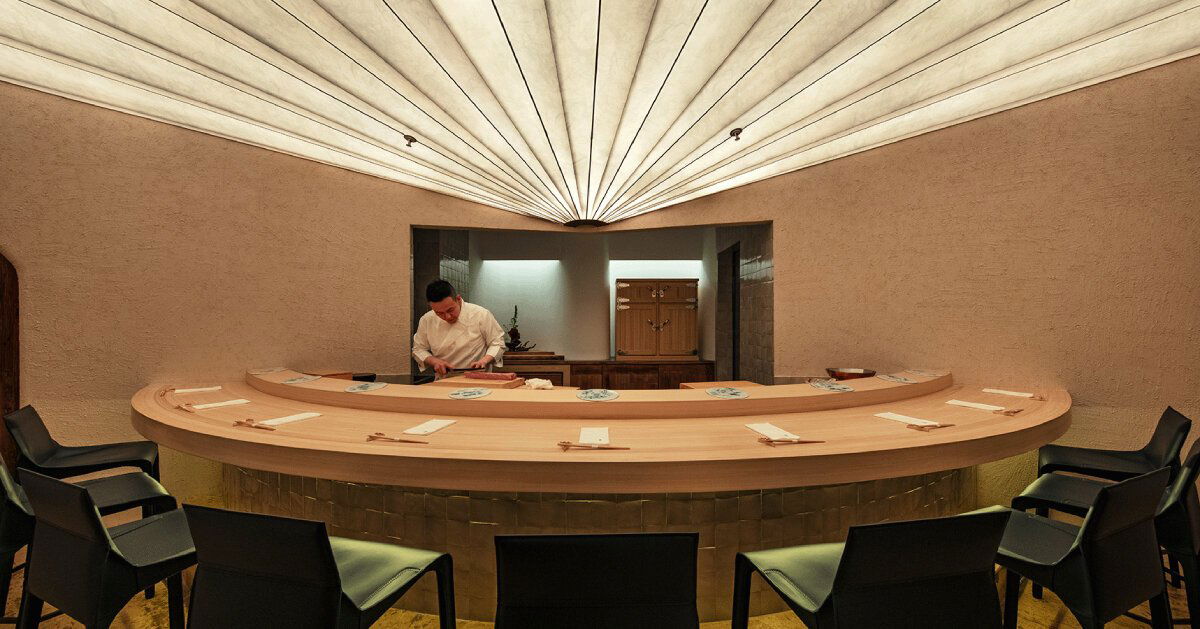
About 3110
A focused sushi counter in Meguro City run by chef Ikuya Kobayashi, 3110 has earned three consecutive years of Opinionated About Dining recognition in Japan — reaching the top 300 in 2024. Booking is straightforward compared to Ginza's most-discussed counters, and the residential Aobadai address keeps the room quiet and serious. A strong choice for food-focused travellers who want OAD-level quality without the advance planning.
Verdict
3110 is not the sushi counter you've heard about from travel blogs or seen tagged on social media. It's a small, quietly serious restaurant in Meguro City's Aobadai neighbourhood run by chef Ikuya Kobayashi, and it has been climbing steadily through Opinionated About Dining's Japan rankings — from Highly Recommended in 2023 to #283 in 2024 and #402 in 2025 (a ranking shift that reflects a larger, more competitive list rather than a drop in quality). If you're a food-focused traveller who wants accomplished sushi without the theatre or the booking anxiety of Tokyo's most-discussed counters, this is worth your attention. Booking is direct. The room is not cavernous. The credentials are real.
About 3110
The most common mistake Tokyo visitors make is assuming that OAD recognition requires a six-month wait and a four-figure bill. 3110 corrects that assumption. Chef Kobayashi operates out of a ground-floor space in a residential building on Aobadai, in the kind of neighbourhood that doesn't show up on most tourist itineraries. That's precisely the point. This is sushi made with focus and craft, not with a publicist.
OAD's consecutive recognition across three years tells you something meaningful: this is not a one-season story. A restaurant that improves its ranking from Highly Recommended to the top 300 in a country with Japan's density of serious sushi counters has done something right and kept doing it. For an explorer who reads menus as closely as guidebooks, that trajectory matters more than a flashy address in Ginza.
The kitchen's hours are structured and specific. Lunch runs from 11am to either 4pm or 5pm depending on the day, while dinner sittings are a tight 6 to 8pm window every evening except Monday, when the restaurant is closed. Sunday is dinner only. This kind of compressed schedule is typical of serious counter dining in Tokyo — it signals that the chef is working to a deliberate pace rather than a volume model. Plan your day around the kitchen's rhythm, not the other way around.
Price range data isn't publicly listed, which makes precise budgeting harder. What the OAD ranking and the format suggest is a counter operating at a serious level without necessarily matching the per-head costs of Ginza's most prominent addresses. For comparison, counters at the top 50 of OAD Japan frequently run ¥30,000–¥60,000 per person at dinner; a counter in the top 400 in a residential Meguro location is likely to be more accessible, though you should confirm current pricing directly before booking.
Google reviewers rate 3110 at 4.6 across 81 reviews , a score that holds up well for a restaurant of this profile, where the audience skews toward people who sought it out deliberately rather than stumbled in. For context on how Tokyo's sushi scene positions itself, you can also explore Harutaka, Sukiyabashi Jiro Roppongiten, Sushi Kanesaka, and Edomae Sushi Hanabusa on Pearl. Each sits at a different point on the booking-difficulty and price spectrum.
The Meguro location also makes 3110 a natural anchor for a neighbourhood evening. Nakameguro is close enough to visit before or after, and the absence of a tourist-circuit address means the room is quieter and more focused than many of its OAD peers. For travellers who find the Ginza counter experience too self-conscious, this is a practical alternative.
If you're building a serious eating itinerary across Japan, note that OAD's broader Japan list includes restaurants worth cross-referencing: HAJIME in Osaka, Gion Sasaki in Kyoto, akordu in Nara, Goh in Fukuoka, 1000 in Yokohama, and 6 in Okinawa. For sushi specifically, regional comparisons in Asia are also worth considering: Sushi Shikon in Hong Kong and Shoukouwa in Singapore are the benchmarks at the leading end outside Japan.
For everything else in the city, Pearl's full guides cover Tokyo restaurants, Tokyo hotels, Tokyo bars, Tokyo wineries, and Tokyo experiences.
Quick reference: Meguro City, Aobadai , lunch (Wed–Sat, 11am–4/5pm), dinner (Tue–Sun, 6–8pm), closed Monday , OAD Top 400 Japan 2025 , Google 4.6/81 reviews , booking difficulty: easy.
FAQ
- What should a first-timer know about 3110? This is a serious counter in a residential part of Meguro City, not a tourist-facing restaurant. Chef Ikuya Kobayashi has received three consecutive years of OAD recognition, which tells you the kitchen is consistent. Expect a focused sushi experience in a small, quiet room. Pricing isn't publicly listed, so contact the restaurant directly before your visit to confirm the current format and cost. First-timers comfortable with counter sushi in Tokyo will feel at home here; those new to the format should start with a more visitor-oriented counter before booking.
- How far ahead should I book 3110? Booking difficulty is rated easy, which puts it in a different bracket from the Ginza counters that require months of advance planning. That said, dinner sittings run only from 6 to 8pm, so available slots are limited by design. Booking one to two weeks ahead should be sufficient for most dates, but if you have a fixed travel itinerary, lock it in earlier. The restaurant's OAD ranking means demand from informed travellers is steady, not casual.
- What should I order at 3110? No specific menu data is available through Pearl's database, so we won't guess at dish names. What the format suggests , a focused sushi counter run by a single named chef with OAD recognition , is that the kitchen likely operates on an omakase or set-menu basis rather than à la carte. Trust the chef's sequence. If you have ingredient preferences or restrictions, raise them when booking rather than at the counter. For comparison, Hiroo Ishizaka is another Tokyo counter worth considering for a different take on the format.
- Is lunch or dinner better at 3110? Lunch runs longer (11am to 4 or 5pm depending on the day) and is available Wednesday through Saturday, which gives you more flexibility if your Tokyo schedule is tight. Dinner is the shorter window , 6 to 8pm only , and is available Tuesday through Sunday. For first visits, lunch offers more breathing room and typically comes in at a lower price point at this type of counter. If value matters as much as experience, lunch is the smarter entry point.
- Can 3110 accommodate groups? No seat count data is available, but the residential address, compact format, and single-chef operation all point to a small counter , likely in the range of 8 to 12 seats, which is standard for this tier of Tokyo sushi restaurant. Groups of more than four should contact the restaurant directly before assuming space is available. Large groups are better served by venues with private dining rooms. If group dining is your priority, Pearl's full Tokyo restaurant guide covers options better suited to larger parties.
- Does 3110 handle dietary restrictions? No direct information on dietary accommodations is available in Pearl's database. Sushi counters at this level are typically built around a fixed sequence of fish-focused courses, which makes significant substitutions difficult. If you have allergies, vegetarian requirements, or other restrictions, contact the restaurant before booking , not after. Showing up with unannounced restrictions at an omakase counter is a poor outcome for both the kitchen and you.
Compare 3110
Frequently Asked Questions
What should a first-timer know about 3110?
3110 is a small, serious sushi counter in Aobadai, Meguro run by chef Ikuya Kobayashi. It holds OAD Top 283 recognition in Japan for 2024, which puts it in credible company without the six-month wait lists of Tokyo's most publicised counters. Go in knowing the format is intimate and the seatings are short windows: dinner runs 6–8 pm on most nights, lunch on weekdays and Saturday only.
How far ahead should I book 3110?
Given the tight two-hour dinner windows and limited seats, booking several weeks in advance is advisable, particularly for weekend evenings. Lunch slots on Wednesday through Saturday may have more flexibility, but the OAD ranking means demand has grown year-on-year since its 2023 Highly Recommended listing. Treat it like a counter booking, not a walk-in prospect.
What should I order at 3110?
No menu details are confirmed in available data, but as a sushi counter with omakase-format seating windows, the expectation is that chef Kobayashi sets the progression. Arrive without a fixed order in mind and follow the counter. If dietary needs are a factor, raise them at booking, not on arrival.
Is lunch or dinner better at 3110?
Lunch runs from 11 am to 4 pm Wednesday through Friday and 11 am to 5 pm on Saturday, giving considerably more time than the tight 6–8 pm dinner slots available most evenings. For a less pressured first visit, lunch is the practical call. Dinner works if your Tokyo schedule is constrained to evenings, but the two-hour window moves fast at a focused sushi counter.
Can 3110 accommodate groups?
No group capacity data is confirmed, but a small counter format in a residential Meguro building is not built for parties. Pairs and solo diners are the natural fit. If you are planning for more than four, check the venue's official channels before assuming availability — the venue does not list a public phone or website, so approach via reservation platform or direct inquiry.
Does 3110 handle dietary restrictions?
No dietary policy is documented for 3110, which is typical of focused sushi counters where the chef controls the menu. Communicate any restrictions clearly at the time of booking rather than at the counter. Strict vegetarian or shellfish-allergy guests should confirm feasibility before reserving, as omakase-format kitchens have limited ability to substitute mid-service.
Hours
- Monday
- Closed
- Tuesday
- 6–8 pm
- Wednesday
- 11 am–4 pm, 6–8 pm
- Thursday
- 11 am–4 pm, 6–8 pm
- Friday
- 11 am–5 pm, 6–8 pm
- Saturday
- 11 am–5 pm, 6–8 pm
- Sunday
- 6–8 pm
Recognized By

More restaurants in Tokyo
- SézanneOccupying the seventh floor of the Four Seasons Hotel Tokyo at Marunouchi, Sézanne earned its first Michelin star within months of opening in July 2021 and now holds three. British chef Daniel Calvert applies French technique to Japanese ingredients, producing a prix-fixe format that Tabelog has recognised with Silver awards every year from 2023 through 2026. It ranked 4th in Asia's 50 Best Restaurants in 2025 and 15th globally in 2024.
- SazenkaSazenka is the address for Chinese cuisine in Tokyo at its most technically demanding. Chef Tomoya Kawada's wakon-kansai approach — Japanese seasonal ingredients applied through Chinese culinary technique — has earned consecutive Tabelog Gold Awards from 2019 to 2026, a #71 ranking on the World's 50 Best 2025, and 99 points from La Liste 2026. At JPY 50,000–59,999 per head, it is one of the hardest tables in the city to book and worth the effort.
- NarisawaNarisawa is Tokyo's most credentialled innovative tasting menu restaurant — two Michelin stars, Asia's 50 Best number 12, and a Tabelog Silver award — running at JPY 80,000–99,999 per head. Book for a milestone occasion, confirm vegetarian or vegan needs in advance, and reserve at least two to three months out. With 15 seats and reservation-only access, this is one of Tokyo's hardest tables to secure.
- FlorilègeFlorilège delivers two Michelin stars and an Asia's 50 Best #17 ranking at a dinner price of ¥22,000 — competitive for Tokyo at this level. Chef Hiroyasu Kawate's plant-forward tasting menus around an open-kitchen counter at Azabudai Hills make this the strongest choice for contemporary French dining in Tokyo if theatrical, produce-led cooking is what you want. Book well in advance; availability is near-impossible at short notice.
- DenDen holds two Michelin stars, a World's 50 Best top-25 Asia ranking, and a Tabelog Silver Award running back to 2017 — and it books out within hours of the two-month reservation window opening. Chef Zaiyu Hasegawa's daily-changing seasonal omakase runs JPY 30,000–39,999 at dinner in a relaxed house-restaurant setting near Gaiemmae. Book by phone only, noon–5 PM JST. Lunch is irregular; plan around dinner.
- MyojakuMyojaku is a 2-Michelin-star, 14-course French-leaning omakase in Nishiazabu holding a 4.47 Tabelog score, Tabelog Silver 2025–2026, and Asia's 50 Best #45 (2025). Chef Hidetoshi Nakamura's water-forward, no-dashi approach shifts meaningfully with the seasons — making timing your reservation as important as getting one. Budget JPY 50,000–59,999 per head plus 10% service charge; reservations only, near-impossible to secure.
Similar venues by awards
Related editorial
- Best Fine Dining Restaurants in ParisFrom three-Michelin-star icons to the next generation of Parisian chefs pushing boundaries, these are the restaurants that define fine dining in the world's culinary capital.
- Best Luxury Hotels in RomeFrom rooftop terraces overlooking ancient ruins to Michelin-starred hotel dining, these are the luxury hotels that make Rome unforgettable.
- Best Cocktail Bars in KyotoFrom sleek lounges to hidden speakeasies, Kyoto's cocktail scene blends Japanese precision with global influence in ways you won't find anywhere else.
Save or rate 3110 on Pearl
Keep this venue in your Pearl passport, rate it after you visit, and track it alongside every other place you collect.