
Restaurant in Osaka, Japan
Yugen
650Pearl PointsSerious kaiseki. Near-impossible to book.

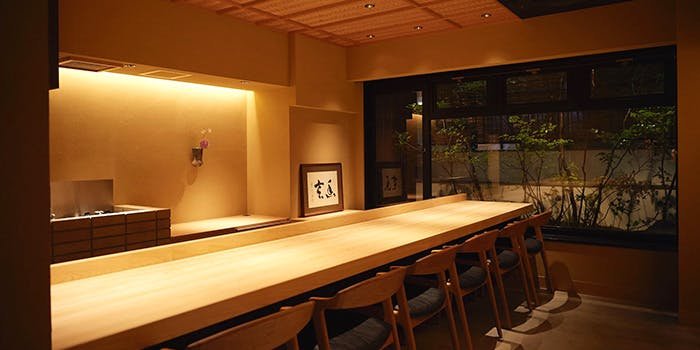
About Yugen
Yugen holds two Michelin stars (2024 and 2025) and builds its menu around seafood sourced from the Genkai Sea and Goto Islands off Kyushu — a provenance argument that separates it from Osaka's other serious kaiseki rooms. At ¥¥¥, it sits a tier below HAJIME and La Cime on price while matching them on formal intent. Book far ahead: reservations are near impossible to secure at short notice.
Verdict
Yugen holds two Michelin stars and earns them on the strength of its sourcing as much as its technique. Chef Keisuke Mifune draws seafood from the Genkai Sea and the Goto Islands off his native Kyushu, and those ingredients are the reason to book here rather than at a comparable kaiseki room in Osaka. If you want a Japanese fine-dining experience where the provenance of each ingredient is visible in the dish, Yugen is the right call. If you want European technique applied to Japanese produce, look at HAJIME or Fujiya 1935 instead.
The Experience
Yugen sits inside Zeniya Honpo Nishikan, a converted merchant building in Tennoji Ward, at street level. The name translates loosely as mysterious profundity, a quality associated in Japanese aesthetics with things whose full depth cannot be measured. That framing is not decorative: it describes Mifune's approach to a menu shaped by ryotei discipline, where combinations of ingredients and dishware are treated with the same weight as the cooking itself.
The sourcing is the argument for the price. Mifune is a Fukuoka native who continues to draw from Kyushu's coastline: the Genkai Sea between northern Kyushu and the Korean Peninsula, and the Goto Islands to the west, produce seafood with a distinct character that differs from what Osaka's local Seto Inland Sea suppliers offer. For the explorer-minded diner, this is the specific detail that makes Yugen worth pursuing over Kashiwaya Osaka Senriyama or Taian, both of which offer serious kaiseki at a comparable or identical price tier but without the same Kyushu provenance angle.
Seasonality is explicit in the menu construction. The changing of the seasons drives both ingredient selection and the dishware chosen to frame each course — a pairing decision that reflects classical ryotei training rather than contemporary tasting-menu conventions. Arrive in autumn or late spring to catch the menu at its most expressive, when both mountain and sea produce are at a peak and the seasonal contrast on the plate is sharpest. These are also the periods when Osaka's food calendar is most active, making a booking at Yugen easier to anchor into a broader itinerary. For a full sense of what Osaka's dining scene offers around this visit, see our full Osaka restaurants guide.
Google reviewers rate Yugen at 4.6 across 70 reviews — a high score for a room operating at this level of formality, where expectations are correspondingly high. The two consecutive Michelin two-star results (2024 and 2025) confirm consistency rather than a single-year performance. That consistency matters when you are booking months out and spending at the ¥¥¥ tier: you are not betting on a peak night.
For context beyond Osaka: this style of sourcing-driven kaiseki with a regional chef's provenance story running through it appears in similar form at Gion Sasaki in Kyoto and at Goh in Fukuoka, where the Kyushu ingredient line is even more direct. If you are travelling the Kyushu–Kansai corridor, Yugen sits logically between those two reference points. Diners focused on Tokyo comparisons should consider Azabu Kadowaki or Myojaku as the closest stylistic equivalents in the capital. For other high-end Japanese dining in the Kansai region, akordu in Nara offers an entirely different lens on the same ingredient pool.
Within Osaka's own ¥¥¥ tier, Miyamoto, Oimatsu Hisano, Tenjimbashi Aoki, and Ajikitcho Bumbuan each offer a different slant on traditional Japanese cuisine worth weighing before committing to a single booking. For the traveller building a complete Osaka trip, the hotels guide, bars guide, and experiences guide are useful companions.
Booking & Logistics
Booking difficulty is rated near impossible. Yugen operates at a scale typical of serious kaiseki rooms , small seat counts, long lead times, and limited walk-in possibility. Plan to book as far in advance as the reservation window allows, and treat a cancellation alert as a genuine opportunity. There is no published phone number or booking URL in the current database; the most reliable route is through a hotel concierge with local relationships or a specialist reservations service. Address: 14-14 Ishigatsujicho, Tennoji Ward, Osaka 543-0031, inside Zeniya Honpo Nishikan, Room 101.
Leading Time to Visit
Autumn (October to November) and late spring (April to May) are the strongest periods. The menu's seasonal architecture means the gap between a mid-winter visit and a peak-autumn visit can be significant in terms of ingredient quality and the visual range of the dishware pairings. If your travel dates are flexible, optimise for one of these two windows.
How It Compares
Explore More in Osaka
- Our full Osaka restaurants guide
- Our full Osaka hotels guide
- Our full Osaka bars guide
- Our full Osaka wineries guide
- Our full Osaka experiences guide
FAQ
- Is Yugen good for a special occasion? Yes, clearly. Two Michelin stars, a seasonally driven menu, and a formal ryotei-trained approach make it one of the stronger choices in Osaka for a milestone dinner. The ¥¥¥ price point is meaningful but not at the ¥¥¥¥ level of HAJIME or La Cime, which means you get serious ceremony at a slightly lower financial commitment. Book as far ahead as possible , this is not a same-week reservation.
- What should I wear to Yugen? Smart formal is the safe call. A two-star kaiseki room in Japan at this price tier expects guests to dress to the occasion. Jacket for men is appropriate; avoid casualwear. Tennoji Ward is not a flashy neighbourhood, but the room itself operates at a level where understated formal clothing is the norm.
- Is Yugen good for solo dining? It depends on the format. Counter seating at Japanese fine-dining rooms frequently accommodates solo diners well, and the chef-focused service style at a kaiseki room translates well for single guests who want to engage with the menu rather than the company. That said, confirm seat configuration when booking , solo availability at peak times may be limited given the demand pressure on reservations.
- What should a first-timer know about Yugen? The menu is structured around seasonal ingredients with Kyushu provenance, so expect a progression of courses where the sourcing story is part of the experience. This is not a restaurant where you order from a menu , the kitchen sets the direction. Come with an appetite and without time pressure. If this is your first kaiseki experience, it is a strong entry point: the two-star consistency means execution is reliable rather than variable.
- What are alternatives to Yugen in Osaka? At the same ¥¥¥ tier: Kashiwaya Osaka Senriyama and Taian are the closest comparisons for traditional Japanese cuisine, both with Michelin recognition. If you want to step up in price and shift toward European-influenced innovation, HAJIME and La Cime operate at ¥¥¥¥. For a Kyushu-ingredient perspective with more contemporary plating, Goh in Fukuoka is worth the train journey.
- Is the tasting menu worth it at Yugen? At ¥¥¥ and two Michelin stars, the value case is direct relative to comparable rooms in the ¥¥¥¥ tier. The specific argument for Yugen is the Kyushu sourcing: if you want to eat Genkai Sea seafood in Osaka prepared by a chef trained in ryotei discipline, there is no shortcut to a cheaper room that replicates that combination. The 4.6 Google rating across 70 reviews suggests guests consistently find the experience matches the price.
- Is Yugen worth the price? Yes, with the caveat that the value is clearest for diners who care about provenance. The Goto Islands and Genkai Sea sourcing gives the menu a regional specificity you do not get at every two-star room. At ¥¥¥ rather than ¥¥¥¥, it also compares favourably on price against peers like HAJIME or Fujiya 1935. If you are indifferent to ingredient sourcing and primarily want technical showmanship, those ¥¥¥¥ options may suit you better. If provenance and seasonal rhythm matter, Yugen justifies the spend.
Frequently Asked Questions
Is Yugen good for a special occasion?
Yes, and it's one of the stronger cases for booking in Osaka. Two Michelin stars, a seasonal menu architecture, and a setting inside a converted merchant building in Tennoji Ward make it a credible choice for birthdays, anniversaries, or any occasion where the meal is the event. The format is kaiseki, so expect a multi-course progression rather than an à la carte dinner — that structure suits occasions where you want the restaurant to set the pace.
What should I wear to Yugen?
The venue data doesn't specify a dress code, but a two-Michelin-star kaiseki room in Osaka will carry the same unspoken expectations as comparable rooms in Kyoto or Tokyo: neat, understated dress is appropriate. Avoid overly casual clothing. If in doubt, dress as you would for a formal dinner rather than a night out.
Is Yugen good for solo dining?
Kaiseki at this level is generally well-suited to solo dining — the counter format common to serious Japanese rooms means a single guest is a natural fit, not an afterthought. Yugen's ryotei-trained chef and attention to individual presentation reinforce that. Booking as a solo diner may actually be easier to arrange than a larger table given the small seat count, though lead times are still long.
What should a first-timer know about Yugen?
Booking is the main obstacle — expect long lead times and limited availability given the scale typical of serious kaiseki rooms. The menu is built around seasonal Kyushu ingredients, particularly seafood from the Genkai Sea and Goto Islands, so what you eat is determined by time of year. Autumn and late spring are the strongest windows. The name itself, meaning 'mysterious profundity', signals the register: this is a considered, slower-paced meal, not a showcase of technique for its own sake.
What are alternatives to Yugen in Osaka?
For French-influenced precision at a comparable price point, La Cime is the most direct alternative. Taian offers kaiseki at two Michelin stars and is similarly difficult to book. Kashiwaya Osaka Senriyama carries three Michelin stars and is the natural step up if budget allows. Fujiya 1935 takes a more contemporary Japanese approach and is slightly more accessible. HAJIME occupies a different register entirely — French technique at three stars — and suits those who want less traditional kaiseki framing.
Is the tasting menu worth it at Yugen?
At ¥¥¥ pricing and two Michelin stars, Yugen delivers at the level you'd expect from a chef with a ryotei background who sources directly from the Genkai Sea and Goto Islands. The value case is strongest in peak season (October–November or April–May), when the seasonal menu is at its most expressive. If you're looking for a shorter or more flexible format, this isn't the venue — kaiseki at this level is a full-commitment meal.
Is Yugen worth the price?
For kaiseki at this standard, yes. Two consecutive Michelin stars (2024 and 2025) and sourcing from Kyushu's premium fishing grounds put Yugen in a credible position at the ¥¥¥ price point. The comparison to make is against Taian or Kashiwaya — if Yugen's Kyushu-focused sourcing and ryotei-trained approach aligns with what you want, the price is justified. If three-star ambition is the goal, Kashiwaya Osaka Senriyama is the harder argument to skip.
Location
Japan, 〒543-0031 Osaka, Tennoji Ward, Ishigatsujicho, 14−14 銭屋本舗 西館 101
Osaka, Japan
Compare Yugen
| Venue | Cuisine | Price | Awards | Booking Difficulty | Value |
|---|---|---|---|---|---|
| Yugen | Japanese | ¥¥¥ | Yugen means ‘mysterious profundity’, grace whose depths can never be plumbed. It connotes the depths of Japanese cuisine, a product of constant refinement through the ages. Keisuke Mifune puts on display the skills and instincts he honed at a ryotei. He pays attention to combinations of ingredients and dishware, expressing the changing of the seasons through his menu. A Fukuoka native, the chef furnishes the bounty of Kyushu in the form of seafood from the Genkai Sea and the Goto Islands.; Michelin 2 Stars (2025); Michelin 2 Stars (2024) | Near Impossible | — |
| HAJIME | French, Innovative | ¥¥¥¥ | Michelin 3 Star, World's 50 Best | Unknown | — |
| La Cime | French | ¥¥¥¥ | Michelin 2 Star, World's 50 Best | Unknown | — |
| Kashiwaya Osaka Senriyama | Japanese | ¥¥¥ | Michelin 3 Star | Unknown | — |
| Taian | Kaiseki, Japanese | ¥¥¥ | Michelin 3 Star | Unknown | — |
| Fujiya 1935 | Innovative | ¥¥¥¥ | Michelin 2 Star | Unknown | — |
Comparing your options in Osaka for this tier.
Also Consider
- HAJIME — French, Innovative, ¥¥¥¥
- La Cime — French, ¥¥¥¥
- Kashiwaya Osaka Senriyama — Japanese, ¥¥¥
- Taian — Kaiseki, Japanese, ¥¥¥
- Fujiya 1935 — Innovative, ¥¥¥¥
Yugen's closest direct comparison within Osaka's traditional Japanese tier is Kashiwaya Osaka Senriyama and Taian. Both operate at ¥¥¥ with Michelin recognition and offer seasonally driven kaiseki. The differentiator at Yugen is the Kyushu sourcing thread: Genkai Sea and Goto Islands seafood gives the menu a regional specificity the others do not match. If provenance is your primary filter, Yugen wins that comparison. If you want the most established name in Osaka kaiseki with the longest track record, Kashiwaya has the deeper institutional history.
At the ¥¥¥¥ tier, HAJIME, La Cime, and Fujiya 1935 each apply European technique and innovation to Japanese ingredients. HAJIME has three Michelin stars and is the strongest case for a splurge if French-influenced precision is what you are after. La Cime and Fujiya 1935 sit at the same ¥¥¥¥ level with a more contemporary sensibility. None of them replicate the traditional ryotei discipline that Mifune brings to Yugen, so the choice between tiers is genuinely a style decision rather than a pure quality ranking.
On booking difficulty, all five venues require significant advance planning. Yugen is rated near impossible, which puts it in the same bracket as HAJIME at the top end of reservation difficulty in Osaka. If your travel dates are fixed and short-notice, Taian or Kashiwaya may offer marginally more availability. The practical recommendation: if you have flexibility, lock Yugen or HAJIME first and build the rest of the trip around whichever you secure.
Recognized By

Explore Osaka
Save or rate Yugen on Pearl
Keep this venue in your Pearl passport, rate it after you visit, and track it alongside every other place you collect.