
Restaurant in Osaka, Japan
Fujiya 1935
1,500Pearl PointsTwo Michelin stars, ten seats, book early.




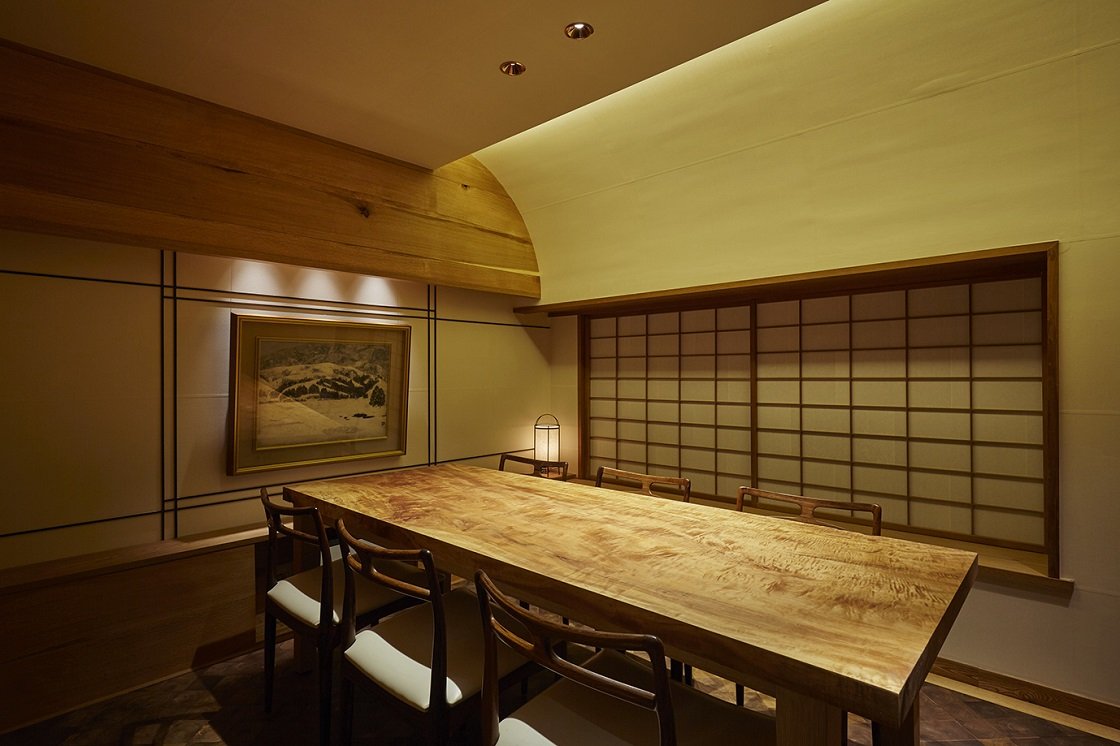
About Fujiya 1935
Fujiya 1935 holds two Michelin stars and eight consecutive years of Tabelog recognition in Osaka, making it a serious option for any considered Japan food itinerary. Chef Tetsuya Fujiwara runs an innovative, Spanish-influenced tasting menu across just ten seats. Lunch at ¥15,000–¥19,999 is the sharper value play; dinner averages closer to ¥50,000 with wine. Booking is extremely difficult — plan well ahead.
Verdict
Fujiya 1935 is one of Osaka's most credentialed fine-dining restaurants and, with two Michelin stars, consistent Tabelog Silver and Bronze recognition across eight consecutive years, and a La Liste score of 83 points in 2026, it earns serious consideration for any dedicated food trip to the Kansai region. But go in with calibrated expectations: this is a ten-seat, intimate kaiseki-adjacent experience with Spanish-influenced technique under chef Tetsuya Fujiwara, not a traditional Japanese dining room. If you want Osaka's most intellectually driven tasting menu at the ¥¥¥¥ tier, book here. If you want kaiseki orthodoxy, Taian or Kashiwaya Osaka Senriyama will serve you better.
About Fujiya 1935
The most common misconception about Fujiya 1935 is that it sits neatly in the kaiseki tradition. It does not. The restaurant's Tabelog categories list it as Innovative and Spanish, and that framing matters. Chef Fujiwara draws on a Japanese sensibility for seasonal precision while working with techniques and aesthetic frameworks that have more in common with contemporary European fine dining than with the Kyoto-style multicourse format many visitors expect when they see "Osaka fine dining" in the same sentence as two Michelin stars. The result is a menu that feels singular within its city, and that distinctiveness is either the main reason to come or the main reason to look elsewhere, depending on what you are after.
The room itself reinforces that sense of deliberate intimacy. Ten seats across the second floor, arranged as three two-seat tables and one private room for four, means the restaurant operates at a scale closer to a chef's table than a conventional dining room. The atmosphere is measured and unhurried rather than buzzy or theatrical. Sound levels stay low. Service is attentive rather than formal. Smart elegance is the stated dress code, and the room reads that way: polished without being stiff. If you are looking for the high-energy dining-room atmosphere that some Osaka restaurants deliver, this is not it. Fujiya 1935 is quiet by design, and the experience is better for it.
Private room accommodates four guests and the restaurant can take up to ten for full-venue private hire, which makes it a plausible option for a small-group celebration or corporate dinner, though availability at that scale will require direct coordination well in advance. A sommelier is on hand and the drink program covers wine and cocktails. Credit cards are accepted across major networks including Visa, Mastercard, JCB, Amex, and Diners. A 10% service charge applies. No parking is available on site, which is standard for this part of central Osaka. The nearest station is Tanimachi 4-chome, approximately five minutes on foot heading west along Honmachi-dori.
Lunch vs. Dinner at Fujiya 1935
This is the most practically important question for anyone planning a visit, and the price difference gives you a clear steer. Lunch at Fujiya 1935 is listed at ¥15,000 to ¥19,999 per person, against a dinner price of ¥30,000 to ¥39,999. Review-based averages on Tabelog push the dinner figure toward ¥50,000 to ¥59,999 when wine pairings and service charges are factored in, which makes the gap between the two sessions substantial.
For an explorer visiting Osaka for the first time and trying to work across multiple restaurants in a short stay, lunch is the stronger strategic choice. You get the same kitchen, the same chef, and the same spatial experience at roughly half the outlay. The service window is narrow at both sessions — the kitchen operates 12:00 to 13:00 for lunch and 18:30 to 21:30 for dinner — so you are not sacrificing a leisurely afternoon by choosing the daytime slot. The lunch experience is simply a more efficient way to calibrate whether the cooking style resonates with you before committing to a full dinner spend on a return visit.
That said, dinner carries weight if this is your one opportunity. The longer service window, wine program, and sommelier presence make the evening format the appropriate choice for a special occasion or when the meal is the centerpiece of the night rather than a prelude to further exploration. For a two-person anniversary dinner, the private room availability at four seats could be requested for a group of two with prior arrangement, though confirmation should be sought directly with the restaurant.
The restaurant is closed on Sundays and on the first and fourth Mondays of each month, so check the schedule carefully when planning around a short trip itinerary. Hours and closure dates can shift, and the venue itself recommends confirming before visiting.
Booking Fujiya 1935
Getting a reservation here is genuinely difficult. With ten seats and a format that lends itself to pre-planned itineraries, demand consistently outpaces availability. Treat this as a near-impossible booking in peak travel periods and plan your Osaka dates around availability rather than the other way around. Check the restaurant's website at fujiya1935.com or call +81-6-6941-2483 directly. Tabelog lists reservations as available through its platform, which is worth using as a secondary channel. Factor the first and fourth Monday closures and Sunday closure into your approach from the start to avoid unnecessary dead ends.
Ratings and Recognition
- Michelin 2 Stars (2024, 2025)
- Tabelog Silver Award: 2019, 2020, 2021, 2022, 2025 , Score 4.26
- Tabelog Bronze Award: 2023, 2024, 2026 , Score 4.24
- La Liste Leading Restaurants 2026: 83 points
- La Liste Leading Restaurants 2025: 85 points
- Opinionated About Dining Japan: Ranked #239 (2024), Highly Recommended (2023)
- Google: 4.5 stars across 233 reviews
Eight consecutive years of Tabelog recognition, with the majority at Silver level, is a strong signal of sustained quality rather than a one-cycle anomaly. For context, Tabelog Silver is a meaningful threshold in Japan's most competitive restaurant market. The slight step down from Silver to Bronze in 2026 is worth noting but does not change the fundamental recommendation. The two Michelin stars, held across at least two consecutive guides, confirm the kitchen operates at a level that warrants serious attention for any visitor building a considered Japan dining itinerary.
Osaka and Beyond
Fujiya 1935 fits naturally into a wider Kansai fine-dining circuit. If you are building a multi-city Japan food trip, comparable innovative formats can be found at Harutaka in Tokyo, Gion Sasaki in Kyoto, and akordu in Nara. Further afield, Goh in Fukuoka and 1000 in Yokohama offer points of comparison in the innovative tasting-menu format. For creative tasting menus in Asia beyond Japan, alla prima in Seoul and Soigné in Seoul are worth considering. Within Osaka's own fine-dining options, our full Osaka restaurants guide covers the broader picture, while our Osaka hotels guide, bars guide, wineries guide, and experiences guide can help structure the rest of your stay.
Within Osaka's innovative fine-dining tier, KAHALA, capi, and Comptoir Feu are worth placing alongside Fujiya 1935 when deciding how to allocate your meal slots. If you are specifically interested in the French-Japanese innovative crossover, HAJIME and La Cime compete directly at the ¥¥¥¥ tier and are covered in our comparison section below.
FAQ
Is Fujiya 1935 good for a special occasion?
- Yes, with some planning. The private room seats four, the service is attentive, and celebrations and surprises are listed as a supported service. Dinner at ¥30,000 to ¥39,999 per person before wine and service charge is a real spend, but the Michelin 2-star credential and eight-year award track record justify it for a milestone occasion. Book as far ahead as possible , availability is extremely limited.
Is Fujiya 1935 good for solo dining?
- The format supports solo visits. At ten seats total, the room is small enough that solo diners do not feel out of place, and the tasting-menu structure means you are not navigating a shared-plates dynamic. Lunch is the more practical solo choice at ¥15,000 to ¥19,999, which keeps the spend manageable for a single cover. The counter-style table arrangement on the second floor suits a solo diner better than a group booking.
What should a first-timer know about Fujiya 1935?
- Understand the format before you arrive: this is an innovative tasting menu with Spanish technique influences, not traditional kaiseki. The room is ten seats, so service is personal but the atmosphere is quiet rather than social. Dinner averages closer to ¥50,000 to ¥59,999 per person once wine is added, per Tabelog review data. Confirm your reservation date against the closure calendar , Sundays and the first and fourth Mondays are closed. Arrive knowing that Fujiya 1935 has held Michelin 2 stars across at least two consecutive guides, which should set the appropriate benchmark for what the kitchen is aiming for.
What should I wear to Fujiya 1935?
- Smart elegance is the stated dress code. In practice, this means business casual at minimum , no casual sportswear or trainers. Given the price point and the intimate room, erring toward formal rather than smart-casual is the safer call. The atmosphere is refined without being stiff, so a jacket for men and equivalent for other guests is appropriate.
Is lunch or dinner better at Fujiya 1935?
- Lunch is the better value proposition at ¥15,000 to ¥19,999 versus ¥30,000 to ¥39,999 for dinner, with review-based averages pushing dinner toward ¥50,000 to ¥59,999 once pairings are included. For a first visit or a tight itinerary, lunch gives you the full kitchen experience at roughly half the cost. Choose dinner if this is a centrepiece occasion, you want the full wine program with sommelier guidance, or you are celebrating something specific , the longer service window and private room availability make the evening format the right call in those scenarios.
Can Fujiya 1935 accommodate groups?
- Groups up to four can use the private room on the second floor. Full private hire of the venue is listed as available, which would cover up to ten guests across all seating. For any group booking, direct contact with the restaurant is necessary , call +81-6-6941-2483 or use the website at fujiya1935.com. Given the booking difficulty at this restaurant, group availability will require significantly more lead time than a standard two-person reservation.
Frequently Asked Questions
Is Fujiya 1935 good for a special occasion?
Yes, with some practical caveats. The restaurant seats only ten people, has a sommelier on staff, and explicitly lists celebrations and surprises as a service offering. A private room for four is available. The smart elegance dress code and 10% service charge set the tone: this is a formal, considered evening. At ¥30,000–¥50,000+ per head for dinner based on reviewer averages, the price matches the occasion.
Is Fujiya 1935 good for solo dining?
It is possible but not the format's natural fit. With only ten seats split across small tables and a private room, solo diners should confirm seating arrangements directly with the restaurant when booking. If solo counter dining is your priority, a traditional Osaka kappo or omakase sushi counter will give you a more interactive experience at a similar price point.
What should a first-timer know about Fujiya 1935?
Fujiya 1935 is not kaiseki. Its Tabelog categories are Innovative and Spanish, and two Michelin stars since at least 2024 confirm this is a restaurant with a clearly defined format rather than a traditional Japanese progression. Dinner runs from around 18:30 and the restaurant is closed Sundays and on the first and fourth Mondays of each month. Budget ¥30,000–¥59,000 per head for dinner including drinks, and confirm your booking well in advance: ten seats fill fast.
What should I wear to Fujiya 1935?
The venue data specifies smart elegance as the dress code. That means no casual clothing: collared shirts or equivalent for men, and equivalent formalwear for women. This is stricter than smart casual and in line with what a two-Michelin-star restaurant at this price level would enforce. When in doubt, dress as you would for a high-end European fine-dining room.
Is lunch or dinner better at Fujiya 1935?
Lunch is the better entry point for first-timers. It runs ¥15,000–¥19,999 per head versus ¥30,000–¥39,999 at dinner (and reviewer averages push dinner closer to ¥50,000+). You get the same two-Michelin-star kitchen at roughly half the price. Dinner makes sense if you want the full pacing of the experience or are marking a specific occasion — the sommelier and private room options are well-suited to evenings.
Can Fujiya 1935 accommodate groups?
The maximum seated party is ten people, which is also the total seat count, so a group of ten would require a full venue buyout. The private room seats four. Groups of two or three get one of the standard tables on the second floor. Parties of five or more should check the venue's official channels before booking: the layout makes mid-sized groups logistically awkward without a private booking arrangement.
Location
2 Chome-4-14 Yariyamachi, Chuo Ward, Osaka, 540-0027, Japan
Osaka, Japan
Also Consider
- HAJIME — French, Innovative, ¥¥¥¥
- La Cime — French, ¥¥¥¥
- Kashiwaya Osaka Senriyama — Japanese, ¥¥¥
- Taian — Kaiseki, Japanese, ¥¥¥
- Sushi Harasho — Sushi, ¥¥¥
At the ¥¥¥¥ tier in Osaka, Fujiya 1935 competes most directly with HAJIME and La Cime. HAJIME sits at the more conceptually ambitious end of the French-innovative spectrum and carries its own Michelin recognition, making it the natural comparison for diners interested in maximalist creative cooking. La Cime leans into a lighter, more precise French idiom and tends to draw stronger comparisons with European fine dining. Fujiya 1935 sits between these two in terms of register: more grounded than HAJIME's high-concept approach, more distinctively Japanese in sensibility than La Cime despite its Spanish technique framework. If you can only choose one ¥¥¥¥ restaurant in Osaka, your preference for Japanese ingredient centrality versus European structural influence should be the deciding factor.
If budget is a consideration, dropping to the ¥¥¥ tier opens up Taian and Kashiwaya Osaka Senriyama for kaiseki, and Sushi Harasho for high-quality sushi. These are meaningfully less expensive and easier to book. If your priority is experiencing traditional Japanese dining formats rather than innovative cross-cultural cuisine, Kashiwaya or Taian will likely deliver a more satisfying result than Fujiya 1935 at a lower price point. Sushi Harasho is the right call if the format rather than the tasting-menu experience is what you are after.
On booking difficulty, all three ¥¥¥¥ Osaka restaurants are hard to secure, but Fujiya 1935's ten-seat room makes it the most constrained of the group by pure capacity. If your travel dates are fixed and you cannot build the itinerary around availability, La Cime or HAJIME may offer slightly more scheduling flexibility simply by virtue of having more covers. The ¥¥¥ options are easier to book across the board. For a visitor to Osaka who has already secured a Fujiya 1935 reservation and wants to add a second fine-dining meal, Taian at the ¥¥¥ tier offers the most complementary contrast in format and price.
Hours
- Monday
- 12–1 pm, 6–8 pm
- Tuesday
- 12–1 pm, 6–8 pm
- Wednesday
- 12–1 pm, 6–8 pm
- Thursday
- 12–1 pm, 6–8 pm
- Friday
- 12–1 pm, 6–8 pm
- Saturday
- 12–1 pm, 6–8 pm
- Sunday
- Closed
Recognized By


Explore Osaka
Save or rate Fujiya 1935 on Pearl
Keep this venue in your Pearl passport, rate it after you visit, and track it alongside every other place you collect.