
Restaurant in Tokyo, Japan
Yotsuya Minemura
450ptsSoba-to-sushi omakase, hard to book.

About Yotsuya Minemura
A Michelin-starred counter kappo in Shinjuku's Arakicho that earns its ¥¥¥¥ price with a genuinely varied omakase arc: soup, sashimi, steamed sushi, and a finale of handmade 100% buckwheat soba. Booking is hard with no listed website or phone — plan through a concierge. The format suits special occasion dinners for two more than group tables.
Verdict: Worth the effort to book, but go in knowing what you're signing up for
Securing a seat at Yotsuya Minemura is hard. This is a small counter kappo in Arakicho, Shinjuku, with a Michelin star earned in 2024 and a Google rating of 4.4 across 37 reviews. It doesn't have a listed phone number or website, which means you're booking through third-party reservation platforms or a concierge who knows the room. If you're planning a special occasion dinner in Tokyo and want something that deviates from a standard omakase sushi format, this is one of the more compelling options at the ¥¥¥¥ tier. Book as early as possible — availability here doesn't sit idle.
The Tasting Menu: A Genuine Arc, Not a Parade of Courses
What separates Yotsuya Minemura from a conventional sushi counter or a kaiseki room is the deliberate structure of its omakase set. The kitchen operates in kappo style, meaning the chef works in open view, and the menu moves across formats rather than staying within one discipline. You move through graceful soup courses and sashimi, then into steamed seafood sushi, before arriving at what is arguably the most distinctive pairing in Tokyo's omakase circuit: a finale of handmade 100% buckwheat soba.
That soba course is not an afterthought. At serious soba establishments across Japan, 100% buckwheat (juwari soba) is a demanding medium — more fragile than blended soba, more expressive of the grain. Ending a multi-course meal with it signals a kitchen that treats soba as a main event, not a filler starch. For diners used to omakase meals that end with tamago or a small sweet, this is a meaningfully different experience.
Then there's the dessert: a rolled omelette executed as a sushi artist would approach it. This is the kind of move that either reads as precious or genuinely clever depending on your tolerance for technique-as-concept. Based on the Michelin recognition and the consistency of the guest ratings, it lands on the right side of that line for most diners.
The overall arc , soup, sashimi, steamed sushi, soba, tamago dessert , covers more ground than a straight sushi omakase and asks more of the diner's attention. If you're coming for a celebratory meal and want variety across a single sitting, this format rewards that expectation. If you want the focused repetition of a 20-piece nigiri progression, Harutaka is a better fit.
The Setting and Occasion Fit
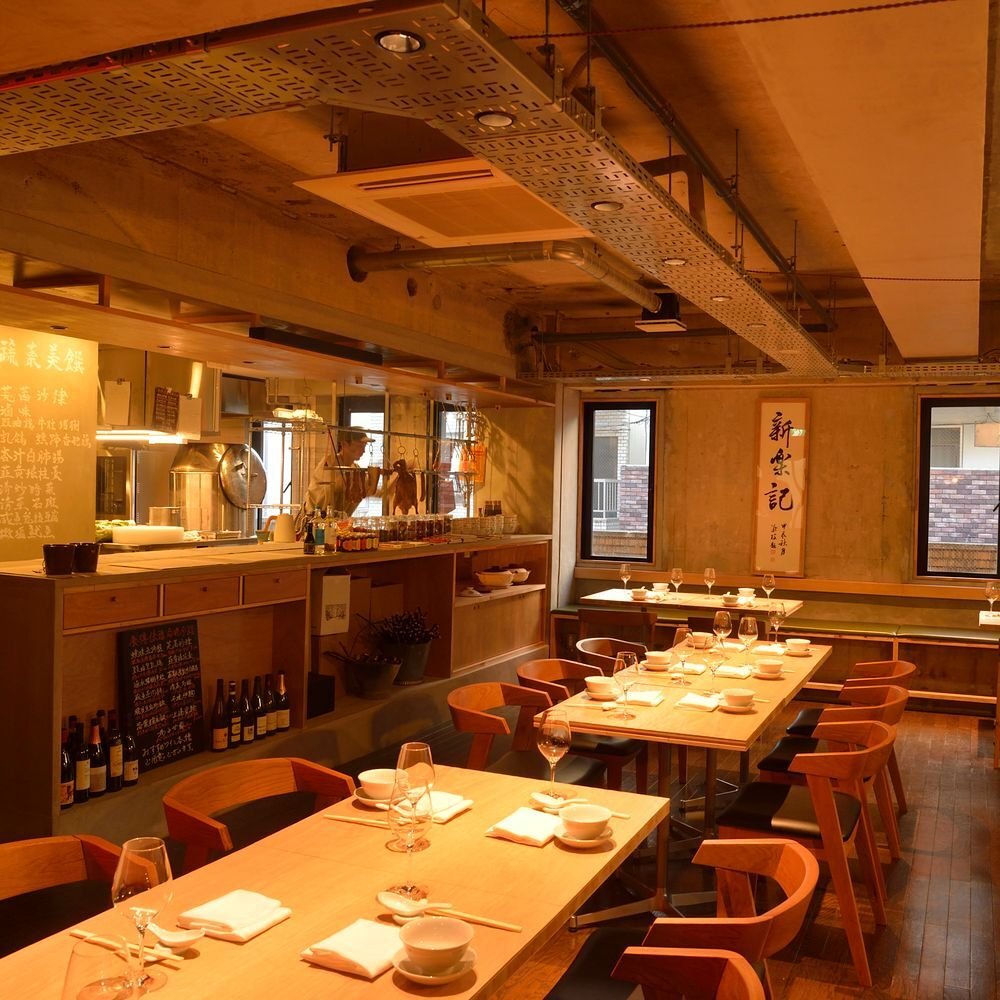
Arakicho is a quiet enclave within Shinjuku, not a tourist pocket. The address in the Nemoto Building, ground floor, suggests a modest exterior with a deliberate interior. Counter kappo rooms in this style are typically 8–12 seats, placing you close to the chef's work , the appropriate setting for a meal built around watching technique unfold. For a date or a celebratory dinner for two, this format works well. For a larger group, a counter of this scale is unlikely to accommodate more than two or three guests together comfortably, and likely won't take groups at all at peak times.
The ¥¥¥¥ price range puts it in the same bracket as Kagurazaka Ishikawa and Azabu Kadowaki, both of which are multiple-Michelin-star kaiseki venues with more established international profiles. Yotsuya Minemura's single star means you're paying comparable prices for a room with less booking friction , relatively speaking , and a more personal scale. That trade-off is worth making if intimacy and format variety matter more to you than prestige.
Booking Reality
There is no website and no published phone number in the public record. Your most reliable paths are a hotel concierge with local connections, Tableall, or Omakase reservation platforms that list Tokyo counter seats. Do not assume you can walk in. Given the Michelin recognition in 2024, demand has almost certainly outpaced the room's modest capacity. Book a minimum of three to four weeks out, and further in advance if you're planning around a fixed travel date.
For more counter dining options in the same neighbourhood tier, Myojaku and Ginza Fukuju are worth considering alongside. For a broader view of what Tokyo's dining scene offers at this level, see our full Tokyo restaurants guide. If you're building a full trip around the meal, our Tokyo hotels guide and Tokyo bars guide will help round out the stay.
For similar counter experiences elsewhere in Japan, Gion Sasaki in Kyoto and HAJIME in Osaka offer comparable investment at the ¥¥¥¥ level. If you want to explore further afield, Goh in Fukuoka and Isshisoden Nakamura in Kyoto are both worth the detour.
Quick reference: Michelin 1 Star (2024) · ¥¥¥¥ · Counter kappo · Omakase format · Arakicho, Shinjuku · Book via concierge or third-party platform · No walk-ins advised.
Compare Yotsuya Minemura
| Venue | Awards | Price | Value |
|---|---|---|---|
| Yotsuya Minemura | The menu at this intimate counter kappo gives free rein to the skills and experience the chef acquired as an apprentice. The omakase set meal is a medley of sushi, soba noodles and other Japanese dishes. Graceful soup dishes and decoratively arranged sashimi are served, then steamed seafood sushi, and the meal ends with handmade 100% buckwheat soba. In an intriguing touch, a rolled omelette, created as a sushi artist would, is served as dessert. Culinary variety to entice any diner.; Michelin 1 Star (2024) | ¥¥¥¥ | — |
| Harutaka | Michelin 3 Star, World's 50 Best | ¥¥¥¥ | — |
| RyuGin | Michelin 3 Star, World's 50 Best | ¥¥¥¥ | — |
| L'Effervescence | Michelin 3 Star, World's 50 Best | ¥¥¥¥ | — |
| HOMMAGE | Michelin 2 Star, World's 50 Best | ¥¥¥¥ | — |
| Florilège | Michelin 2 Star, World's 50 Best | ¥¥¥ | — |
Key differences to consider before you reserve.
Frequently Asked Questions
Can I eat at the bar at Yotsuya Minemura?
Yes — Yotsuya Minemura is a counter kappo, so the bar is essentially the entire dining room. Sitting at the counter is the intended format, not an alternative. This is worth knowing before you book: if you prefer a private table, this is the wrong venue.
What are alternatives to Yotsuya Minemura in Tokyo?
For a more traditional high-end sushi counter, Harutaka in Ginza is the benchmark comparison at a similar price tier. If you want the full kaiseki arc rather than kappo's looser format, RyuGin offers that with a longer track record of international recognition. Yotsuya Minemura sits between those two: more structured than casual kappo, less ceremonial than kaiseki.
Does Yotsuya Minemura handle dietary restrictions?
There is no published policy on dietary restrictions, and as a small counter kappo running a fixed omakase set, the kitchen has limited flexibility by design. Communicate any restrictions at the time of booking — ideally through the concierge or reservation service you use, since there is no public website or phone number. Serious restrictions may make this format a poor fit.
Is Yotsuya Minemura good for solo dining?
This is one of the stronger solo formats in Tokyo. Counter kappo is designed around one-to-one engagement between the chef and each guest, and a single seat is easier to secure than a table for two. At ¥¥¥¥ pricing, you are paying for that proximity — solo diners get the full value of it.
Is the tasting menu worth it at Yotsuya Minemura?
If you want a single omakase that moves from sashimi through steamed seafood sushi and ends with handmade 100% buckwheat soba — plus a rolled omelette served as dessert — the structure here is genuinely different from a standard sushi counter. The Michelin 1 Star awarded in 2024 confirms the kitchen delivers at that price point. If you want a more conventional sushi-only progression, Harutaka is the cleaner choice.
Is Yotsuya Minemura worth the price?
At ¥¥¥¥, it sits at the top of Tokyo's dining price tier. The 2024 Michelin star gives an independent benchmark: the kitchen is operating at a level that justifies the cost. The value case is strongest for diners who specifically want the kappo format — the variety of sushi, soba and sashimi within one meal — rather than depth in a single discipline.
Is Yotsuya Minemura good for a special occasion?
Yes, provided the occasion suits an intimate counter setting rather than a large group dinner. Arakicho is a quiet Shinjuku enclave, and a small kappo counter with a Michelin star and a structured omakase reads as a considered, low-key occasion choice. For groups larger than two or three, the counter format may feel constrained.
Recognized By

More restaurants in Tokyo
- SézanneOccupying the seventh floor of the Four Seasons Hotel Tokyo at Marunouchi, Sézanne earned its first Michelin star within months of opening in July 2021 and now holds three. British chef Daniel Calvert applies French technique to Japanese ingredients, producing a prix-fixe format that Tabelog has recognised with Silver awards every year from 2023 through 2026. It ranked 4th in Asia's 50 Best Restaurants in 2025 and 15th globally in 2024.
- SazenkaSazenka is the address for Chinese cuisine in Tokyo at its most technically demanding. Chef Tomoya Kawada's wakon-kansai approach — Japanese seasonal ingredients applied through Chinese culinary technique — has earned consecutive Tabelog Gold Awards from 2019 to 2026, a #71 ranking on the World's 50 Best 2025, and 99 points from La Liste 2026. At JPY 50,000–59,999 per head, it is one of the hardest tables in the city to book and worth the effort.
- NarisawaNarisawa is Tokyo's most credentialled innovative tasting menu restaurant — two Michelin stars, Asia's 50 Best number 12, and a Tabelog Silver award — running at JPY 80,000–99,999 per head. Book for a milestone occasion, confirm vegetarian or vegan needs in advance, and reserve at least two to three months out. With 15 seats and reservation-only access, this is one of Tokyo's hardest tables to secure.
- FlorilègeFlorilège delivers two Michelin stars and an Asia's 50 Best #17 ranking at a dinner price of ¥22,000 — competitive for Tokyo at this level. Chef Hiroyasu Kawate's plant-forward tasting menus around an open-kitchen counter at Azabudai Hills make this the strongest choice for contemporary French dining in Tokyo if theatrical, produce-led cooking is what you want. Book well in advance; availability is near-impossible at short notice.
- DenDen holds two Michelin stars, a World's 50 Best top-25 Asia ranking, and a Tabelog Silver Award running back to 2017 — and it books out within hours of the two-month reservation window opening. Chef Zaiyu Hasegawa's daily-changing seasonal omakase runs JPY 30,000–39,999 at dinner in a relaxed house-restaurant setting near Gaiemmae. Book by phone only, noon–5 PM JST. Lunch is irregular; plan around dinner.
- MyojakuMyojaku is a 2-Michelin-star, 14-course French-leaning omakase in Nishiazabu holding a 4.47 Tabelog score, Tabelog Silver 2025–2026, and Asia's 50 Best #45 (2025). Chef Hidetoshi Nakamura's water-forward, no-dashi approach shifts meaningfully with the seasons — making timing your reservation as important as getting one. Budget JPY 50,000–59,999 per head plus 10% service charge; reservations only, near-impossible to secure.
Related editorial
- Best Fine Dining Restaurants in ParisFrom three-Michelin-star icons to the next generation of Parisian chefs pushing boundaries, these are the restaurants that define fine dining in the world's culinary capital.
- Best Luxury Hotels in RomeFrom rooftop terraces overlooking ancient ruins to Michelin-starred hotel dining, these are the luxury hotels that make Rome unforgettable.
- Best Cocktail Bars in KyotoFrom sleek lounges to hidden speakeasies, Kyoto's cocktail scene blends Japanese precision with global influence in ways you won't find anywhere else.
Save or rate Yotsuya Minemura on Pearl
Keep this venue in your Pearl passport, rate it after you visit, and track it alongside every other place you collect.