
Restaurant in Tokyo, Japan
Kagurazaka Ishikawa
2,015ptsThree Michelin stars, 25 seats, near-impossible to book.


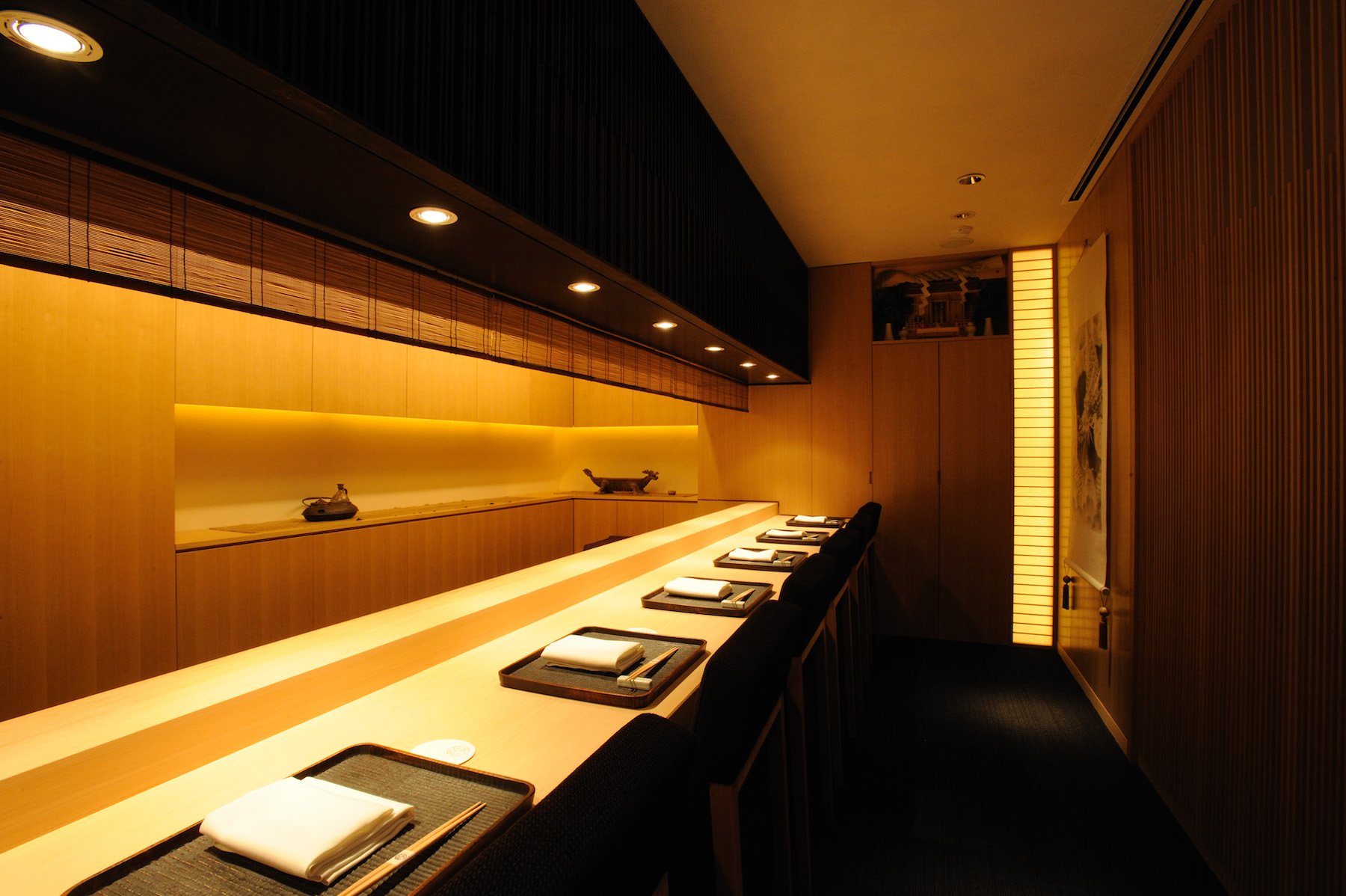
About Kagurazaka Ishikawa
Kagurazaka Ishikawa holds three Michelin stars, a 4.42 Tabelog score, and ten consecutive Tabelog Silver Awards (2017–2026). Chef Hideki Ishikawa's kaiseki in Kagurazaka, Shinjuku runs JPY 50,000–59,999 per head. It is a near-impossible reservation — plan months ahead. The strongest case for booking is a serious, seasonal-driven kaiseki meal in a 25-seat room that has delivered consistent results at the top of Tokyo's Japanese cuisine tier for nearly a decade.
Verdict: Book This If You Have One Kaiseki Meal to Spend in Tokyo
Kagurazaka Ishikawa carries three Michelin stars, a 4.42 Tabelog score, 92 points from La Liste 2026, and a Tabelog Silver Award every year from 2017 through 2026. It ranks 39th in Japan on Opinionated About Dining's 2025 list. That credential stack puts it in the top tier of kaiseki dining in Tokyo, and at JPY 50,000–59,999 per head (plus a 10% service charge), the price confirms it. If classic Japanese cuisine prepared with total commitment to seasonal ingredients is what you are after, book this. If you want something more experimental or shorter in format, look elsewhere.
What Kagurazaka Ishikawa Actually Is
Hideki Ishikawa runs a 25-seat restaurant on the ground floor of a low-rise building on Kagurazaka's quieter back streets in Shinjuku. The room breaks into a 7-seat counter and four private rooms, the largest seating six. The format is kaiseki, the Japanese multi-course structure built around the progression of seasonal ingredients through a meal. Ishikawa's guiding principle is described as mui-shizen: serve what is true to nature, free from artifice. That translates practically to light flavours, clean presentations, and deliberate restraint. His Niigata rice is cooked fresh and served in earthen bowls — a detail that speaks to the sourcing discipline underlying the whole menu.
The seasonal angle here is not decorative. Kaiseki is one of the most calendar-dependent formats in Japanese cooking, and Ishikawa operates within that tradition seriously. Spring menus at this level typically centre on bamboo shoots and mountain vegetables; summer shifts to ayu sweetfish and lighter dashi constructions; autumn brings matsutake and the fatty fish that peak in cooler water; winter is the season for crab, fugu, and the richest broths. The menu you experience in March will be structurally and flavourally different from the one served in October. If you have flexibility in your travel dates and a specific seasonal ingredient in mind, check the time of year before booking. Autumn and winter are generally considered the most rewarding windows for kaiseki of this style, though each season makes a clear case for itself.
For explorers who have been working through Japan's kaiseki canon, Ishikawa's position is worth noting: it sits alongside Azabu Kadowaki and Myojaku in Tokyo's highest tier of Japanese cuisine, and shares a comparable philosophy with Gion Sasaki in Kyoto and Kashiwaya Osaka Senriyama in Osaka — both worth adding to a Japan itinerary built around this format.
Booking: Near Impossible Without Planning
This is a near-impossible reservation. Booking difficulty at Ishikawa sits at the leading of the scale for Tokyo. The restaurant accepts reservations via its own website and by phone (050-3138-5225; for post-booking enquiries, 03-5225-0173), and operates Tuesday through Saturday from 17:00, with closures on Sundays, Mondays, and public holidays. There are also seasonal breaks: late March, mid-August, and the year-end and New Year period. Factor those windows into your planning , arriving in Tokyo in late March expecting to eat here is a viable way to find the restaurant closed. Book as far in advance as your schedule allows. Seats for counter dining open to a small number of international travellers through concierge channels and third-party platforms, but availability is genuinely constrained by the 25-seat format. Do not leave this to the week of arrival.
Private rooms are available for 2, 4, and 6 guests , four rooms seat four, one seats six. For a special occasion where privacy matters, request a room at the time of booking. The counter suits solo travellers and couples willing to eat at the bar; it offers the closest view of the kitchen's rhythm. Children are accepted from age 12, provided they eat the full adult menu. The restaurant is wheelchair accessible. Parking is not available on site, though paid lots are nearby. The nearest transit options are Ushigome-Kagurazaka Station on the Toei Oedo Line (approximately 4 minutes on foot) and Iidabashi Station on the Tokyo Metro Yurakucho and Namboku lines (approximately 4 minutes on foot).
Drink Programme and Payment
Ishikawa takes its sake and wine programmes seriously , Tabelog notes the restaurant as particularly selective on both. Credit cards are accepted (Visa, Mastercard, JCB, Amex, Diners). Electronic money and QR code payments are not. The 10% service charge is added to the bill. BYO is permitted, which is useful for guests travelling with a specific bottle in mind for a significant occasion.
Who Should Book This
Kagurazaka Ishikawa works leading for: food-focused travellers who want a three-Michelin-star kaiseki experience in a neighbourhood setting rather than a hotel dining room; diners who value restraint and ingredient clarity over theatrical presentation; small groups of two to six who want a private room for a milestone dinner; and solo or counter diners who find the format engaging rather than solitary. It is not ideal for large parties (the room caps at six per private booking), guests who want a shorter or more casual format, or anyone unwilling to commit to the price. At JPY 50,000–59,999 per head before service charge, this is a considered spend. But given the credential consistency , ten consecutive Tabelog Silver Awards, three Michelin stars, and a La Liste score that has held at 92–92.5 across two years , the delivery justifies the commitment.
For broader planning across Tokyo, see our full Tokyo restaurants guide, our full Tokyo hotels guide, and our full Tokyo bars guide. If you are building a wider Japan trip around kaiseki, HAJIME in Osaka, akordu in Nara, and Goh in Fukuoka are worth cross-referencing. For Japanese cuisine at the highest level in Kyoto, Isshisoden Nakamura is the direct peer. Further afield, 1000 in Yokohama and 6 in Okinawa offer regional counterpoints to the Tokyo kaiseki format.
Compare Kagurazaka Ishikawa
| Venue | Price | Value |
|---|---|---|
| Kagurazaka Ishikawa | ¥¥¥¥ | — |
| Harutaka | ¥¥¥¥ | — |
| L'Effervescence | ¥¥¥¥ | — |
| RyuGin | ¥¥¥¥ | — |
| HOMMAGE | ¥¥¥¥ | — |
| Crony | ¥¥¥¥ | — |
A quick look at how Kagurazaka Ishikawa measures up.
Frequently Asked Questions
Is Kagurazaka Ishikawa good for solo dining?
Yes, solo diners are well served here. The counter has 7 seats, making it the right format for a single guest — you get a direct sightline into the kitchen and the full kaiseki sequence without the social pressure of a private room. At ¥50,000–¥59,999 per head plus a 10% service charge, it is not a casual solo splurge, but for a food-focused solo traveller with one serious meal to spend in Tokyo, the counter at Ishikawa is a strong call.
Does Kagurazaka Ishikawa handle dietary restrictions?
check the venue's official channels before booking — the reservation line is 050-3138-5225. Kaiseki at this level is ingredient-led and sequenced, so substantial substitutions can compromise the structure of the meal. Children aged 12 and over are accepted on the condition they eat the same menu as adults, which signals the kitchen does not offer alternative menus as a standard practice.
What should a first-timer know about Kagurazaka Ishikawa?
Chef Hideki Ishikawa's guiding philosophy is 'mui-shizen' — cuisine true to nature, without artifice. Presentations are restrained and flavours are light, so if you are expecting bold or visually theatrical plates, recalibrate. The restaurant seats 25 across a 7-seat counter and four private rooms, opens from 17:00, and closes Sundays, Mondays, and public holidays. Budget ¥50,000–¥59,999 per person before drinks and the 10% service charge.
Is Kagurazaka Ishikawa worth the price?
At ¥50,000–¥59,999 per head, Ishikawa sits at the upper end of Tokyo kaiseki pricing — but the credential set justifies it: three Michelin stars, a Tabelog score of 4.42, eight consecutive Tabelog Silver Awards from 2017 through 2026, and 92 points from La Liste 2026. The value case is strongest for guests who specifically want a seasoned, restrained kaiseki chef at the top of their form; if you want a more contemporary or visually driven kaiseki, RyuGin may suit better at a comparable price point.
What are alternatives to Kagurazaka Ishikawa in Tokyo?
RyuGin (Roppongi) offers three Michelin stars with a more modern, technique-forward approach to Japanese cuisine — a useful alternative if Ishikawa's naturalistic restraint is not your format. L'Effervescence is the comparison if you want French fine dining at a comparable commitment level in Tokyo. For a less formal but still serious Japanese meal, HOMMAGE in Tokyo offers a different entry point into high-end Japanese cooking.
Is Kagurazaka Ishikawa good for a special occasion?
It is one of the stronger options in Tokyo for a significant occasion: private rooms accommodate groups of 2, 4, or 6, and the restaurant explicitly supports celebrations and surprises. Three Michelin stars and a neighbourhood setting in Kagurazaka give it weight without the corporate-hotel dining room feel. Book a private room for parties of 4 or more; the counter is better for pairs who want the kitchen interaction.
Recognized By


More restaurants in Tokyo
- SézanneOccupying the seventh floor of the Four Seasons Hotel Tokyo at Marunouchi, Sézanne earned its first Michelin star within months of opening in July 2021 and now holds three. British chef Daniel Calvert applies French technique to Japanese ingredients, producing a prix-fixe format that Tabelog has recognised with Silver awards every year from 2023 through 2026. It ranked 4th in Asia's 50 Best Restaurants in 2025 and 15th globally in 2024.
- SazenkaSazenka is the address for Chinese cuisine in Tokyo at its most technically demanding. Chef Tomoya Kawada's wakon-kansai approach — Japanese seasonal ingredients applied through Chinese culinary technique — has earned consecutive Tabelog Gold Awards from 2019 to 2026, a #71 ranking on the World's 50 Best 2025, and 99 points from La Liste 2026. At JPY 50,000–59,999 per head, it is one of the hardest tables in the city to book and worth the effort.
- NarisawaNarisawa is Tokyo's most credentialled innovative tasting menu restaurant — two Michelin stars, Asia's 50 Best number 12, and a Tabelog Silver award — running at JPY 80,000–99,999 per head. Book for a milestone occasion, confirm vegetarian or vegan needs in advance, and reserve at least two to three months out. With 15 seats and reservation-only access, this is one of Tokyo's hardest tables to secure.
- FlorilègeFlorilège delivers two Michelin stars and an Asia's 50 Best #17 ranking at a dinner price of ¥22,000 — competitive for Tokyo at this level. Chef Hiroyasu Kawate's plant-forward tasting menus around an open-kitchen counter at Azabudai Hills make this the strongest choice for contemporary French dining in Tokyo if theatrical, produce-led cooking is what you want. Book well in advance; availability is near-impossible at short notice.
- DenDen holds two Michelin stars, a World's 50 Best top-25 Asia ranking, and a Tabelog Silver Award running back to 2017 — and it books out within hours of the two-month reservation window opening. Chef Zaiyu Hasegawa's daily-changing seasonal omakase runs JPY 30,000–39,999 at dinner in a relaxed house-restaurant setting near Gaiemmae. Book by phone only, noon–5 PM JST. Lunch is irregular; plan around dinner.
- MyojakuMyojaku is a 2-Michelin-star, 14-course French-leaning omakase in Nishiazabu holding a 4.47 Tabelog score, Tabelog Silver 2025–2026, and Asia's 50 Best #45 (2025). Chef Hidetoshi Nakamura's water-forward, no-dashi approach shifts meaningfully with the seasons — making timing your reservation as important as getting one. Budget JPY 50,000–59,999 per head plus 10% service charge; reservations only, near-impossible to secure.
Related editorial
- Best Fine Dining Restaurants in ParisFrom three-Michelin-star icons to the next generation of Parisian chefs pushing boundaries, these are the restaurants that define fine dining in the world's culinary capital.
- Best Luxury Hotels in RomeFrom rooftop terraces overlooking ancient ruins to Michelin-starred hotel dining, these are the luxury hotels that make Rome unforgettable.
- Best Cocktail Bars in KyotoFrom sleek lounges to hidden speakeasies, Kyoto's cocktail scene blends Japanese precision with global influence in ways you won't find anywhere else.
Save or rate Kagurazaka Ishikawa on Pearl
Keep this venue in your Pearl passport, rate it after you visit, and track it alongside every other place you collect.