
Restaurant in Tokyo, Japan
Yoroniku
770ptsSerious yakiniku, serious commitment required.


About Yoroniku
Yoroniku in Minami-Aoyama is the right booking for a structured, course-driven yakiniku experience in Tokyo. Holding a Tabelog 4.22 score and consistent placement in the Opinionated About Dining Japan Top 50, it runs JPY 15,000–19,999 effective per head at dinner, with private rooms for groups from 2 to 30-plus and an English menu available. Open seven days, dinner only.
Yoroniku, Minami-Aoyama: The Verdict
Yoroniku is the yakiniku booking you should make in Tokyo if the format matters to you as much as the meat itself. This is not a casual BBQ night out. Framed as a "New Generation of Meat Kaiseki," the Minami-Aoyama original has earned a Tabelog score of 4.22, a 2026 Bronze Award, and consistent placement on the Opinionated About Dining Japan Top 50 (ranked #22 in 2023, #28 in 2024, #34 in 2025). At JPY 10,000–14,999 per head (with actual spend often running JPY 15,000–19,999 based on reviews), it sits at the more considered end of Tokyo dining but is priced well below what you would pay at a kaiseki or high-end omakase. For that price, you get a sequenced, course-driven approach to grilled meat — and enough award history dating back to a Tabelog Gold in 2018 to confirm this is not a flash-in-the-pan operation.
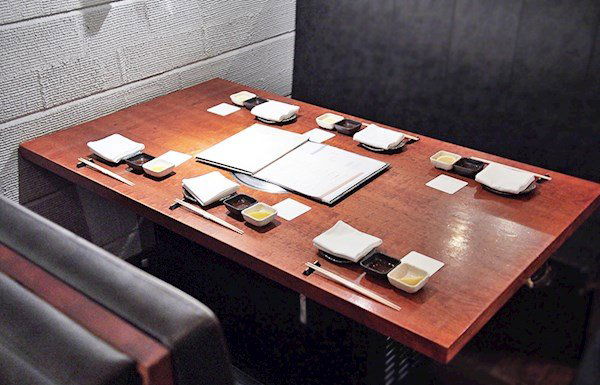
If you have already visited once, the case for a return trip is strong. The 80-seat basement room in the LunaRossa building in Minami-Aoyama has private rooms configured for parties of 2, 4, 6, 8, 10–20, 20–30, and over 30 people, meaning the spatial experience can feel genuinely different depending on how you book. On your first visit, you likely sat where you were placed. On a second visit, request a private room — it changes the atmosphere considerably and makes this more viable as a business dinner or celebration setting. The English menu is available, so returning guests can spend less time decoding and more time deciding.
The drinks program leans into sake, shochu (the team is notably particular about their shochu selection), and wine. If you defaulted to beer on your first visit, a second pass is the right moment to work through the shochu list or ask for a wine pairing recommendation. The 10% service charge is worth noting: it is not optional, so factor it into your budget calculation upfront.
Booking is listed as easy, which makes sense given the 80-seat capacity and open-year-round hours. Walk-ins are not confirmed as available, but online reservations are accepted. The venue opens at 17:00 seven days a week, with no lunch service. If you are planning around a tight Tokyo itinerary, this is a dinner-only commitment with no midday flexibility.
For groups with more than 20 people, Yoroniku accommodates private use of the full space , a practical option that few Tokyo restaurants at this quality level can match. Families with younger children should note that only semi-private room arrangements are supported for children under elementary school age, and strollers are not permitted at the table.
The Yoroniku group now runs multiple locations, including Ebisu Yoroniku (a 2026 Tabelog Silver winner with a 4.26 score, rated marginally higher) and a newer Azabudai Hills outpost. If you cannot get a reservation at the Minami-Aoyama original, Ebisu is the strongest alternative in the same family , and by the numbers, it may actually be the better seat for solo diners or pairs who do not need private room access.
For a wider view of where Yoroniku sits among Tokyo's leading restaurants, see our full Tokyo restaurants guide. Other Tokyo yakiniku worth considering in this range includes Nikusho Horikoshi, Jumbo Hanare, and Kiraku-Tei. For the grilled meat format in other cities, Nikushou in Hong Kong and Gyu-Kaku in Los Angeles offer useful points of comparison. If your Tokyo trip extends to a broader Japan itinerary, note HAJIME in Osaka, Gion Sasaki in Kyoto, akordu in Nara, Goh in Fukuoka, 1000 in Yokohama, and 6 in Okinawa for high-quality dining across the country.
Practical Details
| Detail | Yoroniku (Minami-Aoyama) | Ebisu Yoroniku | Nikusho Horikoshi |
|---|---|---|---|
| Cuisine | Yakiniku / Meat Kaiseki | Yakiniku / Meat Kappo | Yakiniku |
| Average spend (dinner) | JPY 15,000–19,999 | JPY 15,000–19,999 | Not listed |
| Seats | 80 | 58 | Not listed |
| Private rooms | Yes (2–30+) | No | Not listed |
| Hours | Daily 17:00–midnight | Daily 17:00–midnight | Not listed |
| Booking difficulty | Easy | Moderate | Not listed |
| Tabelog Award 2026 | Bronze (4.22) | Silver (4.26) | , |
| English menu | Yes | Not confirmed | Not confirmed |
| Service charge | 10% | 10% | Not listed |
Also in the Aoyama and Minami-Aoyama dining corridor, Cossott'e and Kinryuzan are worth including in your planning. For Tokyo nightlife and pre-dinner drinks, our full Tokyo bars guide covers the leading options nearby. Planning overnight stays? See our full Tokyo hotels guide, and for broader Tokyo planning including wineries and experiences, browse our Tokyo wineries guide and our Tokyo experiences guide.
Ratings at a Glance
- Tabelog Score: 4.22 (2026)
- Tabelog Award: Bronze 2023–2026; Silver 2019–2022; Gold 2018
- Tabelog Yakiniku Tokyo 100: Selected every year 2018–2025
- Opinionated About Dining Japan Leading Restaurants: #34 (2025), #28 (2024), #22 (2023)
- Google Rating: 4.4 (1,411 reviews)
Booking
Online reservations are available and recommended. The venue is open year-round, seven days a week, dinner only from 17:00. For groups of 20 or more, private use of the full space is available , contact the restaurant directly to arrange. The phone number on file is 03-3498-4629. Credit cards accepted include VISA, Mastercard, JCB, AMEX, and Diners. Electronic money and QR code payments are not accepted. Add 10% service charge to your budget estimate.
Compare Yoroniku
Frequently Asked Questions
Does Yoroniku handle dietary restrictions?
The venue offers an English-language menu, which helps communicate needs, but the format is centred on premium beef and tripe. This is not a flexible format for vegetarians or those with significant red-meat restrictions. If dietary needs are a factor, check the venue's official channels before booking — the phone number is 03-3498-4629.
What should a first-timer know about Yoroniku?
Yoroniku frames itself as 'meat kaiseki' rather than casual yakiniku — the pacing and presentation are closer to a tasting menu than a grill-your-own night out. Expect a dinner-only setting (from 17:00), a 10% service charge on top of a ¥10,000–¥19,999 per-person spend, and a Tabelog score of 4.22 that reflects consistently high execution over many years. Book in advance; this is not a walk-in venue.
Is lunch or dinner better at Yoroniku?
Dinner is your only option — Yoroniku operates dinner service only, from 17:00, seven days a week, year-round. There is no lunch service listed in the venue data.
Can Yoroniku accommodate groups?
Yes, and it's genuinely well set up for groups. Private rooms are available for parties of 2 up to 30+, and the venue can be hired exclusively for 20–50 people or parties over 50. With 80 seats total, it's one of the more group-capable high-end yakiniku venues in Tokyo. Book private rooms directly with the restaurant.
What should I order at Yoroniku?
The database does not list specific menu items, so naming dishes would be speculation. What the venue data confirms is that the format spans yakiniku and tripe, positioned as 'meat kaiseki' — a structured, chef-directed progression rather than a carte blanche grill session. Follow the course rather than trying to customise it on a first visit.
Can I eat at the bar at Yoroniku?
The venue data does not confirm a bar counter seating option. Yoroniku's 80-seat space is described as having spacious, relaxing seating with multiple private room configurations, which suggests the layout prioritises table and room dining over counter seating. Confirm directly with the restaurant if a counter position is important to you.
What should I wear to Yoroniku?
No dress code is specified in the venue data, but the context points clearly toward smart dress: private rooms, a 10% service charge, and a per-head spend in the ¥10,000–¥19,999 range put this in the same category as formal Tokyo dining. Treat it like a special-occasion dinner and dress accordingly.
Hours
- Monday
- 5 pm–12 am
- Tuesday
- 5 pm–12 am
- Wednesday
- 5 pm–12 am
- Thursday
- 5 pm–12 am
- Friday
- 5 pm–12 am
- Saturday
- 5 pm–12 am
- Sunday
- 5 pm–12 am
Recognized By


More restaurants in Tokyo
- SézanneOccupying the seventh floor of the Four Seasons Hotel Tokyo at Marunouchi, Sézanne earned its first Michelin star within months of opening in July 2021 and now holds three. British chef Daniel Calvert applies French technique to Japanese ingredients, producing a prix-fixe format that Tabelog has recognised with Silver awards every year from 2023 through 2026. It ranked 4th in Asia's 50 Best Restaurants in 2025 and 15th globally in 2024.
- SazenkaSazenka is the address for Chinese cuisine in Tokyo at its most technically demanding. Chef Tomoya Kawada's wakon-kansai approach — Japanese seasonal ingredients applied through Chinese culinary technique — has earned consecutive Tabelog Gold Awards from 2019 to 2026, a #71 ranking on the World's 50 Best 2025, and 99 points from La Liste 2026. At JPY 50,000–59,999 per head, it is one of the hardest tables in the city to book and worth the effort.
- NarisawaNarisawa is Tokyo's most credentialled innovative tasting menu restaurant — two Michelin stars, Asia's 50 Best number 12, and a Tabelog Silver award — running at JPY 80,000–99,999 per head. Book for a milestone occasion, confirm vegetarian or vegan needs in advance, and reserve at least two to three months out. With 15 seats and reservation-only access, this is one of Tokyo's hardest tables to secure.
- FlorilègeFlorilège delivers two Michelin stars and an Asia's 50 Best #17 ranking at a dinner price of ¥22,000 — competitive for Tokyo at this level. Chef Hiroyasu Kawate's plant-forward tasting menus around an open-kitchen counter at Azabudai Hills make this the strongest choice for contemporary French dining in Tokyo if theatrical, produce-led cooking is what you want. Book well in advance; availability is near-impossible at short notice.
- DenDen holds two Michelin stars, a World's 50 Best top-25 Asia ranking, and a Tabelog Silver Award running back to 2017 — and it books out within hours of the two-month reservation window opening. Chef Zaiyu Hasegawa's daily-changing seasonal omakase runs JPY 30,000–39,999 at dinner in a relaxed house-restaurant setting near Gaiemmae. Book by phone only, noon–5 PM JST. Lunch is irregular; plan around dinner.
- QuintessenceQuintessence is Tokyo's most consistently decorated French restaurant: three Michelin stars held through 2025, a La Liste score of 96.5 points, and a Tabelog Gold run from 2017 to 2024. Dinner runs ¥60,000–¥79,999 all in with wine. Book the first seating (5 PM) well ahead — Near Impossible to secure — and come for classical French cooking executed with sustained precision in a secluded Gotenyama setting.
Similar venues by awards
Related editorial
- Asia's 50 Best Restaurants 2026: The Chairman and Wing Go 1-2 from the Same BuildingThe Chairman takes No. 1 and Wing climbs to No. 2 at Asia's 50 Best Restaurants 2026. Both operate from the same Hong Kong building. Here's what it means.
- Four Seasons Yachts Debut: 95 Suites, 11 Restaurants, and a March 2026 Maiden VoyageFour Seasons I launches March 20, 2026, with 95 suites, a one-to-one staff ratio, and 11 onboard restaurants. Worth tracking if you want hotel-grade service at sea.
- LA Michelin Guide 2026: Seven New Restaurants from Tlayudas to Uzbek DumplingsMichelin's March 2026 California Guide update adds six LA restaurants and one Montecito newcomer, spanning Oaxacan tlayudas, Uzbek manti, and Korean-Italian pasta.
Save or rate Yoroniku on Pearl
Keep this venue in your Pearl passport, rate it after you visit, and track it alongside every other place you collect.