
Restaurant in Tokyo, Japan
Yoroniku Azabudai Hills
495ptsMeat kaiseki that earns its price.


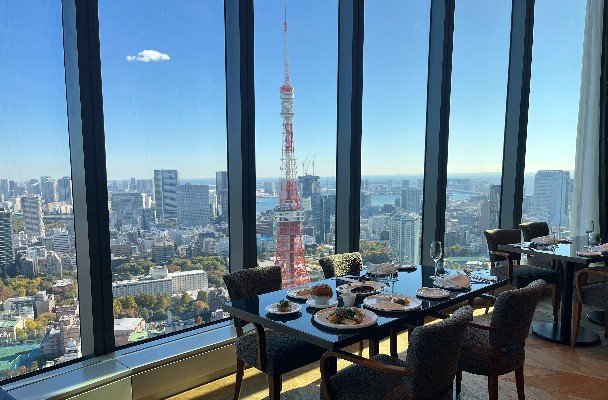
About Yoroniku Azabudai Hills
Yoroniku Azabudai Hills applies kaiseki discipline to Wagyu, sequencing cuts by sourcing and purpose rather than volume. A Tabelog Award 2026 Silver winner with a 4.40 score, it sits at JPY 15,000–19,999 per head and suits business dinners and special occasions. Booking is relatively easy; private rooms are available on request.
Verdict
If you have done a standard yakiniku night in Tokyo and want to understand what the format can actually achieve, Yoroniku Azabudai Hills is the clearest answer in the city right now. This is meat kaiseki, not a grill-at-the-table free-for-all, and the Tabelog Award 2026 Silver (score: 4.40) confirms it is operating at a different level from most yakiniku rooms. At JPY 15,000–19,999 per head for dinner, it sits in the same price band as serious kaiseki, so come with that expectation.
What Makes It Worth Booking
Yoroniku opened at Azabudai Hills in November 2023, a purpose-built luxury development that reset expectations for what a dining address in Minato can look like. The third-floor room seats 48 across a mix of configurations, private rooms included, and the visual experience starts before the food arrives: the setting signals occasion immediately. English-speaking staff and an English menu mean international visitors are not left guessing.
The concept frames Wagyu as a medium for kaiseki-style progression rather than a quantity-driven feast. That framing matters when you are trying to justify a JPY 17,000-ish average spend: the sourcing rigour that kaiseki demands of its seasonal ingredients is applied here to the beef itself. Each cut is chosen for a specific purpose within the sequence, which is exactly the editorial angle that separates Yoroniku from volume-oriented competitors such as Jumbo Hanare or Kiraku-Tei. If you have been once and found the progression coherent, a return visit to track how the sourcing shifts across seasons is a legitimate reason to rebook.
The awards trajectory reinforces confidence: Bronze in 2025, Silver in 2026, and consecutive selection to the Tabelog Yakiniku Tokyo Top 100 in both 2024 and 2025. That is a venue improving, not plateauing. For context on how Yoroniku sits within Tokyo's broader fine-dining picture, see our full Tokyo restaurants guide.
For comparison within the yakiniku tier, Nikusho Horikoshi and Cossott'e offer similar price positioning; Yoroniku's kaiseki structure and Azabudai Hills address give it an edge for business entertaining, which Tabelog reviewers consistently flag as the occasion it suits leading. If you are planning around a special event and want a room that reads as considered rather than flashy, this is the right call. For solo dining the 48-seat room offers flexibility, though the format is designed to reward a two- to four-person group that can share the progression properly.
Thinking beyond Tokyo? The same sourcing-led philosophy appears at different price points and formats across Japan: HAJIME in Osaka and Gion Sasaki in Kyoto each show how ingredient obsession drives a high-end Japanese dining room, even across different cuisines. For the yakiniku format outside Japan, Nikushou in Hong Kong is the closest peer in the region.
Know Before You Go
- Address: Azabudai Hills Tower Plaza 3F, 1-3-1 Azabudai, Minato, Tokyo
- Getting there: Directly connected to Kamiyacho Station (Tokyo Metro Hibiya Line), Exit 5
- Hours: Tuesday–Sunday, 17:00–23:00 (last order 22:00); closed Monday and year-end/New Year holidays
- Dinner price: JPY 15,000–19,999 per head
- Booking difficulty: Easy — reservations available online; book at least one week out for weekends to be safe
- Cancellation: 24–48 hours notice required; late arrivals (15+ minutes) may be treated as no-shows
- Private rooms: Available — request at time of booking
- Seats: 48 total; private use of full venue unavailable
- Payments: Credit cards (Visa, Mastercard, Amex, JCB, UnionPay), IC cards, QR payments (PayPay, WeChat Pay, Alipay)
- Language: English menu and English-speaking staff available
- Smoking: Non-smoking throughout
- Parking: Not available on-site
FAQs
- Is Yoroniku Azabudai Hills good for a special occasion? Yes, and business dinners specifically. Tabelog reviewers consistently recommend it for that occasion. The private rooms, kaiseki-style progression, and Azabudai Hills address create the right register for a celebratory or client dinner without veering into stuffy territory. At JPY 15,000–19,999 per head it is priced like a serious occasion restaurant, so treat it as one.
- How far ahead should I book? Booking is rated Easy, so you do not need months of lead time. One to two weeks out should be sufficient for most weeknights; book two to three weeks ahead for weekend evenings or if you need a private room. Reservations are available online.
- What should a first-timer know? This is a meat kaiseki experience, not an à la carte yakiniku session. Expect a structured sequence of Wagyu cuts rather than a menu you build yourself. Dinner runs JPY 15,000–19,999 per head, English menus and staff are available, and the venue is non-smoking throughout. Arrive on time: 15 minutes late risks being treated as a no-show under their cancellation policy.
- Is it good for solo dining? Possible, but not the ideal format. The kaiseki progression is designed around sharing, and the cost-per-head is the same regardless of group size. Solo diners will get the full experience, but a party of two to four makes better use of the format. If solo yakiniku in Tokyo is the goal, a smaller specialist room may suit better.
- What are the alternatives in Tokyo? Within the yakiniku tier, Nikusho Horikoshi, Jumbo Hanare, and Kiraku-Tei are relevant comparisons at a range of price points. For a kaiseki-format meal that is not centred on beef, RyuGin is the obvious peer. See our full Tokyo guide for broader options, or check bars, hotels, and experiences to plan around the meal.
- What should I order? The menu is a set progression, so ordering choices are limited by design. The structure is the point: each Wagyu cut is sequenced for a reason. Trust the format and do not try to skip courses or substitute freely. If you have been before, pay attention to how the cuts differ from your previous visit , sourcing variation across seasons is where the repeat-visit value lives.
Explore More
Planning further afield? akordu in Nara, Goh in Fukuoka, 1000 in Yokohama, and 6 in Okinawa each offer a version of the sourcing-first philosophy in a different Japanese city. For the yakiniku format in a Western city, Gyu-Kaku in Los Angeles is the accessible end of the spectrum. Also worth exploring: Kinryuzan for a different take on grilled meat in Tokyo, and Tokyo wineries if you want to extend the evening.
Compare Yoroniku Azabudai Hills
| Venue | Cuisine | Price | Booking Difficulty |
|---|---|---|---|
| Yoroniku Azabudai Hills | Yakiniku | Easy | |
| Harutaka | Sushi | ¥¥¥¥ | Unknown |
| L'Effervescence | French | ¥¥¥¥ | Unknown |
| RyuGin | Kaiseki, Japanese | ¥¥¥¥ | Unknown |
| HOMMAGE | Innovtive French, French | ¥¥¥¥ | Unknown |
| Crony | Innovative, French | ¥¥¥¥ | Unknown |
Comparing your options in Tokyo for this tier.
Frequently Asked Questions
Is Yoroniku Azabudai Hills good for a special occasion?
Yes, and the venue data explicitly flags business dining as a primary use case. Private rooms are available, staff are English-speaking, and the meat kaiseki format — priced at ¥15,000–¥19,999 per head — gives the meal structure and occasion weight that a standard yakiniku set does not. The Tabelog Silver 2026 award and a 4.40 score give visiting guests a credible reference point if they need to justify the choice to others.
How far ahead should I book Yoroniku Azabudai Hills?
Book at least two to three weeks out, especially for weekends. Yoroniku opened in November 2023 inside Azabudai Hills, one of Tokyo's highest-profile new dining addresses, and demand has tracked upward since its Tabelog Bronze in 2025 and Silver in 2026. The restaurant seats 48, which helps, but private room requests will narrow availability further. Online reservations are available through Tabelog.
What should a first-timer know about Yoroniku Azabudai Hills?
The format here is meat kaiseki, not a standard cook-your-own yakiniku session — expect a structured progression of Wagyu courses rather than a menu you build yourself. The restaurant is on the 3rd floor of Azabudai Hills Tower Plaza, directly connected to Kamiyacho Station (Hibiya Line, Exit 5). English menus and English-speaking staff are available, so language is not a barrier. Budget ¥15,000–¥19,999 per person for dinner; there is no lunch service.
Is Yoroniku Azabudai Hills good for solo dining?
Possible but not the natural fit here. The 48-seat room and private room availability lean toward couples and small groups, and the business-occasion positioning in the venue data suggests the experience is designed around shared dining. Solo diners will find the format works better at counter-style omakase venues in Tokyo, such as Harutaka, where counter seating is the primary setup.
What are alternatives to Yoroniku Azabudai Hills in Tokyo?
For a different cuisine category at a similar price tier, RyuGin (Japanese tasting menu) and L'Effervescence (French kaiseki) both carry stronger international recognition. If you want to stay in the grilled-meat format but at a lower price point, standard Tabelog 100 yakiniku listings in Minato are worth checking. For a more casual, ingredient-focused dinner, Crony in Tokyo offers a produce-driven approach at a lower price tier.
What should I order at Yoroniku Azabudai Hills?
The menu structure is not documented in the available venue data, so specific dish recommendations cannot be made here. What is confirmed: the kitchen frames itself as exploring the possibilities of Wagyu through a kaiseki format, meaning the progression of cuts and preparations is likely chef-directed rather than freely selectable. Ask staff at booking whether the experience is set-menu only or allows any à la carte choices.
Recognized By


More restaurants in Tokyo
- SazenkaSazenka is the address for Chinese cuisine in Tokyo at its most technically demanding. Chef Tomoya Kawada's wakon-kansai approach — Japanese seasonal ingredients applied through Chinese culinary technique — has earned consecutive Tabelog Gold Awards from 2019 to 2026, a #71 ranking on the World's 50 Best 2025, and 99 points from La Liste 2026. At JPY 50,000–59,999 per head, it is one of the hardest tables in the city to book and worth the effort.
- SézanneOccupying the seventh floor of the Four Seasons Hotel Tokyo at Marunouchi, Sézanne earned its first Michelin star within months of opening in July 2021 and now holds three. British chef Daniel Calvert applies French technique to Japanese ingredients, producing a prix-fixe format that Tabelog has recognised with Silver awards every year from 2023 through 2026. It ranked 4th in Asia's 50 Best Restaurants in 2025 and 15th globally in 2024.
- NarisawaNarisawa is Tokyo's most credentialled innovative tasting menu restaurant — two Michelin stars, Asia's 50 Best number 12, and a Tabelog Silver award — running at JPY 80,000–99,999 per head. Book for a milestone occasion, confirm vegetarian or vegan needs in advance, and reserve at least two to three months out. With 15 seats and reservation-only access, this is one of Tokyo's hardest tables to secure.
- FlorilègeFlorilège delivers two Michelin stars and an Asia's 50 Best #17 ranking at a dinner price of ¥22,000 — competitive for Tokyo at this level. Chef Hiroyasu Kawate's plant-forward tasting menus around an open-kitchen counter at Azabudai Hills make this the strongest choice for contemporary French dining in Tokyo if theatrical, produce-led cooking is what you want. Book well in advance; availability is near-impossible at short notice.
- QuintessenceQuintessence is Tokyo's most consistently decorated French restaurant: three Michelin stars held through 2025, a La Liste score of 96.5 points, and a Tabelog Gold run from 2017 to 2024. Dinner runs ¥60,000–¥79,999 all in with wine. Book the first seating (5 PM) well ahead — Near Impossible to secure — and come for classical French cooking executed with sustained precision in a secluded Gotenyama setting.
- MyojakuMyojaku is a 2-Michelin-star, 14-course French-leaning omakase in Nishiazabu holding a 4.47 Tabelog score, Tabelog Silver 2025–2026, and Asia's 50 Best #45 (2025). Chef Hidetoshi Nakamura's water-forward, no-dashi approach shifts meaningfully with the seasons — making timing your reservation as important as getting one. Budget JPY 50,000–59,999 per head plus 10% service charge; reservations only, near-impossible to secure.
Similar venues by awards
Related editorial
- Asia's 50 Best Restaurants 2026: The Chairman and Wing Go 1-2 from the Same BuildingThe Chairman takes No. 1 and Wing climbs to No. 2 at Asia's 50 Best Restaurants 2026. Both operate from the same Hong Kong building. Here's what it means.
- Four Seasons Yachts Debut: 95 Suites, 11 Restaurants, and a March 2026 Maiden VoyageFour Seasons I launches March 20, 2026, with 95 suites, a one-to-one staff ratio, and 11 onboard restaurants. Worth tracking if you want hotel-grade service at sea.
- LA Michelin Guide 2026: Seven New Restaurants from Tlayudas to Uzbek DumplingsMichelin's March 2026 California Guide update adds six LA restaurants and one Montecito newcomer, spanning Oaxacan tlayudas, Uzbek manti, and Korean-Italian pasta.
Save or rate Yoroniku Azabudai Hills on Pearl
Keep this venue in your Pearl passport, rate it after you visit, and track it alongside every other place you collect.