
Restaurant in Tokyo, Japan
YAKUMO
250ptsBib Gourmand wonton ramen, easy to book.

About YAKUMO
Yakumo's wonton ramen holds a 2024 Michelin Bib Gourmand and a 4.2 Google rating across 1,286 reviews — strong signals for a single-yen neighbourhood counter in Meguro. The Tokusei bowl combines both wonton types with your choice of white dashi, black dashi, or mixed broth. Walk-in format, easy to book, and one of the more accessible Michelin-recognised ramen in Tokyo.
Is Yakumo worth booking for ramen in Tokyo?
Yes — and if you have been once, the answer to returning is even clearer. Yakumo in Meguro earned a Michelin Bib Gourmand in 2024, which in Tokyo's ramen category is a meaningful credential: the Bib Gourmand flags good cooking at a reasonable price, and Yakumo's single-yen price range makes it one of the more accessible Michelin-recognised bowls in the city. The wonton ramen is the reason people come back, and if you left last time without ordering the 'Tokusei' special, that is where to start this visit.
What Yakumo actually delivers
The menu is built around a single strong idea: wonton ramen with two distinct wonton types — one pork parcel sharpened with ginger, one shrimp wonton cooked for texture , served in a broth you choose yourself. That broth choice is the decision that shapes your bowl. White dashi, made with white soy sauce, runs cleaner and lighter; black dashi, built on dark soy, carries more depth and richness. The third option, 'Mix', splits the difference. You also choose between thin noodles and flat. For a first return visit, the Mix broth with flat noodles alongside the Tokusei gives you the widest read on what the kitchen does well.
The kitchen at Yakumo sits in Higashiyama, Meguro City , a quieter residential part of Tokyo compared to the high-traffic ramen corridors of Shinjuku or Shibuya. That geography matters. The walk from the nearest station takes you past neighbourhood bakeries and small coffee shops, and the air carries the kind of low-level roasting and stock-simmering warmth that signals you are moving toward a working kitchen rather than a dining destination designed for foot traffic. The room reflects the same register: this is a local spot that happens to hold a Michelin recognition, not a venue that has rearranged itself around that recognition.
At a ¥ price point, Yakumo sits in the same tier as Tokyo's everyday ramen counters, which makes the Bib Gourmand signal more useful than usual. The award is not elevating the price , it is confirming that the quality at this price tier is verifiably above average. For a returning visitor looking to go deeper, the customisation structure (broth type, noodle width, wonton combination) means there is genuine reason to order differently each visit rather than defaulting to the same bowl.
Groups and the main room
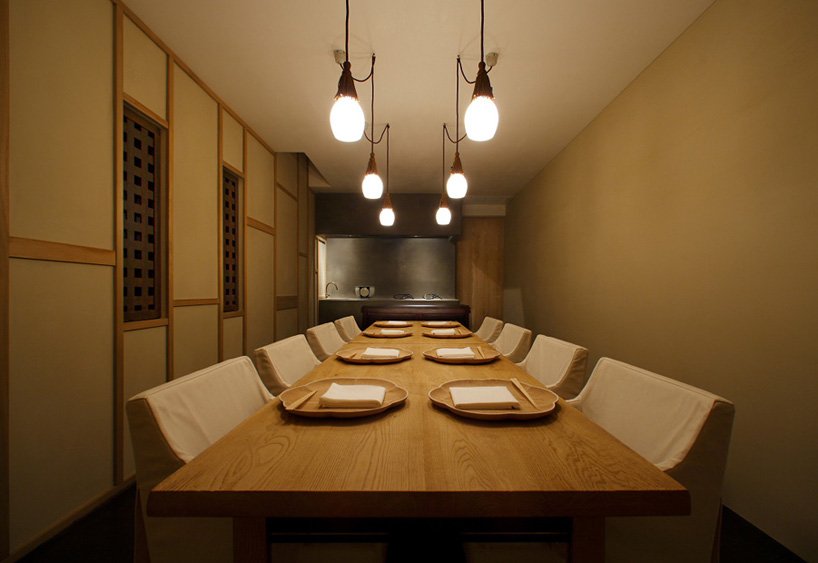
Yakumo's format is a counter-and-table neighbourhood ramen shop, which shapes how groups should think about it. The venue does not appear to offer a private dining room or separated group space, so parties arriving together will be seated in the main room alongside solo diners and pairs. For groups of two or three, this is a non-issue: ramen shops in Tokyo routinely handle small groups efficiently, and the short menu and clear ordering structure keep things moving. Larger groups , four or more , should think carefully. A neighbourhood ramen counter in Meguro is not built around group pacing. Everyone orders individually, bowls arrive when ready, and there is no table-sharing dynamic that keeps a group in sync the way a shared-plates format would. If group cohesion and a shared experience matter more than the bowl itself, a venue with a private dining option will serve that need better. If the group is simply hungry and wants good ramen at a low price point, Yakumo handles it fine , just arrive with realistic expectations about the setting.
For solo diners, Yakumo is close to the ideal format. Counter seating, a focused menu, and a quick service rhythm mean you are in and out efficiently without the social friction of occupying a table alone. The Google rating of 4.2 across 1,286 reviews suggests consistent execution rather than a venue that peaks on certain nights and drops on others , useful data when you are planning a solo lunch with limited time.
How it compares to other Tokyo ramen worth knowing
Yakumo sits in a specific part of the Tokyo ramen spectrum: Michelin-recognised, wonton-focused, with a customisable broth structure. For comparison, Afuri in Tokyo is better known internationally and runs a lighter yuzu shio style that suits different preferences , go there if you want a cleaner, more citrus-forward bowl. Chukasoba Ginza Hachigou and Chukasoba KOTETSU are worth knowing if you are moving through different ramen styles across the city. Fuunji covers tsukemen if dipping noodles are more your current interest. Yakumo's specific advantage is the wonton combination and the broth customisation at a single-yen price point , that combination is not something every shop in the city replicates.
If your Tokyo trip is taking you beyond the capital, the Michelin-recognised ramen and noodle category extends across Japan. HAJIME in Osaka and Gion Sasaki in Kyoto cover different cuisine registers if you are building a wider itinerary. For ramen reference points further afield, Afuri Ramen in Portland and Akahoshi Ramen in Chicago show how the form translates internationally. Our full Tokyo restaurants guide covers the broader dining picture, and if you are building out the rest of a trip, the Tokyo hotels guide, Tokyo bars guide, and Tokyo experiences guide are worth checking alongside it.
Booking and logistics
Booking difficulty is rated Easy. Yakumo is a neighbourhood ramen shop rather than a reservation-driven restaurant, which means walk-ins are the expected format. The address is in Higashiyama, Meguro City , 3 Chome-6-15, Ebiya Building 1F , accessible from the Meguro or Nakameguro station areas. Arrive during standard lunch or dinner service windows; peak hours will see a short queue. Phone and website details are not available in the current record, so checking Google Maps for current hours before visiting is the practical move, particularly if you are combining this with other stops in Meguro. At this price tier, a brief wait is part of the format and does not change the value calculation.
For broader context on what else is worth eating in the neighbourhood and city, Chuogo Hanten Mita covers a different Chinese-influenced register nearby, and 1000 in Yokohama is a short trip out of the city if your itinerary extends that far.
Compare YAKUMO
Frequently Asked Questions
Is YAKUMO good for solo dining?
Yes — Yakumo's counter-and-table neighbourhood format suits solo diners well. You can walk in, choose your broth (white dashi, black dashi, or mixed) and noodle style, and be eating within minutes. For solo ramen in Tokyo on a budget, a Michelin Bib Gourmand spot at ¥-level pricing is a strong call.
What should a first-timer know about YAKUMO?
Order the Tokusei ramen to get both wonton types — the pork-ginger parcel and the shrimp wonton — in a single bowl. Then decide between white dashi (lighter, white soy), black dashi (richer, dark soy), or a mix of the two, and pick thin or flat noodles. Booking is rated Easy, so walk-ins are the standard approach rather than the exception.
Can YAKUMO accommodate groups?
Small groups of two to four should be fine at a neighbourhood ramen shop of this format, but Yakumo does not appear to offer a private dining option. Larger groups should plan for a potential wait or consider splitting into smaller tables. If a private room is a requirement, RyuGin or L'Effervescence in Tokyo are better-suited options.
Does YAKUMO handle dietary restrictions?
The menu is built around pork and shrimp wontons in soy-based broths, so strict vegetarian, vegan, or shellfish-allergy diners will find limited flexibility. Specific allergen or substitution policies are not documented in available venue data, so check the venue's official channels before visiting if this is a concern.
Recognized By

More restaurants in Tokyo
- SézanneOccupying the seventh floor of the Four Seasons Hotel Tokyo at Marunouchi, Sézanne earned its first Michelin star within months of opening in July 2021 and now holds three. British chef Daniel Calvert applies French technique to Japanese ingredients, producing a prix-fixe format that Tabelog has recognised with Silver awards every year from 2023 through 2026. It ranked 4th in Asia's 50 Best Restaurants in 2025 and 15th globally in 2024.
- SazenkaSazenka is the address for Chinese cuisine in Tokyo at its most technically demanding. Chef Tomoya Kawada's wakon-kansai approach — Japanese seasonal ingredients applied through Chinese culinary technique — has earned consecutive Tabelog Gold Awards from 2019 to 2026, a #71 ranking on the World's 50 Best 2025, and 99 points from La Liste 2026. At JPY 50,000–59,999 per head, it is one of the hardest tables in the city to book and worth the effort.
- NarisawaNarisawa is Tokyo's most credentialled innovative tasting menu restaurant — two Michelin stars, Asia's 50 Best number 12, and a Tabelog Silver award — running at JPY 80,000–99,999 per head. Book for a milestone occasion, confirm vegetarian or vegan needs in advance, and reserve at least two to three months out. With 15 seats and reservation-only access, this is one of Tokyo's hardest tables to secure.
- FlorilègeFlorilège delivers two Michelin stars and an Asia's 50 Best #17 ranking at a dinner price of ¥22,000 — competitive for Tokyo at this level. Chef Hiroyasu Kawate's plant-forward tasting menus around an open-kitchen counter at Azabudai Hills make this the strongest choice for contemporary French dining in Tokyo if theatrical, produce-led cooking is what you want. Book well in advance; availability is near-impossible at short notice.
- DenDen holds two Michelin stars, a World's 50 Best top-25 Asia ranking, and a Tabelog Silver Award running back to 2017 — and it books out within hours of the two-month reservation window opening. Chef Zaiyu Hasegawa's daily-changing seasonal omakase runs JPY 30,000–39,999 at dinner in a relaxed house-restaurant setting near Gaiemmae. Book by phone only, noon–5 PM JST. Lunch is irregular; plan around dinner.
- MyojakuMyojaku is a 2-Michelin-star, 14-course French-leaning omakase in Nishiazabu holding a 4.47 Tabelog score, Tabelog Silver 2025–2026, and Asia's 50 Best #45 (2025). Chef Hidetoshi Nakamura's water-forward, no-dashi approach shifts meaningfully with the seasons — making timing your reservation as important as getting one. Budget JPY 50,000–59,999 per head plus 10% service charge; reservations only, near-impossible to secure.
Related editorial
- Best Fine Dining Restaurants in ParisFrom three-Michelin-star icons to the next generation of Parisian chefs pushing boundaries, these are the restaurants that define fine dining in the world's culinary capital.
- Best Luxury Hotels in RomeFrom rooftop terraces overlooking ancient ruins to Michelin-starred hotel dining, these are the luxury hotels that make Rome unforgettable.
- Best Cocktail Bars in KyotoFrom sleek lounges to hidden speakeasies, Kyoto's cocktail scene blends Japanese precision with global influence in ways you won't find anywhere else.
Save or rate YAKUMO on Pearl
Keep this venue in your Pearl passport, rate it after you visit, and track it alongside every other place you collect.