
Restaurant in Osaka, Japan
Yakitori Matsuoka
290ptsCreative yakitori, easy to book, high reward.

About Yakitori Matsuoka
Yakitori Matsuoka in Osaka's Chuo Ward holds two consecutive Michelin Plates (2024–2025) for a reason: chef Hiroki Matsuoka works with aged Kagoshima free-range chicken and a house-prepared fragrant oil that genuinely sets this apart from the standard yakitori format. At the ¥¥¥ tier, the structured menu running from skewers through chicken stews to earthenware pot rice justifies the spend for food-focused visitors. Booking is rated easy by Japanese counter standards.
Verdict
If you are planning a serious yakitori dinner in Osaka, Yakitori Matsuoka in Chuo Ward earns its place on your shortlist. Chef Hiroki Matsuoka works with free-range chickens sourced from Kagoshima, ages the birds to concentrate flavour, and brushes skewers with a house-prepared fragrant oil that immediately separates this kitchen from the standard salt-and-tare binary. Two consecutive Michelin Plates (2024 and 2025) confirm the recognition is not accidental. At the ¥¥¥ price tier, it sits in a range where the cooking has to justify the spend, and on balance it does. Book here if you want a chef-driven yakitori experience with genuine technical curiosity behind it. If you want a more casual, lower-commitment yakitori evening, look at Yakitori Torisen or Ayamuya instead.
The Restaurant
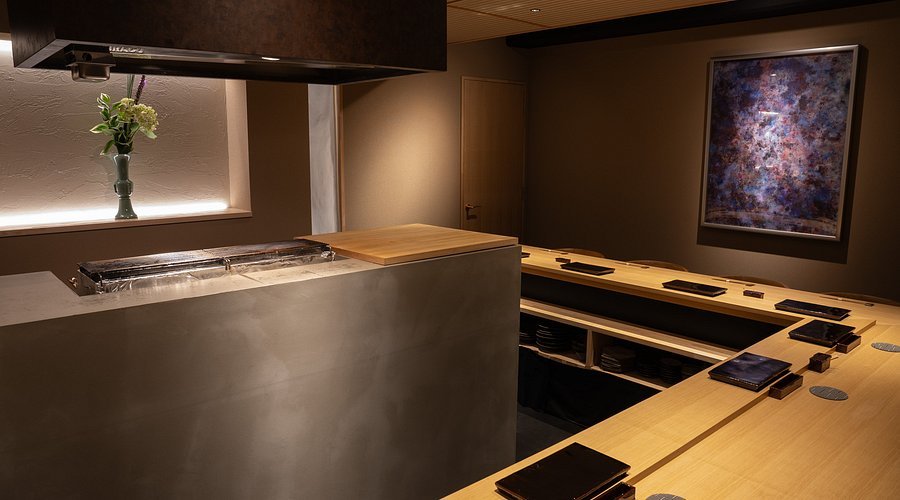
The atmosphere at Yakitori Matsuoka is intimate and counter-focused. The energy in a small yakitori room like this one runs on the smell of binchōtan smoke and the rhythm of the chef working the grill a metre in front of you. That proximity is part of the experience: watching Matsuoka apply his house oil, pace the skewers, and manage the heat is not incidental entertainment, it is what makes the evening work. The room is quiet enough for conversation earlier in the evening, though the enclosed space and live charcoal mean the ambient warmth builds as the meal progresses.
The menu structure gives the kitchen room to move. Skewers form the backbone, but the programme intersperses them with chicken-centric preparations including stews and soups, so the meal has a narrative arc rather than feeling like a parade of identical courses. It closes with rice cooked in earthenware pots or ramen in chicken broth, which is a more considered finish than the abrupt endings common at grill-focused counters. For the food-focused traveller, that structural intelligence is worth registering before you book.
Kagoshima free-range chicken is central to understanding what Matsuoka is doing. Kagoshima's poultry producers have a long reputation for birds raised with room to move and a diet that produces meat with more depth than commodity chicken. The ageing process the chef applies draws out that base flavour further, which means the skewers carry more weight without requiring heavy saucing. The proprietary fragrant oil he brushes onto the yakitori is the move that gives the cooking its own signature — it is not something you will encounter at Ichimatsu or Torisho Ishii, both of which operate in a more traditional register.
Seasonal Considerations
Yakitori format means the seasonal angle is driven primarily by the chicken sourcing and the auxiliary dishes rather than the grill itself. Free-range birds from Kagoshima will vary in character across the year as the birds' diet and activity patterns shift with the seasons — autumn and winter birds tend to carry more fat and produce richer, more concentrated skewers, which pairs well with the earthenware rice finish that closes the meal. Summer visits are perfectly valid, but the enclosed charcoal environment becomes noticeably warmer, which is worth considering when you choose your seat if options are offered. The stews and soups that appear between skewers are likely more present and more substantial in the colder months, making an autumn or winter visit the stronger recommendation for the full breadth of the menu.
If you are coordinating a Japan trip around serious eating, Osaka's restaurant calendar between October and February gives you the most from counter-focused, ingredient-driven kitchens at this price tier. That applies equally here and at comparable venues across the city. For broader Osaka restaurant planning, see our full Osaka restaurants guide.
Booking and Practical Details
Booking difficulty is rated easy, which is a meaningful advantage over comparable Michelin-recognised counters in Japan where reservations are a month-long project. The address in Chuo Ward , 1 Chome-4-17 Tohei, in the Uemachidai Yoshizumi Heights building, unit 102 , puts it in a residential-adjacent pocket of central Osaka rather than a high-visibility dining strip, so plan your navigation in advance. No website or phone number is in the public database, which suggests reservations may be handled through a Japanese-language booking platform or in person. If you are visiting from outside Japan, ask your hotel concierge to assist with the booking, which is standard practice for smaller counter restaurants in this part of Osaka. Hours are not confirmed in the public record, so verify before you travel. Google reviewers rate it 4.7 across 80 reviews, which is a solid signal for a counter-format restaurant where each seat matters.
For travellers building a full Osaka itinerary around the food, Pearl also covers hotels, bars, experiences, and wineries in the city. If yakitori is your focus across the Kansai region, Torisaki in Kyoto is the natural comparison point, and Yakitori Omino in Tokyo sets the national benchmark for the format. For broader Japan restaurant exploration beyond Osaka, Pearl covers Harutaka in Tokyo, Gion Sasaki in Kyoto, akordu in Nara, Goh in Fukuoka, 1000 in Yokohama, and 6 in Okinawa.
Pearl Picks Nearby
- Ichimatsu , For a more traditional yakitori register in Osaka
- Torisho Ishii , Comparable counter format, different stylistic approach
- Yakitori Torisen , Lower price commitment, good for a casual yakitori evening
- Ayamuya , Alternative for those who want less ceremony
- Ishii , Worth knowing if your Osaka dining budget is flexible upward
FAQs
What should a first-timer know about Yakitori Matsuoka?
- This is a chef-driven counter where the meal follows a set progression , skewers interspersed with chicken stews, soups, and a rice or ramen finish. Come with an appetite for the full sequence rather than planning to eat selectively.
- The address is in a residential building in Chuo Ward, not a restaurant row, so locate it on a map before you go.
- Booking is rated easy relative to Michelin-recognised counters in Japan, but the process may require Japanese-language assistance. Ask your hotel concierge if you are visiting from abroad.
- The ¥¥¥ price tier means this is a considered spend, not a casual drop-in. Plan it as a main event dinner, not a warm-up.
Is Yakitori Matsuoka good for a special occasion?
- Yes, but with a caveat on format. The counter setting and progressive menu make it well-suited for a two-person special occasion dinner where the shared experience of watching the chef work is part of the evening.
- For larger groups celebrating a milestone, the intimate size may be a constraint. In that case, compare with Kashiwaya Osaka Senriyama, which operates in a more private-room-compatible format at the same ¥¥¥ tier.
- The Michelin Plate recognition and the distinctive Kagoshima chicken sourcing give the meal enough narrative to make it feel occasion-worthy for food-focused diners.
What should I order at Yakitori Matsuoka?
- The kitchen sets the structure, so the honest answer is: let the menu run. The chef's proprietary fragrant oil is applied across the skewers, so trying to skip courses would undercut the intended arc.
- Pay particular attention to the earthenware pot rice at the close of the meal , it is a deliberate finishing note and worth staying engaged for rather than treating as an afterthought.
- If the stews and soups are offered as optional additions, take them. They are part of what separates Matsuoka's programme from a standard yakitori format.
Can I eat at the bar at Yakitori Matsuoka?
- Counter seating is the standard format at small yakitori restaurants in Japan of this type, so the bar is likely the primary dining position rather than an alternative option.
- Seat count is not confirmed in the public record, but counter-format yakitori restaurants in Osaka at this price tier typically run 8-14 seats. Expect an intimate room.
Is Yakitori Matsuoka worth the price?
- At ¥¥¥, yes , provided you engage with the full menu structure. The Kagoshima free-range sourcing, the ageing process, the house oil, and the stew-and-soup interludes are not add-ons, they are what justifies the price over a lower-tier yakitori option.
- If you want a comparison point: at the same price tier, Taian gives you kaiseki depth, while Matsuoka gives you the focused intensity of a single-ingredient kitchen. The value case depends on which format resonates with you.
- Two consecutive Michelin Plates signal consistent quality rather than a one-year aberration, which adds confidence to the spend.
What are alternatives to Yakitori Matsuoka in Osaka?
- Ichimatsu and Torisho Ishii are the natural yakitori comparisons in Osaka, both operating at counter level with serious chicken focus.
- For a lower price commitment and a less structured evening, Ayamuya or Yakitori Torisen are the practical alternatives.
- If the budget flexes upward and you want to compare against Osaka's broader fine dining tier, HAJIME and La Cime operate at ¥¥¥¥ and offer a different format entirely.
Is the tasting menu worth it at Yakitori Matsuoka?
- The menu at Matsuoka is structured as a progression rather than a strict tasting menu with named courses, but the effect is similar , the chef controls the sequence and the pacing.
- Given that the fragrant oil, the Kagoshima chicken, and the earthenware rice finish are all integrated into that progression, trying to treat it as a pick-and-choose format would miss the point. Commit to the full run.
- At ¥¥¥, the value is there if you engage fully. If you are looking for a venue where you can eat more selectively, this is not the right choice.
Compare Yakitori Matsuoka
| Venue | Cuisine | Awards | Booking Difficulty | Value |
|---|---|---|---|---|
| Yakitori Matsuoka | Yakitori | Cuisine rich with the fertile imagination of Hiroki Matsuoka expresses a spirit of relentless curiosity. Free-range chickens from Kagoshima are aged to draw out their flavour. In addition to the usual salt and sauce, the chef brushes yakitori with a fragrant oil he prepares himself. The menu intersperses skewers with chicken items such as stews and soups. Meals wrap up with rice served in earthenware pots or ramen in chicken broth. Admiring the chef’s skill and forwards-looking imagination is part of the fun.; Michelin Plate (2025); Michelin Plate (2024) | Easy | — |
| HAJIME | French, Innovative | Michelin 3 Star, World's 50 Best | Unknown | — |
| La Cime | French | Michelin 2 Star, World's 50 Best | Unknown | — |
| Kashiwaya Osaka Senriyama | Japanese | Michelin 3 Star | Unknown | — |
| Taian | Kaiseki, Japanese | Michelin 3 Star | Unknown | — |
| Fujiya 1935 | Innovative | Michelin 2 Star | Unknown | — |
A quick look at how Yakitori Matsuoka measures up.
Frequently Asked Questions
What should a first-timer know about Yakitori Matsuoka?
This is not a standard yakitori-bar experience. Chef Hiroki Matsuoka intersperses skewers with stews, soups, and closes meals with earthenware-pot rice or chicken-broth ramen, so expect a structured progression rather than an à la carte grill session. The restaurant holds a Michelin Plate (2025), which signals consistent quality without the reservation pressure of a starred venue. Come hungry and with time to spare — the format rewards those who let the meal unfold.
Is Yakitori Matsuoka good for a special occasion?
Yes, with the right expectations. The counter setting and chef-driven format make it personal enough for a celebratory dinner, and the ¥¥¥ price point signals this is a considered outing rather than a casual grill stop. It works well for two people who want a focused, inventive meal over a longer sitting. For large group celebrations or a purely festive atmosphere, it is probably not the right fit — a smaller, counter-focused room rewards conversation and attention to the food.
What should I order at Yakitori Matsuoka?
The menu is chef-led, so ordering is largely handled for you. The distinguishing element here is Matsuoka's house-prepared fragrant oil, which sits alongside the standard salt and tare options — pay attention to how it changes across different cuts. The Kagoshima free-range chicken is aged specifically to concentrate flavour, so do not skip any skewer assuming it will be repetitive. The closing rice or ramen course is worth saving room for.
Can I eat at the bar at Yakitori Matsuoka?
The counter is the format here — Yakitori Matsuoka operates as a counter-focused room, so eating at the bar is essentially the standard dining experience. There is no separate dining room to request instead. If you prefer not to interact with the kitchen or watch the grill, this format may not suit you, but for most guests the counter is the point.
Is Yakitori Matsuoka worth the price?
At ¥¥¥, Yakitori Matsuoka sits above casual yakitori bars but well below Osaka's starred omakase restaurants. Given the Michelin Plate recognition, aged Kagoshima chicken, and a menu that goes beyond skewers into soups, stews, and a proper closing course, the value case is solid. If you are comparing it to a conveyor-belt or standing yakitori bar, the gap is significant. If you are comparing it to a Michelin-starred counter like Hajime or Kashiwaya, the experience is narrower in scope but far more accessible to book.
What are alternatives to Yakitori Matsuoka in Osaka?
For a more expansive tasting menu in Osaka, La Cime (French-Japanese, two Michelin stars) and Fujiya 1935 offer a completely different register at a higher price point. Taian delivers kaiseki-level precision if you want to stay within Japanese tradition. If yakitori specifically is your goal, Matsuoka is among the few in Osaka with Michelin recognition, which narrows the field considerably. For those who want a high-low contrast on the same trip, pair Matsuoka with a casual izakaya and skip the overlap with starred kaiseki.
Is the tasting menu worth it at Yakitori Matsuoka?
The structured meal format — skewers followed by chicken stews or soups, closing with earthenware rice or ramen — functions as a de facto tasting menu, and it is the way Matsuoka intends the restaurant to be experienced. If you are hoping to cherry-pick a few skewers and leave early, this is probably not the right venue. For guests who want to see how far a single ingredient (free-range Kagoshima chicken) can be taken across a full meal, the progression justifies the ¥¥¥ spend.
Recognized By

More restaurants in Osaka
- La CimeLa Cime holds 2 Michelin stars and ranked #8 in Asia's 50 Best Restaurants in 2025, making it Osaka's most decorated French restaurant. Chef Yusuke Takada's tasting menus apply classical French technique to ingredients from western Japan and his native Amami Oshima. Budget ¥40,000–¥79,999 per person; reservation only, book weeks in advance.
- HAJIMEHAJIME holds three Michelin stars and scores 94 points on La Liste 2026, making it one of Japan's most credentialed restaurants. Chef Hajime Yoneda's nature-philosophy tasting menus run JPY 80,000–100,000 per person before the 15% service charge. Book months ahead — this is a near-impossible reservation open Tuesday through Saturday only.
Similar venues by awards
Related editorial
- Best Fine Dining Restaurants in ParisFrom three-Michelin-star icons to the next generation of Parisian chefs pushing boundaries, these are the restaurants that define fine dining in the world's culinary capital.
- Best Luxury Hotels in RomeFrom rooftop terraces overlooking ancient ruins to Michelin-starred hotel dining, these are the luxury hotels that make Rome unforgettable.
- Best Cocktail Bars in KyotoFrom sleek lounges to hidden speakeasies, Kyoto's cocktail scene blends Japanese precision with global influence in ways you won't find anywhere else.
Save or rate Yakitori Matsuoka on Pearl
Keep this venue in your Pearl passport, rate it after you visit, and track it alongside every other place you collect.