
Restaurant in Singapore, Singapore
Sushi Hare
310Pearl PointsMichelin-noted counter worth booking now.

.png?width=72&height=72&quality=80)
About Sushi Hare
Sushi Hare is a Michelin Plate-recognised counter sushi destination in Singapore's CBD, backed by Opinionated About Dining's Asia Top 250 in both 2024 and 2025. Chef Motoharu Inazuka delivers precision Japanese cuisine at the $$$ tier — credentialed enough to justify the spend, approachable enough for repeat visits. Book two to three weeks ahead for best availability.
The Verdict on Sushi Hare
At the $$$ price point, Sushi Hare earns its place as one of Singapore's more considered sushi destinations. Chef Motoharu Inazuka runs a tight operation at 14 Stanley Street, and the results are backed by a Michelin Plate (2025) and back-to-back recognition from Opinionated About Dining's Asia rankings — #209 in 2024, climbing to #237 in 2025 (the ranking expanded significantly that year, making the continued inclusion meaningful). A 4.9 Google rating across 60 reviews is unusually consistent for a sushi counter format. Book here if precision-focused Japanese cuisine at a mid-to-upper price tier is what you're after. If you want the full omakase spectacle at maximum spend, Shoukouwa is the ceiling.
What You're Getting Into
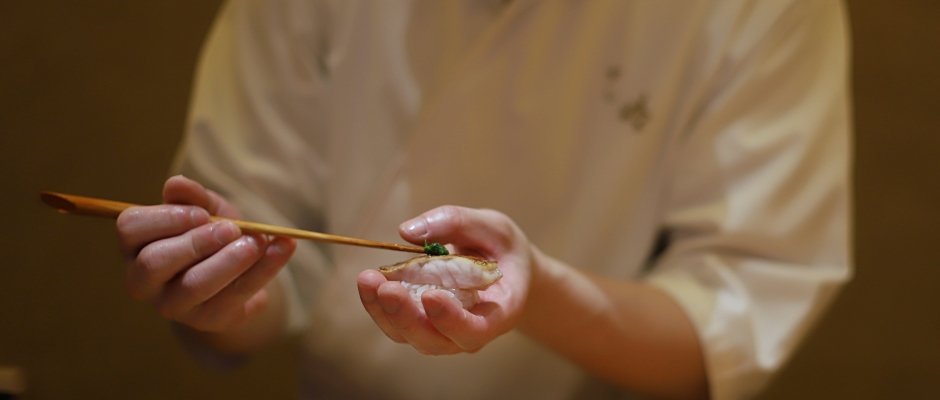
Stanley Street sits in Singapore's CBD fringe, a short walk from Telok Ayer MRT — an area that rewards those who seek it out rather than stumbling across it. The setting is compact and deliberate. Counter sushi at this level is, almost by definition, a visual experience before it's anything else: watching a trained chef work at close range, the sequencing of nigiri, the unhurried movement. That proximity is the point. At Sushi Hare, the format puts you in direct contact with what Inazuka is doing, and the 4.9 rating suggests that contact lands well for most diners.
For context on the format itself: edomae-influenced counter sushi at this calibre in Asia tends to be a tightly scripted experience. You are not choosing dishes off a menu. The service style that either earns or undermines the price at venues like this comes down to two things: how well the pacing is managed, and whether the chef's focus on the food translates into a warm room or a cold one. The OAD ranking and consistent Google scores suggest Sushi Hare gets this balance right , the food is the focus without the experience feeling clinical. Compare that to Tokyo benchmarks like Harutaka or Sushi Kanesaka, where the same format can tip toward austere reverence. Sushi Hare's review data points somewhere more approachable.
The Michelin Plate designation is worth framing correctly: it signals a restaurant that Michelin's inspectors consider worth visiting, sitting below the Star tier. At the $$$ bracket in Singapore, a Plate puts Sushi Hare in the same recognised tier as several of the city's better mid-range Japanese counters. It's a floor, not a ceiling , and the OAD recognition, which tends to weight food obsessives' opinions more heavily, adds credibility above the Michelin signal. For the food-forward traveller, OAD Asia Top 250 placement carries genuine weight.
For regional comparison: Sushi Shikon in Hong Kong operates at the higher end of the $$$$ tier with three Michelin Stars, while Sushi Harasho in Osaka represents the kind of deeply local counter that rarely appears on regional ranking lists. Sushi Hare sits in a pragmatic middle ground: internationally credentialed, Singapore-accessible, and priced for repeat visits rather than once-a-decade pilgrimages. Closer to home, Hamamoto and Sushi Ichi occupy comparable territory in Singapore's Japanese fine dining tier, and are worth considering if Sushi Hare's availability is limited.
Service at sushi counters of this type lives or dies on the chef's ability to read the room. The format is inherently personal , there's no front-of-house buffer between you and the experience. A chef who is technically capable but disengaged produces a meal that feels transactional. The evidence here, thin as the public data is on specifics, tilts toward Inazuka running a counter where the experience justifies the spend. The consistency of the 4.9 rating across 60 reviews , not a number that inflates easily for a niche counter , is the strongest signal available. For more Singapore sushi options at this tier, Sushi Sakuta and Sushi Ashino are both worth having on your shortlist.
If you're building a broader trip around food in Singapore, use our full Singapore restaurants guide to map the full tier from casual hawker to $$$$ tasting menus. The Singapore hotels guide, bars guide, and experiences guide round out the practical picture. And if sushi is your primary focus on this trip, the Sukiyabashi Jiro Roppongi and Edomae Sushi Hanabusa pages give useful Tokyo reference points for calibrating what the format can deliver at its peak. Sushi Sho in New York and HANE in Seoul are worth reading if you're benchmarking the format across cities.
Booking and Practical Details
Sushi Hare is at 14 Stanley Street, Singapore 068733. Booking difficulty is moderate , this is not the kind of counter that requires a three-month wait, but it's not a walk-in venue either. Given the Michelin and OAD recognition, plan at least two to three weeks ahead, particularly for weekend slots. Phone and online booking details are not confirmed in our current data; check directly with the venue or use a concierge service if your preferred date is time-sensitive. No dress code is confirmed, but the format and price point suggest smart casual at minimum. Counter sushi formats typically seat small groups; solo diners and pairs are the natural fit. Larger groups should confirm availability before planning around it.
Quick reference: 14 Stanley St, Singapore 068733 | $$$ | Michelin Plate 2025 | OAD Asia Top 250 (2024 & 2025) | Book 2–3 weeks ahead | Counter format, leading for 1–2 diners.
Frequently Asked Questions
- What should I wear to Sushi Hare? No dress code is confirmed, but at the $$$ tier with Michelin recognition in Singapore, smart casual is the safe default. Think neat, put-together rather than formal. Avoid overpowering fragrances , at a close-proximity sushi counter, scent interferes with the food.
- What should a first-timer know about Sushi Hare? The format is counter sushi, which means you eat what the chef prepares in the sequence he sets. There is no à la carte fallback. Come with appetite and without a hard finish time. The OAD and Michelin credentials signal this is a serious food operation, not a casual drop-in , approach it accordingly.
- How far ahead should I book Sushi Hare? Aim for two to three weeks minimum. As a Michelin Plate and OAD Asia-ranked venue in Singapore's competitive Japanese dining scene, prime slots fill faster than the moderate booking difficulty implies. Weekend evenings are the tightest. If your dates are fixed, book as early as possible.
- Is the tasting menu worth it at Sushi Hare? Based on the Michelin Plate (2025), OAD Asia Top 250 recognition, and a 4.9 Google rating, the answer is yes for diners who want precision counter sushi in Singapore without paying the full $$$$ premium charged at the city's top-tier Japanese counters. Chef Inazuka's consistent recognition across multiple independent sources supports the value case at this price point. If you want a higher ceiling, Shoukouwa is the step up.
- Is Sushi Hare worth the price? At $$$, it is among the better-justified spends in Singapore's Japanese dining tier. The combination of OAD Asia ranking (both 2024 and 2025) and Michelin Plate recognition at this price bracket makes it more credentialed than most counters at the same spend level. For comparison, Hamamoto operates in the same tier and is worth benchmarking against before you decide.
- What should I order at Sushi Hare? Counter sushi at this level is a set format , you don't order. Trust the sequence. The chef directs the meal, and the experience is built around that structure. If you have dietary restrictions, communicate them clearly when booking, not on arrival.
- Is Sushi Hare good for solo dining? Counter sushi is one of the better formats for solo diners in Singapore's fine dining scene. You sit close to the action, the pacing is controlled by the chef, and there's no social pressure to fill conversation gaps. At $$$, a solo visit is a meaningful spend but not an extravagant one by the standards of the category. For solo food enthusiasts in Singapore, this is a format worth experiencing.
Frequently Asked Questions
What should I wear to Sushi Hare?
A counter omakase at the $$$ price point on Stanley Street calls for neat, business-casual dress at minimum — think collared shirts or clean casual wear rather than beachwear or activewear. Nothing in the venue record mandates a strict dress code, but the formality of the format and the OAD-ranked setting make an effort appropriate. When in doubt, overdress slightly rather than under.
What should a first-timer know about Sushi Hare?
Sushi Hare is Chef Motoharu Inazuka's counter at 14 Stanley Street in Singapore's CBD fringe — a deliberate destination rather than a casual drop-in. The format is omakase, so you eat what the chef sends out; there are no à la carte choices to fall back on. It holds a Michelin Plate (2025) and ranked #237 in OAD's Top Restaurants in Asia for 2025, which signals consistent technical quality without the extreme scarcity of Singapore's top-tier counters.
How far ahead should I book Sushi Hare?
One to two weeks ahead is generally sufficient for Sushi Hare — it is not operating at the months-long waitlist level of Singapore's hardest-to-book Japanese counters. That said, prime Friday and Saturday seatings fill faster, so book sooner if your dates are fixed. Its OAD ranking means it attracts a consistent flow of visitors, so leaving it to the last moment is a risk.
Is the tasting menu worth it at Sushi Hare?
At the $$$ price point, Sushi Hare delivers enough consistent craft to justify the spend if omakase is the format you want — the Michelin Plate and back-to-back OAD Top Asia rankings (#209 in 2024, #237 in 2025) confirm it is not a one-season wonder. If you are price-sensitive or prefer choice over a set progression, a traditional à la carte sushi bar will serve you better. For those committed to the omakase format, Chef Inazuka's counter earns its place in Singapore's category.
Is Sushi Hare worth the price?
Yes, for the right diner. At $$$ with a Michelin Plate and two consecutive OAD Top Restaurants in Asia rankings, Sushi Hare sits in a tier where the quality-to-price ratio holds up against comparable Singapore counters. It is not a budget omakase, but it is also not priced at the level of Singapore's two- or three-star Japanese restaurants, which makes it a more accessible entry point into serious sushi in the city.
What should I order at Sushi Hare?
Sushi Hare is an omakase format, so the menu is set by Chef Motoharu Inazuka — there is no ordering in the conventional sense. Arrive with an open brief, flag any dietary restrictions when you book, and let the counter do the work. Attempting to swap out or skip courses at an OAD-ranked omakase counter is generally not the format's expectation.
Is Sushi Hare good for solo dining?
Yes. Counter omakase is one of the few fine-dining formats that works better solo than in a group — you get direct sightlines to Chef Inazuka's preparation, no coordination overhead, and a clean pace through the meal. Sushi Hare's Stanley Street location is also easy to reach alone via Telok Ayer MRT. Solo diners should still book in advance, as the counter has limited seats.
Location
14 Stanley St, Singapore 068733
Singapore, Singapore
Compare Sushi Hare
| Venue | Cuisine | Price | Awards | Booking Difficulty | Value |
|---|---|---|---|---|---|
| Sushi Hare | Sushi | $$$ | Opinionated About Dining Top Restaurants in Asia Ranked #237 (2025); Michelin Plate (2025); Opinionated About Dining Top Restaurants in Asia Ranked #209 (2024) | Moderate | — |
| Zén | European Contemporary | $$$$ | Michelin 3 Star, World's 50 Best | Unknown | — |
| Jaan by Kirk Westaway | British Contemporary | $$$ | Michelin 2 Star, World's 50 Best | Unknown | — |
| Summer Pavilion | Cantonese | $$ | Michelin 1 Star, World's 50 Best | Unknown | — |
| Burnt Ends | Australian Barbecue, Barbecue | $$$ | Michelin 1 Star, World's 50 Best | Unknown | — |
| Seroja | Singaporean, Malaysian | $$$ | Michelin 1 Star, World's 50 Best | Unknown | — |
What to weigh when choosing between Sushi Hare and alternatives.
Also Consider
- Zén — European Contemporary, $$$$
- Jaan by Kirk Westaway — British Contemporary, $$$
- Summer Pavilion — Cantonese, $$
- Burnt Ends — Australian Barbecue, Barbecue, $$$
- Seroja — Singaporean, Malaysian, $$$
Sushi Hare at $$$ sits in a practical sweet spot within Singapore's fine dining scene. If you want a longer, more elaborate tasting format and are prepared to spend at the $$$$ level, Zén is the city's most ambitious European contemporary option — a three-Michelin-Star operation that commands significantly more per head and requires booking months in advance. Sushi Hare offers a more focused experience at a lower price point, with a shorter lead time to book.
Among the $$$ tier, the comparison depends on what you're optimising for. Burnt Ends and Seroja are both OAD and Michelin-recognised at the same price bracket, but deliver entirely different formats — open-fire Australian barbecue and regional Singaporean-Malay cuisine respectively. Jaan by Kirk Westaway offers British contemporary tasting menus with strong Michelin credentials and a Swissôtel 70th-floor setting. For Japanese cuisine specifically, Sushi Hare has fewer direct competitors at the $$$ level with comparable recognition. Summer Pavilion at $$ provides a Michelin-Starred Cantonese option for diners who want formal recognition at a lower spend.
The booking decision comes down to format preference. Sushi Hare is the right call if counter sushi is your priority and you want OAD-credentialed Japanese cuisine without committing to the $$$$ tier. Burnt Ends wins for atmosphere and informality at the same price. Zén wins on pure ambition if budget is no constraint. Sushi Hare's moderate booking difficulty also makes it more accessible than the top-tier counters — an advantage if your trip timeline is fixed.
Recognized By


Explore Singapore
Save or rate Sushi Hare on Pearl
Keep this venue in your Pearl passport, rate it after you visit, and track it alongside every other place you collect.