
Restaurant in Tokyo, Japan
Sumibikappo SHIROSAKA
450ptsCharcoal kappo with real international range.

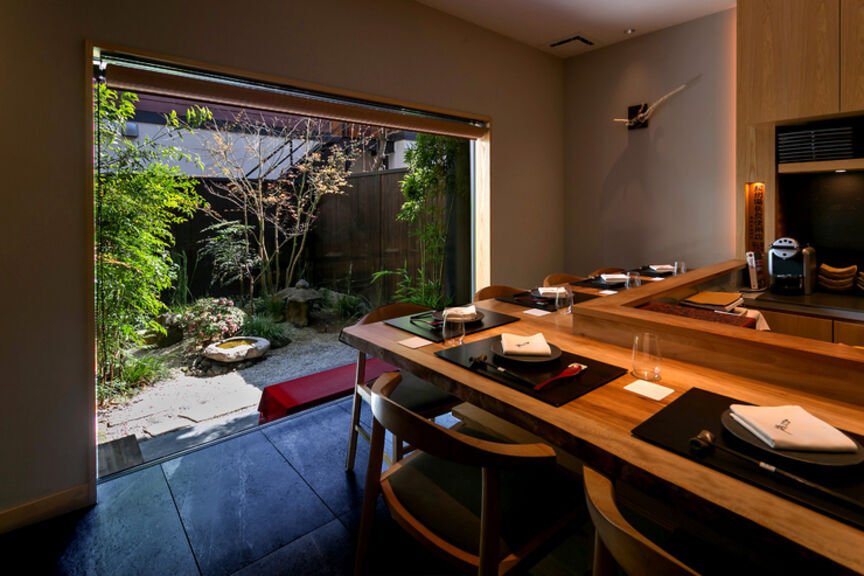
About Sumibikappo SHIROSAKA
Sumibikappo SHIROSAKA in Akasaka delivers charcoal-forward kappo cooking shaped by chef Hideki Ii's time cooking abroad in Sydney and New York. The result is a menu that pairs bincho-grilled wagyu and eel with caviar-topped uni and tuna — more creative range than most kappo rooms at this price tier. At ¥¥¥ with easy booking, it's a practical choice before the harder-to-access ¥¥¥¥ rooms on your Tokyo list.
Verdict
If you want a single venue in Tokyo that combines kappo-style charcoal cooking with genuine international technique, Sumibikappo SHIROSAKA in Akasaka is the clearest answer. It sits a price tier below RyuGin and Harutaka, carries a 4.6 Google rating across 137 reviews, and delivers a menu format that reads as neither fully traditional kaiseki nor modern fusion — which is precisely the point. Book here if you want bincho charcoal-grilled wagyu and eel alongside caviar-topped uni and tuna, served by a chef whose cooking was shaped in Sydney and New York as much as in Tokyo. Skip it if you want the strict formality of a multi-Michelin kaiseki room.
About Sumibikappo SHIROSAKA
Akasaka sits between the political weight of Nagatacho and the after-hours energy of Roppongi, and SHIROSAKA's position in this neighbourhood matters for timing. It draws a crowd that spans business diners finishing late and food-focused visitors who've already done the obvious tasting rooms. The atmosphere skews composed rather than loud — bincho charcoal cooking is by nature a slow, low-heat process, and the room takes on that rhythm. This is not a venue for a quick bite; plan for a full evening.
The cooking logic here is worth understanding before you book. Owner-chef Hideki Ii runs what the venue describes as sumibi kappo , charcoal-centred counter cooking where seasonal ingredients are grilled over bincho charcoal at low heat to draw out fragrance rather than impose it. That technique is the anchor, but the menu is structured with considerably more freedom than a traditional kappo sequence. A hassun platter might include spring rolls and roasted pork fillet alongside more expected Japanese elements. The Cold Tuna and Uni comes with gelatinised dashi and caviar , a dish that signals how Ii uses classical Japanese foundations and adds layers borrowed from his time cooking abroad. For food-focused visitors who've built itineraries around Kagurazaka Ishikawa or Azabu Kadowaki, SHIROSAKA offers a usefully different angle: less ceremony, more direct expression of the chef's accumulated reference points.
The meal structure moves through seafood appetisers, hassun, broiled seafood, charcoal grills of eel and wagyu, and finishes with handmade soba or rice in clay pots , the latter available on request. That last detail is worth noting: if you want the rice course, ask when you book or early in the meal. The bincho charcoal aroma carries through the meal as a consistent sensory thread rather than a single highlight, which makes the pacing feel cohesive even when individual dishes pull in different directions.
Leading Time to Visit
SHIROSAKA makes most sense mid-week in the evening, when Akasaka's business-district energy has settled and the room operates at its intended pace. Late-evening seatings suit the format well , kappo dining is designed to unfold slowly, and arriving after 8 PM puts you in step with how Tokyo's counter restaurants genuinely work. If you're planning a Japan trip that also takes in Gion Sasaki in Kyoto or HAJIME in Osaka, SHIROSAKA works well as a Tokyo opener rather than a closer , it calibrates your expectations for charcoal-forward cooking without the full weight of a top-tier kaiseki bill.
Seasonal ingredients drive the menu, so visiting in autumn or spring gives you the widest range of what Ii does well with the grill. Summer menus lean toward cold preparations and lighter seafood; winter brings richer wagyu and earthier courses. Hours are not confirmed in our database , contact the venue directly to confirm service times and late seating availability before planning around it.
Solo Dining and Group Fit
Counter-format kappo is one of Tokyo's most reliable solo dining formats, and SHIROSAKA follows that pattern. A solo diner at the counter gets direct sight lines to the cooking and a natural opportunity to engage with the kitchen's rhythm. For groups of four or more, check on private or semi-private seating options when booking , the counter format works leading for two to three guests. If you're travelling with a larger group and want a comparable experience, Myojaku or Ginza Fukuju are worth comparing for group capacity.
Booking
Booking difficulty is rated Easy for SHIROSAKA. Phone and website details are not currently listed in our database , the most reliable route is through a hotel concierge if you're staying in Minato or Chiyoda, or via one of Tokyo's specialist reservation services. The address is 6 Chome-3-9 Akasaka, Minato City, Tokyo 107-0052. At ¥¥¥ pricing, this sits below the ¥¥¥¥ bracket of most comparable charcoal-focused tasting rooms in Tokyo, which partly explains the accessible booking window.
Practical Details
| Venue | Cuisine | Price | Booking Difficulty |
|---|---|---|---|
| Sumibikappo SHIROSAKA | Japanese (Kappo / Charcoal) | ¥¥¥ | Easy |
| RyuGin | Kaiseki | ¥¥¥¥ | Hard |
| Harutaka | Sushi | ¥¥¥¥ | Hard |
| Florilège | French | ¥¥¥ | Moderate |
Explore More in Tokyo and Japan
For a broader view of where SHIROSAKA sits in Tokyo's dining options, see our full Tokyo restaurants guide. If you're building a wider Japan itinerary, Pearl covers akordu in Nara, Goh in Fukuoka, 1000 in Yokohama, and 6 in Okinawa. For classical Japanese cooking in Kyoto, Isshisoden Nakamura and Kashiwaya Osaka Senriyama are useful reference points. You can also browse our Tokyo hotels guide, Tokyo bars, Tokyo wineries, and Tokyo experiences.
FAQ
- How far ahead should I book Sumibikappo SHIROSAKA? Booking is rated Easy relative to Tokyo's harder-to-access tasting rooms, but confirming two to three weeks out is sensible, particularly for weekend evenings or late seatings. Contact via hotel concierge or a reservation service since direct contact details are not currently listed in Pearl's database.
- What should I order at Sumibikappo SHIROSAKA? The Cold Tuna and Uni with gelatinised dashi and caviar is the clearest expression of what Ii does differently from a standard kappo kitchen. The charcoal-grilled eel and wagyu are the backbone of the meal. Request the handmade soba or clay-pot rice course when you book , it's available on request and worth adding.
- Is Sumibikappo SHIROSAKA good for solo dining? Yes. Counter kappo is one of the formats leading suited to solo diners in Tokyo, and SHIROSAKA fits that pattern. You get direct engagement with the kitchen and full access to the meal's pacing. Comparable solo-friendly options at a similar price point include Jingumae Higuchi.
- Is Sumibikappo SHIROSAKA worth the price? At ¥¥¥, it delivers a multi-course charcoal kappo experience at a price point meaningfully below the ¥¥¥¥ venues it competes with qualitatively. A 4.6 rating across 137 reviews supports that the value holds. If budget is the constraint, this is a stronger choice than stretching to RyuGin for a first Tokyo tasting room visit.
- Is the tasting menu worth it at Sumibikappo SHIROSAKA? The menu format , moving from seafood appetisers through charcoal grills to soba or rice , justifies the full sequence. The value case is clearer here than at most ¥¥¥¥ rooms because the cooking has a distinct identity: Ii's international background produces combinations you won't find in a purely traditional kappo kitchen.
- Does Sumibikappo SHIROSAKA handle dietary restrictions? No confirmed policy is available in Pearl's database. Given that the menu is built around specific charcoal-grilled proteins and seafood preparations, contact the venue directly before booking if you have significant restrictions. A kappo format is generally harder to adapt than a la carte.
- Can I eat at the bar at Sumibikappo SHIROSAKA? Counter seating is the standard format for kappo restaurants, so bar or counter dining is almost certainly the primary configuration here. Seat count is not confirmed in our database , verify when booking if a specific seating arrangement matters to your group.
Compare Sumibikappo SHIROSAKA
| Venue | Awards | Price | Value |
|---|---|---|---|
| Sumibikappo SHIROSAKA | The chef’s gastronomic experience includes stints in Sydney and New York. The creative flair he acquired along the way finds expression in the imaginative freedom of his menu. Appetiser of sea urchin and tuna is paired with caviar. Hassun platters incorporate unique choices such as spring rolls and roasted pork fillet. Broiled seafood and grills of eel and wagyu are accented by the aroma of bincho charcoal. The meal wraps up with handmade soba or rice in clay pots available on request.; When overseas to sharpen his culinary senses, char-grilling caught owner-chef Hideki Ii’s attention. He cooks seasonal ingredients on low heat, using bincho charcoal for fragrance. He mixes modern culinary theory with traditional techniques, with flexible combinations of ingredients that show off his experience. A fine example is the Cold Tuna and Uni, served with gelatinised dashi and caviar. Ii’s deportment and style in the kitchen inspire confidence. | ¥¥¥ | — |
| Harutaka | Michelin 3 Star, World's 50 Best | ¥¥¥¥ | — |
| RyuGin | Michelin 3 Star, World's 50 Best | ¥¥¥¥ | — |
| L'Effervescence | Michelin 3 Star, World's 50 Best | ¥¥¥¥ | — |
| HOMMAGE | Michelin 2 Star, World's 50 Best | ¥¥¥¥ | — |
| Florilège | Michelin 2 Star, World's 50 Best | ¥¥¥ | — |
How Sumibikappo SHIROSAKA stacks up against the competition.
Frequently Asked Questions
How far ahead should I book Sumibikappo SHIROSAKA?
Book at least two to three weeks out, more if you're visiting on a Friday or Saturday evening. Phone and website details aren't currently listed in Pearl's database, so the most reliable route is through a hotel concierge or a dedicated Tokyo restaurant reservation service. Booking difficulty is rated Easy relative to Tokyo's harder-to-access kappo counters, but that rating assumes you have a Japanese-language contact point.
What should I order at Sumibikappo SHIROSAKA?
The menu is set by the kitchen, so ordering isn't the decision here — format is. The Cold Tuna and Uni with gelatinised dashi and caviar is the dish most closely associated with chef Hideki Ii's approach, and the bincho-grilled eel and wagyu are the clearest expression of the charcoal technique the restaurant is built around. If you want handmade soba or clay-pot rice to close the meal, request it when booking.
Is Sumibikappo SHIROSAKA good for solo dining?
Yes — counter-format kappo is one of Tokyo's most practical solo dining formats, and SHIROSAKA follows that structure. A solo diner at the counter gets direct sight of the kitchen and the charcoal grill, which is where most of the interesting work happens. Solo diners willing to engage with the chef's pacing tend to get the most from this format.
Is Sumibikappo SHIROSAKA worth the price?
At ¥¥¥, SHIROSAKA sits in Tokyo's mid-to-upper tier without reaching the flat-out expense of multi-Michelin destinations. For that price, you get a chef with documented international training in Sydney and New York, bincho charcoal technique applied to seasonal ingredients, and a menu with enough range — spring rolls in the hassun, caviar pairings — to feel considered rather than formulaic. It's a fair trade if kappo is the format you want.
Is the tasting menu worth it at Sumibikappo SHIROSAKA?
Yes, if you're eating here specifically to follow chef Ii's seasonal progression from appetiser through to soba or clay-pot rice. The menu structure — sea urchin and tuna with caviar through to bincho-grilled eel and wagyu — is designed as a sequence, and eating piecemeal would undercut the logic of it. If you want à la carte flexibility, this format isn't the right fit.
Does Sumibikappo SHIROSAKA handle dietary restrictions?
The database doesn't confirm a formal dietary restriction policy, so this is worth clarifying at the time of booking. The menu is seafood and meat-forward, with bincho-grilled eel, wagyu, and sea urchin as core elements, which means significant modifications would alter the kitchen's intended structure. Communicate restrictions clearly when reserving, ideally through a Japanese-speaking contact.
Can I eat at the bar at Sumibikappo SHIROSAKA?
Counter seating is the primary format at kappo restaurants like SHIROSAKA, so eating at the counter is the intended experience rather than a secondary option. The counter position gives you direct access to the kitchen and the bincho charcoal grill, which is the point. If you're hoping for a more separated, table-based experience, this format may not suit you.
Recognized By

More restaurants in Tokyo
- SézanneOccupying the seventh floor of the Four Seasons Hotel Tokyo at Marunouchi, Sézanne earned its first Michelin star within months of opening in July 2021 and now holds three. British chef Daniel Calvert applies French technique to Japanese ingredients, producing a prix-fixe format that Tabelog has recognised with Silver awards every year from 2023 through 2026. It ranked 4th in Asia's 50 Best Restaurants in 2025 and 15th globally in 2024.
- SazenkaSazenka is the address for Chinese cuisine in Tokyo at its most technically demanding. Chef Tomoya Kawada's wakon-kansai approach — Japanese seasonal ingredients applied through Chinese culinary technique — has earned consecutive Tabelog Gold Awards from 2019 to 2026, a #71 ranking on the World's 50 Best 2025, and 99 points from La Liste 2026. At JPY 50,000–59,999 per head, it is one of the hardest tables in the city to book and worth the effort.
- NarisawaNarisawa is Tokyo's most credentialled innovative tasting menu restaurant — two Michelin stars, Asia's 50 Best number 12, and a Tabelog Silver award — running at JPY 80,000–99,999 per head. Book for a milestone occasion, confirm vegetarian or vegan needs in advance, and reserve at least two to three months out. With 15 seats and reservation-only access, this is one of Tokyo's hardest tables to secure.
- FlorilègeFlorilège delivers two Michelin stars and an Asia's 50 Best #17 ranking at a dinner price of ¥22,000 — competitive for Tokyo at this level. Chef Hiroyasu Kawate's plant-forward tasting menus around an open-kitchen counter at Azabudai Hills make this the strongest choice for contemporary French dining in Tokyo if theatrical, produce-led cooking is what you want. Book well in advance; availability is near-impossible at short notice.
- DenDen holds two Michelin stars, a World's 50 Best top-25 Asia ranking, and a Tabelog Silver Award running back to 2017 — and it books out within hours of the two-month reservation window opening. Chef Zaiyu Hasegawa's daily-changing seasonal omakase runs JPY 30,000–39,999 at dinner in a relaxed house-restaurant setting near Gaiemmae. Book by phone only, noon–5 PM JST. Lunch is irregular; plan around dinner.
- MyojakuMyojaku is a 2-Michelin-star, 14-course French-leaning omakase in Nishiazabu holding a 4.47 Tabelog score, Tabelog Silver 2025–2026, and Asia's 50 Best #45 (2025). Chef Hidetoshi Nakamura's water-forward, no-dashi approach shifts meaningfully with the seasons — making timing your reservation as important as getting one. Budget JPY 50,000–59,999 per head plus 10% service charge; reservations only, near-impossible to secure.
Related editorial
- Best Fine Dining Restaurants in ParisFrom three-Michelin-star icons to the next generation of Parisian chefs pushing boundaries, these are the restaurants that define fine dining in the world's culinary capital.
- Best Luxury Hotels in RomeFrom rooftop terraces overlooking ancient ruins to Michelin-starred hotel dining, these are the luxury hotels that make Rome unforgettable.
- Best Cocktail Bars in KyotoFrom sleek lounges to hidden speakeasies, Kyoto's cocktail scene blends Japanese precision with global influence in ways you won't find anywhere else.
Save or rate Sumibikappo SHIROSAKA on Pearl
Keep this venue in your Pearl passport, rate it after you visit, and track it alongside every other place you collect.