
Restaurant in Tokyo, Japan
Shunka Nakamura
290ptsCantonese craft meets Japanese seasons.

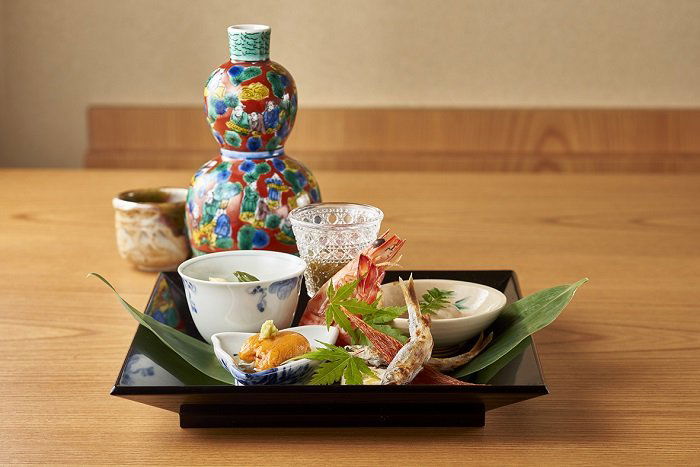
About Shunka Nakamura
A Michelin Plate-recognised restaurant in Roppongi where a Japanese chef applies Cantonese technique to seasonal Japanese ingredients. The result is a personal hybrid cuisine — shunka — that sits between Hong Kong home cooking and kappo sensibility. At ¥¥¥ with easy booking, it is one of the more accessible serious meals in Tokyo's Chinese dining category.
Who Should Book Shunka Nakamura — and When
If you have already done the classic Tokyo Chinese restaurant circuit and want something harder to categorise, Shunka Nakamura is the right next booking. This is the place for a diner who has eaten well at the Cantonese institutions and wants to understand what happens when a Japanese chef internalises Hong Kong cooking through a deeply seasonal Japanese lens. It is not a fusion experiment; it is a considered, personal cuisine that is genuinely difficult to find elsewhere in Roppongi or in Tokyo more broadly. The restaurant holds a Michelin Plate in both 2024 and 2025, which signals a level of seriousness worth taking at face value.
The Cuisine: Shunka as a Philosophy
The chef behind Shunka Nakamura trained in Hong Kong to study Cantonese technique, then returned to Japan to work in a kappo setting, absorbing the Japanese discipline of seasonal sourcing and restrained presentation. The word he uses for his own cooking, shunka, translates roughly as Chinese food with a seasonal sensibility — and that framing matters if you are deciding whether to book. This is not a restaurant where the menu stays fixed while chefs rotate through. The cooking changes with what is available, and the Chinese framework is applied to Japanese ingredients as the seasons shift.
Two dishes anchor the menu conceptually. The spring rolls use pike conger or conger eel , fish with deep roots in Japanese seasonal cooking, particularly in the summer months , wrapped in a format that is fundamentally Cantonese. The steamed chicken is drawn from a secret recipe passed to the chef by his Hong Kong mentor and is intended to reproduce the home-cooked flavours that Hongkongers recognise. If you are returning for a second or third visit, those two dishes are the reference points to track: the spring roll filling will shift with the season, while the steamed chicken represents the chef's direct lineage from his Hong Kong training.
From a sourcing standpoint, the editorial angle here is meaningful. The use of Japanese seasonal fish , pike conger is a summer-to-autumn ingredient in Japanese cooking, expensive and briefly available , inside a Cantonese preparation signals that the kitchen is sourcing at the level of a serious Japanese restaurant, not simply applying Chinese technique to whatever is available. That sourcing discipline is part of what the ¥¥¥ price reflects.
Atmosphere and Practical Feel
The address is Roppongi, Minato City, which places it in one of Tokyo's most internationally trafficked neighbourhoods. Roppongi restaurants tend to carry a certain ambient energy , more transient, more international in the dining room , compared with, say, a kappo counter in Kagurazawa or a Cantonese room in Shinjuku. Expect a mid-volume room rather than a hushed tasting-menu environment. This is not a place where silence is part of the experience; the energy is warm and conversational. For a business dinner or a relaxed evening with someone who appreciates thoughtful cooking without formality, the atmosphere works well. If you want the full reverent quiet of a kaiseki meal, you are in the wrong category.
Google review data puts the rating at 4.6 across 200 reviews, which for a specialist restaurant of this type in Tokyo is a meaningful signal. Scores in the 4.5–4.7 range on Google in Tokyo's competitive dining market tend to reflect consistent execution rather than viral enthusiasm, and 200 reviews suggests an established audience rather than a recently opened restaurant chasing early attention.
Booking and Timing
Shunka Nakamura books as Easy relative to comparably awarded restaurants in Tokyo. That means you are unlikely to need to plan months ahead the way you would for a Michelin-starred counter in the city. A booking one to two weeks out should be sufficient in most cases, though Saturday evenings and peak travel periods (Golden Week, late October, early December) may require more lead time. The ease of booking is one of the practical advantages this restaurant holds over its higher-priced and harder-to-reserve Tokyo peers. If you are organising a Tokyo itinerary and want a serious meal without the stress of a two-month reservation window, this is worth prioritising.
Value Assessment
At ¥¥¥, Shunka Nakamura sits in the mid-to-upper price band for Tokyo dining, but below the ¥¥¥¥ tier that characterises Michelin-starred sushi counters and high-end kaiseki. The Michelin Plate recognition tells you the inspectors found the cooking serious and the experience coherent, without awarding a star , which typically means the food delivers at a high level without quite reaching the narrower criteria for star recognition (often service depth, ambiance polish, or a more formal structure). For the category , a personal, chef-driven Chinese-Japanese hybrid in a recognised Roppongi address , the price is proportionate. You are paying for ingredient-driven seasonal cooking and a distinct point of view, not for the theatre of a tasting menu or the prestige of a star.
How It Compares
See the comparison section below for how Shunka Nakamura positions against Roppongi and Tokyo peers.
Pearl Picks: Where to Eat and Drink Around Your Visit
If Shunka Nakamura's Chinese-Japanese approach interests you, the broader Tokyo Chinese dining scene is worth exploring. Chugoku Hanten Fureika and Chugoku Hanten Kohakukyu (Amber Palace) are the reference points for serious Chinese cooking in Tokyo. Ippei Hanten offers a different register in the same city. For something more intimate and Japanese in framing, itsuka and Koshikiryori Koki are worth considering on the same trip.
For broader planning, see our full Tokyo restaurants guide, our full Tokyo hotels guide, our full Tokyo bars guide, our full Tokyo wineries guide, and our full Tokyo experiences guide.
If you are travelling beyond Tokyo, the same level of chef-driven ambition appears at HAJIME in Osaka, Gion Sasaki in Kyoto, akordu in Nara, Goh in Fukuoka, 1000 in Yokohama, and 6 in Okinawa.
For an international point of comparison , chefs applying Chinese frameworks within a non-Chinese culinary context , see Restaurant Tim Raue in Berlin and Mister Jiu's in San Francisco.
Quick Logistics
| Detail | Shunka Nakamura | Typical ¥¥¥¥ Tokyo Peer |
|---|---|---|
| Price tier | ¥¥¥ | ¥¥¥¥ |
| Booking difficulty | Easy (1–2 weeks out) | Hard (4–8 weeks out) |
| Award level | Michelin Plate (2024, 2025) | Michelin 1–3 stars |
| Google rating | 4.6 / 200 reviews | Varies |
| Cuisine type | Chinese (seasonal Japanese influence) | Sushi / Kaiseki / French |
| Neighbourhood | Roppongi, Minato | Varies |
FAQ
Is Shunka Nakamura worth the price?
- Yes, at ¥¥¥ it is well-positioned for what it delivers. You are getting Michelin Plate-level cooking with seasonal ingredient sourcing , pike conger, eel , applied within a Cantonese framework. Compared to ¥¥¥¥ kaiseki or sushi counters in Tokyo, you spend meaningfully less for a cooking approach that is arguably harder to find. If you want a serious, chef-driven meal without committing to the full tasting-menu price point, this is a strong option in the category.
What should a first-timer know about Shunka Nakamura?
- The cuisine is not standard Chinese restaurant fare. It is a personal hybrid: Cantonese technique applied to Japanese seasonal ingredients, shaped by the chef's time in Hong Kong and in a Japanese kappo kitchen. Come with an open expectation around the menu , dishes shift seasonally. The steamed chicken and spring rolls are the signature anchors. The address is Roppongi, easy to reach from central Tokyo. Booking is direct; you do not need months of lead time.
What are alternatives to Shunka Nakamura in Tokyo?
- For Chinese cooking in Tokyo at a higher register, Chugoku Hanten Fureika and Chugoku Hanten Kohakukyu are the benchmark options. For a completely different direction at the same price tier, Florilège offers French cooking at ¥¥¥ with strong critical recognition. If you want to spend more and book a Michelin-starred meal, RyuGin (kaiseki) or Harutaka (sushi) are the natural next tier, but both require considerably more lead time and budget.
Does Shunka Nakamura handle dietary restrictions?
- No specific dietary restriction information is available in our data. Given that the menu is built around seasonal Chinese-Japanese cooking , with a strong focus on proteins like chicken and eel , guests with shellfish allergies or strict vegetarian requirements should contact the restaurant directly before booking to confirm what can be accommodated. Phone and website details are not currently listed; booking through a hotel concierge or a reservation platform with direct messaging is the most reliable route.
Can I eat at the bar at Shunka Nakamura?
- Seating configuration details are not confirmed in our data. Counter or bar seating is common in Tokyo restaurants of this type and scale, but we cannot confirm availability or format for Shunka Nakamura specifically. If bar seating matters to you , particularly for a solo visit or a two-person dinner , it is worth clarifying when you make the reservation.
Compare Shunka Nakamura
| Venue | Awards | Price | Value |
|---|---|---|---|
| Shunka Nakamura | Relentless curiosity is the driving force of this chef. After going to Hong Kong to study Cantonese cuisine, he then worked at a kappo to learn about Japanese food. He calls the marriage of these two shunka, which roughly translates as ‘Chinese food with a seasonal sensibility’. Spring rolls of pike conger or conger eel are one example. The steamed chicken is a secret recipe passed on from his Hong Kong mentor. He presents the home-cooked flavours that Hongkongers love.; Michelin Plate (2025); Michelin Plate (2024) | ¥¥¥ | — |
| Harutaka | Michelin 3 Star, World's 50 Best | ¥¥¥¥ | — |
| RyuGin | Michelin 3 Star, World's 50 Best | ¥¥¥¥ | — |
| L'Effervescence | Michelin 3 Star, World's 50 Best | ¥¥¥¥ | — |
| HOMMAGE | Michelin 2 Star, World's 50 Best | ¥¥¥¥ | — |
| Florilège | Michelin 2 Star, World's 50 Best | ¥¥¥ | — |
How Shunka Nakamura stacks up against the competition.
Frequently Asked Questions
Does Shunka Nakamura handle dietary restrictions?
No specific dietary accommodation policy is documented for Shunka Nakamura. Given the menu is rooted in Cantonese technique with dishes like steamed chicken and pike conger spring rolls, protein-heavy preparations appear central to the format. check the venue's official channels before booking if dietary restrictions are a factor — the Roppongi address (7 Chome-17-16, Minato City) gives you a reference point for reaching out via local directory services.
What are alternatives to Shunka Nakamura in Tokyo?
For high-end Chinese dining in Tokyo, Chugoku Hanten Fureika is a strong reference point at a similar positioning. If you want Japanese cuisine at a comparable ¥¥¥ price band in Roppongi, RyuGin operates nearby and sits at a higher awards tier. Florilège and L'Effervescence are the go-to options if you're open to French-Japanese at comparable or higher spend. Shunka Nakamura is the right call specifically when the Cantonese-seasonal Japanese hybrid is what you're after.
What should a first-timer know about Shunka Nakamura?
The concept is built around shunka, the chef's term for Chinese food with a seasonal Japanese sensibility — expect dishes like spring rolls of pike conger or conger eel, and a steamed chicken based on a recipe passed on from his Hong Kong mentor. It is in Roppongi (7 Chome-17-16, Minato City), so it is accessible and internationally familiar as a neighbourhood. Booking is relatively Easy compared to Tokyo's more competitive Michelin restaurants, so you don't need to plan months ahead.
Is Shunka Nakamura worth the price?
At ¥¥¥, it earns its price if the Chinese-Japanese hybrid format appeals to you. The chef's Cantonese training in Hong Kong and subsequent kappo work in Japan give the menu a distinct logic — seasonal sensibility applied to home-cooked Cantonese flavours — that you won't find replicated elsewhere in Roppongi. Michelin has awarded it a Plate in both 2024 and 2025, confirming a baseline of technical consistency. If you want straight Cantonese or straight Japanese, the value case is weaker; this restaurant rewards guests who specifically want the crossover.
Can I eat at the bar at Shunka Nakamura?
No seating configuration is documented in the available venue data for Shunka Nakamura. The restaurant's format — a chef-driven, philosophically defined Chinese-Japanese menu — suggests a structured dining experience rather than a casual drop-in bar setting, but this is not confirmed. Verify directly with the restaurant before arriving with bar-seating in mind.
Recognized By

More restaurants in Tokyo
- SézanneOccupying the seventh floor of the Four Seasons Hotel Tokyo at Marunouchi, Sézanne earned its first Michelin star within months of opening in July 2021 and now holds three. British chef Daniel Calvert applies French technique to Japanese ingredients, producing a prix-fixe format that Tabelog has recognised with Silver awards every year from 2023 through 2026. It ranked 4th in Asia's 50 Best Restaurants in 2025 and 15th globally in 2024.
- SazenkaSazenka is the address for Chinese cuisine in Tokyo at its most technically demanding. Chef Tomoya Kawada's wakon-kansai approach — Japanese seasonal ingredients applied through Chinese culinary technique — has earned consecutive Tabelog Gold Awards from 2019 to 2026, a #71 ranking on the World's 50 Best 2025, and 99 points from La Liste 2026. At JPY 50,000–59,999 per head, it is one of the hardest tables in the city to book and worth the effort.
- NarisawaNarisawa is Tokyo's most credentialled innovative tasting menu restaurant — two Michelin stars, Asia's 50 Best number 12, and a Tabelog Silver award — running at JPY 80,000–99,999 per head. Book for a milestone occasion, confirm vegetarian or vegan needs in advance, and reserve at least two to three months out. With 15 seats and reservation-only access, this is one of Tokyo's hardest tables to secure.
- FlorilègeFlorilège delivers two Michelin stars and an Asia's 50 Best #17 ranking at a dinner price of ¥22,000 — competitive for Tokyo at this level. Chef Hiroyasu Kawate's plant-forward tasting menus around an open-kitchen counter at Azabudai Hills make this the strongest choice for contemporary French dining in Tokyo if theatrical, produce-led cooking is what you want. Book well in advance; availability is near-impossible at short notice.
- DenDen holds two Michelin stars, a World's 50 Best top-25 Asia ranking, and a Tabelog Silver Award running back to 2017 — and it books out within hours of the two-month reservation window opening. Chef Zaiyu Hasegawa's daily-changing seasonal omakase runs JPY 30,000–39,999 at dinner in a relaxed house-restaurant setting near Gaiemmae. Book by phone only, noon–5 PM JST. Lunch is irregular; plan around dinner.
- MyojakuMyojaku is a 2-Michelin-star, 14-course French-leaning omakase in Nishiazabu holding a 4.47 Tabelog score, Tabelog Silver 2025–2026, and Asia's 50 Best #45 (2025). Chef Hidetoshi Nakamura's water-forward, no-dashi approach shifts meaningfully with the seasons — making timing your reservation as important as getting one. Budget JPY 50,000–59,999 per head plus 10% service charge; reservations only, near-impossible to secure.
Similar venues by awards
Related editorial
- Best Fine Dining Restaurants in ParisFrom three-Michelin-star icons to the next generation of Parisian chefs pushing boundaries, these are the restaurants that define fine dining in the world's culinary capital.
- Best Luxury Hotels in RomeFrom rooftop terraces overlooking ancient ruins to Michelin-starred hotel dining, these are the luxury hotels that make Rome unforgettable.
- Best Cocktail Bars in KyotoFrom sleek lounges to hidden speakeasies, Kyoto's cocktail scene blends Japanese precision with global influence in ways you won't find anywhere else.
Save or rate Shunka Nakamura on Pearl
Keep this venue in your Pearl passport, rate it after you visit, and track it alongside every other place you collect.