
Restaurant in Tokyo, Japan
Shizuru
290ptsQuiet Kyoto-trained kappo, strong value for Shibuya.

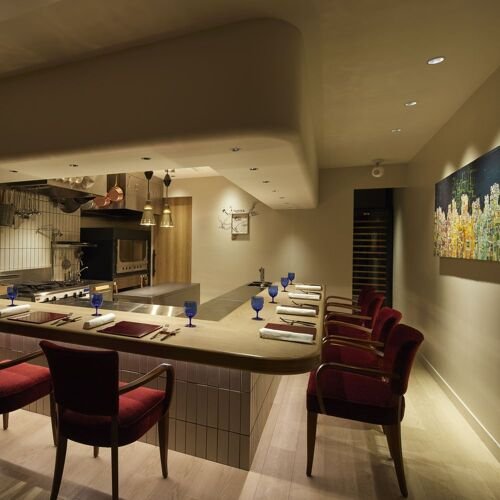
About Shizuru
Shizuru is a husband-and-wife kappo in Tomigaya, Shibuya, trained in Kyoto cuisine and recognised by Michelin Plate in both 2024 and 2025. At the ¥¥ price level, it delivers precise, seasonally driven cooking in a calm third-floor room, with Uonuma Koshihikari rice and Yamagata sake chosen to match the kitchen's restrained style. Book ahead; the room is small and the owners run everything themselves.
Shizuru, Tokyo: Pearl Verdict
At the ¥¥ price point, Shizuru is one of the better-value kappo experiences in Tokyo's Shibuya ward. This is a small, third-floor room in Tomigaya run by a husband-and-wife team, both trained in Kyoto cuisine, and the cooking is precise without being showy. If you've already visited once, the case for returning is strong: the seasonal rotation here is genuine, not cosmetic, and the kitchen's commitment to sourcing — particularly the Uonuma Koshihikari rice cooked to order in a broad-rimmed pot — gives repeat visits a different character depending on when you go. If you're deciding between this and a higher-priced kaiseki room, the honest answer is that Shizuru won't match the ceremony of Kagurazaka Ishikawa or the prestige of Azabu Kadowaki, but it costs considerably less and delivers something more personal in return.
The Space
The room is on the third floor of a residential-scale building in Tomigaya, a quiet residential-leaning neighbourhood west of Yoyogi Park. The physical space is small and deliberately calm. Incense burns during service , a detail mentioned explicitly in the Michelin notes, not a marketing embellishment , and it gives the room a low-key ceremonial quality that suits the kappo format. Kappo, as a service style, sits between the formality of kaiseki and the looseness of an izakaya: dishes come sequentially, you eat at a counter or table close to the kitchen, and the pacing is set by the chefs. In a room this size, with just a couple running service, the atmosphere tilts intimate rather than dramatic. This is not the place for a large group or a celebratory dinner that needs spectacle. It suits two people, or a solo diner who wants attentive cooking in a quiet room.
The Cooking and Seasonal Angle
The husband-and-wife team divide cooking duties between them, and both trained in Kyoto cuisine , a tradition that prizes restraint, precise seasoning, and seasonal ingredient logic above visual drama. The husband's preference for subtler seasoning is noted in the venue record, and it shapes the register of the food: this is cooking where the quality of the ingredient does most of the talking, and where the seasonal shift in what's available in Japanese markets is immediately legible on the plate.
For a returning visitor, timing your visit around the season matters more here than at a restaurant with a fixed tasting menu. Kyoto-trained kappo kitchens tend to work closely with what's arriving from suppliers week by week. Spring brings bamboo shoots and young brassicas; summer moves toward cold preparations and river fish; autumn is when mushrooms, persimmon, and the new-harvest rice come into focus; winter means root vegetables, citrus, and warming broths. The Uonuma Koshihikari rice , sourced from the proprietress' hometown , is cooked in a broad-rimmed pot and transferred to a wooden container before serving, a process that signals the kitchen's seriousness about the rice course specifically. If you're returning, the rice course alone is worth paying attention to: it changes in character with the season and is one of the cleaner expressions of what this kitchen is doing.
Sake from Yamagata accompanies the food by the couple's own preference, and this is worth noting when you sit down: if you're drinking, ask what they recommend rather than ordering independently. The pairing logic here is built around the husband's approach to seasoning, and the Yamagata sake selection is chosen to complement it. For context, Yamagata prefecture produces sake with a clean, dry profile that supports delicate food without overwhelming it , a sensible match for Kyoto-influenced cooking.
For a first-timer considering Shizuru against other kappo options in Tokyo, it's worth comparing it with Myojaku, Ginza Fukuju, or Jingumae Higuchi. Shizuru's price tier makes it more accessible than most, and the Michelin Plate recognition in both 2024 and 2025 confirms it's operating at a level above casual neighbourhood dining without charging accordingly.
Awards and Recognition
Shizuru holds a Michelin Plate in both 2024 and 2025. A Michelin Plate signals that inspectors consider the food good enough to merit a visit , it sits below a star but above an unrecognised listing. For a small, owner-operated kappo at the ¥¥ price level, two consecutive years of Plate recognition is meaningful: it means the kitchen is consistent, not just occasionally sharp. It also means Michelin inspectors have returned more than once, which matters for a room this size where maintaining quality across all services is harder than at a larger, brigade-staffed kitchen.
The Google rating of 4.6 from 55 reviews is positive but the review count is low, which is typical for small kappo restaurants in Tokyo that don't actively market themselves or take walk-ins. It should not be read as a lack of recognition; it reflects the limited seating and the fact that many diners at this level don't leave reviews.
Practical Details
Shizuru is in Tomigaya, Shibuya, on the third floor of a building at 1 Chome-3-12 Sancity Tomigaya. Phone and website details are not publicly listed. Booking is rated Easy, but given the size of the room, advance contact is advisable , this is not a walk-in venue in practice. Hours are not confirmed in our data; contact the restaurant directly to confirm current service times before visiting. Price range is ¥¥, making it one of the more accessible options for kappo dining with Michelin recognition in the city. Dress code is not formally specified, but the quiet, ceremonial atmosphere of the room calls for smart casual at minimum.
If you're planning a broader Tokyo dining trip, see our full Tokyo restaurants guide. For hotels nearby, our Tokyo hotels guide covers the full range. And if Japanese regional cooking is drawing you further afield, consider Gion Sasaki in Kyoto, Isshisoden Nakamura in Kyoto, Kashiwaya Osaka Senriyama, or HAJIME in Osaka. For something farther, Goh in Fukuoka, akordu in Nara, 1000 in Yokohama, and 6 in Okinawa are each worth considering depending on your itinerary. For bars and wineries in Tokyo, see our Tokyo bars guide and our Tokyo wineries guide. The Tokyo experiences guide covers broader itinerary planning.
Quick reference: Kappo, ¥¥, Tomigaya (3rd floor), Michelin Plate 2024–2025, Google 4.6/55 reviews, booking rated Easy, contact venue directly for hours and reservations.
Compare Shizuru
Frequently Asked Questions
What should a first-timer know about Shizuru?
Shizuru is a small kappo run by a husband-and-wife team, both trained in Kyoto cuisine, on the third floor of a residential-scale building in Tomigaya. There is no website listed publicly, so reservations require some effort to arrange — factor that in before you go. The format is intimate and the pacing is unhurried, which suits two people more than a larger group. Arriving with an interest in sake from Yamagata will serve you well here.
What should I order at Shizuru?
Shizuru operates as a kappo, meaning the menu is set by the kitchen rather than chosen à la carte. The rice course — Koshihikari from Uonuma, cooked in a broad-rimmed pot and served from a wooden container — is a deliberate centerpiece worth paying attention to. The husband's cooking leans toward subtler seasoning, designed to accompany local Yamagata sake, so ordering sake alongside is the intended pairing rather than an afterthought.
Is the tasting menu worth it at Shizuru?
At a ¥¥ price point, Shizuru holds a Michelin Plate in both 2024 and 2025, which puts it among the more credibly recognised options in this price range for kappo in Shibuya. Compared to a full Michelin-starred kappo, you are giving up formal prestige for something more personal and considerably easier on the budget. If the Kyoto-trained, restraint-focused style suits your preferences, the value case is sound.
Can I eat at the bar at Shizuru?
Shizuru is a kappo format, where counter seating is standard to the style — guests typically sit facing the kitchen and watch preparation as part of the experience. The space is on the third floor of a small building in Tomigaya, so the overall room count is limited. Counter seats here put you close to the cooking, which is part of what a kappo visit is for.
Is Shizuru worth the price?
Yes, at ¥¥ with two consecutive Michelin Plate recognitions (2024 and 2025), Shizuru delivers Kyoto-trained technique and considered ingredient sourcing at a price that sits well below Tokyo's starred kappo tier. The trade-off is accessibility: no website, no publicly listed phone, and a small room mean you need to work a bit harder to secure a seat. For couples or solo diners who do the legwork, the value is there.
Recognized By

More restaurants in Tokyo
- SézanneOccupying the seventh floor of the Four Seasons Hotel Tokyo at Marunouchi, Sézanne earned its first Michelin star within months of opening in July 2021 and now holds three. British chef Daniel Calvert applies French technique to Japanese ingredients, producing a prix-fixe format that Tabelog has recognised with Silver awards every year from 2023 through 2026. It ranked 4th in Asia's 50 Best Restaurants in 2025 and 15th globally in 2024.
- SazenkaSazenka is the address for Chinese cuisine in Tokyo at its most technically demanding. Chef Tomoya Kawada's wakon-kansai approach — Japanese seasonal ingredients applied through Chinese culinary technique — has earned consecutive Tabelog Gold Awards from 2019 to 2026, a #71 ranking on the World's 50 Best 2025, and 99 points from La Liste 2026. At JPY 50,000–59,999 per head, it is one of the hardest tables in the city to book and worth the effort.
- NarisawaNarisawa is Tokyo's most credentialled innovative tasting menu restaurant — two Michelin stars, Asia's 50 Best number 12, and a Tabelog Silver award — running at JPY 80,000–99,999 per head. Book for a milestone occasion, confirm vegetarian or vegan needs in advance, and reserve at least two to three months out. With 15 seats and reservation-only access, this is one of Tokyo's hardest tables to secure.
- FlorilègeFlorilège delivers two Michelin stars and an Asia's 50 Best #17 ranking at a dinner price of ¥22,000 — competitive for Tokyo at this level. Chef Hiroyasu Kawate's plant-forward tasting menus around an open-kitchen counter at Azabudai Hills make this the strongest choice for contemporary French dining in Tokyo if theatrical, produce-led cooking is what you want. Book well in advance; availability is near-impossible at short notice.
- DenDen holds two Michelin stars, a World's 50 Best top-25 Asia ranking, and a Tabelog Silver Award running back to 2017 — and it books out within hours of the two-month reservation window opening. Chef Zaiyu Hasegawa's daily-changing seasonal omakase runs JPY 30,000–39,999 at dinner in a relaxed house-restaurant setting near Gaiemmae. Book by phone only, noon–5 PM JST. Lunch is irregular; plan around dinner.
- MyojakuMyojaku is a 2-Michelin-star, 14-course French-leaning omakase in Nishiazabu holding a 4.47 Tabelog score, Tabelog Silver 2025–2026, and Asia's 50 Best #45 (2025). Chef Hidetoshi Nakamura's water-forward, no-dashi approach shifts meaningfully with the seasons — making timing your reservation as important as getting one. Budget JPY 50,000–59,999 per head plus 10% service charge; reservations only, near-impossible to secure.
Similar venues by awards
Related editorial
- Best Fine Dining Restaurants in ParisFrom three-Michelin-star icons to the next generation of Parisian chefs pushing boundaries, these are the restaurants that define fine dining in the world's culinary capital.
- Best Luxury Hotels in RomeFrom rooftop terraces overlooking ancient ruins to Michelin-starred hotel dining, these are the luxury hotels that make Rome unforgettable.
- Best Cocktail Bars in KyotoFrom sleek lounges to hidden speakeasies, Kyoto's cocktail scene blends Japanese precision with global influence in ways you won't find anywhere else.
Save or rate Shizuru on Pearl
Keep this venue in your Pearl passport, rate it after you visit, and track it alongside every other place you collect.