
Restaurant in Tokyo, Japan
Sassa
380ptsInnovative kaiseki, easy to book at this price.

About Sassa
Sassa brings a sushi chef's precision to kaiseki, resulting in a 4.6-rated, Michelin Plate-recognised Tokyo table that justifies its ¥¥¥¥ price tag through genuine technique rather than ingredient theatre. The rice, the tuna approach, and the Pu-erh tea close give the meal a distinct identity. Booking is easier than most Tokyo peers at this level, making it a practical choice for serious diners.
A 4.6 from over 2,400 reviews is the number that earns your attention at Sassa
That rating, drawn from a substantial base of diners, places this Tokyo kaiseki table in rare company for sustained satisfaction. The Michelin Plate recognition in 2025 confirms what the review volume suggests: Sassa is not a flash-in-the-pan booking but a restaurant earning consistent, considered praise. The question worth answering before you book is whether the specific format here, kaiseki filtered through a sushi chef's sensibility, is the right match for your evening.
What Sassa Is
Sassa operates at the ¥¥¥¥ price tier, which in Tokyo's fine dining market places it in the same bracket as Harutaka and RyuGin. What separates it from a conventional kaiseki house is the cross-disciplinary philosophy at its core: rice is cooked the way a sushi chef would approach it, using minimal water to concentrate flavour, and tuna is sliced thin to align with lighter soy application rather than heavier dipping sauces. These are not cosmetic touches. They represent a coherent set of decisions about texture, seasoning, and proportion that run through the entire meal.
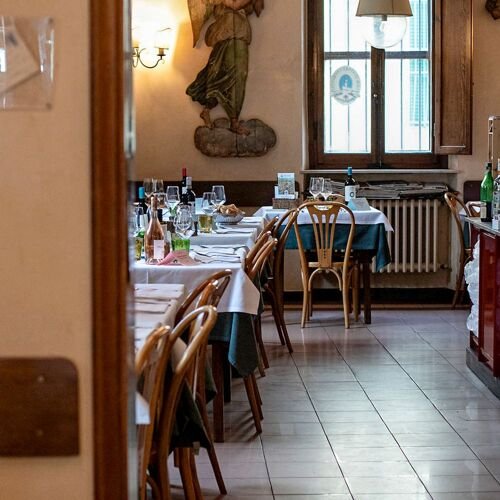
The spatial character of Sassa matters here. Intimate counter seating, typical of Tokyo restaurants that operate at this calibre and price point, means the room functions more like a chef's table than a banquet hall. That physical closeness to the kitchen is part of the arrangement. If you want a private dining room or generous table separation, this is probably not your booking. If you want proximity to the craft, it works in your favour.
One element worth noting for its rarity at a kaiseki table: Pu-erh tea is served after dinner. This reflects documented culinary experience in Shanghai and gives the meal a closing note that most Japanese fine dining venues do not offer. It is a practical differentiator worth knowing if tea pairings matter to you, and it tells you something about the range of reference Sassa draws on.
Sassa as a Late-Evening Booking
Tokyo's fine dining scene tends toward early seatings, and kaiseki as a format is almost always a full-evening commitment. Sassa fits that pattern. If you are looking for somewhere to land after 10 PM, this is not the venue. The value of the late-night angle here is different: Sassa earns its place as the destination that anchors your evening rather than supplements it. Book it as your primary event, give the meal the time it requires, and plan your night around it rather than before it. For actual late-night options after dinner, our full Tokyo bars guide covers what comes next.
The abalone risotto is a specific dish the Michelin documentation flags as a luxury item, prepared with substantial quantities of boiled abalone. This is not a side note, it is the kind of dish that signals what the kitchen is willing to spend and how it wants to be judged. At ¥¥¥¥ pricing, that level of ingredient commitment is expected, and here it appears to be delivered.
Booking and Logistics
Booking difficulty is rated as easy for Sassa, which is a meaningful data point for Tokyo fine dining at this level. Many Michelin-recognised tables in the city require weeks of advance planning or concierge intervention. If Sassa is accessible without that effort, it represents a practical advantage over some of its competition. That said, easy does not mean walk-in. Reserve in advance and treat the booking as confirmed before you travel.
No dress code is listed in the available data. At ¥¥¥¥ Tokyo kaiseki, smart casual is a reasonable baseline assumption, erring toward understated rather than casual. If you are travelling from abroad, the same wardrobe that would suit a formal dinner in a European city will work here.
Know Before You Go
- Price tier: ¥¥¥¥
- Recognition: Michelin Plate (2025)
- Google rating: 4.6 from 2,405 reviews
- Cuisine: Kaiseki with sushi chef's technique
- Booking difficulty: Easy
- Format: Full-evening tasting menu format; plan 2.5–3 hours
- Closing note: Pu-erh tea served post-dinner (unusual for Tokyo kaiseki)
- City: Tokyo, Japan
How It Compares
Pearl Picks: More Tokyo Dining
If Sassa's cross-disciplinary approach appeals, these tables offer comparable depth in different formats. For pure kaiseki tradition, Kagurazaka Ishikawa and Azabu Kadowaki are the benchmarks in Tokyo. For sushi at the same price tier, Myojaku and Ginza Fukuju are worth comparing. Jingumae Higuchi offers another angle on contemporary Japanese cooking if you want to widen the shortlist.
Beyond Tokyo, the same level of ambition appears at Gion Sasaki in Kyoto, HAJIME in Osaka, and Kashiwaya Osaka Senriyama. For something more experimental, akordu in Nara and Goh in Fukuoka are worth the trip. Isshisoden Nakamura in Kyoto anchors the traditional end of the spectrum. You can also browse 1000 in Yokohama and 6 in Okinawa if your itinerary extends further.
For broader Tokyo planning, start with our full Tokyo restaurants guide, and extend to hotels, bars, wineries, and experiences.
FAQ
- Is Sassa worth the price? At ¥¥¥¥, Sassa sits at the leading of Tokyo's dining market, and the Michelin Plate recognition plus a 4.6 rating across 2,400-plus reviews suggests it earns its position. The kaiseki-meets-sushi approach and premium ingredients like abalone give the meal a clear identity, not just a high price tag. If this format suits you, the value holds. If you want pure kaiseki tradition, Kagurazaka Ishikawa or Azabu Kadowaki may be a better fit.
- Is the tasting menu worth it at Sassa? Yes, assuming you are committed to the format. The documented dishes, abalone risotto, thin-sliced tuna calibrated to light soy, sushi-style rice, Pu-erh tea close, suggest a menu with genuine coherence rather than a list of luxury ingredients assembled for effect. For comparison, RyuGin offers a more classical kaiseki arc if you prefer convention over innovation.
- What should a first-timer know about Sassa? Expect a full-evening commitment at the ¥¥¥¥ tier in an intimate setting. The format is kaiseki, but the technique draws heavily from sushi preparation, so the pacing and presentation will feel distinct from a conventional kaiseki house. The Michelin Plate (2025) and the volume of positive Google reviews indicate this is a reliable booking, not a risk. Budget time, not just money.
- What should I wear to Sassa? No dress code is published, but at ¥¥¥¥ in Tokyo, smart casual is the floor. Understated and neat is always the right call for this price bracket in Japan. Avoid overly casual clothing. If you are dressing for dinner elsewhere in Tokyo's Michelin tier, the same wardrobe applies here.
- Does Sassa handle dietary restrictions? No specific policy is available in the current data. Kaiseki menus are typically structured and not easily modified, so if you have significant dietary restrictions, contact the restaurant directly before booking. Do not assume flexibility without confirmation.
Compare Sassa
| Venue | Cuisine | Price | Booking Difficulty |
|---|---|---|---|
| Sassa | Japanese | ¥¥¥¥ | Easy |
| Harutaka | Sushi | ¥¥¥¥ | Unknown |
| L'Effervescence | French | ¥¥¥¥ | Unknown |
| RyuGin | Kaiseki, Japanese | ¥¥¥¥ | Unknown |
| HOMMAGE | Innovtive French, French | ¥¥¥¥ | Unknown |
| Crony | Innovative, French | ¥¥¥¥ | Unknown |
A quick look at how Sassa measures up.
Frequently Asked Questions
Does Sassa handle dietary restrictions?
Kaiseki at this level is a fixed, multi-course format built around the chef's sequence, which makes significant substitutions difficult. Given Sassa's cross-disciplinary approach — drawing on sushi technique and a Shanghai culinary background — the kitchen shows range, but the ¥¥¥¥ tasting menu is not structured for major dietary modifications. check the venue's official channels before booking if you have restrictions, and do so at reservation time rather than on arrival.
What should a first-timer know about Sassa?
Sassa is not a conventional kaiseki experience. The kitchen applies a sushi chef's sensibility to the kaiseki format — rice is cooked with minimal water in the sushi tradition, tuna is sliced thin to complement light soy sauce, and the meal closes with pu-erh tea reflecting the chef's time in Shanghai. Booking is rated easy for a Michelin Plate table at ¥¥¥¥ in Tokyo, so first-timers are not competing against a brutal waitlist. Budget a full evening and come with an appetite for a kitchen that is actively pushing the format rather than preserving it.
What should I wear to Sassa?
Sassa's ¥¥¥¥ price tier and Michelin Plate recognition place it in Tokyo's formal fine dining bracket. Smart, polished dress is appropriate — think business-casual at minimum, with nothing loud or casual. Tokyo fine dining rooms at this level generally expect guests to match the room's register, and that register here is refined.
Is the tasting menu worth it at Sassa?
At ¥¥¥¥, Sassa sits in the same price bracket as Harutaka and RyuGin. What justifies the spend is the format's originality: abalone risotto prepared with generous quantities of boiled abalone, sushi-method rice, and a meal arc that does not simply replay kaiseki orthodoxy. If you want a faithful traditional kaiseki progression, this is probably not the right table. If you want a kitchen using kaiseki as a frame to run its own ideas, the price is reasonable for what you get.
Is Sassa worth the price?
Yes, with a caveat about fit. The Michelin Plate (2025) and a 4.6 rating from over 2,400 diners indicate consistent execution at the ¥¥¥¥ level, which in Tokyo's fine dining market is not a given. The caveat: Sassa's value is highest for diners who want innovation inside the kaiseki format — if pure tradition is the priority, there are more conservative tables at this price. For the right diner, the easy booking availability makes this an unusually accessible entry point for serious Tokyo fine dining.
Recognized By

More restaurants in Tokyo
- SézanneOccupying the seventh floor of the Four Seasons Hotel Tokyo at Marunouchi, Sézanne earned its first Michelin star within months of opening in July 2021 and now holds three. British chef Daniel Calvert applies French technique to Japanese ingredients, producing a prix-fixe format that Tabelog has recognised with Silver awards every year from 2023 through 2026. It ranked 4th in Asia's 50 Best Restaurants in 2025 and 15th globally in 2024.
- SazenkaSazenka is the address for Chinese cuisine in Tokyo at its most technically demanding. Chef Tomoya Kawada's wakon-kansai approach — Japanese seasonal ingredients applied through Chinese culinary technique — has earned consecutive Tabelog Gold Awards from 2019 to 2026, a #71 ranking on the World's 50 Best 2025, and 99 points from La Liste 2026. At JPY 50,000–59,999 per head, it is one of the hardest tables in the city to book and worth the effort.
- NarisawaNarisawa is Tokyo's most credentialled innovative tasting menu restaurant — two Michelin stars, Asia's 50 Best number 12, and a Tabelog Silver award — running at JPY 80,000–99,999 per head. Book for a milestone occasion, confirm vegetarian or vegan needs in advance, and reserve at least two to three months out. With 15 seats and reservation-only access, this is one of Tokyo's hardest tables to secure.
- FlorilègeFlorilège delivers two Michelin stars and an Asia's 50 Best #17 ranking at a dinner price of ¥22,000 — competitive for Tokyo at this level. Chef Hiroyasu Kawate's plant-forward tasting menus around an open-kitchen counter at Azabudai Hills make this the strongest choice for contemporary French dining in Tokyo if theatrical, produce-led cooking is what you want. Book well in advance; availability is near-impossible at short notice.
- DenDen holds two Michelin stars, a World's 50 Best top-25 Asia ranking, and a Tabelog Silver Award running back to 2017 — and it books out within hours of the two-month reservation window opening. Chef Zaiyu Hasegawa's daily-changing seasonal omakase runs JPY 30,000–39,999 at dinner in a relaxed house-restaurant setting near Gaiemmae. Book by phone only, noon–5 PM JST. Lunch is irregular; plan around dinner.
- MyojakuMyojaku is a 2-Michelin-star, 14-course French-leaning omakase in Nishiazabu holding a 4.47 Tabelog score, Tabelog Silver 2025–2026, and Asia's 50 Best #45 (2025). Chef Hidetoshi Nakamura's water-forward, no-dashi approach shifts meaningfully with the seasons — making timing your reservation as important as getting one. Budget JPY 50,000–59,999 per head plus 10% service charge; reservations only, near-impossible to secure.
Similar venues by awards
Related editorial
- Best Fine Dining Restaurants in ParisFrom three-Michelin-star icons to the next generation of Parisian chefs pushing boundaries, these are the restaurants that define fine dining in the world's culinary capital.
- Best Luxury Hotels in RomeFrom rooftop terraces overlooking ancient ruins to Michelin-starred hotel dining, these are the luxury hotels that make Rome unforgettable.
- Best Cocktail Bars in KyotoFrom sleek lounges to hidden speakeasies, Kyoto's cocktail scene blends Japanese precision with global influence in ways you won't find anywhere else.
Save or rate Sassa on Pearl
Keep this venue in your Pearl passport, rate it after you visit, and track it alongside every other place you collect.