
Restaurant in Tokyo, Japan
Ryuen
290ptsBreak from tradition. Book if curious.

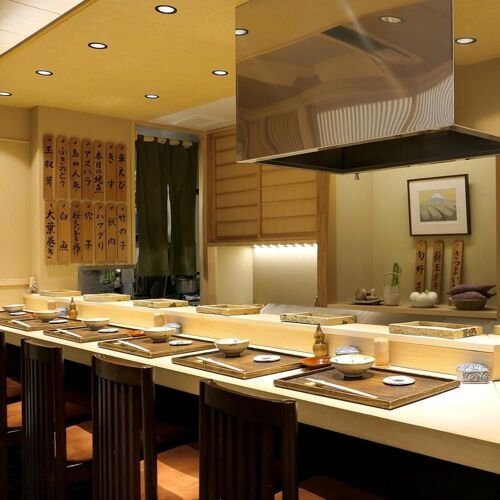
About Ryuen
Ryuen is a Michelin Plate-recognised Japanese restaurant in Nishiasakusa that builds inventive menus around a no-waste ingredient philosophy, with a beef middle course borrowed from sister restaurant Oniku Karyu. At ¥¥¥, it is more accessible than Tokyo's top-tier Japanese addresses and easier to book, making it a practical first choice for diners who want serious cooking without the three-month wait.
Verdict
Ryuen is not the place to go if you want a conventional kaiseki progression or a purely traditional Japanese dining experience. It breaks from that mould deliberately: a Michelin Plate-recognised restaurant in Nishiasakusa that places beef in the middle of the meal, following the format of its sister restaurant Oniku Karyu, while building the rest of the menu around an ingredient-first philosophy rooted in zero-waste cooking. For a first-timer approaching Tokyo's Japanese restaurant scene, the ¥¥¥ price tier makes it more accessible than the ¥¥¥¥ rooms at Kagurazaka Ishikawa or Azabu Kadowaki, and the cooking is genuinely inventive rather than decoratively so. Book it if the idea of a chef who wastes nothing and charges less than the top tier appeals to you. Skip it if you want a purely traditional structure.
Portrait
The biggest misconception about Ryuen is that it is a standard Japanese fine-dining restaurant where you arrive, sit through a classical sequence, and leave having ticked a box. It is not that. The menu is built around the concept of onko-chishin, a Japanese principle of discovering something new by studying what already exists. In practice, that means dishes that carry the logic and technique of Japanese culinary tradition while arriving in forms that first-timers may not anticipate — including a beef course positioned mid-meal rather than as an afterthought.
The name Ryuen translates as 'swallows in the willow trees', and the hope embedded in it is specific: that guests return the way swallows return to the same willow each spring. That is not marketing language. It describes a restaurant built on repeat visits, on a relationship between kitchen and guest that develops over time. A first-timer should know this before booking, because the experience is designed to be the beginning of something rather than a standalone event.
Ingredient philosophy at Ryuen is the most decision-relevant thing about the kitchen. The chef trained with a reverence for ingredients that translates directly into a no-waste approach: every part of the product is used. This matters for the price question. At ¥¥¥, you are paying for a kitchen that extracts maximum value from what it sources rather than one that charges for scarcity or theatrical presentation alone. For diners who have spent time at Ginza Fukuju or Myojaku, the comparison is instructive: Ryuen sits at a lower price point with a more experimental structure. The beef middle course, which mirrors the format at Oniku Karyu, gives the menu a throughline that the sister restaurant has already proven with its own audience.
Nishiasakusa is not the neighbourhood most visitors associate with serious Japanese cooking. The area sits north of Asakusa proper, quieter and less trafficked than the dining corridors of Ginza or Roppongi. That location is neither a drawback nor a selling point on its own, but for a first-timer it is worth noting: you are not walking into a room surrounded by other destination restaurants. The experience is more self-contained, which suits the kind of cooking Ryuen does. If you are building a Tokyo itinerary and want context on the broader dining scene, our full Tokyo restaurants guide covers the range across neighbourhoods and price points. For where to stay nearby, our Tokyo hotels guide and bars guide are useful companions.
The Google rating of 4.1 across 128 reviews is honest rather than inflated, which is useful information. Venues with cooking this particular tend to divide opinion: some diners arrive expecting one format and find another. That gap between expectation and reality is exactly what to prepare for. Ryuen earns Michelin Plate recognition in both 2024 and 2025, which confirms a kitchen operating at a credible level without the three-month booking queues that come with starred Tokyo addresses.
For context on what Michelin Plate recognition means relative to Tokyo's Japanese dining spectrum, it positions Ryuen clearly: above a reliable neighbourhood restaurant, below the formal starred room, but doing something specific enough that the guide considers it worth flagging. Comparable in approach, though different in cuisine and neighbourhood, are starred addresses elsewhere in Japan such as Gion Sasaki in Kyoto and HAJIME in Osaka, both of which show how ingredient-led philosophy plays out at different price and formality levels. Closer to home in format, Jingumae Higuchi in Tokyo offers another reference point for inventive Japanese cooking that does not fit neatly into a single category.
If you are planning broader travel in Japan alongside this booking, akordu in Nara, Goh in Fukuoka, Isshisoden Nakamura in Kyoto, Kashiwaya Osaka Senriyama, 1000 in Yokohama, and 6 in Okinawa all represent the kind of ingredient-driven, regionally grounded cooking that rewards a traveller moving through the country with intention.
Know Before You Go
- Price tier: ¥¥¥ — mid-to-upper range, more accessible than ¥¥¥¥ Tokyo addresses
- Cuisine: Japanese, with inventive structure and a beef middle course
- Location: 3 Chome-1-9 Nishiasakusa, Taito City, Tokyo 111-0035
- Booking difficulty: Easy relative to Michelin-starred Tokyo venues
- Awards: Michelin Plate 2024 and 2025
- Google rating: 4.1 from 128 reviews
- Sister restaurant: Oniku Karyu (beef specialist; the middle course format is drawn from here)
- Getting around Tokyo: See our Tokyo experiences guide and wineries guide for broader trip planning
Compare Ryuen
| Venue | Cuisine | Awards | Booking Difficulty | Value |
|---|---|---|---|---|
| Ryuen | Japanese | The name means ‘swallows in the willow trees’ and it encapsulates the hope that guests will come back to Ryuen just as the swallows return to the willows each spring. The chef’s apprenticeship taught him reverence for ingredients; he learned the skill of using everything in food preparation, wasting nothing. Beef dishes are served as a middle course, taking after Oniku Karyu, Ryuen’s sister restaurant. Each dish is inventive while preserving the traditions of Japanese cuisine. The chef’s quest for new flavours embodies the spirit of onko-chishin: discovering the new by studying the past.; Michelin Plate (2025); Michelin Plate (2024) | Easy | — |
| Harutaka | Sushi | Michelin 3 Star, World's 50 Best | Unknown | — |
| RyuGin | Kaiseki, Japanese | Michelin 3 Star, World's 50 Best | Unknown | — |
| L'Effervescence | French | Michelin 3 Star, World's 50 Best | Unknown | — |
| HOMMAGE | Innovtive French, French | Michelin 2 Star, World's 50 Best | Unknown | — |
| Florilège | French | Michelin 2 Star, World's 50 Best | Unknown | — |
A quick look at how Ryuen measures up.
Frequently Asked Questions
What should a first-timer know about Ryuen?
Ryuen is not a conventional kaiseki restaurant. The format incorporates a beef middle course, a nod to sister restaurant Oniku Karyu, alongside inventive Japanese dishes rooted in the principle of wasting nothing. First-timers expecting a purely classical progression will be surprised. If you want tradition undisturbed, look at Harutaka instead. If you want Japanese fine dining that pushes its own boundaries, Ryuen at ¥¥¥ earns its Michelin Plate recognition.
Does Ryuen handle dietary restrictions?
Dietary accommodation is not documented in available venue data, but given the kitchen's philosophy of using everything and wasting nothing, omissions or substitutions likely require advance notice. check the venue's official channels before booking if you have firm restrictions. The beef middle course is a structural part of the meal, so pescatarian or vegetarian guests should clarify that upfront.
Can Ryuen accommodate groups?
Group capacity details are not confirmed in the venue record. Ryuen is a fine-dining destination in Nishiasakusa at ¥¥¥ price range, which typically means limited covers. For larger parties, confirm availability and seating configuration when booking. Small groups of two to four are generally the most comfortable fit for this style of dining.
Is Ryuen worth the price?
At ¥¥¥ with two consecutive Michelin Plates (2024 and 2025), Ryuen sits in a sensible mid-tier for Tokyo fine dining. The value case rests on its inventive approach: dishes that respect Japanese tradition while introducing new ideas, plus a beef course borrowed from its sister restaurant Oniku Karyu. For pure value-per-course, RyuGin commands a higher price point with more overt prestige. Ryuen suits diners who want something considered but not priced at the top of the market.
Is the tasting menu worth it at Ryuen?
Yes, if the format fits you. The kitchen's philosophy, built on the chef's apprenticeship training to waste nothing and discover the new by studying the past, gives the menu a coherent identity rather than a collection of showpiece dishes. The beef middle course adds structure that separates it from standard kaiseki. At ¥¥¥, the tasting menu is priced accessibly by Tokyo fine-dining standards. Florilège offers a comparable commitment to a chef-driven tasting format if you want a French-Japanese alternative.
Is Ryuen good for solo dining?
Ryuen is a reasonable choice for solo diners. The tasting menu format means the kitchen controls the pace, which works well when dining alone. Counter seating, common in this style of Tokyo restaurant, gives solo guests direct engagement with the kitchen. Confirm seating options when reserving, since Ryuen's exact layout is not detailed in the venue record.
Can I eat at the bar at Ryuen?
Bar or counter seating specifics are not confirmed in the venue data. Many Tokyo fine-dining restaurants at this price point offer counter seats as their primary format, and counter dining is well-suited to Ryuen's kitchen-focused philosophy. Ask directly when making your reservation whether counter seating is available and whether it covers the full menu.
Recognized By

More restaurants in Tokyo
- SézanneOccupying the seventh floor of the Four Seasons Hotel Tokyo at Marunouchi, Sézanne earned its first Michelin star within months of opening in July 2021 and now holds three. British chef Daniel Calvert applies French technique to Japanese ingredients, producing a prix-fixe format that Tabelog has recognised with Silver awards every year from 2023 through 2026. It ranked 4th in Asia's 50 Best Restaurants in 2025 and 15th globally in 2024.
- SazenkaSazenka is the address for Chinese cuisine in Tokyo at its most technically demanding. Chef Tomoya Kawada's wakon-kansai approach — Japanese seasonal ingredients applied through Chinese culinary technique — has earned consecutive Tabelog Gold Awards from 2019 to 2026, a #71 ranking on the World's 50 Best 2025, and 99 points from La Liste 2026. At JPY 50,000–59,999 per head, it is one of the hardest tables in the city to book and worth the effort.
- NarisawaNarisawa is Tokyo's most credentialled innovative tasting menu restaurant — two Michelin stars, Asia's 50 Best number 12, and a Tabelog Silver award — running at JPY 80,000–99,999 per head. Book for a milestone occasion, confirm vegetarian or vegan needs in advance, and reserve at least two to three months out. With 15 seats and reservation-only access, this is one of Tokyo's hardest tables to secure.
- FlorilègeFlorilège delivers two Michelin stars and an Asia's 50 Best #17 ranking at a dinner price of ¥22,000 — competitive for Tokyo at this level. Chef Hiroyasu Kawate's plant-forward tasting menus around an open-kitchen counter at Azabudai Hills make this the strongest choice for contemporary French dining in Tokyo if theatrical, produce-led cooking is what you want. Book well in advance; availability is near-impossible at short notice.
- DenDen holds two Michelin stars, a World's 50 Best top-25 Asia ranking, and a Tabelog Silver Award running back to 2017 — and it books out within hours of the two-month reservation window opening. Chef Zaiyu Hasegawa's daily-changing seasonal omakase runs JPY 30,000–39,999 at dinner in a relaxed house-restaurant setting near Gaiemmae. Book by phone only, noon–5 PM JST. Lunch is irregular; plan around dinner.
- MyojakuMyojaku is a 2-Michelin-star, 14-course French-leaning omakase in Nishiazabu holding a 4.47 Tabelog score, Tabelog Silver 2025–2026, and Asia's 50 Best #45 (2025). Chef Hidetoshi Nakamura's water-forward, no-dashi approach shifts meaningfully with the seasons — making timing your reservation as important as getting one. Budget JPY 50,000–59,999 per head plus 10% service charge; reservations only, near-impossible to secure.
Similar venues by awards
Related editorial
- Best Fine Dining Restaurants in ParisFrom three-Michelin-star icons to the next generation of Parisian chefs pushing boundaries, these are the restaurants that define fine dining in the world's culinary capital.
- Best Luxury Hotels in RomeFrom rooftop terraces overlooking ancient ruins to Michelin-starred hotel dining, these are the luxury hotels that make Rome unforgettable.
- Best Cocktail Bars in KyotoFrom sleek lounges to hidden speakeasies, Kyoto's cocktail scene blends Japanese precision with global influence in ways you won't find anywhere else.
Save or rate Ryuen on Pearl
Keep this venue in your Pearl passport, rate it after you visit, and track it alongside every other place you collect.