
Restaurant in Tokyo, Japan
Oryori Tsuji
450ptsMichelin kaiseki where restraint does the work.

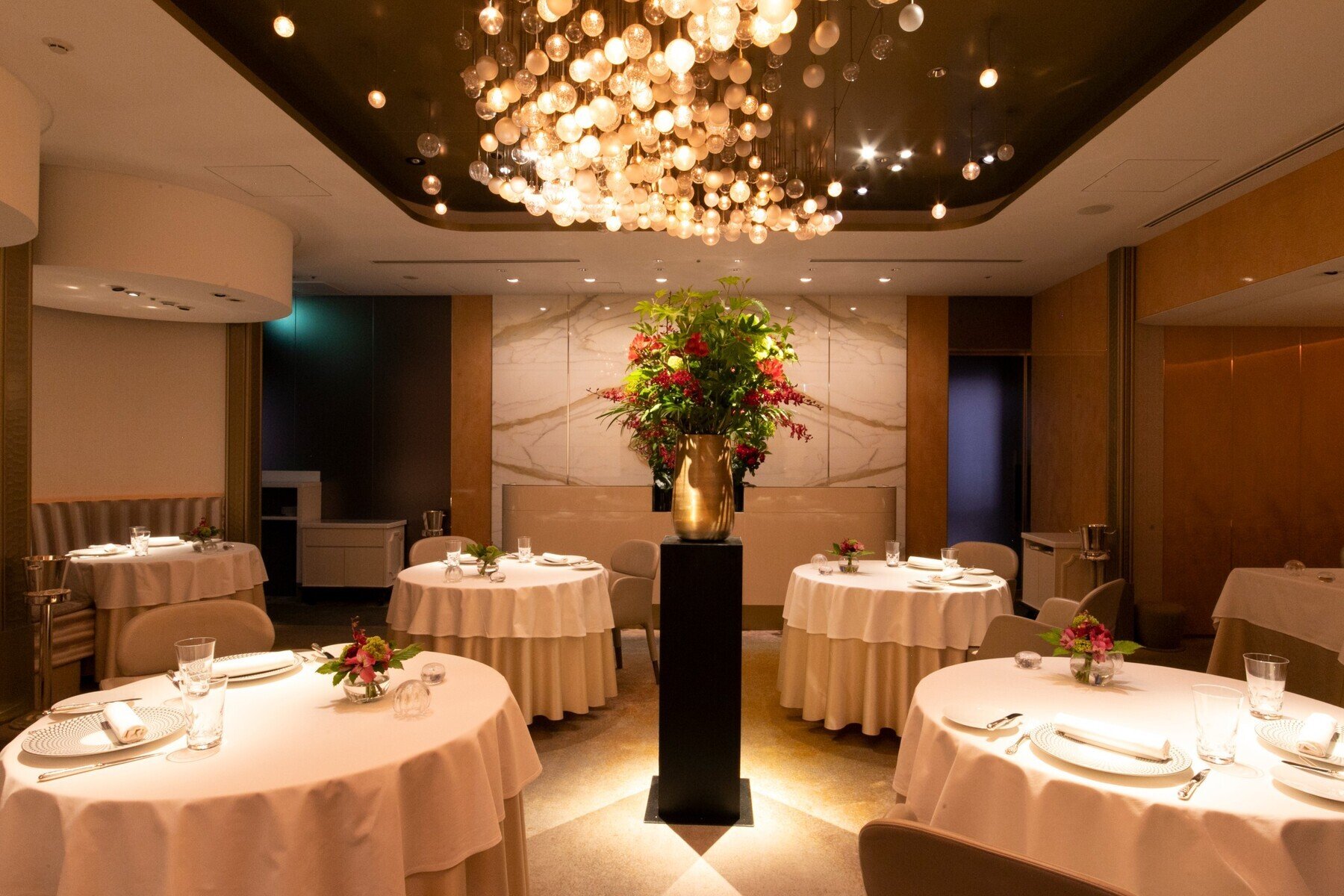
About Oryori Tsuji
Oryori Tsuji is a Michelin one-star kaiseki counter in Higashiazabu where the kitchen makes its case through restraint — clear soups, kombu-wrapped sashimi, and a cypress counter in an austere room that strips away distraction. At ¥¥¥¥, it is expensive and hard to book, but consistently rated (4.4, 83 reviews). Book if you value seasonal precision over spectacle.
Verdict: A Michelin-Starred Kaiseki Counter Worth the Commitment
At ¥¥¥¥ pricing, Oryori Tsuji is a serious financial decision before you even sit down. What you are paying for is a counter experience in Higashiazabu where restraint is the operating principle — a room built from adze-hewn ceilings, cypress wood, and clay walls that signals, immediately, that the kitchen has no interest in impressing you with spectacle. If you want drama and showmanship from your Tokyo kaiseki, book elsewhere. If you want a meal whose logic becomes clear only after the last course, Oryori Tsuji is worth booking. The 2024 Michelin one-star recognition confirms the kitchen's credentials, and a Google rating of 4.4 across 83 reviews suggests consistency rather than a venue coasting on its award.
What to Expect: The Architecture of the Meal
The Michelin inspector's language for Oryori Tsuji is specific enough to be useful: "simple fare" that avoids "shows of splendour in favour of honest presentation." That is not false modesty — it is a menu philosophy that shapes every course. The progression here follows a classical kaiseki structure where the sense of season arrives through taste and aroma rather than through visual theatre or elaborate plating.
Sashimi wrapped in kombu is documented as a representative dish: the aroma that reaches you before you eat is one of the clearest signals the kitchen sends. Kombu-cured fish carries a concentrated sea scent , mineral, clean, saline , that primes your attention before a single bite. This is the sensory logic of the meal: the kitchen earns your focus through restraint, not abundance. Wanmono served as clear soup continues the same argument. A clear broth is one of the hardest things to make well in Japanese cooking; there is nowhere to hide. At Oryori Tsuji, those preparations are, according to the Michelin record, precisely where "effort paid where few will notice" becomes most visible. If you have eaten here once and focused on the more prominent courses, return with attention on the soup and the sashimi presentations , that is where the real technical case is made.
The room itself reinforces this logic. A cypress counter, clay walls, and adze-hewn ceilings create an environment with almost no visual noise. For a returning guest, this is not a limitation , it is a deliberate choice that puts the food and its aromas at the centre of the experience. There is no ambient distraction competing with the kitchen.
Booking Oryori Tsuji
Booking difficulty here is hard. A Michelin one-star counter in Minato City, operating at ¥¥¥¥ pricing, draws a reservation list that fills well in advance. No booking method or phone number is confirmed in the venue record; the most reliable route for international visitors is through a concierge at a high-end Tokyo hotel or a specialist dining reservation service. If you are staying at a property in Minato, Roppongi, or Azabu, front-desk concierge teams with existing relationships at restaurants of this tier are your leading practical option. Expect a minimum lead time of four to six weeks; more during peak autumn and spring seasons when Tokyo's kaiseki calendar is at its most competitive.
Reservations: Hard to book; hotel concierge or specialist dining service recommended. Dress: Smart; the room's austerity sets a tone , casual dress would be out of place. Budget: ¥¥¥¥; factor this against Tokyo's kaiseki tier where comparable counters run from approximately ¥30,000 to ¥50,000 per person before drinks. Location: Basement level, 3 Chome−3−9 Higashiazabu, Minato City , close to Azabu-Juban station.
How Oryori Tsuji Fits Into a Tokyo Dining Itinerary
Tokyo's kaiseki and Japanese fine dining scene at the ¥¥¥¥ tier is dense with strong options. Oryori Tsuji sits closest in philosophy to venues where the cooking's argument is made through classical technique and seasonal honesty rather than innovation or spectacle. If you are building a multi-night Tokyo dining itinerary and want to cover different registers, pair Oryori Tsuji with a sushi counter night , Harutaka operates in the same price tier and provides a useful contrast in format. For a broader view of Tokyo's highest-tier Japanese dining, Kagurazaka Ishikawa and Azabu Kadowaki are two Michelin-recognised kaiseki addresses worth considering alongside this one. Myojaku and Ginza Fukuju offer additional Japanese fine dining reference points, while Jingumae Higuchi provides a slightly different seasonal register.
If you are travelling beyond Tokyo on this trip, the same philosophy of restrained, season-driven Japanese cooking appears at a regional level at Gion Sasaki in Kyoto and Isshisoden Nakamura in Kyoto, and at Kashiwaya Osaka Senriyama. For entirely different Japanese fine dining registers, HAJIME in Osaka and Goh in Fukuoka each represent strong alternatives worth the travel. See our full Tokyo restaurants guide for a complete picture of the city's dining options across all price points, or explore our Tokyo hotels guide, bars guide, wineries guide, and experiences guide to build the full itinerary around it. For other strong Japanese options worth considering in the broader region, akordu in Nara, 1000 in Yokohama, and 6 in Okinawa each occupy distinct positions in Japan's wider dining map.
The Pearl Take
Oryori Tsuji is the right booking if you are looking for a kaiseki experience where the kitchen's intelligence is expressed through understatement. The Michelin recognition, the 4.4 Google score, and the specificity of the inspector's description all point in the same direction: a room and a kitchen that operate with confidence and consistency, not noise. It is a hard reservation to secure, it is expensive, and it will not give you a memorable photograph. What it will give you is a meal whose quality you are still turning over the next morning. For that kind of Tokyo dining experience, it is worth the effort to book.
Frequently Asked Questions
- Can I eat at the bar at Oryori Tsuji? The primary seating at Oryori Tsuji is a counter format , a cypress counter is documented as the room's central feature. This is a counter-led experience by design, which means solo diners or pairs are well suited to the format. Whether walk-in counter seats exist is not confirmed; given the booking difficulty level, assume advance reservations are required for any seat in the room.
- Is Oryori Tsuji worth the price? At ¥¥¥¥ pricing with a 2024 Michelin one-star, Oryori Tsuji sits in a tier where you are paying for precision and restraint rather than abundance. Compared to Tokyo kaiseki addresses at the same price point, the value argument here rests on the cooking's consistency and the clarity of the seasonal philosophy. If those qualities matter to you, yes , it is worth the price. If you want more visual drama or a larger, more varied menu, RyuGin at the same tier delivers a more theatrical kaiseki experience.
- Is the tasting menu worth it at Oryori Tsuji? The tasting menu is the format here , there is no indication of an à la carte option. The Michelin record describes a progression built on seasonal aroma and taste, with clear soup and kombu-wrapped sashimi as anchoring moments. For guests who value the architecture of a meal over individual standout dishes, the format works well. For those who prefer to order around specific preferences, this kitchen's philosophy may not align with how you want to eat.
- Can Oryori Tsuji accommodate groups? Counter seating and a room designed for intimate dining suggest this is not a venue for large groups. No confirmed capacity data is available, but the physical description points to small-group dining: pairs and parties of four are the natural fit for a counter kaiseki of this kind. If you are planning a group of six or more, contact through a concierge service before committing, and have a backup plan.
- How far ahead should I book Oryori Tsuji? Minimum four to six weeks in advance, and longer during autumn (October–November) and spring (March–April) when Tokyo's kaiseki restaurants are at peak demand. As a Michelin one-star counter with hard booking difficulty, last-minute reservations are not a realistic option. Book before you book your flights.
- Is Oryori Tsuji good for a special occasion? Yes, with the right expectations. The room is austere, the service atmosphere formal, and the meal is built around quiet attention rather than celebratory energy. It is a strong choice for a significant dining occasion where the food itself is the event , an anniversary dinner between two people who eat seriously, or a professional meal where the quality of the room and cooking does the work. It is not the right choice if you want a venue that feels festive or celebratory in a conventional sense.
- What are alternatives to Oryori Tsuji in Tokyo? For kaiseki at the same price tier, RyuGin is the most direct comparison , it is also ¥¥¥¥, Michelin-recognised, and Japanese in format, but delivers a more contemporary and visually dramatic version of the kaiseki tradition. Kagurazaka Ishikawa and Azabu Kadowaki are also worth comparing. If you want to shift format entirely, Harutaka offers sushi at ¥¥¥¥ with its own Michelin credentials, and the French options at L'Effervescence and Florilège (at ¥¥¥) provide strong tasting menu alternatives if you are considering a non-Japanese night.
Compare Oryori Tsuji
| Venue | Price | Value |
|---|---|---|
| Oryori Tsuji | ¥¥¥¥ | — |
| Harutaka | ¥¥¥¥ | — |
| RyuGin | ¥¥¥¥ | — |
| L'Effervescence | ¥¥¥¥ | — |
| HOMMAGE | ¥¥¥¥ | — |
| Florilège | ¥¥¥ | — |
A quick look at how Oryori Tsuji measures up.
Frequently Asked Questions
Can I eat at the bar at Oryori Tsuji?
The dining room centres on a cypress counter, so counter seating is the primary format here, not an alternative to table dining. This is not a drop-in bar situation — the ¥¥¥¥ counter experience is the experience, and it requires a reservation. Walk-in access at a Michelin one-star counter in Minato City is not realistic.
Is Oryori Tsuji worth the price?
At ¥¥¥¥, it is worth it specifically if understated Japanese cooking at a high technical level is what you are after. The Michelin inspector flags results that are 'all the more impressive for the effort paid where few will notice' — meaning the value is in precision, not presentation. If you need visible drama on the plate to feel the spend is justified, this counter will frustrate you.
Is the tasting menu worth it at Oryori Tsuji?
Yes, if kaiseki's logic of seasonal restraint appeals to you. The menu explicitly avoids 'shows of splendour,' so the progression through sashimi, wanmono, and clear soup reads as deliberate minimalism rather than low ambition. For a format with more theatrical plating at comparable price, RyuGin is the better comparison in Tokyo.
Can Oryori Tsuji accommodate groups?
A cypress counter in a small basement room in Higashiazabu is not a group dining format. Parties larger than four will find the counter constraining, and the intimate scale of the space is part of the concept. For larger groups at the ¥¥¥¥ tier in Tokyo, look for venues with private dining rooms.
How far ahead should I book Oryori Tsuji?
Book at least four to six weeks out, and further in advance for weekend sittings. A Michelin one-star counter at ¥¥¥¥ pricing in Minato City fills quickly, and the small size of the room means availability is limited by design. If you have a fixed travel date, start the reservation process before you finalise flights.
Is Oryori Tsuji good for a special occasion?
Yes, with the right framing. The adze-hewn ceilings, clay walls, and cypress counter create a considered atmosphere that suits milestone dinners where the conversation matters as much as the food. It is a better fit for two than for a large celebratory group, and the occasion should suit a kitchen whose language is 'calm the soul' rather than impress the room.
What are alternatives to Oryori Tsuji in Tokyo?
For similar kaiseki restraint at ¥¥¥¥, Harutaka is the closest philosophical peer. RyuGin operates at the same tier with more theatrical technique if you want greater visual ambition. L'Effervescence and Florilège shift the format entirely into French-influenced tasting menus, which suits diners who want a different kind of precision. HOMMAGE sits between French and Japanese influences at a comparable price point.
Recognized By

More restaurants in Tokyo
- SézanneOccupying the seventh floor of the Four Seasons Hotel Tokyo at Marunouchi, Sézanne earned its first Michelin star within months of opening in July 2021 and now holds three. British chef Daniel Calvert applies French technique to Japanese ingredients, producing a prix-fixe format that Tabelog has recognised with Silver awards every year from 2023 through 2026. It ranked 4th in Asia's 50 Best Restaurants in 2025 and 15th globally in 2024.
- SazenkaSazenka is the address for Chinese cuisine in Tokyo at its most technically demanding. Chef Tomoya Kawada's wakon-kansai approach — Japanese seasonal ingredients applied through Chinese culinary technique — has earned consecutive Tabelog Gold Awards from 2019 to 2026, a #71 ranking on the World's 50 Best 2025, and 99 points from La Liste 2026. At JPY 50,000–59,999 per head, it is one of the hardest tables in the city to book and worth the effort.
- NarisawaNarisawa is Tokyo's most credentialled innovative tasting menu restaurant — two Michelin stars, Asia's 50 Best number 12, and a Tabelog Silver award — running at JPY 80,000–99,999 per head. Book for a milestone occasion, confirm vegetarian or vegan needs in advance, and reserve at least two to three months out. With 15 seats and reservation-only access, this is one of Tokyo's hardest tables to secure.
- FlorilègeFlorilège delivers two Michelin stars and an Asia's 50 Best #17 ranking at a dinner price of ¥22,000 — competitive for Tokyo at this level. Chef Hiroyasu Kawate's plant-forward tasting menus around an open-kitchen counter at Azabudai Hills make this the strongest choice for contemporary French dining in Tokyo if theatrical, produce-led cooking is what you want. Book well in advance; availability is near-impossible at short notice.
- DenDen holds two Michelin stars, a World's 50 Best top-25 Asia ranking, and a Tabelog Silver Award running back to 2017 — and it books out within hours of the two-month reservation window opening. Chef Zaiyu Hasegawa's daily-changing seasonal omakase runs JPY 30,000–39,999 at dinner in a relaxed house-restaurant setting near Gaiemmae. Book by phone only, noon–5 PM JST. Lunch is irregular; plan around dinner.
- MyojakuMyojaku is a 2-Michelin-star, 14-course French-leaning omakase in Nishiazabu holding a 4.47 Tabelog score, Tabelog Silver 2025–2026, and Asia's 50 Best #45 (2025). Chef Hidetoshi Nakamura's water-forward, no-dashi approach shifts meaningfully with the seasons — making timing your reservation as important as getting one. Budget JPY 50,000–59,999 per head plus 10% service charge; reservations only, near-impossible to secure.
Related editorial
- Best Fine Dining Restaurants in ParisFrom three-Michelin-star icons to the next generation of Parisian chefs pushing boundaries, these are the restaurants that define fine dining in the world's culinary capital.
- Best Luxury Hotels in RomeFrom rooftop terraces overlooking ancient ruins to Michelin-starred hotel dining, these are the luxury hotels that make Rome unforgettable.
- Best Cocktail Bars in KyotoFrom sleek lounges to hidden speakeasies, Kyoto's cocktail scene blends Japanese precision with global influence in ways you won't find anywhere else.
Save or rate Oryori Tsuji on Pearl
Keep this venue in your Pearl passport, rate it after you visit, and track it alongside every other place you collect.