
Restaurant in Tokyo, Japan
Oryori Katsushi
290ptsDashi-focused kaiseki worth booking in Ginza.

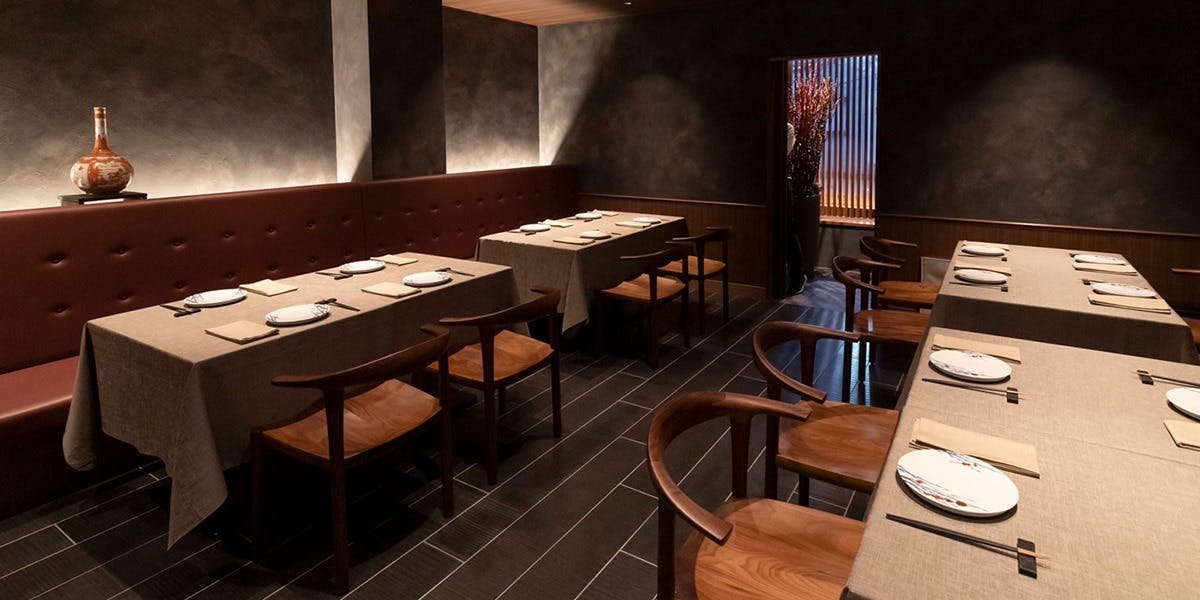
About Oryori Katsushi
Oryori Katsushi is a Michelin Plate-recognised Japanese restaurant in Ginza where the entire menu is built around a dashi stock of bonito, kombu, and clams — learnt under a Kansai mentor and running through egg custard, soup, and pressed sushi preparations. At ¥¥¥, it is one of the more accessible routes to serious, technique-led Japanese cooking in central Tokyo. Easy to book; midweek visits recommended.
The Verdict
If you have eaten at Oryori Katsushi once, the question on a return visit is not whether the food will be consistent — it is whether the dashi will hit you the same way. It will. The Ginza third-floor kitchen runs on a dashi program that the chef has been refining since his training under a Kansai mentor, and it is the most coherent expression of a single technique you will find at this price point in central Tokyo. Two consecutive Michelin Plate recognitions (2024 and 2025) confirm the venue is being watched and taken seriously. At ¥¥¥ pricing, it sits below the four-symbol tier occupied by kaiseki heavyweights like RyuGin, which makes it one of the more accessible entry points to serious Japanese cooking in Ginza.
Portrait
The building address — 8 Chome, Ginza, third floor of the Suzuryū Building , tells you something useful before you arrive. This is not a street-level restaurant angling for walk-in traffic. You take the stairs or the elevator, you have made a reservation, and the room is yours for the evening. That context matters for the explorer diner: Oryori Katsushi is not performing for the street. It is cooking for the table in front of it.
The dashi is the right place to start because it is genuinely the architecture of the menu. The chef trained under a Kansai native whose focus was dashi construction , bonito flakes, kombu kelp, and clams combined to produce a stock with layered depth rather than a single dominant note. Where many Japanese restaurants use dashi as background, here it is foregrounded: you will encounter it in the savoury egg custard, in soup dishes, in hot pot preparations. Returning diners often report that the dashi is the detail they remember most clearly, and that tracking how it shifts between dishes is part of the value of coming back. That is not a romantic observation , it is a practical reason to book a second time.
Sushi element of the menu is where the chef's background becomes relevant without being the point. His brother is a sushi chef, and the influence appears in specific preparations: vinegared rice, simmered abalone liver sauce, and pressed chub mackerel sushi. These are not decorative additions. The vinegared rice technique and the pressed mackerel format are both markers of considered craft. For a diner coming from a sushi-only background , perhaps arriving after visiting Harutaka the previous evening , the sushi elements at Katsushi will read differently: less about fish-forward minimalism, more about how sushi technique integrates into a broader Japanese menu. That is a meaningful distinction worth knowing before you book.
On the question of drinks pairing: the venue database does not confirm a dedicated sake or wine list, and you should not assume one exists at the depth you would find at, say, Kagurazaka Ishikawa or Azabu Kadowaki. For a food-and-drink explorer who expects the beverage program to match the kitchen's precision, that is worth factoring in. The dashi-led cooking pairs well conceptually with aged sake and with mineral-driven white wine , both amplify umami rather than competing with it , but whether those pairings are available in house is something to confirm at booking. Tokyo's leading Japanese restaurants at this tier typically offer a curated sake selection rather than a deep wine list, and that framing will serve you better than expecting a French-influenced cellar.
Timing is a practical consideration. Ginza on a Friday or Saturday evening runs busy from street level upward, and a third-floor restaurant with a small dining room will feel noticeably different midweek. If your goal is a longer, less pressured meal , the kind where you linger over a second pour and track the dashi across multiple courses , a Tuesday or Wednesday booking is the better call. The venue's Google rating of 4.1 from 29 reviews is a small sample, but the consistency of Michelin Plate recognition across two years suggests the kitchen is not variable in the way a higher review count might reveal. For the explorer diner, that two-year signal is more useful than the aggregate score.
For comparison within the Ginza pocket, Ginza Fukuju offers a different register of Japanese cooking worth considering on the same trip. If you are building a broader Japan itinerary, the dashi-focused approach at Katsushi connects interestingly with the classical traditions at Gion Sasaki in Kyoto and the Kansai-rooted cooking at Kashiwaya Osaka Senriyama , the chef's Kansai training lineage makes that regional thread worth pulling. See our full Tokyo restaurants guide for context on how Katsushi fits the wider field, and our Tokyo hotels guide if you are planning stays around multiple restaurant evenings.
Other Japanese restaurants in Tokyo worth cross-referencing depending on your priorities: Myojaku, Jingumae Higuchi, and Kagurazaka Ishikawa each represent a different point on the spectrum between approachable and ceremonial. If you are extending the trip, HAJIME in Osaka, akordu in Nara, and Goh in Fukuoka round out a serious Japan eating itinerary at different price tiers. For Tokyo's broader offer beyond restaurants, our Tokyo bars guide, Tokyo wineries guide, and Tokyo experiences guide cover the rest.
Book this if: the dashi-forward approach to Japanese cooking interests you intellectually, you want Michelin-recognised quality at ¥¥¥ rather than ¥¥¥¥, and you are prepared to do a little advance work on drink pairings. Skip it if: you need a confirmed deep sake or wine program in the room, or if the third-floor, reservation-only format does not suit your travel style.
Quick reference: Ginza, Tokyo | Japanese | ¥¥¥ | Michelin Plate 2024 & 2025 | Google 4.1 (29 reviews) | Easy to book | Midweek recommended.
Ratings
- Food: Michelin Plate (2024, 2025) , consistent kitchen, dashi-driven menu
- Value: Strong at ¥¥¥ for the Ginza address and Michelin recognition
- Booking difficulty: Easy
- Google: 4.1 / 5 (29 reviews)
Booking
Booking is rated easy. No website or phone number is confirmed in the venue record , reservation platforms active in Tokyo (Tableall, Omakase, and direct inquiry through hotel concierge) are your most reliable routes for a Ginza third-floor restaurant at this profile. Confirm drink pairing options and any dietary needs at the time of booking rather than on arrival.
Frequently Asked Questions
- Is Oryori Katsushi good for solo dining? Yes. A counter-style or small dining room at a chef-driven Japanese restaurant in this format tends to work well for solo diners , the menu structure is set by the kitchen rather than by table negotiation, and you are there to follow the chef's progression. At ¥¥¥ in Ginza, solo dining is common and unremarkable. If solo omakase-style eating is your preferred format, also consider Myojaku for comparison.
- What should I order at Oryori Katsushi? The kitchen is built around a dashi made from bonito flakes, kombu, and clams , so the dishes that showcase it most directly are the ones to prioritise: savoury egg custard, soup courses, and hot pot preparations. The pressed chub mackerel sushi and the simmered abalone liver sauce are the clearest expressions of the sushi craft embedded in the menu. In a set-menu format, you will likely encounter most of these without needing to choose , but if you have the option to signal preferences, lean toward the dashi-forward dishes over anything that sits outside that throughline.
- Is Oryori Katsushi worth the price? At ¥¥¥, yes , particularly given two consecutive Michelin Plate recognitions. You are getting a technically considered kitchen in Ginza for less than the ¥¥¥¥ required at RyuGin or the kaiseki tier. The value case is strongest if the dashi-forward format aligns with what you are looking for; if you want a broader kaiseki progression with more ceremonial service, the price gap versus a four-symbol venue may be worth paying.
- What should I wear to Oryori Katsushi? No dress code is confirmed in the venue data. For a Michelin-recognised third-floor restaurant in Ginza at ¥¥¥ pricing, smart casual is a safe default , Ginza dining rooms at this tier tend to read slightly formal without requiring a jacket. Avoid activewear. If in doubt, a concierge at your hotel can confirm current expectations.
- Is the tasting menu worth it at Oryori Katsushi? Based on the Michelin Plate recognition and the coherence of the dashi program across multiple courses, the set menu format is where this kitchen makes its case most clearly. A tasting or chef's choice menu lets the dashi throughline develop across the meal in a way that ordering à la carte would not. Worth it for the food-focused diner; less so if you want to pick and choose around a single dish.
- Does Oryori Katsushi handle dietary restrictions? No specific information on dietary accommodation is available in the venue record, and there is no confirmed website or phone number to check in advance. For a dashi-driven kitchen, note that the core stock contains animal protein (bonito, clams) , vegetarian or vegan adjustments may be structurally difficult given how central the dashi is to the menu. Contact the venue through your booking platform or hotel concierge well in advance to confirm what can be adjusted.
Compare Oryori Katsushi
| Venue | Cuisine | Awards | Booking Difficulty | Value |
|---|---|---|---|---|
| Oryori Katsushi | Japanese | The owner-chef’s obsession with dashi soup stock was learnt from his mentor, a Kansai native. He mixes dashi of dried bonito flakes, kombu kelp and clams to impart depth and richness. This dashi is found throughout: in savoury egg custard, soup dishes, hot pots and other Japanese favourites. The chef’s choice of career is down to the influence of his brother, a sushi chef, and this brotherly bond is shown in his vinegared rice, simmered abalone liver sauce and pressed chub mackerel sushi. The menu is a stage on a fascinating journey that we’re going to keep watching.; Michelin Plate (2025); Michelin Plate (2024) | Easy | — |
| Harutaka | Sushi | Michelin 3 Star, World's 50 Best | Unknown | — |
| RyuGin | Kaiseki, Japanese | Michelin 3 Star, World's 50 Best | Unknown | — |
| L'Effervescence | French | Michelin 3 Star, World's 50 Best | Unknown | — |
| HOMMAGE | Innovtive French, French | Michelin 2 Star, World's 50 Best | Unknown | — |
| Florilège | French | Michelin 2 Star, World's 50 Best | Unknown | — |
How Oryori Katsushi stacks up against the competition.
Frequently Asked Questions
Is Oryori Katsushi good for solo dining?
Yes — a third-floor counter-style setting in Ginza is well-suited to solo guests, and the chef-led format means single diners get full access to the menu without compromise. The intimate scale of the Suzuryū Building address (8 Chome, Ginza) suggests a small room where solo diners are the norm, not an afterthought. Book a counter seat directly through Tokyo reservation platforms such as Tableall or Omakase.
What should I order at Oryori Katsushi?
The menu is set, so ordering choices are limited — which is by design. The dashi-based dishes are the through-line: savoury egg custard, soup dishes, and hot pots all carry the chef's signature triple-stock dashi (dried bonito, kombu, clam). The pressed chub mackerel sushi and simmered abalone liver sauce are the items most directly tied to the chef's background, and worth paying attention to.
Is Oryori Katsushi worth the price?
At ¥¥¥ with a 2025 Michelin Plate, Oryori Katsushi sits in a credible mid-to-upper tier for Ginza kaiseki without the premium of a starred room. If dashi-focused Japanese cooking interests you, the depth of technique here — a triple-base stock running across multiple courses — justifies the spend. For comparison, Harutaka at a similar price point focuses on sushi precision; Katsushi is the better call if you want broader kaiseki range.
What should I wear to Oryori Katsushi?
The venue data does not specify a dress code, but a third-floor Ginza address at the ¥¥¥ price point makes smart casual the sensible baseline — clean, neat, no athletic wear. Tokyo's kaiseki dining culture generally expects understated dressing; loud or very casual clothing would feel out of place.
Is the tasting menu worth it at Oryori Katsushi?
Yes, if dashi-led Japanese cooking is what you are after. The set menu is the only format, and it is structured around a single clear culinary argument: what a well-built dashi can do across egg custard, soup, hot pot, and sushi. That focus gives the menu more coherence than many Ginza tasting rooms at the same price. If you want à la carte flexibility, this is not the right venue.
Does Oryori Katsushi handle dietary restrictions?
No specific dietary accommodation policy is confirmed in the venue record. Given the set-menu format and the central role of fish-based dashi (dried bonito, kombu, clam) in nearly every dish, guests with fish or shellfish allergies should check the venue's official channels before booking — preferably through the reservation platform used to secure the table.
Recognized By

More restaurants in Tokyo
- SézanneOccupying the seventh floor of the Four Seasons Hotel Tokyo at Marunouchi, Sézanne earned its first Michelin star within months of opening in July 2021 and now holds three. British chef Daniel Calvert applies French technique to Japanese ingredients, producing a prix-fixe format that Tabelog has recognised with Silver awards every year from 2023 through 2026. It ranked 4th in Asia's 50 Best Restaurants in 2025 and 15th globally in 2024.
- SazenkaSazenka is the address for Chinese cuisine in Tokyo at its most technically demanding. Chef Tomoya Kawada's wakon-kansai approach — Japanese seasonal ingredients applied through Chinese culinary technique — has earned consecutive Tabelog Gold Awards from 2019 to 2026, a #71 ranking on the World's 50 Best 2025, and 99 points from La Liste 2026. At JPY 50,000–59,999 per head, it is one of the hardest tables in the city to book and worth the effort.
- NarisawaNarisawa is Tokyo's most credentialled innovative tasting menu restaurant — two Michelin stars, Asia's 50 Best number 12, and a Tabelog Silver award — running at JPY 80,000–99,999 per head. Book for a milestone occasion, confirm vegetarian or vegan needs in advance, and reserve at least two to three months out. With 15 seats and reservation-only access, this is one of Tokyo's hardest tables to secure.
- FlorilègeFlorilège delivers two Michelin stars and an Asia's 50 Best #17 ranking at a dinner price of ¥22,000 — competitive for Tokyo at this level. Chef Hiroyasu Kawate's plant-forward tasting menus around an open-kitchen counter at Azabudai Hills make this the strongest choice for contemporary French dining in Tokyo if theatrical, produce-led cooking is what you want. Book well in advance; availability is near-impossible at short notice.
- MyojakuMyojaku is a 2-Michelin-star, 14-course French-leaning omakase in Nishiazabu holding a 4.47 Tabelog score, Tabelog Silver 2025–2026, and Asia's 50 Best #45 (2025). Chef Hidetoshi Nakamura's water-forward, no-dashi approach shifts meaningfully with the seasons — making timing your reservation as important as getting one. Budget JPY 50,000–59,999 per head plus 10% service charge; reservations only, near-impossible to secure.
- L'EffervescenceL'Effervescence holds three Michelin stars, a Green Star, and a place on Asia's 50 Best at #69 (2025) — and it earns all three. Chef Shinobu Namae's prix fixe menu applies French technique to Japanese seasonal produce with genuine rigour. At 45,000 yen before tax and service, with a wine and sake program worth taking seriously, this is one of Tokyo's most demanding reservations and one of its most rewarding.
Similar venues by awards
Related editorial
- How travel will be redefined by 2040The Death of Tourism as We Know It: Why 2040 Will Demand a Completely Different Kind of Traveler Let me be direct: the version of travel most of us grew up dreaming about — cheap flights, crowded lan
- Asia's 50 Best Restaurants 2026: The Chairman and Wing Go 1-2 from the Same BuildingThe Chairman takes No. 1 and Wing climbs to No. 2 at Asia's 50 Best Restaurants 2026. Both operate from the same Hong Kong building. Here's what it means.
- Four Seasons Yachts Debut: 95 Suites, 11 Restaurants, and a March 2026 Maiden VoyageFour Seasons I launches March 20, 2026, with 95 suites, a one-to-one staff ratio, and 11 onboard restaurants. Worth tracking if you want hotel-grade service at sea.
Save or rate Oryori Katsushi on Pearl
Keep this venue in your Pearl passport, rate it after you visit, and track it alongside every other place you collect.