
Restaurant in Tokyo, Japan
Oryori Ichiho
290ptsAccessible Kyoto cooking, easier to book than starred rivals.

About Oryori Ichiho
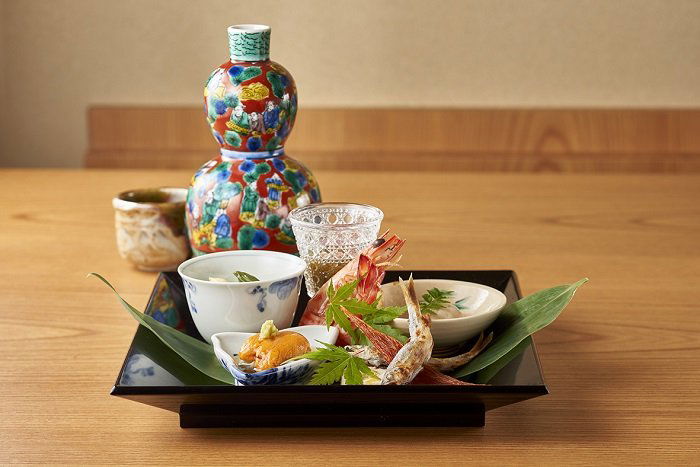
Oryori Ichiho brings Kyoto-tradition Japanese cooking — kombu-based dashi, classical seasonal preparations, bamboo-shoot dumplings, pike conger in summer — to a third-floor room in Ebisu. Michelin Plate recognition in both 2024 and 2025 confirms consistent technical quality at the ¥¥¥ tier, making this one of the more accessible and fairly priced options for serious Japanese cuisine in Tokyo. Booking is straightforward compared to starred venues in the same category.
Verdict
Oryori Ichiho is not a kaiseki tasting marathon or a high-concept omakase experience — and that misconception likely explains why it remains easier to book than many of its Michelin-recognised peers in Tokyo. This is Kyoto-rooted Japanese cuisine served in a third-floor room in Ebisu, guided by chef Ryusuke Yamazaki's clear preference for restraint, seasonal precision, and a dashi tradition built on kombu. The Michelin Plate recognition (2024 and 2025) signals consistent technical merit without the price escalation or booking chaos of starred venues. At the ¥¥¥ price point, it competes on value against a category where ¥¥¥¥ is the norm for comparable craft. If you want honest, ingredient-led Japanese cooking in a neighbourhood where the crowds thin out compared to Ginza or Roppongi, this is worth booking.
Portrait
The name itself sets expectations correctly. "Ichiho" is built around the character for "ho," carrying dual meaning: a step forward, and the idea of bounty or prosperity. That dual register — modest progress, quiet abundance , maps closely to what the kitchen actually does. There is no theatrical presentation for its own sake, no overcrowded menu trying to demonstrate range. What you encounter instead is a disciplined focus on the kind of dishes that define Kyoto's culinary identity: fish steamed with grated turnip, bamboo-shoot dumplings, preparations that reference an older cooking culture rather than reinventing it.
The dashi is the foundation worth paying attention to. Chef Yamazaki's soup stock draws its umami from kombu rather than the more assertive katsuobushi-forward profiles common in Tokyo-style cooking. The result is a lighter, more delicate base that lets seasonal ingredients read clearly rather than being amplified into something they are not. This is a Kyoto sensibility applied to an Ebisu address, and the distinction matters if you are choosing between this and a more generically "Tokyo" Japanese restaurant.
Seasonality is not incidental here , it is the operating logic. Pike conger (hamo) in summer and eddoes (satoimo) in winter are the kind of seasonal markers that signal a kitchen tracking the calendar seriously. These are not trend ingredients; they are embedded in the classical Kyoto repertoire and appear at Ichiho as part of a cooking tradition rather than a seasonal marketing rotation. For visitors arriving in summer, hamo is worth understanding as a technically demanding ingredient , its preparation requires specific knife skill and is one of the clearest signals of a kitchen's classical training. In winter, satoimo dishes offer a different register: earthier, softer, built for cold-weather eating.
On the wine pairing question: Oryori Ichiho sits within a Japanese cuisine category where sake and shochu are the conventional pairing anchors, and where wine programs, when they exist, often default to a short, generic list. The venue record does not confirm a deep wine program here, and the PEA framing is worth applying honestly , if wine list depth is your primary decision variable, this is not the venue to optimise for that. The food's flavour architecture, built around kombu dashi and classical Kyoto preparations, pairs more naturally with well-made junmai or ginjo sake than with European wine. For explorers prioritising the pairing experience as much as the food, the honest recommendation is to lean into sake here rather than seeking a wine-forward conversation.
The Ebisu location (LCUBE EBISU, third floor, 1 Chome-23-10) puts this in a lower-key part of Tokyo compared to the high-density restaurant blocks of Ginza or Nishi-Azabu. Ebisu has a settled, neighbourhood quality that suits a restaurant with this kind of quiet confidence. If you are building a broader Tokyo itinerary around serious eating, cross-reference Myojaku, Azabu Kadowaki, Kagurazaka Ishikawa, and Ginza Fukuju for a fuller picture of where Ichiho sits in the city's Japanese dining tier. Our full Tokyo restaurants guide maps the broader field, and if your Japan trip extends beyond the capital, Gion Sasaki in Kyoto and HAJIME in Osaka offer useful reference points for how Kyoto-tradition cooking scales at higher price points. Elsewhere in Japan, akordu in Nara, Goh in Fukuoka, 1000 in Yokohama, and 6 in Okinawa are worth knowing. For classical Japanese cooking rooted in Kyoto tradition specifically, Isshisoden Nakamura in Kyoto and Kashiwaya Osaka Senriyama are the clearest reference points for how this tradition expresses itself at higher price tiers.
The Google rating of 4.5 across 69 reviews is a modest but consistent signal. The sample size is small enough that it reflects a repeat-visitor audience rather than tourist throughput, which typically reads as a good indicator for neighbourhood restaurants of this type.
Booking & Practical Details
Reservations: Booking difficulty is rated easy by Pearl , considerably more accessible than starred venues in the same cuisine category, and a genuine advantage if your Tokyo schedule is time-sensitive or last-minute. Book at least a week out to be safe, particularly for weekend evenings. Location: LCUBE EBISU 3F, 1 Chome-23-10, Ebisu, Shibuya, Tokyo. Third-floor access , confirm the building entrance before arrival. Budget: ¥¥¥ price range puts this at mid-to-upper Tokyo pricing, below the ¥¥¥¥ tier where starred kaiseki and omakase venues operate. Nearest transport: Ebisu Station (JR Yamanote Line, Tokyo Metro Hibiya Line) is the access point , check walking directions from the east or west exit depending on your approach. Online presence: No website or phone number confirmed in our records; check third-party reservation platforms or contact via the venue's social channels if available. For accommodation and bar recommendations nearby, see our Tokyo hotels guide, Tokyo bars guide, and Tokyo experiences guide.
Trust Signals
- Michelin Plate , 2025
- Michelin Plate , 2024
- Google rating: 4.5 / 5 (69 reviews)
FAQ
What should a first-timer know about Oryori Ichiho?
- This is a Kyoto-tradition Japanese restaurant, not a sushi counter or a European-style kaiseki performance. Expect ingredient-led cooking anchored in kombu dashi and classical seasonal preparations.
- The venue is on the third floor of LCUBE EBISU , confirm the building entrance before you arrive.
- No website is currently confirmed in our records, so use a third-party reservation platform and verify details directly.
- The Michelin Plate recognition (two consecutive years) indicates consistent quality without the price premium of starred venues. For a ¥¥¥ budget, this is a reliable choice for serious Japanese cooking.
- For nearby alternatives in the same cuisine tier, also consider Jingumae Higuchi.
Is Oryori Ichiho worth the price?
- At ¥¥¥, yes , particularly relative to starred venues in the same category that charge ¥¥¥¥ for comparable or only marginally superior cooking. The kombu-based dashi tradition and classical Kyoto preparations represent genuine craft, not just price-point positioning.
- If your benchmark is cost-per-dish against Tokyo's starred kaiseki rooms, Ichiho delivers more accessible value. If your benchmark is against very casual Japanese dining, the pricing will feel refined.
Is the tasting menu worth it at Oryori Ichiho?
- The menu structure is not confirmed in our records, so we cannot confirm whether a fixed tasting menu is the standard format. Given the Kyoto-kaiseki tradition the kitchen operates in, a set-course format is likely, but verify when booking.
- If a tasting menu is available, the Michelin Plate recognition across two years suggests the kitchen executes this format consistently. For the ¥¥¥ tier, that is a reasonable return.
Is Oryori Ichiho good for a special occasion?
- Yes, for the right type of occasion. The Kyoto-rooted cooking, classical technique, and Michelin Plate recognition make this a credible choice for a dinner that needs to feel considered rather than casual.
- It is better suited to an intimate dinner for two or a small group that appreciates Japanese culinary tradition than to a large celebratory booking. Seat count is not confirmed, so contact the venue in advance for group bookings.
Can I eat at the bar at Oryori Ichiho?
- Seating configuration is not confirmed in our records. Given the Kyoto-kaiseki register of the cooking, a counter or bar option may exist, but this cannot be verified without direct confirmation from the venue.
Does Oryori Ichiho handle dietary restrictions?
- No phone or website is confirmed in our records, which makes advance communication harder. If you have dietary restrictions, particularly those that affect dashi (kombu is the base, so this is generally safe for pescatarians, but confirm the full menu structure), contact the venue via a reservation platform ahead of your booking.
- Classical Kyoto cooking does not typically accommodate major dietary changes within a set-course format without advance notice.
What are alternatives to Oryori Ichiho in Tokyo?
- For Japanese cooking at ¥¥¥ in Tokyo: Myojaku and Jingumae Higuchi are worth comparing directly.
- For Kyoto-tradition kaiseki at a higher price point: Azabu Kadowaki and Kagurazaka Ishikawa operate at ¥¥¥¥ and represent the next tier up.
- If the appeal of Ichiho is its Kyoto culinary roots and you are travelling to Kyoto, Gion Sasaki and Isshisoden Nakamura show how the same tradition performs in its original setting. See our Tokyo wineries guide for post-dinner options.
Compare Oryori Ichiho
| Venue | Price | Value |
|---|---|---|
| Oryori Ichiho | ¥¥¥ | — |
| Harutaka | ¥¥¥¥ | — |
| RyuGin | ¥¥¥¥ | — |
| L'Effervescence | ¥¥¥¥ | — |
| HOMMAGE | ¥¥¥¥ | — |
| Florilège | ¥¥¥ | — |
A quick look at how Oryori Ichiho measures up.
Frequently Asked Questions
What are alternatives to Oryori Ichiho in Tokyo?
For starred Japanese dining with more international recognition, RyuGin is the direct step up — more difficult to book and priced higher, but carrying multiple Michelin stars. Harutaka is the alternative if sushi omakase is the preferred format over cooked Japanese cuisine. For French-influenced fine dining at a comparable price point, Florilège and L'Effervescence both hold Michelin recognition in Tokyo. HOMMAGE sits in a similar accessible-fine-dining bracket to Oryori Ichiho. The practical distinction: Oryori Ichiho is the pick if Kyoto culinary tradition specifically is the draw — none of the above replicate that positioning.
What should a first-timer know about Oryori Ichiho?
This is Kyoto-influenced Japanese cooking — think kombu-based soup stocks, fish steamed with grated turnip, and bamboo-shoot dumplings rooted in ancient capital culinary tradition, not a high-concept modern omakase. Priced at ¥¥¥ with a Michelin Plate (2025), it rewards diners who appreciate restrained, season-led cooking over theatrical presentation. Booking is considerably more accessible than starred venues in the same category, so you can plan with less lead time than most comparable Tokyo restaurants. Arrive with curiosity about Kyoto culinary heritage rather than expectations of a kaiseki marathon.
Can I eat at the bar at Oryori Ichiho?
Bar seating specifics are not confirmed in available venue data for Oryori Ichiho. The restaurant occupies the third floor of LCUBE EBISU in Ebisu, Shibuya — a setting that typically suggests an intimate, counter-oriented layout common in this category of Japanese dining. check the venue's official channels to confirm seating configurations before booking, especially if counter seating is a priority for your visit.
Does Oryori Ichiho handle dietary restrictions?
Dietary restriction policies are not documented in available venue data. Given the Kyoto-style cooking format — which relies on kombu-based dashi and seasonal ingredients like fish, bamboo shoots, and root vegetables — strict vegetarian, vegan, or shellfish-allergy requests may require advance coordination. Communicate requirements clearly at the time of reservation rather than on arrival; this is standard practice at this level of Japanese dining.
Is the tasting menu worth it at Oryori Ichiho?
The format here is rooted in Kyoto culinary culture — dishes like fish steamed with grated turnip and bamboo-shoot dumplings reflect a considered, season-driven progression rather than a parade of modern techniques. At ¥¥¥, it is not a budget meal, but it is priced below the city's starred omakase tier, and the Michelin Plate nods in 2024 and 2025 confirm the kitchen is operating at a recognised standard. If you want spectacle or fusion, look elsewhere; if you want technically grounded Japanese cooking with historical depth, the format earns its price.
Is Oryori Ichiho good for a special occasion?
Yes, particularly for occasions where the setting should feel considered rather than loud. The Kyoto-influenced menu, seasonal ingredient focus, and third-floor Ebisu address create a composed atmosphere suited to dinners where the food is meant to anchor the evening. It is a stronger fit for two diners than large groups, and the relatively accessible booking makes it practical for date-specific occasions. For milestone celebrations where Michelin-star status matters as a signal, RyuGin or Harutaka carry more weight — but Oryori Ichiho competes on substance.
Is Oryori Ichiho worth the price?
At ¥¥¥ with a Michelin Plate recognition in both 2024 and 2025, Oryori Ichiho offers good value relative to the category — you are paying for precise, tradition-grounded cooking without the premium attached to starred venues. Seasonal ingredients like pike conger in summer and eddoes in winter anchor the menu to genuine culinary intent rather than trend-chasing. If you are comparing on pure price-to-recognition ratio, it sits favourably against harder-to-book Ebisu and Shibuya alternatives. The value case is strongest for diners who prioritise craft and heritage over prestige optics.
Recognized By

More restaurants in Tokyo
- SézanneOccupying the seventh floor of the Four Seasons Hotel Tokyo at Marunouchi, Sézanne earned its first Michelin star within months of opening in July 2021 and now holds three. British chef Daniel Calvert applies French technique to Japanese ingredients, producing a prix-fixe format that Tabelog has recognised with Silver awards every year from 2023 through 2026. It ranked 4th in Asia's 50 Best Restaurants in 2025 and 15th globally in 2024.
- SazenkaSazenka is the address for Chinese cuisine in Tokyo at its most technically demanding. Chef Tomoya Kawada's wakon-kansai approach — Japanese seasonal ingredients applied through Chinese culinary technique — has earned consecutive Tabelog Gold Awards from 2019 to 2026, a #71 ranking on the World's 50 Best 2025, and 99 points from La Liste 2026. At JPY 50,000–59,999 per head, it is one of the hardest tables in the city to book and worth the effort.
- NarisawaNarisawa is Tokyo's most credentialled innovative tasting menu restaurant — two Michelin stars, Asia's 50 Best number 12, and a Tabelog Silver award — running at JPY 80,000–99,999 per head. Book for a milestone occasion, confirm vegetarian or vegan needs in advance, and reserve at least two to three months out. With 15 seats and reservation-only access, this is one of Tokyo's hardest tables to secure.
- FlorilègeFlorilège delivers two Michelin stars and an Asia's 50 Best #17 ranking at a dinner price of ¥22,000 — competitive for Tokyo at this level. Chef Hiroyasu Kawate's plant-forward tasting menus around an open-kitchen counter at Azabudai Hills make this the strongest choice for contemporary French dining in Tokyo if theatrical, produce-led cooking is what you want. Book well in advance; availability is near-impossible at short notice.
- DenDen holds two Michelin stars, a World's 50 Best top-25 Asia ranking, and a Tabelog Silver Award running back to 2017 — and it books out within hours of the two-month reservation window opening. Chef Zaiyu Hasegawa's daily-changing seasonal omakase runs JPY 30,000–39,999 at dinner in a relaxed house-restaurant setting near Gaiemmae. Book by phone only, noon–5 PM JST. Lunch is irregular; plan around dinner.
- QuintessenceQuintessence is Tokyo's most consistently decorated French restaurant: three Michelin stars held through 2025, a La Liste score of 96.5 points, and a Tabelog Gold run from 2017 to 2024. Dinner runs ¥60,000–¥79,999 all in with wine. Book the first seating (5 PM) well ahead — Near Impossible to secure — and come for classical French cooking executed with sustained precision in a secluded Gotenyama setting.
Similar venues by awards
Related editorial
- Asia's 50 Best Restaurants 2026: The Chairman and Wing Go 1-2 from the Same BuildingThe Chairman takes No. 1 and Wing climbs to No. 2 at Asia's 50 Best Restaurants 2026. Both operate from the same Hong Kong building. Here's what it means.
- Four Seasons Yachts Debut: 95 Suites, 11 Restaurants, and a March 2026 Maiden VoyageFour Seasons I launches March 20, 2026, with 95 suites, a one-to-one staff ratio, and 11 onboard restaurants. Worth tracking if you want hotel-grade service at sea.
- LA Michelin Guide 2026: Seven New Restaurants from Tlayudas to Uzbek DumplingsMichelin's March 2026 California Guide update adds six LA restaurants and one Montecito newcomer, spanning Oaxacan tlayudas, Uzbek manti, and Korean-Italian pasta.
Save or rate Oryori Ichiho on Pearl
Keep this venue in your Pearl passport, rate it after you visit, and track it alongside every other place you collect.