
Restaurant in Tokyo, Japan
Koshita
230ptsAccessible entry point into Tokyo counter dining.

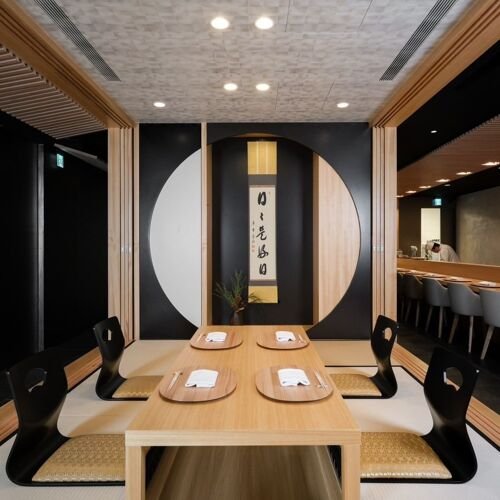
About Koshita
Koshita is a Michelin Plate-recognised Japanese counter in Kudankita, Chiyoda, rated 5.0 on Google across 68 reviews. At ¥¥¥, it sits a full price tier below Tokyo's starred counter venues and is significantly easier to book. The seasonal menu rotates meaningfully, making a return visit in a different season worthwhile.
Should You Book Koshita?
Koshita is easier to book than most Michelin-recognised Japanese restaurants in Tokyo, and at ¥¥¥ it sits a full price tier below comparable kaiseki and counter-format venues in the city. If you want a serious Japanese counter experience without the booking anxiety of the ¥¥¥¥ tier, this is where to look. Google reviewers rate it 5.0 across 68 reviews, and the 2025 Michelin Plate recognition confirms the kitchen is cooking at a level worth your attention. Book it, but read the timing notes below before you do.
The Experience
Koshita occupies a ground-floor unit in a residential building in Kudankita, a quiet pocket of Chiyoda that puts some distance between you and the tourist-heavy dining corridors of Ginza and Shinjuku. The atmosphere here is calm and focused. This is not a loud room; the counter format keeps the energy close and conversational, and the mood is one of concentration rather than celebration. If you are coming after 8 PM expecting a late-night buzz, recalibrate. Koshita rewards early arrivals who want to be present with the food rather than competing with the room.
The counter itself is made from ancient buried cedar, an heirloom passed down from the chef's mentor. That lineage matters here more than as a design detail: it signals a kitchen that takes its inheritance seriously. The chef trained formally and builds on that foundation with combinations that push beyond the conventional boundaries of Japanese cuisine. Unfamiliar ingredients get folded into the repertoire with intent rather than novelty. The chef works the counter in a black shirt and bowtie, which is a deliberate choice that tells you something about the tone — neither stiffly traditional nor casually modern.
For the wanmono course, broth is drawn from two types of makombu seaweed, which deepens the savoury base in a way that single-source dashi does not. Flame-broiled preparations are paired with pureed vegetable soups, a combination that balances char with something softer and more mineral. These are not incidental details — they are the argument for why this counter earns its recognition despite the lower price point relative to ¥¥¥¥ peers like RyuGin.
When to Visit
Timing your visit to Koshita by season will get you more from the menu. Japanese counter cooking at this level is built around what the market delivers each month, and the chef's willingness to incorporate non-traditional ingredients means the seasonal rotation here is less predictable than at a more orthodox kaiseki house. Autumn and early winter are the strongest periods for Japanese counter dining generally , mushrooms, citrus, root vegetables, and rich broths all peak between October and December. Spring brings a different register: lighter broths, young greens, and more delicate preparations. If you have visited once in summer, a return visit in winter will feel like a substantially different restaurant. That gap in experience is worth planning around.
For first-timers, the evening counter is the format to book. For returning guests, the question is less about what time of day and more about what season you missed on your first visit. If you went in spring, come back in late autumn. The makombu broth preparations in particular benefit from colder-weather ingredients, and the pairing logic of flame-broiled items with pureed vegetable soups shifts meaningfully as the produce changes.
Kudankita is well served by the Tokyo Metro Tozai Line and Hanzomon Line (Kudanshita Station), which makes it accessible from most central Tokyo bases without significant transit friction. If you are planning a wider Tokyo dining trip, our full Tokyo restaurants guide covers the full range across price tiers and formats. For pairing dinner with a neighbourhood hotel, our Tokyo hotels guide has options near Chiyoda. You can also browse Tokyo bars, Tokyo wineries, and Tokyo experiences for a fuller itinerary.
How Koshita Fits Into Tokyo's Broader Japanese Dining Map
If Koshita is your entry point into Tokyo's Japanese counter scene, it is worth knowing what sits around it. At the more traditional end of the spectrum, Kagurazaka Ishikawa and Azabu Kadowaki represent the more orthodox kaiseki lineage , both are harder to book and priced above Koshita, but they deliver a more ceremonially structured experience. Myojaku sits closer to Koshita in spirit, with a counter format and a chef who works with seasonal Japanese produce at a similar price tier. Ginza Fukuju and Jingumae Higuchi both operate in the same general bracket and are worth considering as alternatives if Koshita is full.
For reference beyond Tokyo, the same seasonal-counter logic that makes Koshita worth a return visit applies to Gion Sasaki in Kyoto and Isshisoden Nakamura in Kyoto, both of which are in different settings but follow a similar philosophy of seasonal rotation as the core argument for multiple visits. In Osaka, Kashiwaya Osaka Senriyama and HAJIME offer different formats at comparable or higher price tiers. akordu in Nara, Goh in Fukuoka, 1000 in Yokohama, and 6 in Okinawa round out a Japan-wide picture for travellers planning a multi-city trip.
Practical Details
| Detail | Koshita | RyuGin | Harutaka |
|---|---|---|---|
| Price tier | ¥¥¥ | ¥¥¥¥ | ¥¥¥¥ |
| Booking difficulty | Easy | Hard | Hard |
| Format | Counter, Japanese | Kaiseki | Sushi counter |
| Recognition | Michelin Plate 2025 | Michelin starred | Michelin starred |
| Area | Kudankita, Chiyoda | Roppongi | Ginza |
| Google rating | 5.0 (68 reviews) | , | , |
Compare Koshita
| Venue | Cuisine | Awards | Booking Difficulty | Value |
|---|---|---|---|---|
| Koshita | Japanese | The counter of ancient buried cedar is an heirloom from the chef’s honoured mentor. On a foundation of technique cultivated in his apprenticeship, he builds unique combinations of foodstuffs and techniques to place his own stamp on his craft. For wanmono, broth is drawn from two types of makombu seaweed, multiplying the flavours. Flame-broiled items are paired with pureed vegetable soup. Ingredients unfamiliar to Japanese cuisine are enthusiastically added to the repertoire. Expressing freedom of spirit, the chef is resplendent in black shirt and bowtie.; Michelin Plate (2025) | Easy | — |
| Harutaka | Sushi | Michelin 3 Star, World's 50 Best | Unknown | — |
| L'Effervescence | French | Michelin 3 Star, World's 50 Best | Unknown | — |
| RyuGin | Kaiseki, Japanese | Michelin 3 Star, World's 50 Best | Unknown | — |
| HOMMAGE | Innovtive French, French | Michelin 2 Star, World's 50 Best | Unknown | — |
| Crony | Innovative, French | Michelin 2 Star, World's 50 Best | Unknown | — |
How Koshita stacks up against the competition.
Frequently Asked Questions
Can I eat at the bar at Koshita?
Counter seating is the format at Koshita — this is a Japanese counter restaurant, not a table-service room. The counter itself is made from ancient buried cedar, an heirloom passed down from the chef's mentor, so sitting at it is the experience, not an alternative to it. If you prefer table seating, this is not the right venue.
What should I order at Koshita?
Koshita runs a set menu format, so ordering à la carte is not the model here. Pay attention to the wanmono course — the broth is drawn from two types of makombu seaweed, which is a deliberate technique choice that distinguishes it from standard dashi-based preparations. The chef also incorporates ingredients outside the conventional Japanese pantry, so expect combinations that sit outside typical kaiseki reference points.
How far ahead should I book Koshita?
Koshita is more accessible than most Michelin-recognised counters in Tokyo — two to three weeks out is generally sufficient, compared to the months-long waits at Harutaka or RyuGin. That said, weekends and seasonal peaks tighten availability, so booking as soon as your dates are fixed is the practical move. No online booking portal is listed, so contact through a hotel concierge or a dining reservation service is the most reliable route.
Is Koshita good for a special occasion?
Yes, with the right expectations. The setting is a ground-floor unit in a residential building in Kudankita — understated rather than grand — so if a formal or visually impressive room matters for the occasion, look at RyuGin or L'Effervescence instead. What Koshita offers is an intimate counter experience with Michelin Plate recognition and a chef who has a clear point of view, which works well for a dinner where the food should do the talking.
Is Koshita worth the price?
At ¥¥¥, Koshita is priced a full tier below comparable Michelin-recognised kaiseki in Tokyo, which makes the value case clear if counter-format Japanese cooking is what you want. The Michelin Plate (2025) confirms the kitchen is working at a recognised level without the premium attached to starred venues. If you are weighing it against Harutaka or RyuGin, those rooms carry more prestige and higher price tags — Koshita is the stronger call when value relative to quality is the deciding factor.
Recognized By

More restaurants in Tokyo
- SézanneOccupying the seventh floor of the Four Seasons Hotel Tokyo at Marunouchi, Sézanne earned its first Michelin star within months of opening in July 2021 and now holds three. British chef Daniel Calvert applies French technique to Japanese ingredients, producing a prix-fixe format that Tabelog has recognised with Silver awards every year from 2023 through 2026. It ranked 4th in Asia's 50 Best Restaurants in 2025 and 15th globally in 2024.
- SazenkaSazenka is the address for Chinese cuisine in Tokyo at its most technically demanding. Chef Tomoya Kawada's wakon-kansai approach — Japanese seasonal ingredients applied through Chinese culinary technique — has earned consecutive Tabelog Gold Awards from 2019 to 2026, a #71 ranking on the World's 50 Best 2025, and 99 points from La Liste 2026. At JPY 50,000–59,999 per head, it is one of the hardest tables in the city to book and worth the effort.
- NarisawaNarisawa is Tokyo's most credentialled innovative tasting menu restaurant — two Michelin stars, Asia's 50 Best number 12, and a Tabelog Silver award — running at JPY 80,000–99,999 per head. Book for a milestone occasion, confirm vegetarian or vegan needs in advance, and reserve at least two to three months out. With 15 seats and reservation-only access, this is one of Tokyo's hardest tables to secure.
- FlorilègeFlorilège delivers two Michelin stars and an Asia's 50 Best #17 ranking at a dinner price of ¥22,000 — competitive for Tokyo at this level. Chef Hiroyasu Kawate's plant-forward tasting menus around an open-kitchen counter at Azabudai Hills make this the strongest choice for contemporary French dining in Tokyo if theatrical, produce-led cooking is what you want. Book well in advance; availability is near-impossible at short notice.
- DenDen holds two Michelin stars, a World's 50 Best top-25 Asia ranking, and a Tabelog Silver Award running back to 2017 — and it books out within hours of the two-month reservation window opening. Chef Zaiyu Hasegawa's daily-changing seasonal omakase runs JPY 30,000–39,999 at dinner in a relaxed house-restaurant setting near Gaiemmae. Book by phone only, noon–5 PM JST. Lunch is irregular; plan around dinner.
- MyojakuMyojaku is a 2-Michelin-star, 14-course French-leaning omakase in Nishiazabu holding a 4.47 Tabelog score, Tabelog Silver 2025–2026, and Asia's 50 Best #45 (2025). Chef Hidetoshi Nakamura's water-forward, no-dashi approach shifts meaningfully with the seasons — making timing your reservation as important as getting one. Budget JPY 50,000–59,999 per head plus 10% service charge; reservations only, near-impossible to secure.
Similar venues by awards
Related editorial
- Best Fine Dining Restaurants in ParisFrom three-Michelin-star icons to the next generation of Parisian chefs pushing boundaries, these are the restaurants that define fine dining in the world's culinary capital.
- Best Luxury Hotels in RomeFrom rooftop terraces overlooking ancient ruins to Michelin-starred hotel dining, these are the luxury hotels that make Rome unforgettable.
- Best Cocktail Bars in KyotoFrom sleek lounges to hidden speakeasies, Kyoto's cocktail scene blends Japanese precision with global influence in ways you won't find anywhere else.
Save or rate Koshita on Pearl
Keep this venue in your Pearl passport, rate it after you visit, and track it alongside every other place you collect.