
Restaurant in Tokyo, Japan
Kikunoi - Tokyo
1,535ptsKyoto kaiseki in Tokyo, worth the booking effort.


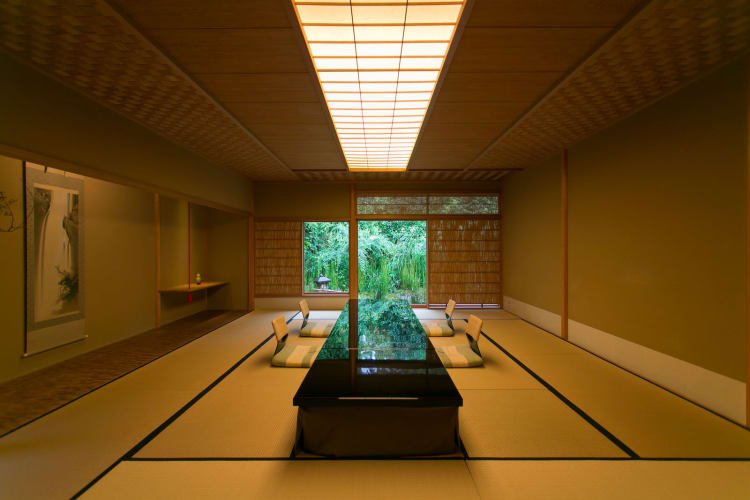
About Kikunoi - Tokyo
Kikunoi Akasaka holds two Michelin stars and consecutive Tabelog Bronze Awards since 2017, making it one of Tokyo's most credentialed kaiseki venues. The menu rotates with the seasons — timing your visit matters. Lunch from 14,300 yen is strong value for the level; dinner runs to 55,000 yen. Book four to six weeks out minimum; peak seasonal windows require more.
Who Should Book Kikunoi Akasaka — and When
Kikunoi Akasaka is the right call for a formal special occasion, a significant business dinner, or any meal where you want Kyoto-style kaiseki without flying to Kyoto. Two Michelin stars (2026), a Tabelog Bronze Award held consecutively since 2017, and a Tabelog score of 3.93 place it firmly in Tokyo's top tier of traditional Japanese dining. If your priority is an immersive, seasonally driven multi-course meal in a setting that earns its price, book here. If you want a more casual or experimental format, look elsewhere.
The Experience
The room at Kikunoi Akasaka is a deliberate contrast to the Akasaka streets outside. A cobblestone approach, bamboo surroundings, and sukiya-style architecture signal that the pace changes the moment you arrive. Seating splits across a 13-seat counter where you can watch the kitchen work, a sunken kotatsu counter with 6 seats, tatami private rooms, and table seating — 50 seats in total across four distinct formats. That flexibility makes it one of the more practical venues in this price tier for mixed groups: counter for solo diners or couples who want engagement with the kitchen, private rooms (available for 2 to 20 guests) for business or family occasions.
The cuisine is kaiseki anchored in Kyoto tradition but adjusted for contemporary Tokyo tastes. The menu rotates with the seasons , this is not a venue where the same dishes appear month after month. Spring brings lighter, more delicate courses built around early-season produce; autumn shifts toward earthier, richer preparations. Visiting in the wrong season for your preferences is a real consideration. If you have a strong preference for a particular Japanese seasonal moment, time your booking accordingly rather than treating any visit as equivalent.
An English multilingual menu is available, which matters more than it might seem at this price point. A sommelier is on hand, and the drink program emphasizes sake and shochu alongside wine , the sake selection is a deliberate focus rather than an afterthought. Perfume and cologne are asked to be avoided so as not to interfere with the food aromas, which tells you something about how seriously the kitchen takes the sensory sequence of the meal.
Pricing and What You Get
Lunch runs 14,300 yen / 17,600 yen / 22,000 yen (tax included, service charge not included). Dinner runs 22,000 yen / 33,000 yen / 55,000 yen (tax included, service charge not included). Add a service charge of 10–20% to calculate your full outlay. At the mid-tier dinner option (33,000 yen plus service), you are in the range of two Michelin-starred kaiseki value in Tokyo. The top-tier dinner at 55,000 yen before service is a serious commitment , reserve that for occasions where the occasion itself justifies the spend. Lunch is the stronger value play: 14,300 yen for a kaiseki lunch at a two-star venue is competitive against the broader Tokyo fine-dining market.
Booking
Reservations are available but this is a near-impossible table to secure at short notice. Tabelog lists reservations as available in principle, but given the Michelin two-star status, Tabelog Bronze Award recognition since 2017, and consistent inclusion in the Tabelog Top 100 Japanese cuisine restaurants in Tokyo, demand far exceeds supply for peak times. Book a minimum of four to six weeks in advance for weekday dinner; weekend dinner and prime seasonal windows (cherry blossom season, autumn foliage) require longer lead times. The entry window is tight , lunch entry is allowed only between 12:00 and 12:30, dinner between 17:00 and 19:00. Closed Monday and Sunday. Also closed during year-end and New Year holidays and Obon season.
Practical Details
Reservations: Essential; book four to six weeks minimum, longer for autumn and spring peak windows. Booking: Via Tabelog or direct contact. Hours: Tuesday–Saturday, lunch 12:00–14:00 (entry 12:00–12:30), dinner 17:00–22:00 (entry 17:00–19:00). Closed Monday, Sunday, year-end holidays, and Obon. Budget: Lunch from 14,300 yen; dinner from 22,000 yen (both tax-included, service charge of 10–20% additional). Dress: No shorts or sandals for men; no perfume or cologne for any guests. Payment: Credit cards accepted (VISA, Mastercard, JCB, AMEX, Diners); electronic money and QR code payments not accepted. Getting there: 10-minute walk from Akasaka Station (Chiyoda Line). No on-site parking; coin parking available nearby. Families: Children welcome; guests with children 12 and under are accommodated in private rooms during evening service only. Private dining: Private rooms available for 2–20 guests; full venue hire for 20–50 guests.
How It Compares
See the comparison section below for how Kikunoi Akasaka sits against RyuGin and other peers in the Tokyo kaiseki and high-end Japanese dining tier.
Pearl Picks Nearby and Beyond
If you are building a Tokyo dining itinerary around this calibre of Japanese cuisine, consider Hirosaku and Ajihiro for additional traditional Japanese options in Tokyo, or Akasaka Ogino if you want to stay in the Akasaka neighbourhood. Aoyama Jin and Bulgari Cafe II offer contrast in the same general area of central Tokyo.
For kaiseki comparisons outside Tokyo, Ifuki and Ankyu in Kyoto represent the source tradition that Kikunoi Akasaka draws from. Beyond Tokyo, Pearl covers high-end Japanese dining at HAJIME in Osaka, Gion Sasaki in Kyoto, akordu in Nara, Goh in Fukuoka, 1000 in Yokohama, and 6 in Okinawa. For full Tokyo coverage, see our full Tokyo restaurants guide, our full Tokyo hotels guide, our full Tokyo bars guide, our full Tokyo wineries guide, and our full Tokyo experiences guide.
Frequently Asked Questions
- Is Kikunoi Akasaka good for a special occasion? Yes , it is one of the more complete special-occasion venues in Tokyo's formal Japanese dining tier. Two Michelin stars, private rooms for 2–20 guests, a sommelier, and a setting that signals occasion from the moment you arrive make it a sound choice for birthdays, anniversaries, or significant business meals. Dinner from 22,000 yen (plus service) is the entry point; for a genuinely memorable evening, budget for the 33,000 yen or 55,000 yen course.
- What should I order at Kikunoi Akasaka? Kikunoi is an omakase-format kaiseki restaurant , the kitchen sets the menu and the seasonal rotation determines what you eat. You choose a course tier (three options at lunch, three at dinner), not individual dishes. The kitchen has a particular focus on fish. If sake pairing matters to you, the drink program here is more carefully considered than at most venues in this price band.
- How far ahead should I book Kikunoi Akasaka? Four to six weeks minimum for a weekday dinner; longer for weekends or peak seasonal periods. Spring (March–April) and autumn (October–November) are the most sought-after windows given how directly those seasons shape the menu. For year-end dinners, eight to twelve weeks is not excessive. Note the venue closes during year-end and New Year holidays and during Obon.
- What should I wear to Kikunoi Akasaka? Smart casual at minimum; formal is appropriate and common. Men may not wear shorts or sandals , this is enforced. No perfume or cologne for any guests, which is an unusual but firm house rule tied to the kitchen's approach to the meal. Err toward conservative, understated clothing.
- What are alternatives to Kikunoi Akasaka in Tokyo? For kaiseki at a comparable level, RyuGin is the most direct peer , technically adventurous where Kikunoi is traditional, and similarly difficult to book. For a different high-end format entirely, Harutaka offers sushi at a comparable price tier. If you want to stay in Tokyo but experience a more contemporary interpretation of Japanese fine dining, L'Effervescence uses French technique with strong Japanese ingredient focus.
- Is lunch or dinner better at Kikunoi Akasaka? Lunch is the better value decision: from 14,300 yen (tax included) versus 22,000 yen at dinner, you get a kaiseki experience at a two-star venue for roughly two-thirds of the dinner entry price. The entry window is tight (12:00–12:30 only), so punctuality matters. Dinner offers the fuller range of course tiers , up to 55,000 yen , and the tatami room atmosphere shifts perceptibly in the evening. If budget is a constraint, lunch; if atmosphere and occasion are the priority, dinner.
Compare Kikunoi - Tokyo
| Venue | Price | Value |
|---|---|---|
| Kikunoi - Tokyo | — | |
| Harutaka | ¥¥¥¥ | — |
| L'Effervescence | ¥¥¥¥ | — |
| RyuGin | ¥¥¥¥ | — |
| HOMMAGE | ¥¥¥¥ | — |
| Crony | ¥¥¥¥ | — |
A quick look at how Kikunoi - Tokyo measures up.
Frequently Asked Questions
Is Kikunoi - Tokyo good for a special occasion?
Yes — it is one of the stronger cases for a formal special occasion in Tokyo. Michelin 2 stars (2026), a Tabelog score of 3.93, private rooms available for groups of 2 to 20, and a dress code all signal that the room is calibrated for milestone dinners and serious business entertaining. The restaurant explicitly lists celebrations and surprises as a service offering, so staff are accustomed to handling occasion requests.
What should I order at Kikunoi - Tokyo?
Kikunoi serves kaiseki only — there is no à la carte menu. At lunch, three fixed menus are available at 14,300 yen, 17,600 yen, and 22,000 yen (tax included). At dinner, the tiers run 22,000 yen, 33,000 yen, and 55,000 yen. The kitchen is noted for its focus on fish and a sake programme the restaurant describes as a particular strength, so pairing sake rather than wine is worth considering.
How far ahead should I book Kikunoi - Tokyo?
Four to six weeks minimum for a standard booking; longer during autumn and spring, when demand for kaiseki in Tokyo peaks. Entry is restricted to a tight arrival window — 12:00 to 12:30 for lunch and 17:00 to 19:00 for dinner — so latecomers may be turned away even with a reservation. Book via Tabelog or direct contact at 03-3568-6055.
What should I wear to Kikunoi - Tokyo?
The dress code is explicit: men may not wear shorts or sandals, and all guests are asked to avoid perfume or cologne so the aroma of the food is not disrupted. Smart, understated clothing is the practical call — think what you would wear to any formal Japanese ryotei. This is not a venue where casual dress will pass quietly.
What are alternatives to Kikunoi - Tokyo in Tokyo?
For Tokyo kaiseki at a comparable Michelin level, RyuGin (3 stars) is the obvious step up in prestige but commands a significantly higher price floor. If you want Kyoto-style kaiseki with a slightly more accessible booking window, Kikunoi Akasaka holds the stronger value case given its Tabelog 100 selection and consistent Bronze Award history since 2017. For high-end Japanese dining outside the kaiseki format, Harutaka offers a counter-focused alternative in the sushi tier.
Is lunch or dinner better at Kikunoi - Tokyo?
Lunch is the better entry point if price is a factor — the lowest tier starts at 14,300 yen versus 22,000 yen at dinner, and the format and kitchen quality are consistent across both services. Dinner makes more sense for a special occasion or if you want the full range of the menu, including the 55,000 yen tasting tier. Note that private rooms for families with children under 12 are only available in the evening.
Hours
- Monday
- Closed
- Tuesday
- 12–2 pm, 5–10 pm
- Wednesday
- 12–2 pm, 5–10 pm
- Thursday
- 12–2 pm, 5–10 pm
- Friday
- 12–2 pm, 5–10 pm
- Saturday
- 12–2 pm, 5–10 pm
- Sunday
- Closed
Recognized By


More restaurants in Tokyo
- SézanneOccupying the seventh floor of the Four Seasons Hotel Tokyo at Marunouchi, Sézanne earned its first Michelin star within months of opening in July 2021 and now holds three. British chef Daniel Calvert applies French technique to Japanese ingredients, producing a prix-fixe format that Tabelog has recognised with Silver awards every year from 2023 through 2026. It ranked 4th in Asia's 50 Best Restaurants in 2025 and 15th globally in 2024.
- SazenkaSazenka is the address for Chinese cuisine in Tokyo at its most technically demanding. Chef Tomoya Kawada's wakon-kansai approach — Japanese seasonal ingredients applied through Chinese culinary technique — has earned consecutive Tabelog Gold Awards from 2019 to 2026, a #71 ranking on the World's 50 Best 2025, and 99 points from La Liste 2026. At JPY 50,000–59,999 per head, it is one of the hardest tables in the city to book and worth the effort.
- NarisawaNarisawa is Tokyo's most credentialled innovative tasting menu restaurant — two Michelin stars, Asia's 50 Best number 12, and a Tabelog Silver award — running at JPY 80,000–99,999 per head. Book for a milestone occasion, confirm vegetarian or vegan needs in advance, and reserve at least two to three months out. With 15 seats and reservation-only access, this is one of Tokyo's hardest tables to secure.
- FlorilègeFlorilège delivers two Michelin stars and an Asia's 50 Best #17 ranking at a dinner price of ¥22,000 — competitive for Tokyo at this level. Chef Hiroyasu Kawate's plant-forward tasting menus around an open-kitchen counter at Azabudai Hills make this the strongest choice for contemporary French dining in Tokyo if theatrical, produce-led cooking is what you want. Book well in advance; availability is near-impossible at short notice.
- DenDen holds two Michelin stars, a World's 50 Best top-25 Asia ranking, and a Tabelog Silver Award running back to 2017 — and it books out within hours of the two-month reservation window opening. Chef Zaiyu Hasegawa's daily-changing seasonal omakase runs JPY 30,000–39,999 at dinner in a relaxed house-restaurant setting near Gaiemmae. Book by phone only, noon–5 PM JST. Lunch is irregular; plan around dinner.
- MyojakuMyojaku is a 2-Michelin-star, 14-course French-leaning omakase in Nishiazabu holding a 4.47 Tabelog score, Tabelog Silver 2025–2026, and Asia's 50 Best #45 (2025). Chef Hidetoshi Nakamura's water-forward, no-dashi approach shifts meaningfully with the seasons — making timing your reservation as important as getting one. Budget JPY 50,000–59,999 per head plus 10% service charge; reservations only, near-impossible to secure.
Related editorial
- Best Fine Dining Restaurants in ParisFrom three-Michelin-star icons to the next generation of Parisian chefs pushing boundaries, these are the restaurants that define fine dining in the world's culinary capital.
- Best Luxury Hotels in RomeFrom rooftop terraces overlooking ancient ruins to Michelin-starred hotel dining, these are the luxury hotels that make Rome unforgettable.
- Best Cocktail Bars in KyotoFrom sleek lounges to hidden speakeasies, Kyoto's cocktail scene blends Japanese precision with global influence in ways you won't find anywhere else.
Save or rate Kikunoi - Tokyo on Pearl
Keep this venue in your Pearl passport, rate it after you visit, and track it alongside every other place you collect.