
Restaurant in Tokyo, Japan
Kaiseki Komuro
520ptsMichelin-starred kaiseki; book two months out.


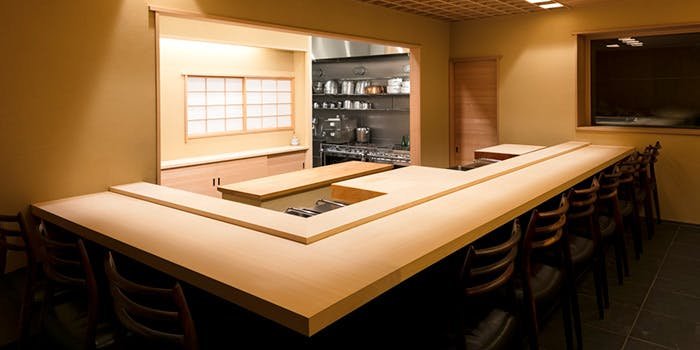
About Kaiseki Komuro
A Michelin-starred kaiseki restaurant in Shinjuku with narrow daily service windows and serious booking competition. Chef Mitsuhiro Komuro's room holds La Liste and OAD recognition across three consecutive years. Book two months out minimum — this is a special occasion destination, not a walk-in option, and the format demands full commitment to the kaiseki sequence.
Book at least two months out — and don't wait for a special occasion to justify it
The single most useful thing to know about Kaiseki Komuro before anything else: the window for a reservation is narrower than the lunchtime seating itself. Chef Mitsuhiro Komuro runs a tightly controlled kitchen in Shinjuku's Wakamiyacho, with lunch and dinner each limited to a one-hour service window (noon to 1 pm; 6 to 8 pm), six days a week, Sunday closed. Seats fill weeks in advance. If you are planning around a specific date, treat this like booking a Michelin table in Kyoto during cherry blossom season, not a neighbourhood kaiseki you can call the week before.
What Kaiseki Komuro is
Kaiseki Komuro is a formal kaiseki restaurant in Shinjuku City, Tokyo, earning a Michelin star in 2024 and appearing on both the La Liste Leading Restaurants list (81.5 points, 2025) and the Opinionated About Dining ranking for Japan, where it climbed from Recommended status in 2023 to #422 in 2024 and #514 in 2025. That slight OAD slip is worth noting: it does not indicate a fall in quality so much as an increasingly competitive field of Tokyo kaiseki. The venue sits at the leading of the ¥¥¥¥ price tier, so arrive with expectations calibrated accordingly.
The address — 35-4 Wakamiyacho, Shinjuku City , places it in a quieter residential pocket of Shinjuku, away from the station's commercial noise. Visually, this matters: the room is likely intimate and deliberately composed, consistent with kaiseki tradition, where the visual arrangement of each course is part of the dining contract. You are not coming here for a lively dining room. You are coming for focused, sequential attention to food, service, and presentation across a meal designed to be experienced in order. If that sounds like an obligation rather than a pleasure, this is not your restaurant.
For a special occasion, whether a birthday dinner, a significant business meal, or a trip to Tokyo built around food, Kaiseki Komuro offers the kind of controlled, high-effort experience that justifies a ¥¥¥¥ spend. The Michelin star and La Liste recognition give it verifiable credibility; 74 Google reviews averaging 4.2 suggest the experience holds up beyond the awards circuit. That Google sample is small, which itself signals something: this is not a venue chasing volume or walk-in traffic.
On the question of takeout and delivery
Kaiseki is among the least delivery-compatible formats in Japanese cuisine, and Kaiseki Komuro's operating model reinforces this. The one-hour lunch and dinner windows exist because kaiseki is a timed, sequential format where temperature, plating, and pacing are inseparable from the food itself. Nothing about a kaiseki progression is designed to travel. If you are considering any kind of off-premise option, redirect that energy toward securing an in-restaurant booking. The experience at Komuro is specifically built around the room, the sequence, and the service. Takeout is not a viable alternative here; it is a different category entirely.
For high-quality Japanese food that does travel well , bentō formats, soba, or ramen , Tokyo has excellent options at every price tier, but none of them replicate what you come to Kaiseki Komuro for. Treat this as a sit-down-only commitment from the moment you book.
Timing and practical logistics
The leading time to visit Kaiseki Komuro is a weekday lunch in spring or autumn, when Tokyo's kaiseki kitchens are working with the widest seasonal range of produce and when a midday meal gives you the rest of the afternoon to process the experience rather than rushing back to a hotel. Avoid booking a lunch immediately before an afternoon flight or a packed itinerary , the one-hour window is short, but you will want time after.
Sunday closures mean weekend planning requires working around Saturday only. Saturday dinner is the hardest booking to secure and the most in-demand slot; if you are flexible, a weekday lunch will typically be easier and will still give you the full kaiseki format. Hours are tight across the board: lunch seating begins at noon with last entry at 1 pm, dinner at 6 pm with last entry at 8 pm. Late arrivals are not a realistic option here.
No booking method, dress code, or seat configuration is confirmed in available data, but at a Michelin-starred kaiseki restaurant in this price bracket, smart-casual at minimum is the safe assumption , Tokyo's formal kaiseki rooms consistently expect a level of presentation from diners that matches the effort on the plate. Enquire directly when booking.
How it fits into Tokyo's kaiseki and fine dining map
Tokyo's kaiseki scene has enough depth that where you book should depend on what you are optimising for. See the comparison section below for a direct breakdown. If you are building a broader Japan itinerary around this kind of dining, Gion Sasaki in Kyoto and Isshisoden Nakamura in Kyoto are the obvious benchmarks for traditional kaiseki in its home city. In Osaka, Kashiwaya Osaka Senriyama and HAJIME offer comparable commitment at the top tier. Closer to Tokyo, 1000 in Yokohama is worth considering if your schedule allows.
Within Shinjuku and nearby Tokyo neighbourhoods, Kagurazaka Ishikawa is the direct local peer , also kaiseki, also Michelin-recognised, and geographically close. Myojaku, Azabu Kadowaki, Ginza Fukuju, and Jingumae Higuchi round out the serious Japanese fine dining options across the city at this price level. For a broader view of where Komuro sits in Tokyo's dining scene, see our full Tokyo restaurants guide. If you are building a full trip, our Tokyo hotels guide, Tokyo bars guide, and Tokyo experiences guide cover the rest.
Pearl's verdict
Book Kaiseki Komuro if you are in Tokyo for a special occasion meal and want a Michelin-credentialed kaiseki experience in Shinjuku with a tighter, more intimate format than the city's largest kaiseki rooms. The multi-award recognition , Michelin, La Liste, OAD , across three consecutive years gives it a documented track record. The constraints (short service windows, Sunday closure, advance booking required) are not drawbacks; they are features of the format. Go in knowing what kaiseki demands of a diner and you will get exactly what the awards suggest. If the rigid timing or price tier is a concern, Kagurazaka Ishikawa and Myojaku are the first alternatives to consider.
How far ahead should I book Kaiseki Komuro?
Plan for a minimum of two months in advance, and more if you are targeting a Saturday dinner or a peak travel period (late March to early May, October to November). This is a small-volume restaurant with narrow daily service windows , noon to 1 pm and 6 to 8 pm , running six days a week, Sunday closed. Demand consistently outpaces availability at this Michelin-starred, La Liste-recognised level. If you find yourself within four weeks of your target date, check for cancellations but have a backup option ready.
What should I wear to Kaiseki Komuro?
No dress code is confirmed in available data, but smart-casual is the floor at a ¥¥¥¥ Michelin-starred kaiseki restaurant in Tokyo. That means no shorts, no trainers, and nothing you would wear to a casual lunch. At formal kaiseki rooms in this price tier, business casual or above is standard practice across Tokyo and Kyoto. When you book, ask directly , the response will also tell you something about how the room is run.
Can I eat at the bar at Kaiseki Komuro?
Seat configuration at Kaiseki Komuro is not confirmed in available data. Kaiseki restaurants in Tokyo at this level often feature counter seating that provides a direct view of the kitchen, which some diners prefer over table seating for the interaction it allows. Whether a bar or counter option exists here, and whether walk-in counter seats are possible, is not known. Contact the restaurant directly when booking to ask about seating preferences.
Is the tasting menu worth it at Kaiseki Komuro?
Yes, at this awards level. A Michelin star, La Liste recognition at 81.5 points, and three consecutive years on the OAD Japan ranking confirm the kitchen's credentials. Kaiseki is a fixed-format, multi-course meal by definition , there is no à la carte equivalent at a restaurant like this. The question is not whether the tasting menu is worth it versus ordering à la carte; it is whether the ¥¥¥¥ kaiseki format suits your group. For a special occasion meal in Tokyo where the food is the event, the answer is yes. If you want a more flexible high-end Japanese dinner, consider Harutaka for sushi instead.
What are alternatives to Kaiseki Komuro in Tokyo?
For kaiseki specifically, Kagurazaka Ishikawa is the closest geographic and format peer. RyuGin operates at a higher public profile and is arguably easier to research in English, making it a better starting point for first-time kaiseki diners in Tokyo. If you want to stay at the ¥¥¥¥ tier but prefer a different cuisine format, L'Effervescence and Crony offer serious tasting-menu cooking in a less ceremonially demanding context. Myojaku, Azabu Kadowaki, and Jingumae Higuchi round out the shortlist for traditional Japanese fine dining in the city.
Is Kaiseki Komuro worth the price?
At the ¥¥¥¥ tier with a Michelin star, La Liste listing (81.5 points), and OAD Leading Japan recognition across three years, Kaiseki Komuro has the credentials to justify its price for diners who value formal kaiseki as a format. The Google rating of 4.2 across 74 reviews is modest in sample size but consistent with a restaurant that is not chasing broad popularity. Worth it? Yes, if kaiseki is your target format and Shinjuku works geographically. If you are still deciding whether kaiseki is the right spend versus other Tokyo fine dining options, compare it against RyuGin for a better-known kaiseki alternative, or HOMMAGE for creative French at a comparable price point.
Compare Kaiseki Komuro
| Venue | Cuisine | Price | Awards | Booking Difficulty | Value |
|---|---|---|---|---|---|
| Kaiseki Komuro | Japanese | ¥¥¥¥ | Opinionated About Dining Top Restaurants in Japan Ranked #514 (2025); La Liste Top Restaurants (2025): 81.5pts; Opinionated About Dining Top Restaurants in Japan Ranked #422 (2024); Michelin 1 Star (2024); Opinionated About Dining Top Restaurants in Japan Recommended (2023) | Hard | — |
| Harutaka | Sushi | ¥¥¥¥ | Michelin 3 Star, World's 50 Best | Unknown | — |
| L'Effervescence | French | ¥¥¥¥ | Michelin 3 Star, World's 50 Best | Unknown | — |
| RyuGin | Kaiseki, Japanese | ¥¥¥¥ | Michelin 3 Star, World's 50 Best | Unknown | — |
| HOMMAGE | Innovtive French, French | ¥¥¥¥ | Michelin 2 Star, World's 50 Best | Unknown | — |
| Crony | Innovative, French | ¥¥¥¥ | Michelin 2 Star, World's 50 Best | Unknown | — |
How Kaiseki Komuro stacks up against the competition.
Frequently Asked Questions
How far ahead should I book Kaiseki Komuro?
Aim for at least two months in advance, especially for weekend lunch seatings. Kaiseki Komuro runs a single one-hour lunch window (12–1 pm) and a two-hour dinner window (6–8 pm), six days a week, which keeps overall seat availability low. Sunday closures tighten the weekly calendar further. If your dates are fixed, book the day your travel window opens.
What should I wear to Kaiseki Komuro?
Formal or dressy business attire is the appropriate call for a Michelin-starred kaiseki restaurant at the ¥¥¥¥ price level. Kaiseki is among the most structured formats in Japanese cuisine, and the dining room at this tier will read underdressed if you arrive in casual clothing. Avoid sportswear, shorts, or trainers.
Can I eat at the bar at Kaiseki Komuro?
Counter or bar seating details are not confirmed in available data for Kaiseki Komuro. Traditional kaiseki restaurants often seat guests at private tables rather than open counters, so do not assume walk-in counter access is an option here. check the venue's official channels to confirm seating configurations before your visit.
Is the tasting menu worth it at Kaiseki Komuro?
If kaiseki is your format, yes. Kaiseki Komuro holds a Michelin star (2024), an 81.5-point La Liste ranking, and consecutive appearances on Opinionated About Dining's Japan list through 2023–2025. At ¥¥¥¥ pricing, you are paying for a chef-driven seasonal tasting sequence with documented critical validation. If you want à la carte flexibility or a shorter meal, this format is not built for that.
What are alternatives to Kaiseki Komuro in Tokyo?
RyuGin is the comparison to make if you want kaiseki with broader international recognition and a longer critical track record. L'Effervescence is worth considering if French-influenced fine dining is acceptable alongside kaiseki on your shortlist. HOMMAGE and Crony sit at different points on the formality and format spectrum. Kaiseki Komuro's case is specifically its Shinjuku location and its Michelin-credentialed kaiseki format at a more contained scale.
Is Kaiseki Komuro worth the price?
At ¥¥¥¥, Kaiseki Komuro is priced at the upper end of Tokyo dining, and the credentials justify the ask: Michelin 1 Star (2024), La Liste Top Restaurants at 81.5 points, and a rising OAD Japan ranking from recommended in 2023 to #422 in 2024 and #514 in 2025. The value case is strongest if you specifically want kaiseki in Shinjuku and are booking for a meal that warrants the format. For a lower-commitment fine dining option, the alternatives listed above offer different price-to-format trade-offs.
Hours
- Monday
- 12–1 pm, 6–8 pm
- Tuesday
- 12–1 pm, 6–8 pm
- Wednesday
- 12–1 pm, 6–8 pm
- Thursday
- 12–1 pm, 6–8 pm
- Friday
- 12–1 pm, 6–8 pm
- Saturday
- 12–1 pm, 6–8 pm
- Sunday
- Closed
Recognized By


More restaurants in Tokyo
- SézanneOccupying the seventh floor of the Four Seasons Hotel Tokyo at Marunouchi, Sézanne earned its first Michelin star within months of opening in July 2021 and now holds three. British chef Daniel Calvert applies French technique to Japanese ingredients, producing a prix-fixe format that Tabelog has recognised with Silver awards every year from 2023 through 2026. It ranked 4th in Asia's 50 Best Restaurants in 2025 and 15th globally in 2024.
- SazenkaSazenka is the address for Chinese cuisine in Tokyo at its most technically demanding. Chef Tomoya Kawada's wakon-kansai approach — Japanese seasonal ingredients applied through Chinese culinary technique — has earned consecutive Tabelog Gold Awards from 2019 to 2026, a #71 ranking on the World's 50 Best 2025, and 99 points from La Liste 2026. At JPY 50,000–59,999 per head, it is one of the hardest tables in the city to book and worth the effort.
- NarisawaNarisawa is Tokyo's most credentialled innovative tasting menu restaurant — two Michelin stars, Asia's 50 Best number 12, and a Tabelog Silver award — running at JPY 80,000–99,999 per head. Book for a milestone occasion, confirm vegetarian or vegan needs in advance, and reserve at least two to three months out. With 15 seats and reservation-only access, this is one of Tokyo's hardest tables to secure.
- FlorilègeFlorilège delivers two Michelin stars and an Asia's 50 Best #17 ranking at a dinner price of ¥22,000 — competitive for Tokyo at this level. Chef Hiroyasu Kawate's plant-forward tasting menus around an open-kitchen counter at Azabudai Hills make this the strongest choice for contemporary French dining in Tokyo if theatrical, produce-led cooking is what you want. Book well in advance; availability is near-impossible at short notice.
- DenDen holds two Michelin stars, a World's 50 Best top-25 Asia ranking, and a Tabelog Silver Award running back to 2017 — and it books out within hours of the two-month reservation window opening. Chef Zaiyu Hasegawa's daily-changing seasonal omakase runs JPY 30,000–39,999 at dinner in a relaxed house-restaurant setting near Gaiemmae. Book by phone only, noon–5 PM JST. Lunch is irregular; plan around dinner.
- MyojakuMyojaku is a 2-Michelin-star, 14-course French-leaning omakase in Nishiazabu holding a 4.47 Tabelog score, Tabelog Silver 2025–2026, and Asia's 50 Best #45 (2025). Chef Hidetoshi Nakamura's water-forward, no-dashi approach shifts meaningfully with the seasons — making timing your reservation as important as getting one. Budget JPY 50,000–59,999 per head plus 10% service charge; reservations only, near-impossible to secure.
Similar venues by awards
Related editorial
- Best Fine Dining Restaurants in ParisFrom three-Michelin-star icons to the next generation of Parisian chefs pushing boundaries, these are the restaurants that define fine dining in the world's culinary capital.
- Best Luxury Hotels in RomeFrom rooftop terraces overlooking ancient ruins to Michelin-starred hotel dining, these are the luxury hotels that make Rome unforgettable.
- Best Cocktail Bars in KyotoFrom sleek lounges to hidden speakeasies, Kyoto's cocktail scene blends Japanese precision with global influence in ways you won't find anywhere else.
Save or rate Kaiseki Komuro on Pearl
Keep this venue in your Pearl passport, rate it after you visit, and track it alongside every other place you collect.