
Restaurant in Tokyo, Japan
Kagurazaka Marutomi
290ptsIwate wagyu, menu changes twice monthly.

About Kagurazaka Marutomi
A wagyu-specialist kaiseki restaurant in Kagurazaka with a menu that changes twice monthly, built around Iwate Prefecture beef sourced through chef Kenichi Onodera's family farming connections. Two consecutive Michelin Plates (2024–2025) and a 4.7 Google rating confirm consistent quality at ¥¥¥ — a recognised standard without the booking friction of Tokyo's starred rooms.
Verdict
The menu at Kagurazaka Marutomi changes twice a month. That's not a marketing detail — it's the reason to book here over a dozen comparable wagyu-forward restaurants in Tokyo. Each bi-monthly reset means the kitchen is working with whatever Iwate Prefecture is producing right now: seasonal wild plants, matsutake mushrooms when they're in, and a rotating cast of preparations across the char-grilled, fried, and sukiyaki formats. If you visited six months ago, you haven't seen the current menu. Come back.
At ¥¥¥, Marutomi sits a tier below the top-end kaiseki circuit, making it one of the more accessible entry points into serious wagyu dining in Kagurazaka. Two consecutive Michelin Plates (2024 and 2025) confirm it's operating at a recognised standard without the booking obstacle or the invoice shock of a starred room. Google reviewers back that up with a 4.7 across 69 reviews — a tight, high-confidence score that suggests consistent execution rather than a few outlying rave nights.
What Defines the Menu
The sourcing logic at Marutomi is more specific than most wagyu restaurants will tell you. Chef Kenichi Onodera named the restaurant after his grandfather's cattle farm , Marutomi , and his family ran a butcher's shop in Ichinoseki, in Iwate Prefecture. That regional commitment isn't sentiment; it's operational. The beef comes from a supply chain Onodera has known his whole life, which gives the kitchen an unusual degree of control over what it's working with.
The result is a format that blends traditional multi-course kaiseki structure with beef as the central thread. Wagyu appears across cooking methods , char-grilled cuts, fried preparations, and sukiyaki built around seasonal foraged ingredients and matsutake mushrooms when the season allows. The menu's twice-monthly refresh means sourcing drives the calendar, not the other way around. That's a meaningfully different model from restaurants that fix a tasting menu and source to match it.
For a return visitor, this is the key question to ask yourself: what season are you going in? Autumn visits coincide with matsutake season, which elevates the sukiyaki course into something worth specifically timing a trip around. Spring brings edible wild plants onto the menu in greater variety. The menu structure doesn't change, but the ingredients do, and the difference is noticeable at the plate.
The Room and Setting
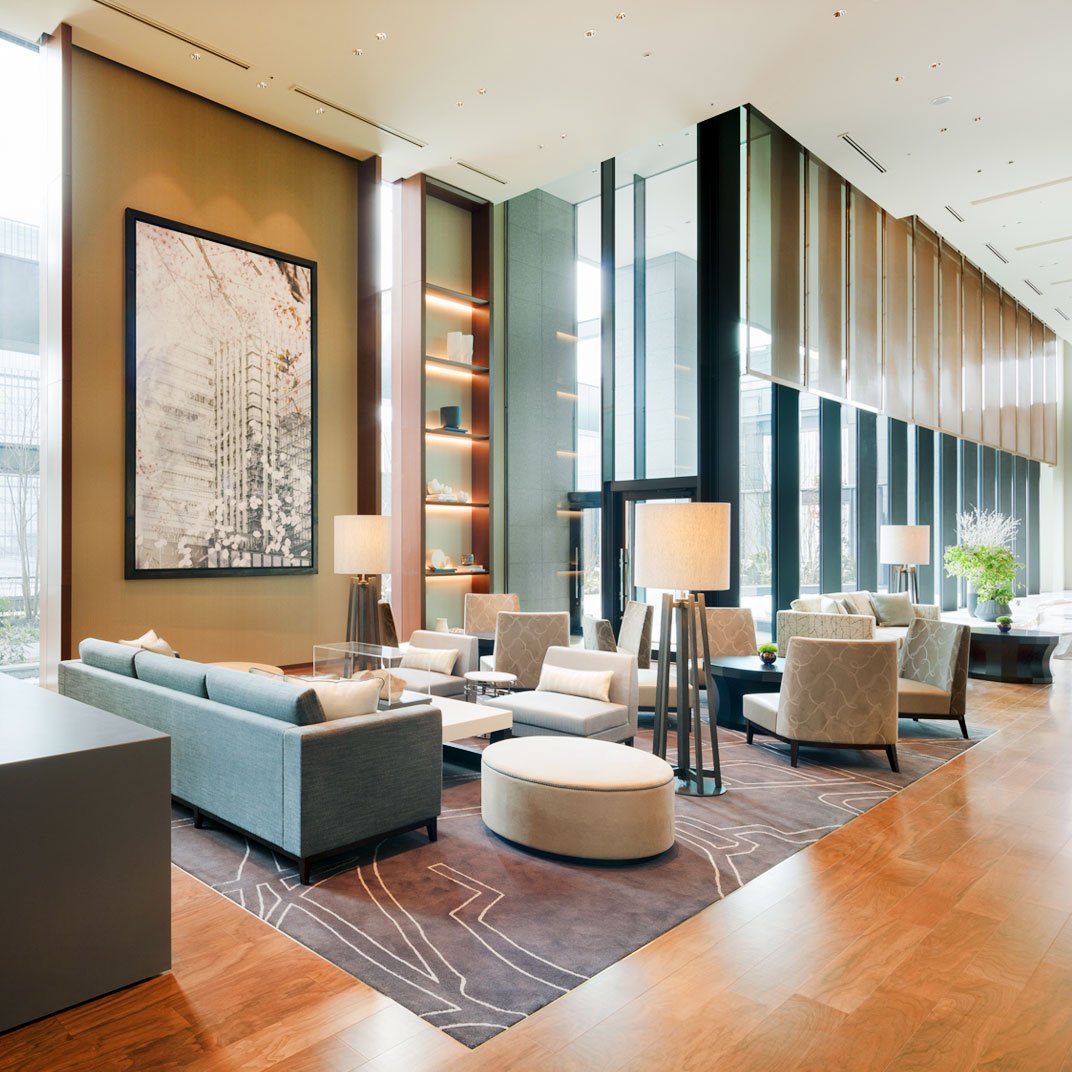
Kagurazaka is one of Tokyo's more visually distinct dining neighbourhoods , a former geisha district with narrow stone lanes and low-lit facades that give the area a different texture from Ginza or Roppongi. Marutomi is located in the Fukuromachi part of Shinjuku City, inside a residential-scale building (クレール神楽坂 14). The setting is quiet and deliberately low-key for a restaurant at this recognition level, which is consistent with the neighbourhood's character. You're not arriving into a designed spectacle; the room is the backdrop, and the food is the focus.
For a first-time visitor to Kagurazaka, the neighbourhood itself warrants arriving early. The streets around the restaurant are worth walking before your reservation. For regulars comparing Marutomi's setting to comparable venues: it's closer in feel to Kagurazaka Ishikawa or Myojaku in its restraint than to the louder design statements you'll find further south in the city.
How It Fits the Tokyo Circuit
If you're building a multi-day Tokyo itinerary around serious Japanese dining, Marutomi fills a specific gap: a wagyu-specialist kaiseki format at a price point that doesn't require the weeks-out booking discipline of the starred tier. It pairs naturally with a sushi night at a counter venue and a lighter lunch, rather than competing with a full kaiseki experience at somewhere like Azabu Kadowaki or Ginza Fukuju.
For visitors extending the trip to other cities: Gion Sasaki in Kyoto and Kashiwaya Osaka Senriyama offer kaiseki comparisons in different regional registers, while HAJIME in Osaka is the logical next step if you want a more technically ambitious multi-course experience. Within Tokyo, Jingumae Higuchi is worth knowing as a further reference point in the Japanese fine dining tier.
See our full Tokyo restaurants guide for the broader picture, alongside our Tokyo hotels guide, bars guide, wineries guide, and experiences guide for planning context. Further afield: akordu in Nara, Goh in Fukuoka, 1000 in Yokohama, 6 in Okinawa, and Isshisoden Nakamura in Kyoto round out the Japan fine dining map worth tracking.
Booking and Practical Notes
Booking difficulty is rated Easy, which is relatively uncommon for a Michelin-recognised wagyu specialist in central Tokyo. That's useful information: you don't need to plan weeks ahead, but the twice-monthly menu change means it's worth being intentional about when you go rather than defaulting to whatever date is available. Autumn is the season to prioritise if your schedule allows.
Phone and website details are not confirmed in our current data , verify booking channels directly. Kagurazaka is served by the Touzai Line (Kagurazaka Station) and is walkable from Iidabashi on the JR and subway lines.
Quick reference: Wagyu kaiseki, ¥¥¥, Kagurazaka (Shinjuku City), Michelin Plate 2024 and 2025, 4.7/5.0 (69 reviews), booking difficulty Easy, menu changes twice monthly.
FAQs
- What should a first-timer know about Kagurazaka Marutomi? Go in knowing this is a wagyu-forward multi-course format, not a la carte. The menu changes twice monthly, so the exact dishes you'll eat depend on when you visit. At ¥¥¥, you're in recognised Michelin Plate territory without the pricing of a starred room. Arrive into the Kagurazaka neighbourhood with time to walk the lanes before your reservation.
- Does Kagurazaka Marutomi handle dietary restrictions? Beef is structurally central to every course here , the kitchen's identity is built around Iwate wagyu across multiple preparations. That makes Marutomi a poor fit for non-beef eaters or anyone avoiding red meat. For dietary restrictions beyond that, phone or booking confirmation is the right channel to check; specific policy details are not confirmed in our data.
- Can I eat at the bar at Kagurazaka Marutomi? Seating configuration details aren't confirmed in our current data. In Kagurazaka's fine dining tier, counter seating is common but not universal. Contact the restaurant directly to confirm your options , the easy booking difficulty suggests flexibility is likely.
- Is the tasting menu worth it at Kagurazaka Marutomi? Yes, with a caveat about timing. The twice-monthly menu rotation and the use of seasonal ingredients (matsutake, edible wild plants) mean some visits will hit a more compelling menu than others. Autumn is the strongest season for the sukiyaki course. Two Michelin Plates confirm the kitchen is consistent; the sourcing model means the ceiling is higher when seasonal produce is at its peak.
- What are alternatives to Kagurazaka Marutomi in Tokyo? For wagyu at a similar price tier, Marutomi's regional sourcing focus is relatively distinct. Step up to ¥¥¥¥ and you're into kaiseki rooms like RyuGin or sushi counters like Harutaka , both excellent but different formats entirely. If you want Japanese fine dining in Kagurazaka specifically, Kagurazaka Ishikawa is the obvious comparison. For a French alternative at ¥¥¥, Florilège is the peer to benchmark.
- Is Kagurazaka Marutomi worth the price? At ¥¥¥ with two Michelin Plates and a 4.7 Google rating, the value case is solid. You're paying for a sourcing-driven wagyu kaiseki format that refreshes every two weeks , that's a genuinely different proposition from a fixed tasting menu. It's not a bargain, but it delivers more culinary specificity than most restaurants at this price point in Tokyo.
Compare Kagurazaka Marutomi
| Venue | Cuisine | Price | Booking Difficulty |
|---|---|---|---|
| Kagurazaka Marutomi | Japanese | ¥¥¥ | Easy |
| Harutaka | Sushi | ¥¥¥¥ | Unknown |
| RyuGin | Kaiseki, Japanese | ¥¥¥¥ | Unknown |
| L'Effervescence | French | ¥¥¥¥ | Unknown |
| HOMMAGE | Innovtive French, French | ¥¥¥¥ | Unknown |
| Florilège | French | ¥¥¥ | Unknown |
Side-by-side comparison to help you decide where to book.
Frequently Asked Questions
What should a first-timer know about Kagurazaka Marutomi?
The menu changes twice a month, so what you eat depends heavily on when you visit. The format is a traditional multi-course meal built around wagyu from Iwate Prefecture, with char-grilled, fried, and sukiyaki preparations alongside seasonal ingredients like matsutake mushrooms and edible wild plants. Booking is rated Easy for a Michelin Plate-recognised wagyu specialist in central Tokyo, so you don't need to plan months ahead. Come expecting a kaiseki-style structure, not a à la carte steakhouse.
Does Kagurazaka Marutomi handle dietary restrictions?
Wagyu beef is the structural centre of the menu here, so this is not a practical choice for non-meat-eaters. The menu is a composed multi-course format that changes twice monthly, which means substitutions are unlikely to be straightforward. If dietary restrictions are a serious consideration, check the venue's official channels before booking — the venue is located at 3 Chome-3-4 Fukuromachi, Shinjuku City, Tokyo.
Can I eat at the bar at Kagurazaka Marutomi?
No bar seating is documented for Marutomi in available venue data. The restaurant operates a set multi-course format rather than a casual counter-dining setup, so walk-in bar dining is not the model here. If counter-style wagyu dining is the priority, that's a different category of Tokyo restaurant.
Is the tasting menu worth it at Kagurazaka Marutomi?
At the ¥¥¥ price tier and with a Michelin Plate in both 2024 and 2025, Marutomi is priced competitively for what it offers: a sourcing-specific wagyu kaiseki from a chef whose family background in Iwate cattle farming is the actual foundation of the menu, not a marketing overlay. The twice-monthly menu rotation means the kitchen is working with genuinely seasonal ingredients rather than a fixed set-piece. For wagyu within a structured multi-course format, the value case is solid.
What are alternatives to Kagurazaka Marutomi in Tokyo?
For Japanese fine dining at a higher price ceiling, RyuGin and Harutaka operate in a different tier of ambition and commitment. Florilège and L'Effervescence are better comparisons if French-inflected tasting menus are on the table rather than wagyu-led kaiseki. HOMMAGE sits closer in spirit to Marutomi's format. Marutomi's specific advantage is the Iwate wagyu provenance and the bimonthly menu rotation, which most Tokyo wagyu restaurants at this price level don't match.
Is Kagurazaka Marutomi worth the price?
At ¥¥¥, Marutomi holds a Michelin Plate for two consecutive years — recognition that marks it as a serious restaurant without reaching the price pressure of Michelin-starred options. The sourcing story is genuine: Chef Kenichi Onodera named the restaurant after his grandfather's cattle farm and focuses on wagyu from Iwate Prefecture, which is a specific and verifiable culinary position. If you want wagyu in a kaiseki format with clear provenance and a menu that changes with the season, this is a reasonable spend. If you want à la carte flexibility or a steakhouse format, look elsewhere.
Recognized By

More restaurants in Tokyo
- SézanneOccupying the seventh floor of the Four Seasons Hotel Tokyo at Marunouchi, Sézanne earned its first Michelin star within months of opening in July 2021 and now holds three. British chef Daniel Calvert applies French technique to Japanese ingredients, producing a prix-fixe format that Tabelog has recognised with Silver awards every year from 2023 through 2026. It ranked 4th in Asia's 50 Best Restaurants in 2025 and 15th globally in 2024.
- SazenkaSazenka is the address for Chinese cuisine in Tokyo at its most technically demanding. Chef Tomoya Kawada's wakon-kansai approach — Japanese seasonal ingredients applied through Chinese culinary technique — has earned consecutive Tabelog Gold Awards from 2019 to 2026, a #71 ranking on the World's 50 Best 2025, and 99 points from La Liste 2026. At JPY 50,000–59,999 per head, it is one of the hardest tables in the city to book and worth the effort.
- NarisawaNarisawa is Tokyo's most credentialled innovative tasting menu restaurant — two Michelin stars, Asia's 50 Best number 12, and a Tabelog Silver award — running at JPY 80,000–99,999 per head. Book for a milestone occasion, confirm vegetarian or vegan needs in advance, and reserve at least two to three months out. With 15 seats and reservation-only access, this is one of Tokyo's hardest tables to secure.
- FlorilègeFlorilège delivers two Michelin stars and an Asia's 50 Best #17 ranking at a dinner price of ¥22,000 — competitive for Tokyo at this level. Chef Hiroyasu Kawate's plant-forward tasting menus around an open-kitchen counter at Azabudai Hills make this the strongest choice for contemporary French dining in Tokyo if theatrical, produce-led cooking is what you want. Book well in advance; availability is near-impossible at short notice.
- DenDen holds two Michelin stars, a World's 50 Best top-25 Asia ranking, and a Tabelog Silver Award running back to 2017 — and it books out within hours of the two-month reservation window opening. Chef Zaiyu Hasegawa's daily-changing seasonal omakase runs JPY 30,000–39,999 at dinner in a relaxed house-restaurant setting near Gaiemmae. Book by phone only, noon–5 PM JST. Lunch is irregular; plan around dinner.
- MyojakuMyojaku is a 2-Michelin-star, 14-course French-leaning omakase in Nishiazabu holding a 4.47 Tabelog score, Tabelog Silver 2025–2026, and Asia's 50 Best #45 (2025). Chef Hidetoshi Nakamura's water-forward, no-dashi approach shifts meaningfully with the seasons — making timing your reservation as important as getting one. Budget JPY 50,000–59,999 per head plus 10% service charge; reservations only, near-impossible to secure.
Similar venues by awards
Related editorial
- Best Fine Dining Restaurants in ParisFrom three-Michelin-star icons to the next generation of Parisian chefs pushing boundaries, these are the restaurants that define fine dining in the world's culinary capital.
- Best Luxury Hotels in RomeFrom rooftop terraces overlooking ancient ruins to Michelin-starred hotel dining, these are the luxury hotels that make Rome unforgettable.
- Best Cocktail Bars in KyotoFrom sleek lounges to hidden speakeasies, Kyoto's cocktail scene blends Japanese precision with global influence in ways you won't find anywhere else.
Save or rate Kagurazaka Marutomi on Pearl
Keep this venue in your Pearl passport, rate it after you visit, and track it alongside every other place you collect.