
Restaurant in Tokyo, Japan
Kabukizaura Masashi
290ptsOmakase with personality — easier to book than most.

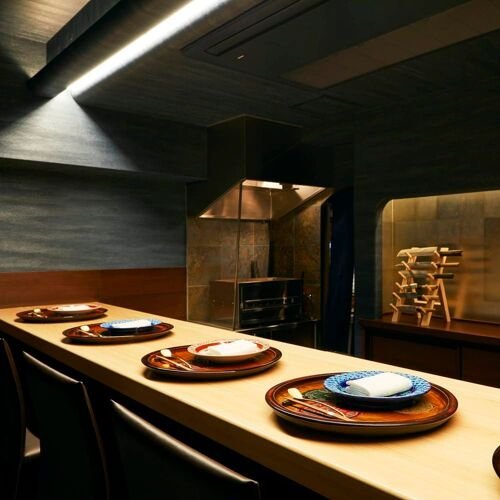
About Kabukizaura Masashi
A Michelin Plate omakase behind Ginza's Kabukiza Theatre, Kabukizaura Masashi delivers a personal, owner-led counter experience at the ¥¥¥ tier. The format blends nigiri, tempura, and a standout baked gyoza rooted in the chef's Chinese cooking background. Booking is easy by Tokyo standards, making this a strong call for solo diners and explorers who want depth without the multi-month reservation wait.
Verdict: Book It for a Different Kind of Tokyo Omakase
Imagine stepping out of the Kabukiza Theatre on a Ginza evening, the neighbourhood still humming, and finding yourself at a counter where the chef greets you like a regular and the proprietress is already considering which drink will suit your mood. That is the proposition at Kabukizaura Masashi: a Michelin Plate-recognised omakase in the heart of Ginza (4 Chome-11-9 Ginza, Chuo City) that trades the reverent silence of a high-ceremony kaiseki for something warmer, more personal, and considerably easier on the wallet at the ¥¥¥ price tier. If you want technical rigour wrapped in genuine hospitality rather than cool precision, book this.
The Experience: What You Are Actually Booking
The room announces itself immediately through colour. The walls carry a tableau rendered in kumadori, the bold shaded makeup of kabuki performance, depicting faces and scenes that trace humanity's relationship with food from past to future. It is a considered visual programme, not decorative wallpaper, and it sets the tone for a dining room that takes its ideas seriously while refusing to take itself too seriously. The atmosphere sits at a comfortable midpoint between intimate and animated: expect a room with personality and audible conversation, not the hush of a three-Michelin-starred temple.
The omakase format at Kabukizaura Masashi is structured to move through contrasting textures rather than a single continuous register. Two pieces of nigiri anchor the meal, paired with two preparations that exploit entirely different cooking methods: tempura for its clean, grease-free crunch, and a deep-fried item for richer, heavier texture. The pivot point that most distinguishes this kitchen from the standard Tokyo omakase is the baked gyoza, where the chef's background in Chinese cooking surfaces with real clarity. This is not a fusion gesture; it is the kind of technical cross-pollination that only works when someone has genuinely cooked in both traditions. For explorers who want a meal that makes an argument rather than just executes a format, that gyoza course is the reason to come.
Drink pairing is an area where the proprietress's guidance is the practical advice you should follow, not a suggestion to ignore. Rather than ordering independently, let her steer the pairings. This is the most efficient way to get full value from the visit, particularly if your knowledge of Japanese sake, shochu, or wine pairings with this style of cooking is less developed than your interest in it.
Timing: When to Go
Ginza operates on weekday energy. The neighbourhood draws office professionals and theatre-goers midweek, and the dynamic around Kabukizaura Masashi will reflect that. For the most focused, unhurried version of the experience, a midweek dinner on a Tuesday or Wednesday is the practical call: fewer post-performance rush arrivals from the adjacent Kabukiza Theatre, and a room that settles into its own rhythm. If your Tokyo itinerary is theatre-forward and you want to combine both in one evening, the proximity is a genuine advantage. Weekend dinner in Ginza carries more ambient energy; the meal itself does not change, but the surrounding neighbourhood will.
Group and Solo Dining: What Works
Counter dining at this scale works particularly well for solo travellers and pairs. The open-kitchen format, where the chef works in view and the proprietress manages the room, creates a natural arc of conversation and interaction that makes solo dining here less isolating than a larger, more anonymous restaurant. The drink pairing guidance from the proprietress is especially valuable when dining alone, since she can pace the selection with a single guest in mind. For groups, the question is whether the venue's capacity and format accommodate larger parties without fragmenting the experience. Seat count is not confirmed in available data, so if you are planning for four or more, contact the venue directly to confirm arrangements before booking. Unlike the private dining rooms that anchor experiences at venues such as Azabu Kadowaki or Kagurazaka Ishikawa, Kabukizaura Masashi's appeal is built around the shared counter and owner presence, so groups seeking a separated private room experience should factor that in.
Booking: How to Secure a Table
Booking difficulty is rated Easy, which is a meaningful differentiator in a city where the leading omakase counters require weeks or months of planning. A 4.8 Google rating across 40 reviews and a Michelin Plate from the 2024 guide means the venue is known and respected, but it has not yet crossed into the impossible-to-book tier occupied by counters with one or two Michelin stars. This is one of the practical advantages of the ¥¥¥ price point in Ginza: strong quality credentials without the booking logistics of a Harutaka or a kaiseki destination like RyuGin. Booking a week to ten days out should be sufficient for most dates; for weekend evenings or specific dates aligned with Kabukiza Theatre programming, give yourself a little more lead time. Phone and website details are not confirmed in our current data, so approach the booking through your hotel concierge or a Japan restaurant reservation service if direct contact proves difficult.
How It Compares
See the comparison section below for a direct read against Tokyo's peer venues at different price tiers.
Pearl Picks: More to Explore
If the Ginza-area Japanese dining scene interests you, Ginza Fukuju and Myojaku are both worth cross-referencing before you finalise your Tokyo restaurant itinerary. For a different neighbourhood register, Jingumae Higuchi offers a contrast in setting and style. Outside Tokyo, the same instinct for personal, owner-led Japanese dining is well represented at Gion Sasaki in Kyoto and Isshisoden Nakamura in Kyoto, while Kashiwaya Osaka Senriyama in Osaka and HAJIME in Osaka cover the upper tier of the Kansai region. For a broader view of where to eat and stay while planning your trip, our full Tokyo restaurants guide, full Tokyo hotels guide, and full Tokyo bars guide are the practical starting points. If you are extending beyond the capital, akordu in Nara, Goh in Fukuoka, 1000 in Yokohama, and 6 in Okinawa are all on our radar. Our full Tokyo experiences guide and full Tokyo wineries guide round out the broader picture.
Frequently Asked Questions
- Is Kabukizaura Masashi good for solo dining? Yes, and it may actually be the format it suits leading. The open counter and owner-chef presence create natural engagement that solo diners at a larger restaurant would miss entirely. At the ¥¥¥ price tier, it is also a lower-commitment solo spend than a starred counter in Ginza. Let the proprietress handle drink pairings and you will get a well-paced, personalised experience from start to finish. For solo omakase in Tokyo at a comparable price point, this is a stronger call than a larger, more impersonal room.
- How far ahead should I book Kabukizaura Masashi? One to two weeks is realistic for most dates, which is one of the genuine advantages this Michelin Plate venue holds over the city's harder-to-book counters. The 2024 recognition means demand has grown, but it has not tipped into the multi-month wait territory of Tokyo's starred kaiseki or sushi destinations. For weekend evenings, particularly when the Kabukiza Theatre has a popular programme running nearby, book closer to two weeks out to be safe. Use your hotel concierge if direct booking contact proves difficult, as phone and website details are not confirmed in our current data.
Compare Kabukizaura Masashi
| Venue | Price | Booking Difficulty | Value |
|---|---|---|---|
| Kabukizaura Masashi | ¥¥¥ | Easy | — |
| Harutaka | ¥¥¥¥ | Unknown | — |
| RyuGin | ¥¥¥¥ | Unknown | — |
| L'Effervescence | ¥¥¥¥ | Unknown | — |
| HOMMAGE | ¥¥¥¥ | Unknown | — |
| Florilège | ¥¥¥ | Unknown | — |
What to weigh when choosing between Kabukizaura Masashi and alternatives.
Frequently Asked Questions
Is Kabukizaura Masashi good for solo dining?
Yes — the open-counter format is well-suited to solo diners. The owner-chef cooks in full view and the proprietress manages the room, which creates a natural rhythm of interaction that makes solo visits feel engaged rather than isolating. At the ¥¥¥ price tier, it sits in a range where solo dining is a reasonable commitment rather than an extreme one. For solo omakase in Ginza, this is a more approachable entry point than Harutaka, where counter seats are harder to secure.
How far ahead should I book Kabukizaura Masashi?
Booking difficulty is rated Easy, which is genuinely rare for a Michelin Plate omakase counter in central Tokyo. You are unlikely to need weeks of lead time, but confirming a few days to a week ahead is sensible, particularly around Kabukiza Theatre performance dates when the Ginza neighbourhood draws heavier foot traffic. The proprietress handles pairings, so flag any drink preferences at the time of booking.
What is Kabukizaura Masashi known for?
Kabukizaura Masashi is primarily known for Japanese in Tokyo.
Where is Kabukizaura Masashi located?
Kabukizaura Masashi is located in Tokyo, at 4 Chome-11-9 Ginza, Chuo City, Tokyo 104-0061, Japan.
Recognized By

More restaurants in Tokyo
- SézanneOccupying the seventh floor of the Four Seasons Hotel Tokyo at Marunouchi, Sézanne earned its first Michelin star within months of opening in July 2021 and now holds three. British chef Daniel Calvert applies French technique to Japanese ingredients, producing a prix-fixe format that Tabelog has recognised with Silver awards every year from 2023 through 2026. It ranked 4th in Asia's 50 Best Restaurants in 2025 and 15th globally in 2024.
- SazenkaSazenka is the address for Chinese cuisine in Tokyo at its most technically demanding. Chef Tomoya Kawada's wakon-kansai approach — Japanese seasonal ingredients applied through Chinese culinary technique — has earned consecutive Tabelog Gold Awards from 2019 to 2026, a #71 ranking on the World's 50 Best 2025, and 99 points from La Liste 2026. At JPY 50,000–59,999 per head, it is one of the hardest tables in the city to book and worth the effort.
- NarisawaNarisawa is Tokyo's most credentialled innovative tasting menu restaurant — two Michelin stars, Asia's 50 Best number 12, and a Tabelog Silver award — running at JPY 80,000–99,999 per head. Book for a milestone occasion, confirm vegetarian or vegan needs in advance, and reserve at least two to three months out. With 15 seats and reservation-only access, this is one of Tokyo's hardest tables to secure.
- FlorilègeFlorilège delivers two Michelin stars and an Asia's 50 Best #17 ranking at a dinner price of ¥22,000 — competitive for Tokyo at this level. Chef Hiroyasu Kawate's plant-forward tasting menus around an open-kitchen counter at Azabudai Hills make this the strongest choice for contemporary French dining in Tokyo if theatrical, produce-led cooking is what you want. Book well in advance; availability is near-impossible at short notice.
- MyojakuMyojaku is a 2-Michelin-star, 14-course French-leaning omakase in Nishiazabu holding a 4.47 Tabelog score, Tabelog Silver 2025–2026, and Asia's 50 Best #45 (2025). Chef Hidetoshi Nakamura's water-forward, no-dashi approach shifts meaningfully with the seasons — making timing your reservation as important as getting one. Budget JPY 50,000–59,999 per head plus 10% service charge; reservations only, near-impossible to secure.
- L'EffervescenceL'Effervescence holds three Michelin stars, a Green Star, and a place on Asia's 50 Best at #69 (2025) — and it earns all three. Chef Shinobu Namae's prix fixe menu applies French technique to Japanese seasonal produce with genuine rigour. At 45,000 yen before tax and service, with a wine and sake program worth taking seriously, this is one of Tokyo's most demanding reservations and one of its most rewarding.
Similar venues by awards
Related editorial
- Asia's 50 Best Restaurants 2026: The Chairman and Wing Go 1-2 from the Same BuildingThe Chairman takes No. 1 and Wing climbs to No. 2 at Asia's 50 Best Restaurants 2026. Both operate from the same Hong Kong building. Here's what it means.
- Four Seasons Yachts Debut: 95 Suites, 11 Restaurants, and a March 2026 Maiden VoyageFour Seasons I launches March 20, 2026, with 95 suites, a one-to-one staff ratio, and 11 onboard restaurants. Worth tracking if you want hotel-grade service at sea.
- LA Michelin Guide 2026: Seven New Restaurants from Tlayudas to Uzbek DumplingsMichelin's March 2026 California Guide update adds six LA restaurants and one Montecito newcomer, spanning Oaxacan tlayudas, Uzbek manti, and Korean-Italian pasta.
Save or rate Kabukizaura Masashi on Pearl
Keep this venue in your Pearl passport, rate it after you visit, and track it alongside every other place you collect.