
Restaurant in Tokyo, Japan
JINBO MINAMI AOYAMA
390ptsFarm-sourced Italian; book for the vegetables.


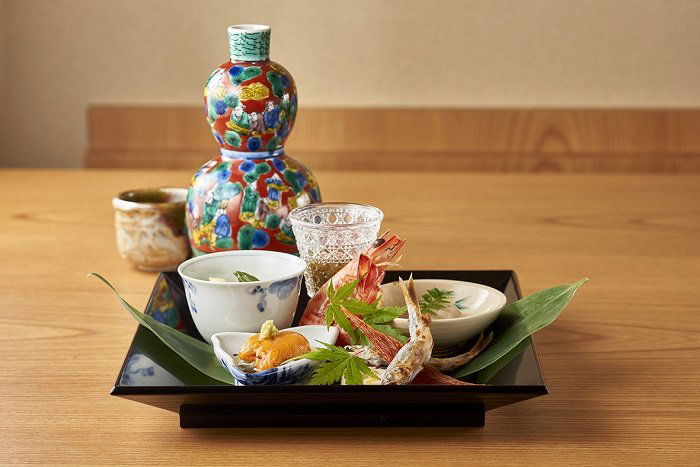
About JINBO MINAMI AOYAMA
JINBO MINAMI AOYAMA holds consecutive Michelin Plate recognition and a 4.8 Google rating for Chef Yoshinaga Jinbo's farm-sourced Italian cooking in Minami-Aoyama. At ¥¥¥, it sits below Tokyo's starred Italian tier while delivering vegetable-forward precision that rewards return visits. Book if produce-driven Italian is your format; look elsewhere if you want broader European fine dining.
Verdict: A Michelin-recognised Italian table in Minami-Aoyama worth returning to more than once
A 4.8 Google rating from 44 reviews is the most telling number here — not because it proves perfection, but because it signals a consistent, small-audience operation that earns genuine loyalty rather than tourist traffic. JINBO MINAMI AOYAMA sits in the ¥¥¥ tier, which places it below the ¥¥¥¥ spending required at most of Tokyo's headline Italian addresses, and it carries consecutive Michelin Plate recognition in 2024 and 2025. If you have already visited once and are deciding whether to return, the answer is yes — but only if vegetable-forward, farm-sourced Italian is the format you want. If you are chasing a broader European fine-dining experience in Tokyo, look first at L'Effervescence or HOMMAGE.
Portrait
Chef Yoshinaga Jinbo's cooking sits at an unusual intersection: Italian technique applied to Japanese agricultural produce, filtered through a sensibility that takes vegetables as seriously as protein. His role as Ibaraki Food Ambassador is not a marketing footnote , it actively shapes the sourcing, with ingredients pulled from farms across Japan and assembled into dishes that reflect what is growing rather than what a fixed menu requires. That means the plate changes, and it means a second or third visit is structurally different from the first.
The awards record confirms the kitchen's consistency rather than its ambition. Two consecutive Michelin Plate recognitions tell you this is a restaurant the guide considers technically competent and worth recommending , without placing it in the starred tier where omakase counter format and extreme price points become the expectation. At ¥¥¥, you are paying for precision and produce, not for the ceremony of a multi-Michelin-starred room.
The address in Minami-Aoyama, at 4 Chome-11-13 Sunlight Hill Aoyama, places the restaurant in one of Tokyo's quieter upscale residential pockets. This is not the Roppongi dining corridor or the Ginza concentration of international fine dining. The neighbourhood suits the restaurant's register: considered, low-key, frequented by people who live nearby and eat here on repeat. For context on other serious Italian cooking in Tokyo, Aroma Fresca and PRISMA operate in the same city but at different price points and with different emphases. Gucci Osteria da Massimo Bottura Tokyo and Principio offer contrasting interpretations of Italian cooking in Tokyo, and AlCeppo provides a more traditional reference point.
A Multi-Visit Strategy
If you have eaten here once, you likely encountered the vegetable courses that anchor Jinbo's approach. His bagna càuda , the warm, anchovy-and-garlic-driven Italian dip that he frames through a seasonal lens , is the dish most associated with his name. On a second visit, the right move is to pay attention to what has shifted: the farms he is sourcing from at that moment, which Ibaraki producers are on the plate, and how the produce calendar has moved on. The cooking is iterative in a way that rewards return visits more than restaurants with fixed menus.
A third visit, if you are that committed to the format, is where you start to understand his Italian and French influences as a structural grammar rather than an aesthetic choice. The vegetables are not a trend statement , they are the organising principle. Understanding that distinction takes more than one sitting. For comparison, cenci in Kyoto and akordu in Nara operate in a similar Italian-with-Japanese-produce register; visiting all three across a Japan trip gives you a useful triangulation of how this genre plays out in different cities and at different price levels.
Booking and Logistics
With a 4.8 rating from a small review base and Michelin Plate status, JINBO MINAMI AOYAMA books at Easy difficulty , meaning reservations are available with reasonable lead time and this is not a 3-month-out situation. No booking method is specified in the available data, so confirming the current reservation channel directly with the restaurant is the practical first step. No phone number or website is listed in the verified record, which suggests checking Google Maps or a reservation aggregator like Tableall or Omakase for live booking access. The ¥¥¥ price positioning means you should expect a meaningful spend without the financial commitment that Tokyo's starred Italian or French tables require.
Beyond JINBO, our full Tokyo restaurants guide covers the breadth of the city's dining options. If you are building a wider trip, our Tokyo hotels guide, bars guide, and experiences guide cover the rest. For serious Italian cooking elsewhere in Japan, HAJIME in Osaka and Gion Sasaki in Kyoto are worth plotting on the same trip. If your itinerary extends to Fukuoka, Goh is the comparable reference point there. For completeness, 1000 in Yokohama and 6 in Okinawa round out the regional picture. For Italian in the broader Asia region, 8½ Otto e Mezzo Bombana in Hong Kong is the regional benchmark at higher price point. Our Tokyo wineries guide is also available if wine sourcing is part of your planning.
Frequently Asked Questions
- Is JINBO MINAMI AOYAMA worth the price? At ¥¥¥, yes , for the format. Two consecutive Michelin Plate awards confirm the kitchen is technically sound, and the farm-sourced Italian cooking is more distinct than most mid-range Italian tables in Tokyo. If you want starred-level ambition, the price step up to L'Effervescence or RyuGin gets you that. If you want good cooking at a price point below Tokyo's headline tier, JINBO delivers.
- Is JINBO MINAMI AOYAMA good for solo dining? The Minami-Aoyama address and counter-likely format of a small Japanese Italian restaurant makes it a reasonable solo choice. The 4.8 rating from a tight review set suggests a personal, attentive room rather than a loud group destination. Solo diners eating Italian at this level in Tokyo will find the format more relaxed than an omakase counter at a sushi restaurant.
- What should a first-timer know about JINBO MINAMI AOYAMA? The cooking is Italian in technique, Japanese in ingredient sourcing. Vegetables take a prominent role in every course. Chef Jinbo's status as Ibaraki Food Ambassador shapes what arrives on the plate , expect produce-driven cooking that reflects the season rather than a fixed menu you can preview online. Book with standard lead time; this is not a difficult reservation by Tokyo fine-dining standards.
- Is the tasting menu worth it at JINBO MINAMI AOYAMA? Based on the Michelin Plate recognition and the farm-to-plate sourcing approach, the tasting format is where the kitchen's logic makes most sense. Individual dishes from Jinbo's farm-sourcing approach need the arc of a full menu to read properly. Confirmed menu structure and pricing are not available in the public record, so verify current format when booking.
- Can JINBO MINAMI AOYAMA accommodate groups? Specific seat count and private dining data are not available. Given the small review base and the neighbourhood restaurant profile, this is likely a compact room more suited to two to four diners than to larger parties. Contact the restaurant directly before planning a group booking of six or more.
- What should I order at JINBO MINAMI AOYAMA? The bagna càuda is the most documented signature , a seasonal, vegetable-forward take on the Italian classic that reflects Jinbo's farm sourcing. Beyond that, the seasonal vegetable courses are the reason to be here. Specific dish availability changes with the sourcing calendar, so arriving with a fixed order in mind is the wrong approach. Trust the menu as structured.
Compare JINBO MINAMI AOYAMA
| Venue | Cuisine | Price | Booking Difficulty |
|---|---|---|---|
| JINBO MINAMI AOYAMA | Italian | ¥¥¥ | Easy |
| Harutaka | Sushi | ¥¥¥¥ | Unknown |
| L'Effervescence | French | ¥¥¥¥ | Unknown |
| RyuGin | Kaiseki, Japanese | ¥¥¥¥ | Unknown |
| HOMMAGE | Innovtive French, French | ¥¥¥¥ | Unknown |
| Crony | Innovative, French | ¥¥¥¥ | Unknown |
Side-by-side comparison to help you decide where to book.
Frequently Asked Questions
Is JINBO MINAMI AOYAMA worth the price?
At ¥¥¥, it is. Chef Jinbo holds two consecutive Michelin Plate recognitions (2024 and 2025), and his sourcing approach — direct relationships with farms across Japan, including Ibaraki — means you are paying for produce that most Italian restaurants in Tokyo do not have access to. For a comparable spend on Western-influenced fine dining, L'Effervescence is the main alternative, but Jinbo's format is more intimate and easier to book.
Is JINBO MINAMI AOYAMA good for solo dining?
It is a strong solo option. The small scale of the restaurant and chef-driven format favour solo diners who want to engage with the food rather than a social occasion. Booking difficulty is rated easy, so you are not competing for a counter seat weeks in advance the way you would at a tighter Tokyo omakase.
What should a first-timer know about JINBO MINAMI AOYAMA?
Expect Italian technique applied to Japanese agricultural produce, not a conventional Italian menu. Vegetables are central to the cooking, not a side consideration, so first-timers who arrive expecting meat-forward Italian plates may need to recalibrate. The address is 4 Chome-11-13 Minamiaoyama, Minato City — straightforward to reach in Aoyama. Michelin Plate status signals quality without the reservation pressure of a starred room.
Is the tasting menu worth it at JINBO MINAMI AOYAMA?
If vegetable-driven, produce-focused cooking is your format, yes. Chef Jinbo's tasting structure is built around farm sourcing and seasonal progression, with the bagna càuda cited as an anchor course. If you want a more classic Italian progression centred on protein, HOMMAGE or a conventionally structured European table may be a better fit at this price point.
Can JINBO MINAMI AOYAMA accommodate groups?
The restaurant's intimate scale and chef-driven format suggest it is better suited to parties of two to four than to larger groups. There is no documented private dining room in the venue data, so larger groups should check the venue's official channels before assuming availability. For group events requiring private space, confirm arrangements in advance.
What should I order at JINBO MINAMI AOYAMA?
The bagna càuda is the dish most associated with Chef Jinbo's approach — a warm anchovy-and-garlic preparation built around seasonal Japanese vegetables from farms he sources directly. Beyond that, the vegetable courses that run through the menu reflect his work as an Ibaraki Food Ambassador and are the clearest expression of what makes this kitchen distinct from other Italian tables in Tokyo.
Recognized By


More restaurants in Tokyo
- SézanneOccupying the seventh floor of the Four Seasons Hotel Tokyo at Marunouchi, Sézanne earned its first Michelin star within months of opening in July 2021 and now holds three. British chef Daniel Calvert applies French technique to Japanese ingredients, producing a prix-fixe format that Tabelog has recognised with Silver awards every year from 2023 through 2026. It ranked 4th in Asia's 50 Best Restaurants in 2025 and 15th globally in 2024.
- SazenkaSazenka is the address for Chinese cuisine in Tokyo at its most technically demanding. Chef Tomoya Kawada's wakon-kansai approach — Japanese seasonal ingredients applied through Chinese culinary technique — has earned consecutive Tabelog Gold Awards from 2019 to 2026, a #71 ranking on the World's 50 Best 2025, and 99 points from La Liste 2026. At JPY 50,000–59,999 per head, it is one of the hardest tables in the city to book and worth the effort.
- NarisawaNarisawa is Tokyo's most credentialled innovative tasting menu restaurant — two Michelin stars, Asia's 50 Best number 12, and a Tabelog Silver award — running at JPY 80,000–99,999 per head. Book for a milestone occasion, confirm vegetarian or vegan needs in advance, and reserve at least two to three months out. With 15 seats and reservation-only access, this is one of Tokyo's hardest tables to secure.
- FlorilègeFlorilège delivers two Michelin stars and an Asia's 50 Best #17 ranking at a dinner price of ¥22,000 — competitive for Tokyo at this level. Chef Hiroyasu Kawate's plant-forward tasting menus around an open-kitchen counter at Azabudai Hills make this the strongest choice for contemporary French dining in Tokyo if theatrical, produce-led cooking is what you want. Book well in advance; availability is near-impossible at short notice.
- DenDen holds two Michelin stars, a World's 50 Best top-25 Asia ranking, and a Tabelog Silver Award running back to 2017 — and it books out within hours of the two-month reservation window opening. Chef Zaiyu Hasegawa's daily-changing seasonal omakase runs JPY 30,000–39,999 at dinner in a relaxed house-restaurant setting near Gaiemmae. Book by phone only, noon–5 PM JST. Lunch is irregular; plan around dinner.
- QuintessenceQuintessence is Tokyo's most consistently decorated French restaurant: three Michelin stars held through 2025, a La Liste score of 96.5 points, and a Tabelog Gold run from 2017 to 2024. Dinner runs ¥60,000–¥79,999 all in with wine. Book the first seating (5 PM) well ahead — Near Impossible to secure — and come for classical French cooking executed with sustained precision in a secluded Gotenyama setting.
Similar venues by awards
Related editorial
- Asia's 50 Best Restaurants 2026: The Chairman and Wing Go 1-2 from the Same BuildingThe Chairman takes No. 1 and Wing climbs to No. 2 at Asia's 50 Best Restaurants 2026. Both operate from the same Hong Kong building. Here's what it means.
- Four Seasons Yachts Debut: 95 Suites, 11 Restaurants, and a March 2026 Maiden VoyageFour Seasons I launches March 20, 2026, with 95 suites, a one-to-one staff ratio, and 11 onboard restaurants. Worth tracking if you want hotel-grade service at sea.
- LA Michelin Guide 2026: Seven New Restaurants from Tlayudas to Uzbek DumplingsMichelin's March 2026 California Guide update adds six LA restaurants and one Montecito newcomer, spanning Oaxacan tlayudas, Uzbek manti, and Korean-Italian pasta.
Save or rate JINBO MINAMI AOYAMA on Pearl
Keep this venue in your Pearl passport, rate it after you visit, and track it alongside every other place you collect.