
Restaurant in Tokyo, Japan
Hijirizaka Wakei
290ptsSeasonal Japanese dining, closed for relocation.

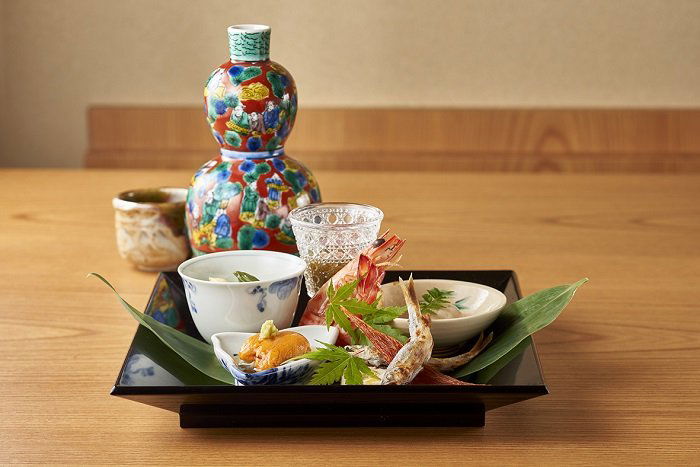
About Hijirizaka Wakei
Hijirizaka Wakei is a Michelin Plate Japanese restaurant in Mita, Minato-ku, currently closed for a planned autumn relocation. At the ¥¥¥¥ tier, it offers classical Japanese cuisine with deliberate modern touches — conger eel grilled over straw, tuna with nori sauce — in a composed, intimate setting. Worth tracking for a post-relocation visit; for immediate bookings, consider Azabu Kadowaki or Kagurazaka Ishikawa instead.
Verdict
Hijirizaka Wakei is a Michelin Plate-recognised Japanese restaurant in Mita, Minato-ku, currently closed for relocation ahead of an autumn reopening. If you are planning a special occasion meal in Tokyo at the ¥¥¥¥ price tier, this is a venue worth tracking — but book only once the new location is confirmed. For immediate reservations at a comparable level, Azabu Kadowaki and Kagurazaka Ishikawa are strong alternatives in the same tier.
Portrait
At ¥¥¥¥ per head, Hijirizaka Wakei positions itself among Tokyo's more considered Japanese dining rooms — not the city's loudest or most-booked, but a restaurant that earns its Michelin Plate (awarded in both 2024 and 2025) through a clear, disciplined philosophy. The kitchen's guiding principle , cuisine made by people, to be eaten by people , translates into a menu that respects technique handed down over generations while allowing deliberate, controlled innovation. Dishes documented from the current iteration include decoratively arranged sashimi built around conger eel grilled over straw and dressed with caviar, and tuna paired with a starchy nori seaweed sauce. These are not restless fusion moves; they are precise additions to a classical framework.
The concept of wakei seijaku , harmony, respect, purity, and tranquillity , shapes not just the food but the atmosphere. This is a dining room where the relationship between chef and guest is treated as the organising principle of the experience, which makes it a particularly good fit for a business dinner or an anniversary where the mood of the room matters as much as what arrives on the plate. The spatial register here is composed rather than theatrical: expect an environment that reads calm and deliberate, consistent with the kaiseki-adjacent tradition the kitchen draws from.
Seasonal Considerations
Japanese cuisine at this level is inherently seasonal , the menu at a Michelin Plate restaurant in the ¥¥¥¥ bracket will shift meaningfully across spring, summer, and autumn. The conger eel preparation noted in available records is a dish with strong seasonal associations in Japanese cooking, typically at its peak through summer and into early autumn. If you are planning around specific ingredients or a particular seasonal expression of the menu, confirm timing with the restaurant directly once the new location opens. The autumn relocation itself is worth factoring into your planning: a freshly opened room often means the kitchen is running at a focused, motivated pitch , which can make the months immediately after a relocation among the better times to visit.
For the broader seasonal picture of Japanese fine dining in Tokyo, see Myojaku and Ginza Fukuju, both of which operate at comparable levels and are currently accepting reservations. If you are building a wider Japan itinerary around seasonal dining, Gion Sasaki in Kyoto and Isshisoden Nakamura in Kyoto offer strong reference points for how the same seasonal philosophy plays out in a different culinary context.
For Special Occasions
The wakei seijaku framework , built on mutual respect between kitchen and table , makes Hijirizaka Wakei a considered choice for a celebratory dinner or an important business meal. The ¥¥¥¥ price point signals a serious, multi-course experience rather than a casual meal, and the Michelin Plate recognition in consecutive years confirms a consistent level of execution. Google reviewers give it a 4.2 from 33 reviews, a smaller sample than many comparable rooms but not a signal of inconsistency. For a special occasion where the atmosphere needs to feel intimate and intentional rather than performative, this format suits well.
If your occasion demands a more established or immediately bookable room, Jingumae Higuchi is worth considering, as is Kagurazaka Ishikawa for a slightly more storied setting. For occasions where you want Japanese fine dining outside Tokyo entirely, HAJIME in Osaka and Kashiwaya Osaka Senriyama operate at higher award levels and provide useful comparison for what additional spend buys you.
Know Before You Go
- Status: Currently closed for relocation , autumn reopening expected
- Address (pre-relocation): 3-4-2 Mita, Minato-ku, Tokyo, 108-0073
- Cuisine: Japanese (classical with deliberate innovation)
- Price tier: ¥¥¥¥
- Awards: Michelin Plate 2024, Michelin Plate 2025
- Google rating: 4.2 (33 reviews)
- Booking difficulty: Easy (confirm new location before attempting to book)
- Leading for: Special occasions, business dinners, seasonal Japanese menus
- Explore more: Our full Tokyo restaurants guide | Tokyo hotels | Tokyo bars
How It Compares
See the comparison section below for how Hijirizaka Wakei sits against Harutaka, RyuGin, and other ¥¥¥¥ Tokyo rooms.
Further Afield
If you are extending your Japan trip, akordu in Nara, Goh in Fukuoka, 1000 in Yokohama, and 6 in Okinawa round out a strong national picture of where serious Japanese cooking is happening beyond the capital. See also our full Tokyo experiences guide and Tokyo wineries for broader trip planning.
Compare Hijirizaka Wakei
| Venue | Cuisine | Price | Awards | Booking Difficulty | Value |
|---|---|---|---|---|---|
| Hijirizaka Wakei | Japanese | ¥¥¥¥ | This restaurant is currently closed due to relocation in autumn. The aim here is to serve Japanese cuisine that stands the test of time. To add an inventive touch to fare handed down over generations, repeated innovations seek new taste sensations while preserving the basics. Decoratively arranged sashimi consists of conger eel grilled over straw and dressed with caviar; tuna is coupled with a starchy nori seaweed sauce. The owner-chef’s principle is that “cuisine is made by people to be eaten by people”. Wakei seijaku, or ‘harmony, respect, purity and tranquillity’, a spirit of mutual respect between chef and guests, pervades the atmosphere.; Michelin Plate (2025); Michelin Plate (2024) | Easy | — |
| Harutaka | Sushi | ¥¥¥¥ | Michelin 3 Star, World's 50 Best | Unknown | — |
| RyuGin | Kaiseki, Japanese | ¥¥¥¥ | Michelin 3 Star, World's 50 Best | Unknown | — |
| L'Effervescence | French | ¥¥¥¥ | Michelin 3 Star, World's 50 Best | Unknown | — |
| HOMMAGE | Innovtive French, French | ¥¥¥¥ | Michelin 2 Star, World's 50 Best | Unknown | — |
| Florilège | French | ¥¥¥ | Michelin 2 Star, World's 50 Best | Unknown | — |
Key differences to consider before you reserve.
Frequently Asked Questions
What should a first-timer know about Hijirizaka Wakei?
The restaurant is currently closed for relocation, with an autumn reopening planned — so your first priority is confirming the new address and reservations before making plans. When it reopens, expect a ¥¥¥¥ tasting-format Japanese meal shaped by the philosophy of wakei seijaku: mutual respect between kitchen and guest. The kitchen's approach pairs classical technique with deliberate innovation, so dishes like sashimi dressed with caviar or tuna with nori sauce signal a room that experiments within tradition rather than abandoning it.
Can Hijirizaka Wakei accommodate groups?
Group suitability at Hijirizaka Wakei is not confirmed in available venue data, and the relocation makes current capacity details unavailable. At ¥¥¥¥ price point, Japanese restaurants in Tokyo of this type typically run small dining rooms — parties of more than four should check the venue's official channels once the new location is open to confirm seating arrangements.
What should I order at Hijirizaka Wakei?
The menu is not published, so specific dish recommendations are not possible here. Based on the venue record, signature preparations include straw-grilled conger eel sashimi dressed with caviar, and tuna served with a starchy nori seaweed sauce — both reflect the kitchen's approach of layering inventive touches onto generational Japanese technique. At ¥¥¥¥, this is almost certainly a set-course format, so ordering à la carte is unlikely to be an option.
Is the tasting menu worth it at Hijirizaka Wakei?
Hijirizaka Wakei holds a Michelin Plate recognition for both 2024 and 2025, which places it in credible company without the full-star price premium that venues like RyuGin carry. At ¥¥¥¥, the value case depends on whether you want a considered, philosophy-driven Japanese meal over a purely technical one — the wakei seijaku ethos puts the guest relationship at the centre, which can make the experience feel more grounded than a prestige tasting room of similar price. If you are after Michelin star-level spectacle, look elsewhere; if the draw is thoughtful seasonal Japanese cuisine at a respected but not overbooked address, the price is defensible.
What are alternatives to Hijirizaka Wakei in Tokyo?
While Hijirizaka Wakei is closed for relocation, RyuGin in Roppongi is the clearest step up in prestige and price within Tokyo's Japanese fine dining tier, holding three Michelin stars. Harutaka in Ginza is a strong alternative for high-end omakase at a similar commitment level. L'Effervescence and Florilège both operate at ¥¥¥¥ but pivot to French-influenced cuisine, so they serve a different brief entirely.
Is Hijirizaka Wakei good for a special occasion?
Yes, with the right expectations. The wakei seijaku framework — harmony, respect, purity, and tranquillity between kitchen and table — gives the room a quietly ceremonial quality that suits a celebratory dinner better than a casual night out. At ¥¥¥¥ with Michelin Plate recognition in both 2024 and 2025, it carries enough credential to feel like an occasion without the pressure of a three-star booking. Confirm the reopening timeline before committing, as the relocation means the current address at 3-4-2 Mita, Minato-ku is no longer active.
Is Hijirizaka Wakei worth the price?
At ¥¥¥¥ with two consecutive Michelin Plate recognitions, Hijirizaka Wakei sits in a credible position within Tokyo's high-end Japanese dining tier — not the city's most-decorated room, but not inflated for its level either. The kitchen's stated ambition to preserve traditional technique while introducing genuine innovation is a reasonable promise at this price point, and the wakei seijaku philosophy suggests the experience is meant to feel considered rather than transactional. Worth it for guests who value atmosphere and culinary intent alongside pure technical execution; less so if your benchmark is strictly Michelin-starred spectacle.
Recognized By

More restaurants in Tokyo
- SézanneOccupying the seventh floor of the Four Seasons Hotel Tokyo at Marunouchi, Sézanne earned its first Michelin star within months of opening in July 2021 and now holds three. British chef Daniel Calvert applies French technique to Japanese ingredients, producing a prix-fixe format that Tabelog has recognised with Silver awards every year from 2023 through 2026. It ranked 4th in Asia's 50 Best Restaurants in 2025 and 15th globally in 2024.
- SazenkaSazenka is the address for Chinese cuisine in Tokyo at its most technically demanding. Chef Tomoya Kawada's wakon-kansai approach — Japanese seasonal ingredients applied through Chinese culinary technique — has earned consecutive Tabelog Gold Awards from 2019 to 2026, a #71 ranking on the World's 50 Best 2025, and 99 points from La Liste 2026. At JPY 50,000–59,999 per head, it is one of the hardest tables in the city to book and worth the effort.
- NarisawaNarisawa is Tokyo's most credentialled innovative tasting menu restaurant — two Michelin stars, Asia's 50 Best number 12, and a Tabelog Silver award — running at JPY 80,000–99,999 per head. Book for a milestone occasion, confirm vegetarian or vegan needs in advance, and reserve at least two to three months out. With 15 seats and reservation-only access, this is one of Tokyo's hardest tables to secure.
- FlorilègeFlorilège delivers two Michelin stars and an Asia's 50 Best #17 ranking at a dinner price of ¥22,000 — competitive for Tokyo at this level. Chef Hiroyasu Kawate's plant-forward tasting menus around an open-kitchen counter at Azabudai Hills make this the strongest choice for contemporary French dining in Tokyo if theatrical, produce-led cooking is what you want. Book well in advance; availability is near-impossible at short notice.
- DenDen holds two Michelin stars, a World's 50 Best top-25 Asia ranking, and a Tabelog Silver Award running back to 2017 — and it books out within hours of the two-month reservation window opening. Chef Zaiyu Hasegawa's daily-changing seasonal omakase runs JPY 30,000–39,999 at dinner in a relaxed house-restaurant setting near Gaiemmae. Book by phone only, noon–5 PM JST. Lunch is irregular; plan around dinner.
- QuintessenceQuintessence is Tokyo's most consistently decorated French restaurant: three Michelin stars held through 2025, a La Liste score of 96.5 points, and a Tabelog Gold run from 2017 to 2024. Dinner runs ¥60,000–¥79,999 all in with wine. Book the first seating (5 PM) well ahead — Near Impossible to secure — and come for classical French cooking executed with sustained precision in a secluded Gotenyama setting.
Similar venues by awards
Related editorial
- Asia's 50 Best Restaurants 2026: The Chairman and Wing Go 1-2 from the Same BuildingThe Chairman takes No. 1 and Wing climbs to No. 2 at Asia's 50 Best Restaurants 2026. Both operate from the same Hong Kong building. Here's what it means.
- Four Seasons Yachts Debut: 95 Suites, 11 Restaurants, and a March 2026 Maiden VoyageFour Seasons I launches March 20, 2026, with 95 suites, a one-to-one staff ratio, and 11 onboard restaurants. Worth tracking if you want hotel-grade service at sea.
- LA Michelin Guide 2026: Seven New Restaurants from Tlayudas to Uzbek DumplingsMichelin's March 2026 California Guide update adds six LA restaurants and one Montecito newcomer, spanning Oaxacan tlayudas, Uzbek manti, and Korean-Italian pasta.
Save or rate Hijirizaka Wakei on Pearl
Keep this venue in your Pearl passport, rate it after you visit, and track it alongside every other place you collect.