
Restaurant in Osaka, Japan
Gochiso nene
290Pearl PointsHusband-wife tempura omakase, seasonally driven.
.png?width=144&height=144&quality=80)
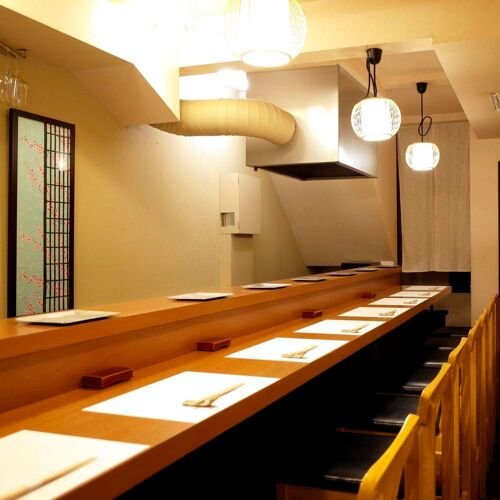
About Gochiso nene
A husband-and-wife tempura omakase counter in Osaka's Tenjinbashi district, Michelin Plate-recognised in 2024 and 2025. The owner-chef fries; the proprietress runs the dashi dishes alongside — a dual-chef format that gives the meal more structure than most tempura counters at this price tier. Book in summer for hamo or winter for crab to get the most from the seasonal menu.
The Verdict
If you have already eaten at Gochiso nene once, the question on a return visit is not whether the food holds up — it is whether the rhythm of the meal feels as precise as you remembered. It does. The omakase format here is built around a husband-and-wife team whose coordination gives the meal a structure you will not find at a solo-chef counter. The tempura is the anchor, but the dashi-based dishes that run alongside it are what make the experience worth the return booking. At ¥¥¥, this is one of the more accessible ways to eat Michelin-recognised tempura omakase in Osaka.
What Gochiso nene Actually Is
Gochiso nene sits on the fifth block of Tenjinbashi in Kita Ward, on the second floor of the Yasuda Building. Tenjinbashi-suji is one of Osaka's longest covered shopping streets, which means the location is easy to reach on foot from multiple subway lines but does not signal fine dining from the outside. That gap between street-level expectation and what happens upstairs is exactly the point.
The format is a set omakase. The owner-chef handles the tempura frying while the proprietress manages the dashi-based dishes — takiawase (separately simmered vegetables and proteins) and hand-made oden. These are not side dishes filling gaps between tempura courses. They are given equal weight, and the couple develop the dashi preparations together. What you get is a meal that moves between two cooking techniques with real intention behind the sequencing.
The seasonal logic here is specific and worth understanding before you book. In summer, the menu includes tempura of pike conger (hamo) with simmered onions , a pairing that is classically Osaka in its sensibility. In winter, crab tempura arrives alongside a pureed soup of lily bulb (yuriné). These are not decorative seasonal gestures. Pike conger in summer and crab in winter represent the two strongest arguments for timing your visit deliberately. If you are travelling to Osaka in July or August, the hamo course alone justifies the booking. If you are coming in December or January, the crab preparation is the one to anticipate.
Dual-chef dynamic also changes how the meal reads visually. Where most tempura counters are built around watching a single chef work a single station, Gochiso nene has two people moving with clear interdependence. The proprietress brings dashi dishes to the counter in between tempura courses, and the pacing is tighter for it. You are watching two people work a room together, which is a different visual experience from the solitary performance most tempura omakase venues offer. For a food-focused traveller who has already done several Osaka counters, that distinction is meaningful.
Michelin has awarded the restaurant a Plate in both 2024 and 2025, which places it in the recognised tier without the pressure of starred-venue booking logistics. A Michelin Plate signals that inspectors found the cooking worth noting , it is a quality signal, not a hype signal. The Google rating sits at 4.2 across 50 reviews, which is a modest sample but consistent with a small, quiet room that does not attract volume traffic.
For context on where this sits within Osaka's tempura category, OIMATSU Tempura Suzuki and Hiraishi are the other Osaka tempura references worth comparing. Among Osaka Japanese-format counters more broadly, Numata, Shunsaiten Tsuchiya, and Shintaro are worth having on your list for the same trip.
If tempura omakase is a format you want to understand across Japan's major cities, Tempura Kondo and Tempura Ginya in Tokyo are the peer benchmarks. Kondo in particular is the reference point for technically precise, ingredient-led tempura at the leading end. Gochiso nene operates at a lower price tier and with a different emphasis , the dashi component makes it a more complete meal structure , but the comparison is useful for calibrating expectations around frying technique and batter weight.
For travellers building a multi-city itinerary, the Osaka meal pairs well with other format-specific omakase experiences: Harutaka in Tokyo for sushi, Gion Sasaki in Kyoto for Japanese haute cuisine, akordu in Nara for a European-Japanese crossover, and Goh in Fukuoka if you are continuing south. 1000 in Yokohama and 6 in Okinawa extend the network further.
Booking and Logistics
Booking difficulty is rated Easy. No website or phone number is listed in available data, which suggests reservations may be handled through a third-party platform or walk-in basis , confirm via a booking aggregator before your visit. The second-floor location on Tenjinbashi means the room is small, so even with easy availability, arriving without a reservation carries risk on weekends. The address is 5 Chome-3-22 Tenjinbashi, Kita Ward, Osaka, 530-0041, second floor of the Yasuda Building.
For broader Osaka trip planning, Pearl's guides cover restaurants, hotels, bars, wineries, and experiences across the city.
Practical Details
| Detail | Gochiso nene | OIMATSU Tempura Suzuki | Kashiwaya Osaka Senriyama |
|---|---|---|---|
| Price tier | ¥¥¥ | Check Pearl listing | ¥¥¥ |
| Cuisine format | Tempura omakase + dashi | Tempura | Japanese |
| Michelin recognition | Plate (2024, 2025) | Check Pearl listing | Check Pearl listing |
| Booking difficulty | Easy | Check Pearl listing | Check Pearl listing |
| Seasonal highlight | Hamo (summer), crab (winter) | Not confirmed | Not confirmed |
| Counter format | Yes (duo-chef) | Yes | Not confirmed |
FAQs
- What should a first-timer know about Gochiso nene? The meal is a set omakase combining tempura and dashi-based dishes , you do not order à la carte. The dual-chef format (one on tempura, one on dashi) makes this different from a standard tempura counter. At ¥¥¥, it is mid-tier pricing for Osaka omakase, and Michelin Plate recognition in both 2024 and 2025 confirms the quality is genuine. Arrive knowing the format and you will get more from the meal.
- What should I order at Gochiso nene? There is no à la carte menu , the omakase is the meal. The seasonal centrepieces are the most meaningful choices the kitchen makes: pike conger tempura with simmered onions in summer, crab tempura with pureed lily bulb soup in winter. If you can time your visit around one of these, do it. The dashi dishes from the proprietress are as considered as the tempura, so treat the full sequence as the experience rather than treating the tempura as the main event.
- How far ahead should I book Gochiso nene? Booking difficulty is rated Easy, so last-minute reservations are more realistic here than at starred Osaka venues. That said, the room is small and on the second floor of a low-profile building, which limits capacity. A week's notice is a reasonable buffer for weeknight visits; book further out if you are visiting on a weekend or targeting a specific seasonal menu period. No website is listed in available data , check a reservation aggregator for current booking channels.
- Can I eat at the bar at Gochiso nene? The counter format is standard for omakase in this style, and the meal is structured around watching the chef work. Whether the venue has a separate bar seating option is not confirmed in available data. For a counter seat specifically, confirm when booking , at a small second-floor room, most seating is likely counter-oriented by default.
- What should I wear to Gochiso nene? No dress code is listed, but ¥¥¥ pricing and a Michelin Plate-recognised omakase format in Osaka suggest smart casual is the right call. You do not need to dress to the level you would for a starred kaiseki restaurant, but jeans and trainers would feel out of place. Smart trousers and a clean shirt or equivalent is the sensible standard for this tier in Japan.
- Does Gochiso nene handle dietary restrictions? No information is available in current data on how the kitchen handles dietary restrictions. Because the format is a set omakase with seasonal ingredients dictating the menu, significant restrictions (shellfish allergy, vegetarian) may be difficult to accommodate without advance notice. Contact the venue directly before booking if this is a consideration , and note that no phone or website is listed in current Pearl data, so a reservation platform with a notes function may be the most practical route.
Frequently Asked Questions
Can I eat at the bar at Gochiso nene?
The format is an omakase set meal, which in most Osaka counter-style tempura restaurants means seating at or very close to the counter where the chef fries. Given the owner-chef runs the tempura pass and the proprietress serves dashi dishes in sequence, the experience is counter-oriented by design. check the venue's official channels to confirm seating configuration before booking.
Does Gochiso nene handle dietary restrictions?
This is a fixed omakase format built around tempura and dashi-based dishes, with seasonal ingredients like crab, pike conger, and lily bulb featured in the set. There is no menu flexibility baked into that structure, so restrictions that conflict with core ingredients are a real concern. Raise any requirements when booking — omakase venues in Japan generally need advance notice to accommodate changes, if they can at all.
How far ahead should I book Gochiso nene?
No direct website or phone number is listed in available data, which points to reservations going through a third-party platform or an intermediary. For a Michelin Plate counter in Osaka's Tenjinbashi area running an omakase format, booking at least two to four weeks out is sensible — small counters fill quickly. Confirm the booking channel before you assume walk-ins are possible.
What should a first-timer know about Gochiso nene?
This is not a la carte dining — you are committing to a set omakase that moves between tempura and dashi-based dishes at the kitchen's pace. The menu shifts with the season: pike conger with simmered onions in summer, crab tempura with lily bulb soup in winter. The Michelin Plate recognition (2024 and 2025) signals consistency, not spectacle — come for precision cooking and a slow, sequenced meal, not a big-ticket showpiece.
What should I order at Gochiso nene?
There is no ordering: the meal is a fixed omakase. The kitchen decides the sequence, alternating tempura from the owner-chef with takiawase and hand-made oden from the proprietress. Seasonal highlights from the available data include pike conger tempura with simmered onions in summer and crab tempura with pureed lily bulb soup in winter — so the time of year you visit shapes what you eat.
What should I wear to Gochiso nene?
At ¥¥¥ pricing with a Michelin Plate and an omakase format on Tenjinbashi, smart casual is a reasonable baseline — clean, neat, and not casual streetwear. Nothing in the available data specifies a dress code, but small omakase counters in Japan at this price point typically have an understated, considered atmosphere that rewards dressing accordingly.
Location
Japan, 〒530-0041 Osaka, Kita Ward, Tenjinbashi, 5 Chome−3−22 安田ビル 2階
Osaka, Japan
Compare Gochiso nene
| Venue | Price | Booking Difficulty | Value |
|---|---|---|---|
| Gochiso nene | ¥¥¥ | Easy | — |
| HAJIME | ¥¥¥¥ | Unknown | — |
| La Cime | ¥¥¥¥ | Unknown | — |
| Kashiwaya Osaka Senriyama | ¥¥¥ | Unknown | — |
| Taian | ¥¥¥ | Unknown | — |
| Fujiya 1935 | ¥¥¥¥ | Unknown | — |
Key differences to consider before you reserve.
Also Consider
- HAJIME — French, Innovative, ¥¥¥¥
- La Cime — French, ¥¥¥¥
- Kashiwaya Osaka Senriyama — Japanese, ¥¥¥
- Taian — Kaiseki, Japanese, ¥¥¥
- Fujiya 1935 — Innovative, ¥¥¥¥
At ¥¥¥, Gochiso nene sits in the same price tier as Kashiwaya Osaka Senriyama and Taian, but offers a different format. Kashiwaya and Taian are kaiseki-rooted Japanese restaurants with more elaborate multi-course structures and longer menus — if you want the full kaiseki architecture, either of those is the stronger choice. Gochiso nene is narrower in scope (tempura plus dashi), but that focus produces more coherence within the meal. For a traveller who wants a single cooking technique done with real depth rather than a broad survey of Japanese preparations, Gochiso nene is the more purposeful booking at this price point.
If budget is not a constraint, HAJIME, La Cime, and Fujiya 1935 are all ¥¥¥¥ venues in a different category entirely — European-influenced and technically complex in ways that are not directly comparable to a Japanese omakase counter. They are worth booking on the same Osaka trip for contrast, but they are not substitutes for Gochiso nene's format. The decision between them is about what kind of meal you want, not which is objectively better.
On booking difficulty, Gochiso nene is the easiest entry point in this group. Hajime, La Cime, and Fujiya 1935 require more lead time and have higher booking friction. If you are planning an Osaka itinerary and want to anchor it with one accessible mid-tier omakase and one higher-effort reservation, Gochiso nene works well as the former — book it alongside one of the ¥¥¥¥ venues for a trip that covers both registers.
Recognized By

Explore Osaka
Save or rate Gochiso nene on Pearl
Keep this venue in your Pearl passport, rate it after you visit, and track it alongside every other place you collect.