
Restaurant in Tokyo, Japan
Ginza Kousui
450ptsShizuoka regionalism, counter format, hard to book.

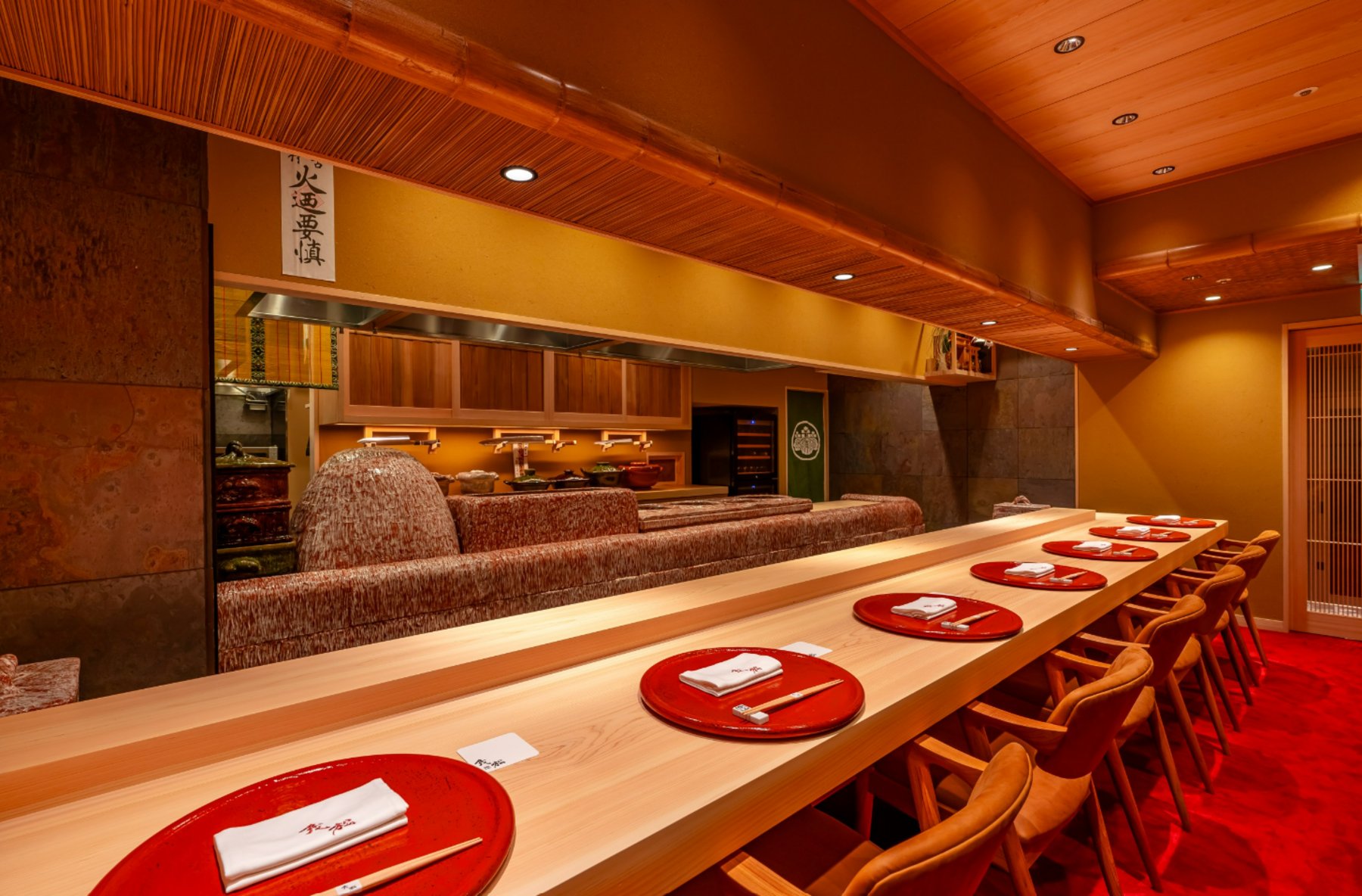
About Ginza Kousui
A Michelin-starred counter restaurant in Ginza built around Shizuoka regional produce, Suruga Bay seafood, and a Kyoto-influenced approach to seasonal cooking. The hinoki cypress counter and lake-nori-enhanced soy dressing signal a kitchen with a clear identity rather than a generalist tasting menu. Hard to book and priced at ¥¥¥¥ — best for the food-focused diner who wants regional coherence over broad range.
Should You Book Ginza Kousui?
If you are weighing Ginza Kousui against the broader field of Michelin-starred Japanese restaurants in central Tokyo, the comparison that matters most is not price — it is specificity. Where a venue like Kagurazaka Ishikawa offers a generalist kaiseki experience drawing on multiple regional traditions, Kousui has a defined geographic identity: Shizuoka prefecture, Suruga Bay, the culinary memory of a chef shaped by both hometown produce and Kyoto discipline. That specificity is either exactly what you want or slightly beside the point depending on how deeply you engage with Japanese regional cuisine. For the food enthusiast who reads the provenance on a menu, this is one of the most coherent single-region Japanese dining experiences available in Ginza at the ¥¥¥¥ tier.
The Venue Portrait
Ginza Kousui sits on the eighth floor of a building in Ginza 6-chome, a district saturated with serious dining options. The counter itself is the first signal of intent: fashioned from hinoki cypress sourced from Shimada in Shizuoka, it communicates that the material choices here are deliberate rather than decorative. Hinoki is a wood associated with purity and craftsmanship in Japanese tradition, and its presence at the counter frames the experience before the first course arrives.
The menu is built around Suruga Bay seafood and sake, with sashimi dressed in soy sauce enhanced with nori from Lake Hamana. That last detail is worth pausing on: rather than using a standard house soy, the kitchen modifies it with local seaweed to shift both the flavour profile and the aromatic character of the dressing. For a diner paying attention, this is the kind of decision that separates a thematically coherent tasting menu from one that simply assembles high-quality ingredients. The visual arrangement of dishes carries the same logic — presentation is deliberate enough to suggest Kyoto influence, where the aesthetic dimension of a dish is treated as integral rather than incidental.
The chef's background spans Shizuoka origins and Kyoto training, and that combination shows in the menu's structure. Annual seasonal events feature prominently, which reflects a Kyoto sensibility around the calendar: the idea that certain preparations belong to specific moments in the year and carry meaning because of that timing. For the explorer who wants Japanese cuisine to feel rooted in something beyond the plate, Kousui delivers that framing without becoming didactic about it.
The Counter Experience and Group Considerations
Kousui operates as a counter restaurant, which shapes everything about how you experience the meal. The counter format means direct sight lines to the kitchen, a naturally paced progression through courses, and a level of engagement with the chef's process that a table arrangement does not provide. For solo diners and pairs, this is the format working at its leading.
For groups, the counter format requires more thought. Counter seating at this tier of Japanese restaurant typically accommodates small parties seated together in sequence, which means larger groups may find the experience less cohesive than at venues with dedicated private dining infrastructure. If your party is four or more, it is worth confirming the seating configuration when booking. Venues like Azabu Kadowaki or Ginza Fukuju in the same tier have different room configurations that may serve larger groups more naturally. For a private group dining experience with full room separation, the counter-only format at Kousui is a meaningful constraint to factor into your decision.
That said, for a corporate dinner of two or a focused food-focused occasion for a small group, the counter setting amplifies the experience rather than limiting it. The intimacy is a feature, not a compromise.
Ratings and Recognition
Ginza Kousui holds a Michelin One Star (2024), earned on the strength of its regional cooking philosophy and technical precision. The Michelin citation specifically references the chef's Shizuoka origins, the Suruga Bay sourcing, and the Kyoto-influenced attention to seasonal events , which aligns with the actual menu structure rather than reading as boilerplate. The Google rating sits at 5.0 from 68 reviews, a high score on a small sample that suggests a loyal and satisfied guest base rather than broad volume. Take the perfect score with appropriate scepticism given the review count, but the Michelin recognition provides the more durable quality signal.
For context within the Tokyo Japanese dining tier: Myojaku and Jingumae Higuchi operate in adjacent territory for Michelin-recognised Japanese cooking in Tokyo, and both reward the same kind of engaged, research-oriented diner that Kousui is leading suited for.
Booking and Practical Details
Booking difficulty is rated Hard. For a Michelin-starred counter restaurant in Ginza with no publicly listed phone or website in standard directories, securing a reservation requires either a hotel concierge with strong Tokyo relationships or a specialist reservation service. If you are travelling from outside Japan, factor in that English-language booking channels may be limited, and that last-minute availability is unlikely. Plan at least four to six weeks ahead for a standard booking window; for peak dining periods around seasonal events, the lead time should be longer.
The ¥¥¥¥ price tier places Kousui at the upper tier of Tokyo dining. This is not an entry-level Michelin experience. For those exploring Japan's broader fine dining geography, it is worth cross-referencing with Gion Sasaki in Kyoto or Kashiwaya Osaka Senriyama if a Shizuoka-rooted menu in Ginza does not align with your itinerary. For a deeper look at where Kousui sits in the Tokyo dining picture, see our full Tokyo restaurants guide. You can also explore our Tokyo hotels guide, bars guide, and experiences guide for the full picture. If your Japan trip extends beyond Tokyo, HAJIME in Osaka, akordu in Nara, Goh in Fukuoka, 1000 in Yokohama, 6 in Okinawa, and Isshisoden Nakamura in Kyoto are worth considering alongside it.
Quick reference: Michelin 1 Star (2024) | ¥¥¥¥ | Ginza, Tokyo | Counter dining | Booking difficulty: Hard | Reserve well in advance via hotel concierge.
FAQ
Is Ginza Kousui worth the price?
- At the ¥¥¥¥ tier, Kousui is worth it for diners who specifically want a coherent regional Japanese menu built around Shizuoka and Suruga Bay produce. The Michelin One Star (2024) confirms the technical level. If you want broader kaiseki variety rather than a single-region focus, RyuGin at the same price tier gives you more range.
Is the tasting menu worth it at Ginza Kousui?
- Yes, if regional Japanese cuisine and ingredient provenance are part of why you eat at this level. The menu's use of Suruga Bay seafood, Lake Hamana nori-enhanced soy, and Kyoto-influenced seasonal structure gives it a coherent identity that justifies the price. If you are primarily motivated by technical spectacle rather than narrative coherence, RyuGin may suit you better.
Can Ginza Kousui accommodate groups?
- Small groups of two to four are well suited to the counter format. For larger parties seeking a private dining room with full separation from the main counter, the configuration here may not be ideal. Check directly when booking. Azabu Kadowaki is a stronger option if a dedicated private room is a firm requirement for your group.
Can I eat at the bar at Ginza Kousui?
- The counter is the dining format at Kousui , it is not a secondary option alongside table seating. Booking the counter is booking the restaurant. This is a considered choice, not a fallback, and the hinoki cypress counter is central to the experience.
Does Ginza Kousui handle dietary restrictions?
- No specific dietary restriction policy is confirmed in available data. Given the counter format and the emphasis on Suruga Bay seafood as a core menu element, strict vegetarian or shellfish-free requirements would significantly limit the menu. Contact the restaurant directly before booking, ideally through a hotel concierge who can communicate clearly in Japanese.
Compare Ginza Kousui
| Venue | Cuisine | Awards | Booking Difficulty | Value |
|---|---|---|---|---|
| Ginza Kousui | Japanese | Delights of hometown cooking and the traditional culture of Japan as told by the Shizuoka-born chef. The counter, fashioned of hinoki cypress from Shimada, is laden with seafood and sake from Suruga Bay. Soy sauce used to dress decoratively arranged sashimi is enhanced with nori seaweed from Lake Hamana to impart flavour and a unique character. The importance placed on annual events reflects the chef’s Kyoto experience. The menu sports original touches, appealing to the eyes as well as the tastebuds.; Michelin 1 Star (2024) | Hard | — |
| Harutaka | Sushi | Michelin 3 Star, World's 50 Best | Unknown | — |
| RyuGin | Kaiseki, Japanese | Michelin 3 Star, World's 50 Best | Unknown | — |
| L'Effervescence | French | Michelin 3 Star, World's 50 Best | Unknown | — |
| HOMMAGE | Innovtive French, French | Michelin 2 Star, World's 50 Best | Unknown | — |
| Florilège | French | Michelin 2 Star, World's 50 Best | Unknown | — |
What to weigh when choosing between Ginza Kousui and alternatives.
Frequently Asked Questions
Does Ginza Kousui handle dietary restrictions?
No dietary information is publicly listed for Kousui, which is common for single-counter omakase restaurants in Tokyo where the menu is set by the chef around specific regional ingredients. Given the heavy emphasis on Suruga Bay seafood and traditional Japanese preparations, pescatarians may find the menu accommodating by default, but strict dietary requirements are best raised at the point of booking — which itself requires navigating limited public contact details.
Is Ginza Kousui worth the price?
At ¥¥¥¥ in Ginza with a 2024 Michelin Star, Kousui justifies its price if regional Japanese cooking — specifically Shizuoka produce, Suruga Bay seafood, and Shimada-sourced hinoki counter craft — is what you are after. If you want broader kaiseki tradition without the regional focus, Harutaka or RyuGin offer a different value proposition at a comparable tier. Kousui earns its price through specificity, not spectacle.
Is the tasting menu worth it at Ginza Kousui?
Yes, if the format suits you. The menu is built around Shizuoka ingredients — Suruga Bay seafood, Lake Hamana nori-enhanced soy sauce — with presentation that reflects both the chef's Kyoto training and regional identity. The Michelin citation specifically calls out visual appeal alongside flavour, so this is a menu designed to be watched as well as eaten. If you want maximum ingredient variety across Japan rather than a single-region story, look at RyuGin instead.
Can Ginza Kousui accommodate groups?
Groups are a constraint here. Kousui is a counter restaurant, which means seating is linear and the experience is structured around the chef's pacing. Large groups will not get the private-room option you find at some Ginza peers. Parties of two are the natural fit; anything above four should check availability carefully before assuming it works logistically.
Can I eat at the bar at Ginza Kousui?
The counter is the restaurant — there is no separate bar or a la carte section to drop into casually. The hinoki cypress counter fashioned from Shimada wood is where the full experience happens, and it is reservation-only. Walk-ins are not a realistic option at a Michelin-starred counter in Ginza.
Recognized By

More restaurants in Tokyo
- SézanneOccupying the seventh floor of the Four Seasons Hotel Tokyo at Marunouchi, Sézanne earned its first Michelin star within months of opening in July 2021 and now holds three. British chef Daniel Calvert applies French technique to Japanese ingredients, producing a prix-fixe format that Tabelog has recognised with Silver awards every year from 2023 through 2026. It ranked 4th in Asia's 50 Best Restaurants in 2025 and 15th globally in 2024.
- SazenkaSazenka is the address for Chinese cuisine in Tokyo at its most technically demanding. Chef Tomoya Kawada's wakon-kansai approach — Japanese seasonal ingredients applied through Chinese culinary technique — has earned consecutive Tabelog Gold Awards from 2019 to 2026, a #71 ranking on the World's 50 Best 2025, and 99 points from La Liste 2026. At JPY 50,000–59,999 per head, it is one of the hardest tables in the city to book and worth the effort.
- NarisawaNarisawa is Tokyo's most credentialled innovative tasting menu restaurant — two Michelin stars, Asia's 50 Best number 12, and a Tabelog Silver award — running at JPY 80,000–99,999 per head. Book for a milestone occasion, confirm vegetarian or vegan needs in advance, and reserve at least two to three months out. With 15 seats and reservation-only access, this is one of Tokyo's hardest tables to secure.
- FlorilègeFlorilège delivers two Michelin stars and an Asia's 50 Best #17 ranking at a dinner price of ¥22,000 — competitive for Tokyo at this level. Chef Hiroyasu Kawate's plant-forward tasting menus around an open-kitchen counter at Azabudai Hills make this the strongest choice for contemporary French dining in Tokyo if theatrical, produce-led cooking is what you want. Book well in advance; availability is near-impossible at short notice.
- DenDen holds two Michelin stars, a World's 50 Best top-25 Asia ranking, and a Tabelog Silver Award running back to 2017 — and it books out within hours of the two-month reservation window opening. Chef Zaiyu Hasegawa's daily-changing seasonal omakase runs JPY 30,000–39,999 at dinner in a relaxed house-restaurant setting near Gaiemmae. Book by phone only, noon–5 PM JST. Lunch is irregular; plan around dinner.
- QuintessenceQuintessence is Tokyo's most consistently decorated French restaurant: three Michelin stars held through 2025, a La Liste score of 96.5 points, and a Tabelog Gold run from 2017 to 2024. Dinner runs ¥60,000–¥79,999 all in with wine. Book the first seating (5 PM) well ahead — Near Impossible to secure — and come for classical French cooking executed with sustained precision in a secluded Gotenyama setting.
Related editorial
- Asia's 50 Best Restaurants 2026: The Chairman and Wing Go 1-2 from the Same BuildingThe Chairman takes No. 1 and Wing climbs to No. 2 at Asia's 50 Best Restaurants 2026. Both operate from the same Hong Kong building. Here's what it means.
- Four Seasons Yachts Debut: 95 Suites, 11 Restaurants, and a March 2026 Maiden VoyageFour Seasons I launches March 20, 2026, with 95 suites, a one-to-one staff ratio, and 11 onboard restaurants. Worth tracking if you want hotel-grade service at sea.
- LA Michelin Guide 2026: Seven New Restaurants from Tlayudas to Uzbek DumplingsMichelin's March 2026 California Guide update adds six LA restaurants and one Montecito newcomer, spanning Oaxacan tlayudas, Uzbek manti, and Korean-Italian pasta.
Save or rate Ginza Kousui on Pearl
Keep this venue in your Pearl passport, rate it after you visit, and track it alongside every other place you collect.