
Restaurant in Tokyo, Japan
Ginza Katsukami
525ptsPrix fixe tonkatsu, serious credentials, fair price.


About Ginza Katsukami
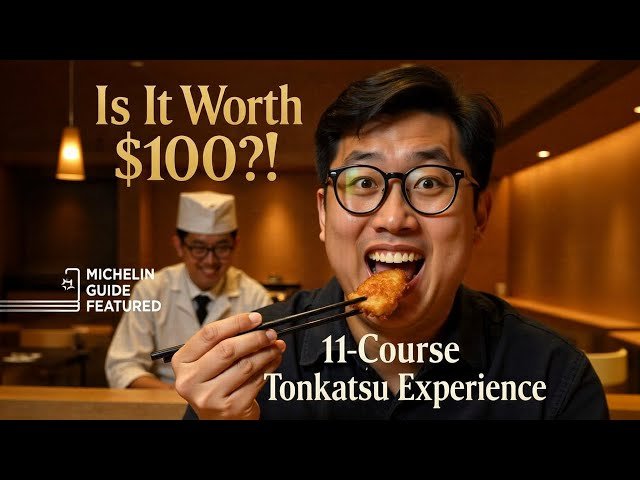
Ginza Katsukami is one of Tokyo's most decorated tonkatsu restaurants, holding a Michelin Bib Gourmand and consecutive Opinionated About Dining Casual Japan rankings. The prix fixe-only format serves rare pork cuts one slice at a time, with seasonal name-brand pork varieties available for comparison. At ¥¥ in Ginza, it's the most credentialled value option in this category in the city.
Verdict: One of Tokyo's Most Decorated Tonkatsu Counters, and Worth the Detour to Ginza
The common assumption about tonkatsu is that it's casual, cheap, and interchangeable. Ginza Katsukami corrects that assumption quickly. This fifth-floor Ginza address runs a prix fixe-only format, has held a Michelin Bib Gourmand (2024), and has appeared in the Opinionated About Dining Casual Japan rankings every year from 2023 to 2025, sitting at #25 in 2024. It is, by any objective measure, one of the most rigorously recognised tonkatsu restaurants in the country. If you are visiting Tokyo for a special occasion and want a deeply considered Japanese meal that won't cost ¥¥¥¥, this is one of the clearest answers in the city.
What Ginza Katsukami Actually Is
Ginza Katsukami, led by Mr. Hirata, does not offer a menu in the conventional sense. You are eating a prix fixe sequence of tonkatsu, served one slice at a time, directly from the fryer. The format is tightly controlled: each cut arrives at the table at its precise moment, hot and without delay. Alongside the standard fillet and pork loin cuts you'd find anywhere, the kitchen works with rarer cuts including rump and round tip, and the menu rotates through several name-brand pork varieties so that comparison is built into the experience itself. A few additions, such as minced pork burgers, shift the register without breaking the focus.
That single-slice service structure is more than a presentation choice. It means that whatever the kitchen is running on a given day, you are tasting it at its optimum. The format also dictates the pace of your meal: this is not a restaurant where you arrive and rush. Budget time accordingly, especially for the evening sitting.
The Seasonal Angle: Why the Rotation Matters
Because Katsukami sources and rotates name-brand pork varieties, what you eat here is genuinely subject to availability and season. Different pork producers bring their animals to market at different times of year, and the kitchen's ability to offer multiple varieties for direct comparison depends on what is available. This is not a menu that stays fixed month to month. If comparing premium pork breeds side by side is part of why you want to visit, it is worth checking in advance what varieties are currently on the menu. The OAD and Michelin recognition reflects the consistency of the execution, but the specific tasting experience will shift across the calendar.
For a special occasion visit, this seasonal variability is actually a reason to book rather than a caveat. You are not eating a laminated menu; you are eating what is leading right now. That framing makes the prix fixe format feel considered rather than restrictive.
Atmosphere and the Special Occasion Case
Being on the fifth floor of a Ginza building gives Katsukami a remove from the street-level noise of Chuo City that most tonkatsu counters lack. The address itself signals occasion: Ginza's 5-chome puts you among the most deliberate dining choices in Tokyo. A meal here reads well as a birthday dinner, a business dinner where you want to show thoughtfulness without the formality of kaiseki, or a date where you want something focused and high-quality without the price pressure of a ¥¥¥¥ room.
For context on the broader Tokyo dining scene, see our full Tokyo restaurants guide, and if you're planning the rest of your trip, the Tokyo hotels guide, Tokyo bars guide, Tokyo wineries guide, and Tokyo experiences guide are useful starting points.
Practical Details
Reservations: Booking is relatively easy compared to Tokyo's most competitive counters — plan ahead but this is not a months-in-advance situation. Hours: Open seven days a week, lunch 11:30 am–2 pm and dinner 6–8 pm. The dinner window is short; factor that in when planning your evening. Price tier: ¥¥ — accessible for Ginza, and significantly below the ¥¥¥¥ price point of the comparison set. Address: 5 Chome-6-10 Ginza, Chuo City, Tokyo, fifth floor of the Ginza Miyako Building. Format: Prix fixe only. Google rating: 4.3 from 572 reviews.
Tonkatsu Alternatives in Tokyo
If Katsukami is not available or you want to compare before booking, the Tokyo tonkatsu field has several strong options. Butagumi is the most frequently cited peer for breed-focused pork exploration. Maisen is the accessible, no-booking-required option in Omotesando if you want tonkatsu without ceremony. Katsuyoshi and Katsusen are worth considering if you want a shorter meal or a more casual format. Fry-ya takes a more modern approach to the fried cutlet format and is a reasonable alternative for diners who want something less traditional in structure.
Outside Tokyo, the genre has strong representation: Jukuseibuta Kawamura in Kyoto is particularly well regarded for aged pork work, and Kyomachibori Nakamura in Osaka offers a different regional take on the same format.
For other Japan destinations covered on Pearl: HAJIME in Osaka, Gion Sasaki in Kyoto, akordu in Nara, Goh in Fukuoka, 1000 in Yokohama, and 6 in Okinawa.
FAQs
- Is the tasting menu worth it at Ginza Katsukami? Yes, for the price tier. At ¥¥, you are getting Michelin Bib Gourmand-recognised, OAD-ranked tonkatsu in a controlled, single-slice prix fixe format with access to rare cuts and name-brand pork comparisons. That is significantly more value than most ¥¥¥¥ tasting menus deliver per experience point. The format works leading if you appreciate the idea of eating one thing done with serious precision, rather than a multi-course meal across cuisines.
- What are alternatives to Ginza Katsukami in Tokyo? For tonkatsu specifically, Butagumi is the closest peer for pork-breed focus. Maisen is the right call if you want no reservation pressure. If you want to step outside tonkatsu entirely for a special occasion, Harutaka (sushi, ¥¥¥¥) or RyuGin (kaiseki, ¥¥¥¥) represent the leading of the Tokyo market at a higher price point.
- Is Ginza Katsukami good for solo dining? Yes. The counter-focused, prix fixe format is well-suited to solo diners , you eat at the kitchen's pace, each slice served as it comes, without the social mechanics of a shared menu. Ginza at this price tier also makes solo dining feel like a deliberate choice rather than an afterthought. Show up at lunch if you prefer a quieter room; dinner is a shorter window and may feel more pressured on timing.
- What should I wear to Ginza Katsukami? No formal dress code is listed, but the Ginza address and Michelin recognition suggest smart casual is the right register. You are not expected to arrive in a suit, but arriving in athletic wear would feel out of place. What you'd wear to a mid-range Ginza restaurant is appropriate here.
- What should I order at Ginza Katsukami? The format removes the guesswork: prix fixe only, and the kitchen decides the sequence. The rarer cuts , rump and round tip , are the reason to choose Katsukami over a standard tonkatsu counter, so if the kitchen offers a selection that includes them, those are the cuts worth paying attention to. The minced pork burger is noted as an unexpected addition worth trying. Beyond that, trust the sequence and the kitchen's sourcing decisions on the day.
- Is lunch or dinner better at Ginza Katsukami? Lunch is the better booking if your schedule allows. The lunch window runs 11:30 am to 2 pm, giving you more time before the session ends. The dinner window, 6–8 pm, is notably short , two hours is tight for a prix fixe meal if you factor in travel and settling in. That said, dinner in Ginza has a different energy, and for a date or celebration, the evening context may matter more than the extra time. Both sittings run the same format; the difference is pacing and atmosphere, not quality.
Compare Ginza Katsukami
| Venue | Cuisine | Awards | Booking Difficulty | Value |
|---|---|---|---|---|
| Ginza Katsukami | Tonkatsu | Service at this tonkatsu restaurant is prix fixe only. Along with the familiar fillet and pork loin cutlets, you’ll find rare cuts such as rump and round tip, fried one slice at a time. Several name-brand pork varieties are available to taste and compare, each one tender and succulent. A few unexpected entries, such as minced pork burgers, add whimsy into the mix. It’s a concept that makes sense: unique prix fixe menus of tonkatsu, each item served piping hot from the kitchen.; Opinionated About Dining Casual in Japan Ranked #29 (2025); Opinionated About Dining Casual in Japan Ranked #25 (2024); Michelin Bib Gourmand (2024); Opinionated About Dining Casual in Japan Ranked #31 (2023) | Easy | — |
| Harutaka | Sushi | Michelin 3 Star, World's 50 Best | Unknown | — |
| L'Effervescence | French | Michelin 3 Star, World's 50 Best | Unknown | — |
| RyuGin | Kaiseki, Japanese | Michelin 3 Star, World's 50 Best | Unknown | — |
| HOMMAGE | Innovtive French, French | Michelin 2 Star, World's 50 Best | Unknown | — |
| Crony | Innovative, French | Michelin 2 Star, World's 50 Best | Unknown | — |
How Ginza Katsukami stacks up against the competition.
Frequently Asked Questions
Is the tasting menu worth it at Ginza Katsukami?
Yes, for the price range (¥¥), the format delivers clear value. The prix fixe structure means you get rare cuts like rump and round tip alongside the standard loin and fillet, served one slice at a time — a level of curation that most tonkatsu counters skip. The Michelin Bib Gourmand and three consecutive Opinionated About Dining Casual Japan rankings (2023, 2024, 2025) confirm this is not just a credentialed name: the kitchen earns consistent recognition. If you want à la carte flexibility, this is the wrong venue — but if you are eating tonkatsu seriously, the prix fixe format is the point.
What are alternatives to Ginza Katsukami in Tokyo?
Butagumi in Nishi-Azabu is the most direct comparison: it also focuses on named pork varieties and takes the ingredient seriously, but operates more as a standalone tonkatsu destination with a broader menu. For a lower-key, neighbourhood experience, several regional chains deliver solid tonkatsu at a lower price point, but without the curation of cuts or the rotating pork variety programme Katsukami runs. Katsukami is the call if you want the prix fixe, decorated counter format; Butagumi suits those who prefer choosing their own cut.
Is Ginza Katsukami good for solo dining?
Yes — the counter format and prix fixe structure make solo dining straightforward here. You are following a set sequence, so there is no awkwardness around sharing or ordering decisions, and counter seating is standard for this type of Tokyo restaurant. The fifth-floor setting in a Ginza building gives it a quieter atmosphere than a street-level spot, which works well for a solo lunch.
What should I wear to Ginza Katsukami?
No formal dress requirement is documented for Katsukami, and tonkatsu — even at the ¥¥ Michelin Bib Gourmand level — is a casual cuisine by nature. That said, the Ginza address and fifth-floor setting put it a step above a neighbourhood tonkatsu shop. Neat, presentable clothing is appropriate; a suit is not necessary.
What should I order at Ginza Katsukami?
There is no à la carte menu — Katsukami is prix fixe only, so the kitchen decides the sequence. The draws are the rare cuts (rump, round tip) that most tonkatsu counters never serve, plus the chance to taste and compare multiple named-breed pork varieties in a single sitting. Minced pork burger portions also appear in the sequence as a change of pace. The format is the order.
Is lunch or dinner better at Ginza Katsukami?
Both services run the same hours structure (11:30am–2pm and 6–8pm daily), so the format does not change between them. Lunch is the practical choice if you are combining Katsukami with a broader day in Ginza or central Tokyo — the short dinner window (6–8pm) means timing is tighter in the evening. Neither service has a documented price or menu difference, so the decision is logistical rather than culinary.
Hours
- Monday
- 11:30 am–2 pm, 6–8 pm
- Tuesday
- 11:30 am–2 pm, 6–8 pm
- Wednesday
- 11:30 am–2 pm, 6–8 pm
- Thursday
- 11:30 am–2 pm, 6–8 pm
- Friday
- 11:30 am–2 pm, 6–8 pm
- Saturday
- 11:30 am–2 pm, 6–8 pm
- Sunday
- 11:30 am–2 pm, 6–8 pm
Recognized By


More restaurants in Tokyo
- SézanneOccupying the seventh floor of the Four Seasons Hotel Tokyo at Marunouchi, Sézanne earned its first Michelin star within months of opening in July 2021 and now holds three. British chef Daniel Calvert applies French technique to Japanese ingredients, producing a prix-fixe format that Tabelog has recognised with Silver awards every year from 2023 through 2026. It ranked 4th in Asia's 50 Best Restaurants in 2025 and 15th globally in 2024.
- SazenkaSazenka is the address for Chinese cuisine in Tokyo at its most technically demanding. Chef Tomoya Kawada's wakon-kansai approach — Japanese seasonal ingredients applied through Chinese culinary technique — has earned consecutive Tabelog Gold Awards from 2019 to 2026, a #71 ranking on the World's 50 Best 2025, and 99 points from La Liste 2026. At JPY 50,000–59,999 per head, it is one of the hardest tables in the city to book and worth the effort.
- NarisawaNarisawa is Tokyo's most credentialled innovative tasting menu restaurant — two Michelin stars, Asia's 50 Best number 12, and a Tabelog Silver award — running at JPY 80,000–99,999 per head. Book for a milestone occasion, confirm vegetarian or vegan needs in advance, and reserve at least two to three months out. With 15 seats and reservation-only access, this is one of Tokyo's hardest tables to secure.
- FlorilègeFlorilège delivers two Michelin stars and an Asia's 50 Best #17 ranking at a dinner price of ¥22,000 — competitive for Tokyo at this level. Chef Hiroyasu Kawate's plant-forward tasting menus around an open-kitchen counter at Azabudai Hills make this the strongest choice for contemporary French dining in Tokyo if theatrical, produce-led cooking is what you want. Book well in advance; availability is near-impossible at short notice.
- DenDen holds two Michelin stars, a World's 50 Best top-25 Asia ranking, and a Tabelog Silver Award running back to 2017 — and it books out within hours of the two-month reservation window opening. Chef Zaiyu Hasegawa's daily-changing seasonal omakase runs JPY 30,000–39,999 at dinner in a relaxed house-restaurant setting near Gaiemmae. Book by phone only, noon–5 PM JST. Lunch is irregular; plan around dinner.
- QuintessenceQuintessence is Tokyo's most consistently decorated French restaurant: three Michelin stars held through 2025, a La Liste score of 96.5 points, and a Tabelog Gold run from 2017 to 2024. Dinner runs ¥60,000–¥79,999 all in with wine. Book the first seating (5 PM) well ahead — Near Impossible to secure — and come for classical French cooking executed with sustained precision in a secluded Gotenyama setting.
Similar venues by awards
Related editorial
- Asia's 50 Best Restaurants 2026: The Chairman and Wing Go 1-2 from the Same BuildingThe Chairman takes No. 1 and Wing climbs to No. 2 at Asia's 50 Best Restaurants 2026. Both operate from the same Hong Kong building. Here's what it means.
- Four Seasons Yachts Debut: 95 Suites, 11 Restaurants, and a March 2026 Maiden VoyageFour Seasons I launches March 20, 2026, with 95 suites, a one-to-one staff ratio, and 11 onboard restaurants. Worth tracking if you want hotel-grade service at sea.
- LA Michelin Guide 2026: Seven New Restaurants from Tlayudas to Uzbek DumplingsMichelin's March 2026 California Guide update adds six LA restaurants and one Montecito newcomer, spanning Oaxacan tlayudas, Uzbek manti, and Korean-Italian pasta.
Save or rate Ginza Katsukami on Pearl
Keep this venue in your Pearl passport, rate it after you visit, and track it alongside every other place you collect.