
Restaurant in Tokyo, Japan
Katsuyoshi
250ptsSerious tonkatsu. Modest prices. Book ahead.

About Katsuyoshi
A Michelin Bib Gourmand tonkatsu counter in Shimokitazawa where a single chef fries pork cutlets with two copper pots and variable oil temperatures — a technical detail most restaurants at three times the price ignore. At the ¥ tier with a 4.3 Google rating across 332 reviews, the value case is clear. Book in advance: Michelin recognition has made this small basement counter harder to walk into than the price implies.
The Verdict
Katsuyoshi is not a novelty tonkatsu experience aimed at tourists, and it is not trying to be. This is a Michelin Bib Gourmand-recognised counter in Shimokitazawa where a single chef makes pork cutlets with the kind of precision that most ¥¥¥¥ restaurants apply to much more complicated food. At the ¥ price tier, the quality-to-cost ratio is difficult to match anywhere in Tokyo. Book it — but read the logistics first, because getting a seat takes more planning than the price tag suggests.
What Katsuyoshi Actually Is
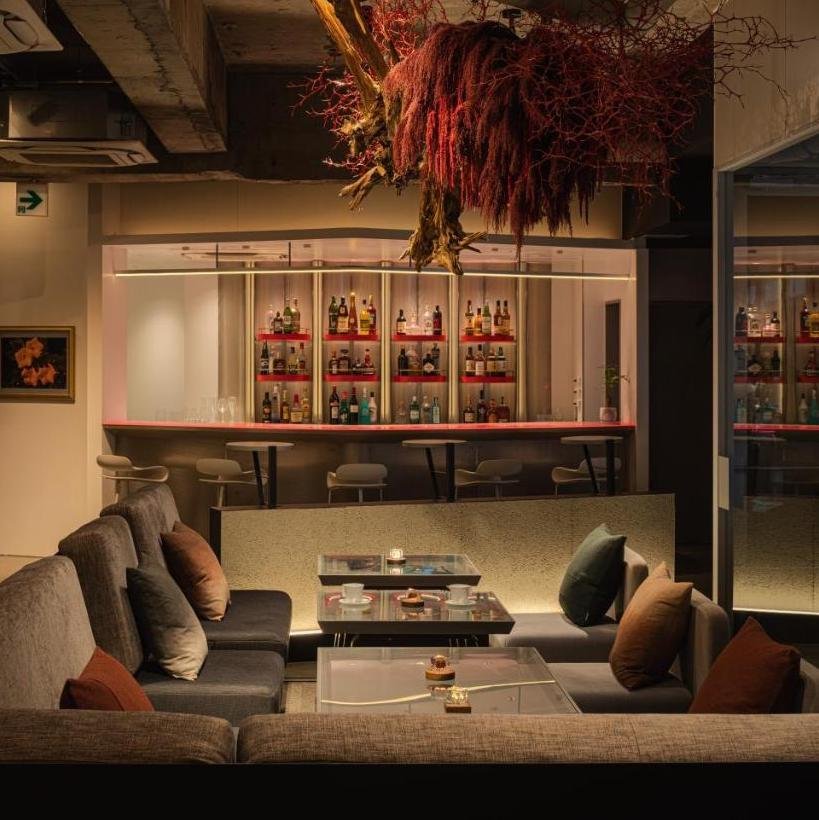
The misconception worth correcting upfront: a ¥ tonkatsu counter in a basement does not mean casual by default. Katsuyoshi operates out of a refurbished traditional building in Shimokitazawa's back streets, with recycled wood fittings that give the room a worn-in, deliberate feel — not the sterile bright-light format of chain tonkatsu shops. The counter seating puts you directly in front of the kitchen, where you can watch the chef manage two copper deep-frying pots simultaneously. That detail matters: the chef uses different oil temperatures for different items, a variable that most tonkatsu operations ignore entirely. It is a small technical decision with a noticeable effect on texture.
Tonkatsu as a format rewards this kind of attention. The core technique , breading and frying pork , has almost no place to hide, which is why the gap between a competent version and a considered one is immediately perceptible. At Katsuyoshi, the menu extends beyond the standard pork loin and fillet cuts to include fried seafood, with scallop and tiger prawn cited as popular choices. The counter seating is the place to be if you want to follow the sequence of preparation, from meat trimming through to the final fry. If you are researching comparable approaches to the craft, [Butagumi](https://www.joinpearl.co/restaurants/butagumi-tokyo-restaurant) in Nishi-Azabu and [Ginza Katsukami](https://www.joinpearl.co/restaurants/ginza-katsukami-tokyo-restaurant) work in the same category but at higher price points and with more formal settings.
Why the Bib Gourmand Recognition Matters Here
The Michelin Bib Gourmand designation , awarded in 2024 , is specifically for restaurants that deliver high quality at moderate prices. It is a different signal from a Michelin star: it tells you that the inspectors found the food worth the detour at this price level, not just within its category. For a tonkatsu specialist operating at the ¥ tier, that recognition places Katsuyoshi in a very short list of venues where low cost and documented quality overlap. It also means demand has increased, which has direct implications for how you should approach booking. For deeper context on how Tokyo's tonkatsu scene maps out, [Katsusen](https://www.joinpearl.co/restaurants/katsusen-tokyo-restaurant), [Maisen](https://www.joinpearl.co/restaurants/maisen-tokyo-restaurant), and [Fry-ya](https://www.joinpearl.co/restaurants/fry-ya-tokyo-restaurant) are useful reference points across different price tiers and service styles.
Getting a Seat: Plan Further Ahead Than the Price Implies
This is the most important practical note on Katsuyoshi: the booking difficulty is rated easy, but that assessment reflects the process, not the spontaneity. A small basement counter in a residential neighbourhood, now carrying Michelin recognition, fills faster than its low-key setting suggests. Do not treat the ¥ price or the casual framing as a signal that walk-ins are likely to work. The safer approach is to plan your visit before arriving in Tokyo, not after. Shimokitazawa is well-connected by train , served by the Odakyu and Keio Inokashira lines , so reaching it from central Tokyo is direct, but that accessibility adds to demand rather than reducing it.
If you are building a broader Tokyo itinerary, the city's restaurant ecosystem rewards advance planning across most quality tiers. See [our full Tokyo restaurants guide](https://www.joinpearl.co/restaurants/tokyo) for coverage across neighbourhoods and cuisines, or explore adjacent guides for [hotels](https://www.joinpearl.co/hotels/tokyo), [bars](https://www.joinpearl.co/bars/tokyo), [wineries](https://www.joinpearl.co/wineries/tokyo), and [experiences](https://www.joinpearl.co/experiences/tokyo). For tonkatsu specifically in other Japanese cities, [Jukuseibuta Kawamura in Kyoto](https://www.joinpearl.co/restaurants/jukuseibuta-kawamura-kyoto-restaurant) and [Kyomachibori Nakamura in Osaka](https://www.joinpearl.co/restaurants/kyomachibori-nakamura-osaka-restaurant) are the relevant comparisons if your trip covers more ground.
Who Should Book
Katsuyoshi is the right call for food-focused travellers who want to understand what considered frying actually tastes like at a price that does not require a special occasion budget. The counter format and the open kitchen make it particularly suitable for solo diners or pairs who want direct exposure to the cooking. It is less suited to groups looking for a relaxed, sprawling dinner, or to anyone who needs flexibility around dietary restrictions , a single-focus frying kitchen has limited range outside its core format. If a multi-course Japanese dinner is your priority for the evening, [RyuGin](https://www.joinpearl.co/restaurants/ryugin) at the kaiseki tier or [HAJIME in Osaka](https://www.joinpearl.co/restaurants/hajime-osaka-restaurant) serve entirely different purposes. Katsuyoshi's value is in its specificity, not its range.
Google reviewers rate it 4.3 across 332 reviews, which for a specialist counter at this price level reflects consistent execution rather than occasional brilliance. That consistency is the point. The leading reason to book Katsuyoshi is not that it will surprise you with complexity , it is that it will do something simple at a level of care that justifies a trip across the city to get there. Whether you are arriving from another neighbourhood in Tokyo or travelling from further afield , from [Gion Sasaki in Kyoto](https://www.joinpearl.co/restaurants/gion-sasaki-kyoto-restaurant) the previous evening, or planning a wider loop that takes in [Goh in Fukuoka](https://www.joinpearl.co/restaurants/goh-fukuoka-restaurant), [akordu in Nara](https://www.joinpearl.co/restaurants/akordu-nara-restaurant), [1000 in Yokohama](https://www.joinpearl.co/restaurants/1000-yokohama-restaurant), or [6 in Okinawa](https://www.joinpearl.co/restaurants/6-okinawa-restaurant) , Katsuyoshi fits the itinerary of anyone who treats the quality of frying as a subject worth investigating on its own terms.
Quick reference: Michelin Bib Gourmand 2024 | ¥ price tier | Shimokitazawa, Tokyo | Counter seating | Book in advance.
Compare Katsuyoshi
| Venue | Cuisine | Awards | Booking Difficulty | Value |
|---|---|---|---|---|
| Katsuyoshi | Tonkatsu | You’ll find Katsuyoshi in a back-alley of Ningyocho. The interior of the shop, a refurbished traditional home, uses recycled wood to convey a retro feel. In the kitchen, you’ll see two copper pots. When deep-frying pork cutlets, the owner-chef uses hotter oil for some dishes and cooler oil for others. Fried seafood morsels such as scallop and tiger prawn are popular. If you get a seat at the counter, you can watch the chef’s work, which starts with preparing the meat.; Michelin Bib Gourmand (2024) | Easy | — |
| Harutaka | Sushi | Michelin 3 Star, World's 50 Best | Unknown | — |
| L'Effervescence | French | Michelin 3 Star, World's 50 Best | Unknown | — |
| RyuGin | Kaiseki, Japanese | Michelin 3 Star, World's 50 Best | Unknown | — |
| HOMMAGE | Innovtive French, French | Michelin 2 Star, World's 50 Best | Unknown | — |
| Crony | Innovative, French | Michelin 2 Star, World's 50 Best | Unknown | — |
Key differences to consider before you reserve.
Frequently Asked Questions
Does Katsuyoshi handle dietary restrictions?
Tonkatsu is a single-focus format built around deep-fried pork, which limits flexibility for pescatarians, vegetarians, and those avoiding gluten or pork. Katsuyoshi does offer fried seafood including scallop and tiger prawn, so pescatarians may have workable options. If restrictions are significant, a different format will serve you better than a tonkatsu specialist.
Can Katsuyoshi accommodate groups?
Katsuyoshi operates from a compact basement counter in a refurbished traditional building in Kitazawa, which puts a hard ceiling on group size. It is the right venue for two or three food-focused diners who want to watch the chef work at the counter — not for a group dinner or a celebratory party. If you have four or more, look elsewhere in Tokyo.
What should I wear to Katsuyoshi?
The setting is a basement counter in a back-alley building with recycled-wood interiors and a retro feel — clean and casual is appropriate. There is no indication of a dress code, and the ¥ price point and Bib Gourmand positioning both point toward a relaxed atmosphere. Overly formal dress would be out of place.
Is Katsuyoshi worth the price?
At ¥ pricing with a 2024 Michelin Bib Gourmand — a designation specifically for high quality at moderate cost — Katsuyoshi represents clear value for what you're getting. The Bib Gourmand is a different tier from a Michelin star, but it is a meaningful signal that the quality-to-price ratio has been independently validated. For the price, there are few stronger arguments for a tonkatsu lunch in Tokyo.
How far ahead should I book Katsuyoshi?
Booking difficulty is rated easy, but that reflects the process rather than guaranteed availability on short notice. Given the compact counter format and Bib Gourmand recognition, booking a few days ahead is sensible — same-day walk-ins are a risk not worth taking if this is a priority stop on a short trip to Tokyo.
What should I order at Katsuyoshi?
The core of the menu is tonkatsu: deep-fried pork cutlets prepared using a dual-temperature oil technique, with hotter oil for some dishes and cooler for others. Fried seafood, specifically scallop and tiger prawn, are noted as popular options. If you are seated at the counter, you can watch the chef work — worth factoring in when choosing your seat.
Recognized By

More restaurants in Tokyo
- SézanneOccupying the seventh floor of the Four Seasons Hotel Tokyo at Marunouchi, Sézanne earned its first Michelin star within months of opening in July 2021 and now holds three. British chef Daniel Calvert applies French technique to Japanese ingredients, producing a prix-fixe format that Tabelog has recognised with Silver awards every year from 2023 through 2026. It ranked 4th in Asia's 50 Best Restaurants in 2025 and 15th globally in 2024.
- SazenkaSazenka is the address for Chinese cuisine in Tokyo at its most technically demanding. Chef Tomoya Kawada's wakon-kansai approach — Japanese seasonal ingredients applied through Chinese culinary technique — has earned consecutive Tabelog Gold Awards from 2019 to 2026, a #71 ranking on the World's 50 Best 2025, and 99 points from La Liste 2026. At JPY 50,000–59,999 per head, it is one of the hardest tables in the city to book and worth the effort.
- NarisawaNarisawa is Tokyo's most credentialled innovative tasting menu restaurant — two Michelin stars, Asia's 50 Best number 12, and a Tabelog Silver award — running at JPY 80,000–99,999 per head. Book for a milestone occasion, confirm vegetarian or vegan needs in advance, and reserve at least two to three months out. With 15 seats and reservation-only access, this is one of Tokyo's hardest tables to secure.
- FlorilègeFlorilège delivers two Michelin stars and an Asia's 50 Best #17 ranking at a dinner price of ¥22,000 — competitive for Tokyo at this level. Chef Hiroyasu Kawate's plant-forward tasting menus around an open-kitchen counter at Azabudai Hills make this the strongest choice for contemporary French dining in Tokyo if theatrical, produce-led cooking is what you want. Book well in advance; availability is near-impossible at short notice.
- DenDen holds two Michelin stars, a World's 50 Best top-25 Asia ranking, and a Tabelog Silver Award running back to 2017 — and it books out within hours of the two-month reservation window opening. Chef Zaiyu Hasegawa's daily-changing seasonal omakase runs JPY 30,000–39,999 at dinner in a relaxed house-restaurant setting near Gaiemmae. Book by phone only, noon–5 PM JST. Lunch is irregular; plan around dinner.
- MyojakuMyojaku is a 2-Michelin-star, 14-course French-leaning omakase in Nishiazabu holding a 4.47 Tabelog score, Tabelog Silver 2025–2026, and Asia's 50 Best #45 (2025). Chef Hidetoshi Nakamura's water-forward, no-dashi approach shifts meaningfully with the seasons — making timing your reservation as important as getting one. Budget JPY 50,000–59,999 per head plus 10% service charge; reservations only, near-impossible to secure.
Related editorial
- Best Fine Dining Restaurants in ParisFrom three-Michelin-star icons to the next generation of Parisian chefs pushing boundaries, these are the restaurants that define fine dining in the world's culinary capital.
- Best Luxury Hotels in RomeFrom rooftop terraces overlooking ancient ruins to Michelin-starred hotel dining, these are the luxury hotels that make Rome unforgettable.
- Best Cocktail Bars in KyotoFrom sleek lounges to hidden speakeasies, Kyoto's cocktail scene blends Japanese precision with global influence in ways you won't find anywhere else.
Save or rate Katsuyoshi on Pearl
Keep this venue in your Pearl passport, rate it after you visit, and track it alongside every other place you collect.