
Restaurant in Tokyo, Japan
Ginza Adachi Naoto
290ptsMichelin-noted ryotei technique, serious seasonal focus.

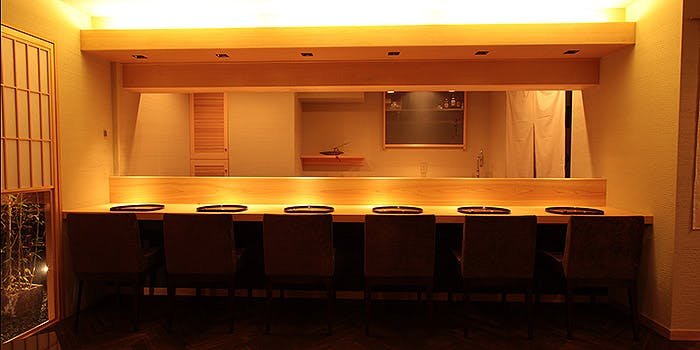
About Ginza Adachi Naoto
A Michelin Plate recipient for 2024 and 2025, Ginza Adachi Naoto delivers ryotei-trained technique at a ¥¥¥ price point that is genuinely competitive for central Ginza. The seasonal iimushi amuse-bouche and konnyaku soba closer signal a kitchen that sequences a meal with real care. Book dinner for occasions, pursue lunch if available for the stronger value entry.
A Michelin-recognised ryotei heir in Ginza worth booking for its seasonal precision
A 4.6 Google rating across 59 reviews is a telling number for a second-floor address on a Ginza side street. Ginza Adachi Naoto is not a room that markets itself loudly, and the score suggests it does not need to. The venue holds a Michelin Plate in both 2024 and 2025, the guide's signal that this is cooking worth seeking out even if a star has not been awarded. For a ¥¥¥ price point in a neighbourhood where ¥¥¥¥ restaurants dominate the conversation, that combination of recognition and relative accessibility makes it one of the more considered choices in central Tokyo right now.
What Adachi Naoto is doing
The kitchen is grounded in ryotei tradition, the formal Japanese banquet culture where technique and seasonal sourcing are inseparable. Right now, in the current season, that means the kitchen is drawing on autumn and early-winter produce: the signature iimushi, a mochi rice steamed with fish and served as an amuse-bouche, arrives paired with seasonal accompaniments such as sea urchin, salmon roe, and chestnut. These are not decorative flourishes. The pairing of iimushi with ingredients at their seasonal peak is the kitchen's statement of intent in miniature, and it tells you quickly whether the meal is going to be worth your time. Based on the Michelin assessors' two consecutive Plate awards, it is.
The meal closes not with rice, as most Japanese tasting menus do, but with konnyaku soba, devil's-tongue noodles, a deliberate structural choice designed to ease the fullness that accumulates over a long menu. That kind of considered hospitality, the sequencing of dishes to look after the diner rather than to impress a critic, is a hallmark of ryotei culture done seriously. If you have eaten here once and remember the appetisers, the konnyaku soba close is worth your attention on the next visit.
Lunch versus dinner: which to book
Specific hours are not confirmed in available data for this venue, but Ginza ryotei-adjacent restaurants of this category typically operate a lunch service and an evening service, with lunch often representing the stronger value proposition. A ryotei-trained kitchen at ¥¥¥ is already accessible by Ginza standards. If lunch is available here, it is almost certainly the sharper price-to-quality entry point, a meaningful consideration when you are comparing it against RyuGin or other kaiseki venues that price their evening menus at ¥¥¥¥ and hold lunch at a lower tier. Confirm availability directly when booking, but if you are returning after a first dinner visit, try the lunch format to see whether the seasonal menu changes or compresses at midday.
Evening bookings suit a longer commitment to the format: the ryotei structure rewards unhurried eating, and the konnyaku soba closer makes more sense at the end of an evening than as a midday interlude. For a special occasion, dinner is the call. For a solo or couple visit where value matters as much as experience, lunch, if available, is worth pursuing.
Getting there and booking
The address is 7 Chome-6-5, Ishii Kishiya Building 2F, Ginza, Chuo City. The nearest stations are Ginza and Higashi-Ginza on the Tokyo Metro, both within a short walk. The second-floor location means the entrance requires finding, so allow a minute or two to locate the building. Booking difficulty is rated Easy for this venue, which is a relative advantage over more heavily sought-after Ginza rooms. No phone number or website is confirmed in available data, so booking through a hotel concierge or a restaurant reservation platform is the most reliable approach. Dress expectations at a Michelin-recognised Ginza Japanese restaurant of this category lean smart-casual at minimum; the ryotei tradition leans formal, so erring towards neat and understated is the right call.
How It Compares
See the comparison section below for how Adachi Naoto sits against its Tokyo peers.
Broader Japan context
If Ginza Adachi Naoto fits your appetite for technique-driven Japanese cooking, the same sensibility applies across Japan's major cities. Gion Sasaki in Kyoto and Isshisoden Nakamura in Kyoto offer kaiseki in the city where the format originated. Kashiwaya Osaka Senriyama in Osaka and HAJIME in Osaka represent the Osaka range from tradition to innovation. For something farther afield, Goh in Fukuoka and akordu in Nara extend the itinerary. Within Tokyo, Myojaku, Azabu Kadowaki, Kagurazaka Ishikawa, Ginza Fukuju, and Jingumae Higuchi are all worth considering alongside Adachi Naoto when building a Tokyo restaurant list. For the full picture, see our full Tokyo restaurants guide, and our Tokyo hotels guide, Tokyo bars guide, Tokyo wineries guide, and Tokyo experiences guide for broader planning. You can also consider 1000 in Yokohama and 6 in Okinawa if your Japan itinerary extends beyond the capital.
FAQ
- Is Ginza Adachi Naoto worth the price? At ¥¥¥, yes. Two consecutive Michelin Plate awards and a 4.6 Google rating confirm this is a kitchen delivering at a level that justifies the spend. Compared to ¥¥¥¥ kaiseki rooms in Ginza, you are getting comparable technical seriousness at a lower price tier. The seasonal iimushi and the konnyaku soba closer are specific reasons to book.
- Does Ginza Adachi Naoto handle dietary restrictions? No confirmed information is available. The ryotei format typically involves a set menu with limited substitution options, so communicate restrictions clearly when booking. A hotel concierge booking through Japanese will improve the chances of an accurate response from the kitchen.
- Can Ginza Adachi Naoto accommodate groups? Seat count is not confirmed in available data. Ryotei-format rooms in Ginza are typically intimate, so larger groups of six or more should confirm capacity before booking. Smaller groups of two to four are better suited to this style of restaurant.
- What should I wear to Ginza Adachi Naoto? Smart-casual at minimum. The ryotei tradition and Ginza setting both favour neat, understated dress. Avoid sportswear. Men in a collared shirt and women in smart daywear or evening wear will be appropriately dressed for either a lunch or dinner visit.
- Is the tasting menu worth it at Ginza Adachi Naoto? Based on two Michelin Plate recognitions, the sequenced format here is the point. The painstakingly prepared appetisers cited by Michelin and the structural choice of konnyaku soba as a closer both indicate a kitchen that takes the full arc of a meal seriously. If tasting-menu formats suit you, this one is worth committing to.
- What are alternatives to Ginza Adachi Naoto in Tokyo? For comparable Japanese cooking at ¥¥¥, Ginza Fukuju is a nearby alternative. For more ambitious kaiseki at ¥¥¥¥, RyuGin is the reference point. Kagurazaka Ishikawa and Azabu Kadowaki offer ryotei-adjacent formats outside Ginza. For sushi rather than kaiseki, Harutaka is the stronger option at ¥¥¥¥.
- Is Ginza Adachi Naoto good for a special occasion? Yes, specifically for a dinner booking. The ryotei format, Ginza address, and Michelin recognition create the right conditions for a meaningful meal. The seasonal precision of the menu, changing with what is leading right now, gives it a specificity that generic occasion restaurants lack. For a milestone dinner with two to four people, this is a well-suited choice.
Compare Ginza Adachi Naoto
| Venue | Cuisine | Awards | Booking Difficulty | Value |
|---|---|---|---|---|
| Ginza Adachi Naoto | Japanese | This restaurant values traditional techniques honed at a ryotei. The painstakingly prepared appetisers are a must-try. Seasonal iimushi, mochi rice topped with fish and steamed, is served as an amuse-bouche, paired with seasonal tastes such as sea urchin, salmon roe and chestnut. Instead of rice, the meal closes with konnyaku soba (devil’s-tongue noodles), to relieve uncomfortable fullness after the meal. Meticulous food preparation eloquently conveys the spirit and feeling of the owner-chef.; Michelin Plate (2025); Michelin Plate (2024) | Easy | — |
| Harutaka | Sushi | Michelin 3 Star, World's 50 Best | Unknown | — |
| RyuGin | Kaiseki, Japanese | Michelin 3 Star, World's 50 Best | Unknown | — |
| L'Effervescence | French | Michelin 3 Star, World's 50 Best | Unknown | — |
| HOMMAGE | Innovtive French, French | Michelin 2 Star, World's 50 Best | Unknown | — |
| Florilège | French | Michelin 2 Star, World's 50 Best | Unknown | — |
Comparing your options in Tokyo for this tier.
Frequently Asked Questions
Is Ginza Adachi Naoto worth the price?
For the format, yes. The ¥¥¥ pricing sits at the serious end of Ginza dining, but the Michelin Plate recognition in both 2024 and 2025 confirms the kitchen is delivering at a consistent level. The ryotei-rooted approach — seasonal iimushi as amuse-bouche, sea urchin, salmon roe and chestnut pairings, konnyaku soba to close — reflects meticulous sourcing and technique you won't find at a standard kaiseki restaurant. If you're paying Ginza prices, this is one of the addresses where the money goes to the plate rather than the fit-out.
Does Ginza Adachi Naoto handle dietary restrictions?
No specific dietary policy is confirmed in available data for this venue. Ryotei-tradition kitchens of this type build menus around a fixed seasonal sequence, which makes significant substitutions structurally difficult. check the venue's official channels before booking if dietary needs are a factor — a second-floor Ginza address at this price point will generally accommodate advance requests more readily than walk-in adjustments.
Can Ginza Adachi Naoto accommodate groups?
Group capacity details are not confirmed in the available record. Second-floor Ginza restaurants in the ryotei category typically run small dining rooms, and this address is not positioned as a group-event venue. For parties larger than four, contact the restaurant in advance — availability for larger seatings at this level usually requires prior arrangement and is not guaranteed.
What should I wear to Ginza Adachi Naoto?
No dress code is documented in the available data, but the context is clear: a ryotei-tradition kitchen on a Ginza address, Michelin-noted, ¥¥¥ pricing. Business casual at minimum is appropriate, and formal attire is never out of place. Avoid casual or sportswear — the room and the food signal that the visit is an occasion.
Is the tasting menu worth it at Ginza Adachi Naoto?
The structure of the meal — seasonal iimushi amuse-bouche, fish and mochi rice courses, sea urchin, salmon roe and chestnut pairings, closing with konnyaku soba to ease digestion — is not a conventional tasting menu but a ryotei sequence where each course has a specific function. If that format suits you, the Michelin Plate recognition across two consecutive years suggests the execution holds up. If you want à la carte flexibility, this is not the right room.
What are alternatives to Ginza Adachi Naoto in Tokyo?
For Michelin-starred Japanese cooking with more name recognition, RyuGin in Roppongi operates at a higher award tier and broader international profile. Harutaka in Ginza covers similar Ginza ground with a sushi-counter format if raw fish is the priority. L'Effervescence and Florilège are strong alternatives if French-influenced technique is more your direction. Adachi Naoto's value is its ryotei purity at a price point below Tokyo's Michelin-starred tier.
Is Ginza Adachi Naoto good for a special occasion?
Yes, with one condition: you should want the ryotei format. The seasonal precision, the thoughtfully sequenced courses, and the Ginza address make it a credible choice for a meaningful meal. It is not a high-energy celebratory room — the ryotei tradition runs quieter and more deliberate than that. For a birthday dinner or anniversary where the food itself is the event, it fits well.
Recognized By

More restaurants in Tokyo
- SézanneOccupying the seventh floor of the Four Seasons Hotel Tokyo at Marunouchi, Sézanne earned its first Michelin star within months of opening in July 2021 and now holds three. British chef Daniel Calvert applies French technique to Japanese ingredients, producing a prix-fixe format that Tabelog has recognised with Silver awards every year from 2023 through 2026. It ranked 4th in Asia's 50 Best Restaurants in 2025 and 15th globally in 2024.
- SazenkaSazenka is the address for Chinese cuisine in Tokyo at its most technically demanding. Chef Tomoya Kawada's wakon-kansai approach — Japanese seasonal ingredients applied through Chinese culinary technique — has earned consecutive Tabelog Gold Awards from 2019 to 2026, a #71 ranking on the World's 50 Best 2025, and 99 points from La Liste 2026. At JPY 50,000–59,999 per head, it is one of the hardest tables in the city to book and worth the effort.
- NarisawaNarisawa is Tokyo's most credentialled innovative tasting menu restaurant — two Michelin stars, Asia's 50 Best number 12, and a Tabelog Silver award — running at JPY 80,000–99,999 per head. Book for a milestone occasion, confirm vegetarian or vegan needs in advance, and reserve at least two to three months out. With 15 seats and reservation-only access, this is one of Tokyo's hardest tables to secure.
- FlorilègeFlorilège delivers two Michelin stars and an Asia's 50 Best #17 ranking at a dinner price of ¥22,000 — competitive for Tokyo at this level. Chef Hiroyasu Kawate's plant-forward tasting menus around an open-kitchen counter at Azabudai Hills make this the strongest choice for contemporary French dining in Tokyo if theatrical, produce-led cooking is what you want. Book well in advance; availability is near-impossible at short notice.
- DenDen holds two Michelin stars, a World's 50 Best top-25 Asia ranking, and a Tabelog Silver Award running back to 2017 — and it books out within hours of the two-month reservation window opening. Chef Zaiyu Hasegawa's daily-changing seasonal omakase runs JPY 30,000–39,999 at dinner in a relaxed house-restaurant setting near Gaiemmae. Book by phone only, noon–5 PM JST. Lunch is irregular; plan around dinner.
- QuintessenceQuintessence is Tokyo's most consistently decorated French restaurant: three Michelin stars held through 2025, a La Liste score of 96.5 points, and a Tabelog Gold run from 2017 to 2024. Dinner runs ¥60,000–¥79,999 all in with wine. Book the first seating (5 PM) well ahead — Near Impossible to secure — and come for classical French cooking executed with sustained precision in a secluded Gotenyama setting.
Similar venues by awards
Related editorial
- Asia's 50 Best Restaurants 2026: The Chairman and Wing Go 1-2 from the Same BuildingThe Chairman takes No. 1 and Wing climbs to No. 2 at Asia's 50 Best Restaurants 2026. Both operate from the same Hong Kong building. Here's what it means.
- Four Seasons Yachts Debut: 95 Suites, 11 Restaurants, and a March 2026 Maiden VoyageFour Seasons I launches March 20, 2026, with 95 suites, a one-to-one staff ratio, and 11 onboard restaurants. Worth tracking if you want hotel-grade service at sea.
- LA Michelin Guide 2026: Seven New Restaurants from Tlayudas to Uzbek DumplingsMichelin's March 2026 California Guide update adds six LA restaurants and one Montecito newcomer, spanning Oaxacan tlayudas, Uzbek manti, and Korean-Italian pasta.
Save or rate Ginza Adachi Naoto on Pearl
Keep this venue in your Pearl passport, rate it after you visit, and track it alongside every other place you collect.