
Restaurant in Tokyo, Japan
ESTERRE by Alain Ducasse
965ptsMichelin-starred French dining, grounded in Japan.


About ESTERRE by Alain Ducasse
ESTERRE by Alain Ducasse holds a Michelin star and a La Liste ranking for good reason: its kitchen builds French menus around Kamakura vegetables and charcoal technique in a way that feels genuinely rooted rather than decorative. At ¥¥¥, it sits below most of Tokyo's top-tier French competition on price, and the Palace Hotel setting — sixth floor, Imperial Palace gardens below — is one of the more considered dining rooms in the city.
Should You Book ESTERRE by Alain Ducasse?
If you have been to ESTERRE once, the question on a second visit is not whether the cooking holds up — it does — but whether the sourcing philosophy has deepened. The short answer: it has. The Kamakura vegetable programme that defines the menu continues to evolve seasonally, and for a food-focused traveller who tracks ingredient provenance, that evolution is reason enough to return. For a first-timer, this is one of the clearest arguments in Tokyo for French fine dining that is genuinely rooted in Japanese terroir rather than simply plated in a Japanese city.
The Venue at a Glance
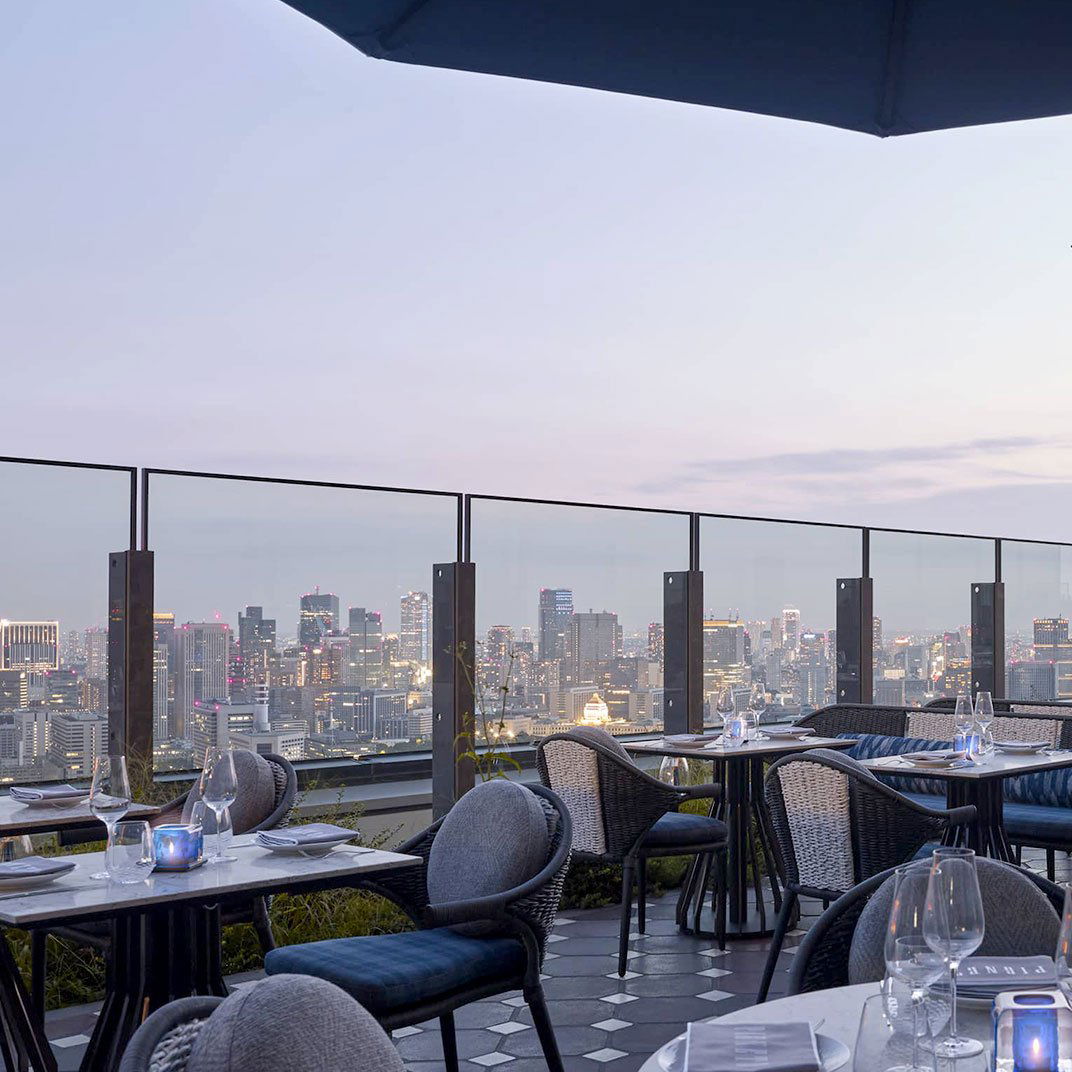
ESTERRE sits on the sixth floor of Palace Hotel Tokyo in Marunouchi, directly overlooking the gardens of the Imperial Palace. The room runs quiet by Tokyo fine-dining standards , conversation carries without effort, and the energy stays composed through service. This is not a room that builds toward a buzzy late-evening peak; it is calibrated for focus, which makes it a better choice for a long, considered meal than for a celebratory group dinner that needs atmosphere to do some of the work. The views over the Imperial Palace gardens shift with the light, and the stillness of that outlook sets the tone for everything that follows on the plate.
Why Sourcing Is the Story Here
The concept , described by the restaurant as a place that weaves an encounter between earth and sea , is not marketing language. It is a genuine editorial position on how the menu is constructed. Vegetables sourced from the markets of Kamakura arrive colourful and fresh, and the kitchen treats them as primary ingredients rather than supporting elements. The use of charcoal flame across the menu carries a distinctly Japanese inflection: it is not French technique applied to Japanese produce, but a more integrated approach where the two inform each other at the method level, not just the garnish level.
This matters for the value question. At the ¥¥¥ price tier, ESTERRE sits below Tokyo's ¥¥¥¥ French restaurants including L'Effervescence and Florilège. What you are paying for here is a specific kind of discipline: a kitchen that has chosen to express Japanese terroir through a French framework rather than chase luxury imports. If that editorial position matches what you are looking for, the price-to-experience ratio is strong. If you want the broader technical ambition of a Sézanne or the ingredient depth of an ESqUISSE, those are different conversations.
Trust Signals and Recognition
ESTERRE holds a Michelin one star (2024) and appeared on La Liste's Leading Restaurants ranking with 81 points in 2025 and 78 points in 2026. The La Liste trajectory is worth noting: a three-point drop year-on-year is not a collapse, but it is a signal that the restaurant is holding its position in an increasingly competitive field rather than climbing. The Michelin star is consistent with the kitchen's level , precise, ingredient-led, technically assured , without suggesting the kitchen is operating at two-star ambition. A 4.4 on Google across 135 reviews is a reliable floor, not a ceiling: the guests reporting there confirm execution is consistent, which matters more for repeat-visit decisions than headline rankings.
The Alain Ducasse group's involvement provides structural credibility, and the published reference to a previous chef's influence from Baumanière , the Provençal estate known for vegetable-forward cooking , helps explain why the Kamakura sourcing programme feels coherent rather than grafted on. For travellers who have eaten at HAJIME in Osaka or Gion Sasaki in Kyoto, the level of sourcing intentionality at ESTERRE will read as familiar and genuine.
Booking and Logistics
Reservations at ESTERRE are hard to secure. The Palace Hotel Tokyo setting means the restaurant draws both hotel guests and destination diners, and the combination keeps the book full. Book as far in advance as possible , four to six weeks minimum is a practical baseline for preferred time slots. Dinner on weekday evenings is typically harder to land than weekend lunch, though neither is direct. The hotel concierge route may offer some advantage for guests staying at Palace Hotel Tokyo.
The address is Palace Hotel Tokyo, 6F, 1-1-1 Marunouchi, Chiyoda-ku, Tokyo. The Marunouchi location places it well for visitors also considering Château Restaurant Joël Robuchon or planning a wider Tokyo itinerary across the city's fine-dining French tier. For broader planning, see our full Tokyo restaurants guide, our full Tokyo hotels guide, our full Tokyo bars guide, our full Tokyo wineries guide, and our full Tokyo experiences guide.
For travellers moving beyond Tokyo, the sourcing-driven French approach at ESTERRE has loose parallels in the work being done at akordu in Nara and 1000 in Yokohama. For a regional comparison further afield, Les Amis in Singapore and Hotel de Ville Crissier in Crissier offer reference points for what Ducasse-adjacent French fine dining looks like at different price points and in different culinary contexts. For Japanese regional fine dining comparisons, Goh in Fukuoka and 6 in Okinawa show how ingredient-led restaurants operate in markets with very different produce profiles.
How It Compares
Practical Details
| Venue | Cuisine | Price | Booking Difficulty | Setting |
|---|---|---|---|---|
| ESTERRE by Alain Ducasse | French | ¥¥¥ | Hard | Hotel, 6F, Imperial Palace views |
| L'Effervescence | French | ¥¥¥¥ | Very Hard | Standalone, Nishi-Azabu |
| Florilège | French | ¥¥¥ | Hard | Standalone, Minami-Aoyama |
| HOMMAGE | Innovative French | ¥¥¥¥ | Hard | Standalone |
| RyuGin | Kaiseki | ¥¥¥¥ | Very Hard | Standalone, Roppongi |
Pearl's Take
Book ESTERRE if you want French fine dining in Tokyo that is grounded in a clear sourcing argument, served in a room that prioritises calm over energy, and priced a notch below the ¥¥¥¥ tier that dominates the city's high-end French category. It is the right choice for a focused, ingredient-attentive dinner , and the Imperial Palace views on a clear evening make the setting work harder than most hotel restaurants manage.
Compare ESTERRE by Alain Ducasse
| Venue | Cuisine | Price | Booking Difficulty |
|---|---|---|---|
| ESTERRE by Alain Ducasse | French | ¥¥¥ | Hard |
| Harutaka | Sushi | ¥¥¥¥ | Unknown |
| RyuGin | Kaiseki, Japanese | ¥¥¥¥ | Unknown |
| L'Effervescence | French | ¥¥¥¥ | Unknown |
| HOMMAGE | Innovtive French, French | ¥¥¥¥ | Unknown |
| Florilège | French | ¥¥¥ | Unknown |
Comparing your options in Tokyo for this tier.
Frequently Asked Questions
What are alternatives to ESTERRE by Alain Ducasse in Tokyo?
For French fine dining in Tokyo, L'Effervescence and Florilège are the closest comparisons — both are vegetable-forward and Japan-sourced, though with a less formal register than ESTERRE's Palace Hotel setting. If you want Japanese fine dining instead of French, RyuGin offers comparable prestige and a Michelin-starred tasting format at a similar price tier. HOMMAGE is worth considering if you prefer French technique applied with a tighter, more intimate format.
Is ESTERRE by Alain Ducasse worth the price?
At ¥¥¥, ESTERRE is priced at the top end of Tokyo fine dining, and the Michelin one star (2024) and La Liste ranking (81 points in 2025, 78 in 2026) suggest the kitchen earns it. The sourcing argument — Kamakura vegetables, charcoal-accented cooking, Alain Ducasse group oversight — gives the meal a coherent identity beyond the room and the view. If you want French fine dining with a clear Japan-rooted philosophy rather than a generic luxury tasting menu, the price holds up.
Is ESTERRE by Alain Ducasse good for a special occasion?
Yes, directly. The sixth-floor setting inside Palace Hotel Tokyo overlooking the Imperial Palace gardens is one of the more considered backdrops for a significant meal in the city. The quiet, calm room suits occasions where conversation matters more than atmosphere or energy. Book a window table if you can — the garden view is the room's strongest asset.
Is ESTERRE by Alain Ducasse good for solo dining?
ESTERRE is a tasting-menu format in a formal hotel dining room, which is not the most natural solo setup — there is no counter or bar dining noted in available venue data. Solo diners are not excluded, but the experience is built around a leisurely, multi-course meal that reads better as a shared occasion. If solo fine dining is the goal, a counter-format omakase will feel less formal and more engaging.
What should I wear to ESTERRE by Alain Ducasse?
ESTERRE is inside Palace Hotel Tokyo, one of the city's more formal luxury hotels, and the room runs quiet and formal by Tokyo fine dining standards. Smart formal is the safe call: jacket for men, and nothing that would look out of place at a Michelin-starred dinner in Paris. Trainers and casual dress will feel wrong in this room.
Recognized By


More restaurants in Tokyo
- SézanneOccupying the seventh floor of the Four Seasons Hotel Tokyo at Marunouchi, Sézanne earned its first Michelin star within months of opening in July 2021 and now holds three. British chef Daniel Calvert applies French technique to Japanese ingredients, producing a prix-fixe format that Tabelog has recognised with Silver awards every year from 2023 through 2026. It ranked 4th in Asia's 50 Best Restaurants in 2025 and 15th globally in 2024.
- SazenkaSazenka is the address for Chinese cuisine in Tokyo at its most technically demanding. Chef Tomoya Kawada's wakon-kansai approach — Japanese seasonal ingredients applied through Chinese culinary technique — has earned consecutive Tabelog Gold Awards from 2019 to 2026, a #71 ranking on the World's 50 Best 2025, and 99 points from La Liste 2026. At JPY 50,000–59,999 per head, it is one of the hardest tables in the city to book and worth the effort.
- NarisawaNarisawa is Tokyo's most credentialled innovative tasting menu restaurant — two Michelin stars, Asia's 50 Best number 12, and a Tabelog Silver award — running at JPY 80,000–99,999 per head. Book for a milestone occasion, confirm vegetarian or vegan needs in advance, and reserve at least two to three months out. With 15 seats and reservation-only access, this is one of Tokyo's hardest tables to secure.
- FlorilègeFlorilège delivers two Michelin stars and an Asia's 50 Best #17 ranking at a dinner price of ¥22,000 — competitive for Tokyo at this level. Chef Hiroyasu Kawate's plant-forward tasting menus around an open-kitchen counter at Azabudai Hills make this the strongest choice for contemporary French dining in Tokyo if theatrical, produce-led cooking is what you want. Book well in advance; availability is near-impossible at short notice.
- DenDen holds two Michelin stars, a World's 50 Best top-25 Asia ranking, and a Tabelog Silver Award running back to 2017 — and it books out within hours of the two-month reservation window opening. Chef Zaiyu Hasegawa's daily-changing seasonal omakase runs JPY 30,000–39,999 at dinner in a relaxed house-restaurant setting near Gaiemmae. Book by phone only, noon–5 PM JST. Lunch is irregular; plan around dinner.
- MyojakuMyojaku is a 2-Michelin-star, 14-course French-leaning omakase in Nishiazabu holding a 4.47 Tabelog score, Tabelog Silver 2025–2026, and Asia's 50 Best #45 (2025). Chef Hidetoshi Nakamura's water-forward, no-dashi approach shifts meaningfully with the seasons — making timing your reservation as important as getting one. Budget JPY 50,000–59,999 per head plus 10% service charge; reservations only, near-impossible to secure.
Related editorial
- Best Fine Dining Restaurants in ParisFrom three-Michelin-star icons to the next generation of Parisian chefs pushing boundaries, these are the restaurants that define fine dining in the world's culinary capital.
- Best Luxury Hotels in RomeFrom rooftop terraces overlooking ancient ruins to Michelin-starred hotel dining, these are the luxury hotels that make Rome unforgettable.
- Best Cocktail Bars in KyotoFrom sleek lounges to hidden speakeasies, Kyoto's cocktail scene blends Japanese precision with global influence in ways you won't find anywhere else.
Save or rate ESTERRE by Alain Ducasse on Pearl
Keep this venue in your Pearl passport, rate it after you visit, and track it alongside every other place you collect.