
Restaurant in Tokyo, Japan
Chugokusai HINA
230ptsSeasonal Chinese, Japanese restraint, worth booking.

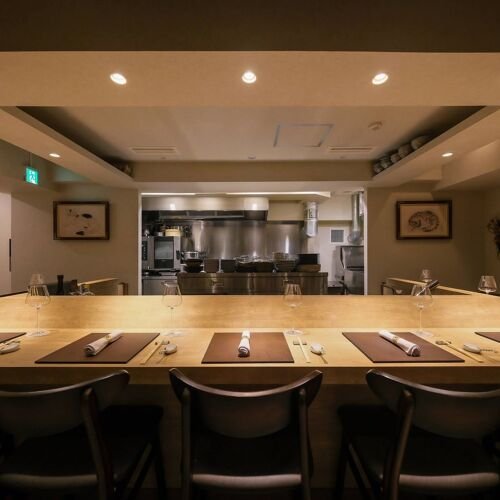
About Chugokusai HINA
A counter-style Chinese restaurant in Nakameguro where the kitchen reinterprets Japanese seasonal produce through Chinese technique. Seasoning is restrained and precise; the drinks list runs to aged Japanese sake and organic wine rather than Shaoxing. At ¥¥¥ and with easy booking, it is one of the more considered Chinese counter options in Tokyo for diners who return across different seasons.
Is Chugokusai HINA worth booking in Nakameguro?
Yes — and if you care about how Chinese cooking intersects with Japanese seasonal thinking, this counter-style restaurant in Nakameguro is one of the more considered choices in Tokyo at the ¥¥¥ price tier. The format is intimate, the philosophy is restraint over spectacle, and the drinks pairing — aged Japanese sake and organic wine in place of Shaoxing wine , is a genuine point of difference worth planning around.
What to Expect at Chugokusai HINA
HINA sits on the third floor of a building in Kamimeguro, a quieter residential pocket of Meguro City a short walk from the Nakameguro canal. The counter format means every seat faces the kitchen, and the husband-and-wife operation keeps the room tight: he cooks, she serves. That clarity of roles shapes the experience , this is not a restaurant that runs on front-of-house performance or table theatrics. The attention is on what arrives in front of you.
The cooking is grounded in Chinese technique but oriented around Japanese seasonal produce. The chef trained in Yokohama's Chinatown kitchens and in Shanghai, so the technical foundation is orthodox , but the ingredient sourcing and seasonal rotation follow a Japanese logic. Expect the menu to shift meaningfully across the year: what you eat in early spring, when mountain vegetables are at their peak, will be a different proposition from an autumn visit built around mushrooms, root vegetables, and the richer profiles that come with cooler months. If you've visited once and want to know what to try next, the honest answer is to come back in a different season rather than ordering differently within the same menu window.
Seasoning here is deliberate and restrained. The kitchen's stated priority is the inherent flavour of the ingredient, not the accumulation of sauce or salt. For diners used to the bolder register of Cantonese banquet cooking or the punchy heat of Sichuan, the first course or two may read as quiet. Trust the calibration , this is intentional cooking, not timid cooking. By the midpoint of any meal, the cumulative effect of that restraint tends to read clearly.
The drinks list is worth attention before you arrive. The decision to pair dishes with well-aged Japanese sake and organic wine rather than Shaoxing wine is not just a marketing note , it changes the register of the meal. Aged sake, particularly junmai-type expressions with several years of development, reads rounder and more oxidative than young sake; alongside restrained Chinese dishes built on clean ingredient flavour, it tends to amplify rather than compete. If sake is not a format you know well, this is a reasonable place to start building familiarity. Ask what's currently being poured , the selection is likely to rotate with the seasonal menu.
HINA holds a Google rating of 4.5 across 49 reviews, which is a credible signal at this scale. Small counter restaurants in Tokyo often accumulate ratings slowly; 49 reviews at 4.5 suggests a consistent rather than viral reputation.
When to Book and How Far Out
Booking difficulty is rated easy, which means you are not competing against a months-long waitlist the way you would at a reservations-only kaiseki room or an omakase sushi counter with a national following. That said, the counter format means seat count is low by definition, and the husband-and-wife operation limits covers per service. Book one to two weeks out for a standard visit; same-week availability is possible but not guaranteed on weekends. If you are planning a Tokyo trip around a specific seasonal window , say, cherry blossom season in late March or the peak of autumn colour in November , book further ahead, because demand in those windows is higher across all Nakameguro restaurants. Specific hours and a booking method are not confirmed in current data, so check directly via a Tokyo restaurant reservation platform or the venue itself before planning around it.
For context on how HINA fits within Tokyo's Chinese dining options: Chugoku Hanten Fureika and Chugoku Hanten Kohakukyu (Amber Palace) both sit at a higher price point and offer a more formal banquet-style experience , different format, different occasion. Ippei Hanten is another reference point in Tokyo's Chinese category worth comparing depending on what you're after. If the counter-focused, ingredient-led approach at HINA appeals but you want to explore further, itsuka and Koshikiryori Koki offer adjacent sensibilities in Tokyo's smaller, chef-driven room category.
Beyond Tokyo, the philosophy of Chinese cooking reinterpreted through Japanese seasonal logic has a few interesting comparators elsewhere in Japan: HAJIME in Osaka operates at a different price tier and category but shares the seasonal ingredient emphasis. Further afield, Restaurant Tim Raue in Berlin and Mister Jiu's in San Francisco both demonstrate how Chinese technique can be applied outside its original context with serious results , useful benchmarks if you want to understand where HINA sits on the broader spectrum of modern Chinese cooking.
For more options across the city, see our full Tokyo restaurants guide. If you're building a wider trip itinerary, our Tokyo hotels guide, bars guide, wineries guide, and experiences guide cover the rest. For day-trip considerations, 1000 in Yokohama and Gion Sasaki in Kyoto are both worth noting, along with akordu in Nara, Goh in Fukuoka, and 6 in Okinawa if your itinerary extends further.
Practical Details
Chugokusai HINA is on the third floor at 2-16-12 Kamimeguro, Meguro City, Tokyo. The nearest station is Nakameguro on the Tokyu Toyoko and Tokyo Metro Hibiya lines. Price tier is ¥¥¥. Phone and hours are not confirmed in current data , verify before visiting. Booking difficulty is easy relative to comparable Tokyo counters.
Quick reference: Counter-style Chinese, ¥¥¥, Nakameguro, Tokyo. Book 1–2 weeks out; verify hours directly. Google: 4.5/5 (49 reviews).
FAQ
What should a first-timer know about Chugokusai HINA?
- This is counter-format Chinese at ¥¥¥ in Nakameguro , expect an intimate room, a set or semi-set menu structure typical of this format, and cooking that prioritises ingredient flavour over heavy seasoning.
- The drinks pairing uses aged Japanese sake and organic wine rather than Chinese wine, which is distinctive at this price point and worth engaging with rather than skipping.
- The menu follows Japanese seasonal rotation, so what you eat will depend heavily on when you visit. Autumn and spring visits tend to showcase the seasonal philosophy most clearly.
- Service is run by the chef's wife, so the room is quiet and unhurried , not a loud or convivial Chinese restaurant in the traditional sense.
Is Chugokusai HINA good for solo dining?
- Yes. The counter format is well-suited to solo diners , you have a direct view of the kitchen and a natural interaction point with the team, which makes eating alone here more engaging than at a standard table-service room.
- At ¥¥¥, it sits at a reasonable solo spend for Tokyo's counter-dining category. Comparable solo counter experiences in the city at higher price points include omakase sushi and kaiseki rooms, which can run significantly more per head.
- If solo dining at a Chinese counter in Tokyo is the goal, HINA is one of the cleaner options at this price tier.
Can I eat at the bar at Chugokusai HINA?
- The entire format is counter-style, so yes , the counter is the dining experience, not a separate bar area. There is no conventional table section to distinguish from.
- This also means walk-in counter seats function differently here than at a restaurant with a dedicated bar: all seats are part of the same service, and availability depends on the whole booking status of the counter, not a separate walk-in section.
- Confirming current reservation policy directly is advisable given the small scale of the operation.
Can Chugokusai HINA accommodate groups?
- The counter format limits group size. Without a confirmed seat count in current data, it is not possible to state a maximum, but counter-style restaurants in Tokyo at this tier typically run between 8 and 14 seats.
- Groups of 4 or more should contact the venue directly before booking to confirm availability and whether the full counter can be reserved , at this scale, a large group may effectively need to take all or most of the seats.
- For larger groups in Tokyo wanting Chinese cuisine at a similar quality level, Chugoku Hanten Kohakukyu (Amber Palace) or Chugoku Hanten Fureika offer formats better suited to larger parties.
Compare Chugokusai HINA
| Venue | Price | Value |
|---|---|---|
| Chugokusai HINA | ¥¥¥ | — |
| Harutaka | ¥¥¥¥ | — |
| L'Effervescence | ¥¥¥¥ | — |
| RyuGin | ¥¥¥¥ | — |
| HOMMAGE | ¥¥¥¥ | — |
| Crony | ¥¥¥¥ | — |
How Chugokusai HINA stacks up against the competition.
Frequently Asked Questions
Can Chugokusai HINA accommodate groups?
Counter-style restaurants of this type typically have limited total covers, which makes large groups difficult to seat together. HINA works best for two to four people; if you are planning a group of six or more, check the venue's official channels before booking. For a private-room group dinner in Tokyo at a comparable price point, RyuGin or HOMMAGE offer formats better suited to larger parties.
Can I eat at the bar at Chugokusai HINA?
The restaurant is counter-style by design, so the counter is the main dining format rather than a bar alternative to table seating. Every guest eats at the counter, which means you get a direct view of the kitchen regardless of booking type. There is no separate bar or lounge area noted for the venue.
What should a first-timer know about Chugokusai HINA?
Expect counter seating, a husband-and-wife operation, and Chinese cooking filtered through Japanese seasonal thinking — restrained seasoning, premium ingredients, and sake or organic wine pairings instead of Shaoxing wine. At ¥¥¥, this is not a casual takeout-style Chinese meal; it sits closer in register to a Tokyo counter omakase. If you want loud, saucy Cantonese or Sichuan heat, this is the wrong room.
Is Chugokusai HINA good for solo dining?
Yes — the counter format is built for solo diners. You eat facing the kitchen, the chef's wife manages service personally, and the pacing is course-by-course, which makes the solo experience feel intentional rather than awkward. At ¥¥¥ it is a considered spend for one, but the counter setup makes it one of the more natural solo bookings in Nakameguro.
Recognized By

More restaurants in Tokyo
- SézanneOccupying the seventh floor of the Four Seasons Hotel Tokyo at Marunouchi, Sézanne earned its first Michelin star within months of opening in July 2021 and now holds three. British chef Daniel Calvert applies French technique to Japanese ingredients, producing a prix-fixe format that Tabelog has recognised with Silver awards every year from 2023 through 2026. It ranked 4th in Asia's 50 Best Restaurants in 2025 and 15th globally in 2024.
- SazenkaSazenka is the address for Chinese cuisine in Tokyo at its most technically demanding. Chef Tomoya Kawada's wakon-kansai approach — Japanese seasonal ingredients applied through Chinese culinary technique — has earned consecutive Tabelog Gold Awards from 2019 to 2026, a #71 ranking on the World's 50 Best 2025, and 99 points from La Liste 2026. At JPY 50,000–59,999 per head, it is one of the hardest tables in the city to book and worth the effort.
- NarisawaNarisawa is Tokyo's most credentialled innovative tasting menu restaurant — two Michelin stars, Asia's 50 Best number 12, and a Tabelog Silver award — running at JPY 80,000–99,999 per head. Book for a milestone occasion, confirm vegetarian or vegan needs in advance, and reserve at least two to three months out. With 15 seats and reservation-only access, this is one of Tokyo's hardest tables to secure.
- FlorilègeFlorilège delivers two Michelin stars and an Asia's 50 Best #17 ranking at a dinner price of ¥22,000 — competitive for Tokyo at this level. Chef Hiroyasu Kawate's plant-forward tasting menus around an open-kitchen counter at Azabudai Hills make this the strongest choice for contemporary French dining in Tokyo if theatrical, produce-led cooking is what you want. Book well in advance; availability is near-impossible at short notice.
- DenDen holds two Michelin stars, a World's 50 Best top-25 Asia ranking, and a Tabelog Silver Award running back to 2017 — and it books out within hours of the two-month reservation window opening. Chef Zaiyu Hasegawa's daily-changing seasonal omakase runs JPY 30,000–39,999 at dinner in a relaxed house-restaurant setting near Gaiemmae. Book by phone only, noon–5 PM JST. Lunch is irregular; plan around dinner.
- MyojakuMyojaku is a 2-Michelin-star, 14-course French-leaning omakase in Nishiazabu holding a 4.47 Tabelog score, Tabelog Silver 2025–2026, and Asia's 50 Best #45 (2025). Chef Hidetoshi Nakamura's water-forward, no-dashi approach shifts meaningfully with the seasons — making timing your reservation as important as getting one. Budget JPY 50,000–59,999 per head plus 10% service charge; reservations only, near-impossible to secure.
Similar venues by awards
Related editorial
- Best Fine Dining Restaurants in ParisFrom three-Michelin-star icons to the next generation of Parisian chefs pushing boundaries, these are the restaurants that define fine dining in the world's culinary capital.
- Best Luxury Hotels in RomeFrom rooftop terraces overlooking ancient ruins to Michelin-starred hotel dining, these are the luxury hotels that make Rome unforgettable.
- Best Cocktail Bars in KyotoFrom sleek lounges to hidden speakeasies, Kyoto's cocktail scene blends Japanese precision with global influence in ways you won't find anywhere else.
Save or rate Chugokusai HINA on Pearl
Keep this venue in your Pearl passport, rate it after you visit, and track it alongside every other place you collect.