
Restaurant in Tokyo, Japan
Arakicho Tatsuya
290ptsProducer-obsessed counter for serious Tokyo diners.

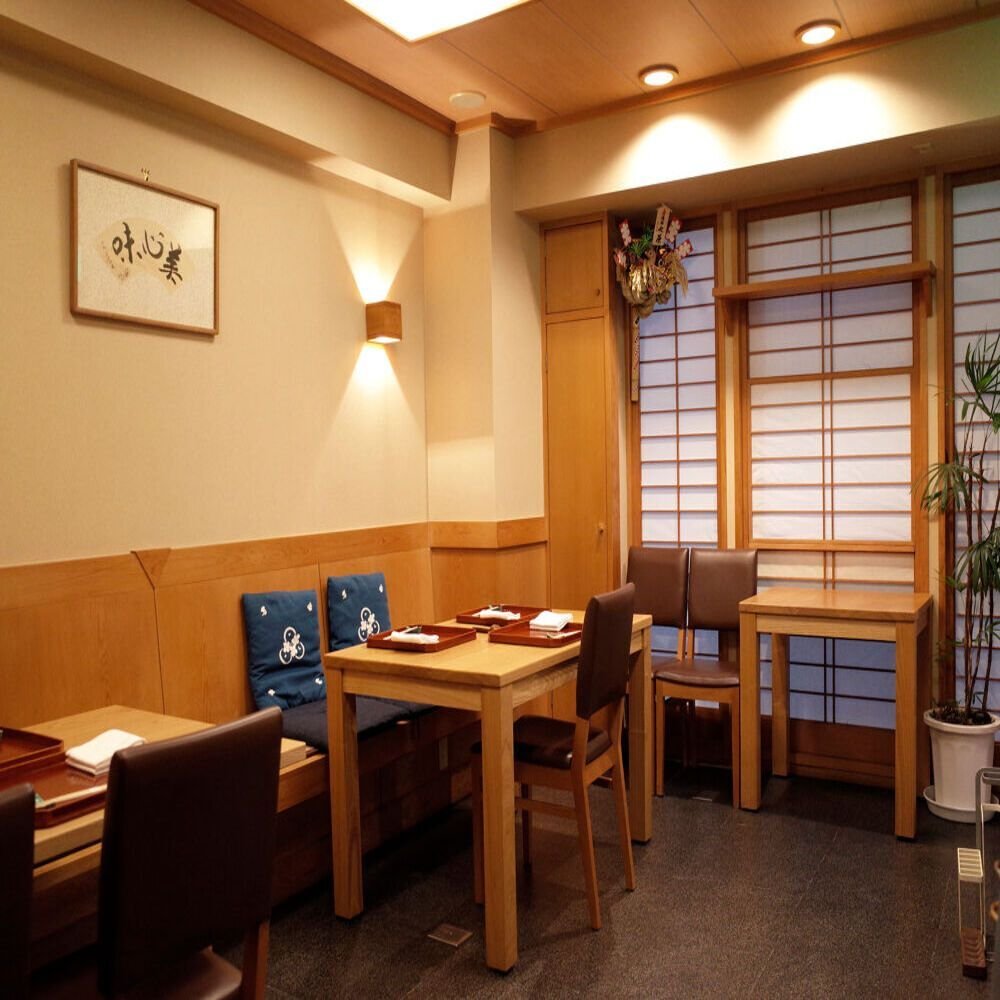
About Arakicho Tatsuya
A Michelin Plate-recognised Japanese counter in Arakicho, Shinjuku, where the chef traces every ingredient back to its producer and finishes meals with a zero-waste rice soup that earns its place as the closing course. At ¥¥¥ pricing, it delivers producer-connected, personally-driven dining well below the ¥¥¥¥ tier — and is easier to book than most Michelin-level venues in Tokyo.
Verdict: A Michelin-Recognised Counter in Shinjuku That Earns Its Price Tag
Picture this: a quiet residential pocket of Shinjuku City, a ground-floor counter, and a chef who has spent years tracking down the potter who made your bowl. If that level of intentionality sounds worth investigating, Arakicho Tatsuya is worth booking. This is a ¥¥¥ Japanese restaurant in Arakicho that holds a Michelin Plate for 2024 and 2025 — not a star, but a consistent Michelin-level endorsement that places it above the noise of Tokyo's mid-range Japanese dining without demanding ¥¥¥¥ pricing. For food-focused travellers who want a personal, producer-driven meal rather than a theatrical kaiseki production, this is a strong choice.
What Makes This Place Work
The chef at Arakicho Tatsuya operates on a philosophy that is uncommon even by Tokyo standards: direct relationships with food producers, potters, sake breweries, and wineries. He visits them. He knows them. And that context arrives at the table with every course. You are not just eating seasonal Japanese ingredients; you are eating ingredients that the chef has traced back to their source. This is producer-to-table dining with the traceability kept visible rather than treated as a marketing footnote.
The meal concludes with a risotto-like rice soup made with broth from takiawase — a finalé that functions as both a comfort dish and a statement of the chef's zero-waste commitment. Nothing is discarded. Bones, trimmings, and cooking liquids cycle back into something warm and coherent at the end of the meal. For guests used to tasting menus that end with a parade of petit fours, this closing course is a deliberate reframe: nourishing rather than decorative, practical rather than theatrical.
That commitment to waste elimination also reflects in the flavour profile. The cooking here reads as soul-warming rather than technique-showcasing. If you are coming for flashy presentations or ingredient exoticism for its own sake, adjust expectations. The reward here is coherence: each element in a dish exists because it should, not because it can.
Who Should Book This
Arakicho Tatsuya suits a specific diner: someone who finds the producer backstory as compelling as the plating, who appreciates a chef-driven counter where the conversation around food is part of the evening. It is a good fit for solo diners or couples who want a quieter, more intimate setting than Tokyo's high-profile kaiseki rooms. At ¥¥¥ pricing, it sits below the ¥¥¥¥ tier occupied by venues like RyuGin or Kagurazaka Ishikawa, which makes it one of the more accessible Michelin-recognised Japanese options in the city.
For late evenings, Arakicho Tatsuya's intimate counter format means the pace is set by the chef rather than a busy dining room turning tables. Hours are not confirmed in available data, so contact ahead to verify last-seating times , but the style of service and the closing rice course suggest a meal designed to end the evening properly rather than rush you out. If you are looking for a late dinner that delivers something considered rather than just convenient, this warrants the call to confirm availability.
Explorers moving across Japan's dining circuit will find useful parallels here with other producer-focused counter restaurants. Myojaku and Azabu Kadowaki both represent the Tokyo counter tradition at different price points. Outside Tokyo, Gion Sasaki in Kyoto and HAJIME in Osaka operate in comparable territory with different regional ingredient foundations. Arakicho Tatsuya's Shinjuku location and ¥¥¥ pricing make it a practical anchor for a broader Japan itinerary.
Timing and Booking
With a 4.7 Google rating from 33 reviews, the sample size is small but the signal is consistent. This is not a venue with mass-market visibility, which works in the booker's favour: securing a seat is genuinely easier here than at the heavily trafficked starred restaurants across Shinjuku and central Tokyo. Booking is rated Easy. That said, the counter format means capacity is limited by design, so booking ahead is still advisable rather than arriving unannounced.
The leading time to visit is early in the week, when counter restaurants across Tokyo typically have more availability and the chef is fresher in the rhythm of the week. Autumn and spring are the strongest seasons for Japanese produce-driven cooking generally, making those windows worth targeting if your schedule allows. For visitors already planning to cover Ginza Fukuju or Jingumae Higuchi on the same trip, Arakicho Tatsuya completes a coherent tour of Tokyo's mid-to-high Japanese counter scene without duplicating the experience.
Know Before You Go
- Price range: ¥¥¥
- Location: Arakicho, Shinjuku City, Tokyo (ground floor, タウンコート七海 building)
- Awards: Michelin Plate 2024 and 2025
- Google rating: 4.7 (33 reviews)
- Booking difficulty: Easy , advance booking still recommended given counter seating
- Format: Counter-style Japanese, chef-driven tasting menu with closing rice course
- Phone/website: Not publicly listed , contact via reservation platform or in person
- Hours: Not confirmed , verify last-seating time before planning a late dinner
- Leading time to visit: Early in the week; autumn and spring for peak seasonal produce
Elsewhere in Tokyo and Japan
If Arakicho Tatsuya is fully booked or you want to build a broader itinerary, our full Tokyo restaurants guide covers the city's range from counter sushi to French-Japanese hybrids. For accommodation context, our Tokyo hotels guide is worth consulting alongside, and our Tokyo bars guide can complete a late evening that starts at the Arakicho counter. For those extending beyond Tokyo, akordu in Nara, Goh in Fukuoka, and Isshisoden Nakamura in Kyoto each represent the same producer-connected ethos in different regional registers. Kashiwaya Osaka Senriyama, 1000 in Yokohama, and 6 in Okinawa round out a Japan-wide picture of this style of deeply considered Japanese cooking. Our Tokyo wineries guide and Tokyo experiences guide are also worth bookmarking if you are planning a multi-day visit.
Frequently Asked Questions
- How far ahead should I book Arakicho Tatsuya? Booking is rated Easy compared to most Michelin-recognised Tokyo restaurants, but the counter format limits covers. A few days to a week ahead is usually sufficient , unlike ¥¥¥¥ venues in Tokyo where 4–6 weeks is standard. Contact directly since no online booking platform is listed in available data.
- Does Arakicho Tatsuya handle dietary restrictions? No information is available in confirmed data. Given the chef's close relationships with producers and his zero-waste cooking philosophy, the menu is likely tightly structured. Contact the restaurant directly before booking if dietary restrictions are a concern , this is not a venue where assumptions should be made.
- Is Arakicho Tatsuya worth the price? At ¥¥¥, yes , for what it delivers. You get Michelin Plate-level cooking, a producer-connected menu, and a personalised counter experience for less than the ¥¥¥¥ tier. If you want a star-level kaiseki spectacle, look at RyuGin instead. If you want something more personal and at a lower price point, Arakicho Tatsuya makes a strong case.
- What should I order at Arakicho Tatsuya? The menu is chef-driven, so ordering choices are likely limited. Based on confirmed data, the closing rice soup made from takiawase broth is the dish most worth arriving with an appetite for , the meal is designed to build toward it. No specific à la carte dishes are confirmed in available data.
- Is Arakicho Tatsuya good for a special occasion? Yes, with caveats. The intimate counter and personalised chef interaction make it a strong choice for two people marking something meaningful. It is not a venue with the production-level ambiance of a major kaiseki room, so if visual drama matters more than personal depth, look elsewhere. For a food-focused celebratory dinner, it works well.
- Is the tasting menu worth it at Arakicho Tatsuya? The evidence points to yes. The Michelin Plate for consecutive years, the 4.7 Google rating, and the chef's sourcing philosophy all suggest a menu that justifies the ¥¥¥ spend. The closing rice course alone suggests the menu is structured with intention rather than just length. Compared to the ¥¥¥¥ alternatives in Tokyo, this is one of the better-value tasting experiences in the Michelin-recognised tier.
- What are alternatives to Arakicho Tatsuya in Tokyo? For a similar producer-driven Japanese counter at ¥¥¥, Myojaku is worth considering. For a step up in ceremony and price, Azabu Kadowaki and Kagurazaka Ishikawa operate in the ¥¥¥¥ bracket. If you want French-influenced cooking at a comparable price point, Florilège is the closest ¥¥¥ peer with a different cuisine axis.
Compare Arakicho Tatsuya
| Venue | Awards | Price | Value |
|---|---|---|---|
| Arakicho Tatsuya | The owner-chef prides himself on being the link between diner and food producer. He visits not only the producers of the ingredients he uses, but also the potters who make his crockery, sake breweries and wineries, building strong and trusting relationships. To convey that background to his guests, the chef goes the extra mile to make the dining experience fun. Meals conclude with risotto-like rice soup made with broth from takiawase. The chef is determined to waste nothing, using every morsel of food—a commitment he delivers on with flavours that warm the soul.; Michelin Plate (2025); Michelin Plate (2024) | ¥¥¥ | — |
| Harutaka | Michelin 3 Star, World's 50 Best | ¥¥¥¥ | — |
| RyuGin | Michelin 3 Star, World's 50 Best | ¥¥¥¥ | — |
| L'Effervescence | Michelin 3 Star, World's 50 Best | ¥¥¥¥ | — |
| HOMMAGE | Michelin 2 Star, World's 50 Best | ¥¥¥¥ | — |
| Florilège | Michelin 2 Star, World's 50 Best | ¥¥¥ | — |
Side-by-side comparison to help you decide where to book.
Frequently Asked Questions
How far ahead should I book Arakicho Tatsuya?
Book at least three to four weeks out. With only 33 Google reviews, this is not a high-volume venue, but that limited visibility means seats go to regulars and word-of-mouth referrals rather than tourists — so availability can be tighter than it looks. No website or phone number is publicly listed, so research the current booking channel before you plan your trip.
Does Arakicho Tatsuya handle dietary restrictions?
The chef's philosophy is built around minimising waste and honouring each ingredient, which suggests a fixed, producer-led menu rather than a flexible à la carte format. That means dietary restrictions may be difficult to accommodate. check the venue's official channels before booking if this is a concern — do not assume substitutions are available at a counter of this type.
Is Arakicho Tatsuya worth the price?
At ¥¥¥, it is priced in line with Tokyo's serious counter restaurants and holds a Michelin Plate for 2024 and 2025. The case for the price rests on the chef's direct relationships with producers, potters, and sake breweries — context that shapes the meal rather than decorates it. If you want that layer of provenance woven into the experience, the price is justified. If you just want technically precise food, there are Michelin-starred options in Tokyo at a similar spend.
What should I order at Arakicho Tatsuya?
The menu is chef-driven, so ordering is not the frame. The meal concludes with a risotto-style rice soup made from takiawase broth — a signature zero-waste touch that is worth knowing about going in. Expect the format to be set, with the chef guiding the progression from start to finish.
Is Arakicho Tatsuya good for a special occasion?
Yes, with the right group. This suits a pair or small group where at least one person is genuinely interested in producer relationships and Japanese food culture — the chef actively conveys that backstory as part of the experience. For a celebration that needs atmosphere over substance, or a large group, look elsewhere in Tokyo.
Is the tasting menu worth it at Arakicho Tatsuya?
The Michelin Plate recognition in both 2024 and 2025 supports the case. The format is designed to be educational as well as satisfying — the chef explains the origin of ingredients, crockery, and sake, which adds real value if that interests you. If you want a conventional tasting menu without the producer narrative, Harutaka or Florilège offer stronger culinary credentials at a comparable or higher price point.
What are alternatives to Arakicho Tatsuya in Tokyo?
For a higher-stakes omakase with verified Michelin star credentials, Harutaka is the counter benchmark in Tokyo. RyuGin offers a modern Japanese tasting menu with more spectacle and international recognition. L'Effervescence and Florilège are the calls if you want French-influenced fine dining rather than a Japanese counter format. HOMMAGE sits closer to Arakicho Tatsuya in spirit — chef-driven, intimate, and focused on craft over volume.
Recognized By

More restaurants in Tokyo
- SézanneOccupying the seventh floor of the Four Seasons Hotel Tokyo at Marunouchi, Sézanne earned its first Michelin star within months of opening in July 2021 and now holds three. British chef Daniel Calvert applies French technique to Japanese ingredients, producing a prix-fixe format that Tabelog has recognised with Silver awards every year from 2023 through 2026. It ranked 4th in Asia's 50 Best Restaurants in 2025 and 15th globally in 2024.
- SazenkaSazenka is the address for Chinese cuisine in Tokyo at its most technically demanding. Chef Tomoya Kawada's wakon-kansai approach — Japanese seasonal ingredients applied through Chinese culinary technique — has earned consecutive Tabelog Gold Awards from 2019 to 2026, a #71 ranking on the World's 50 Best 2025, and 99 points from La Liste 2026. At JPY 50,000–59,999 per head, it is one of the hardest tables in the city to book and worth the effort.
- NarisawaNarisawa is Tokyo's most credentialled innovative tasting menu restaurant — two Michelin stars, Asia's 50 Best number 12, and a Tabelog Silver award — running at JPY 80,000–99,999 per head. Book for a milestone occasion, confirm vegetarian or vegan needs in advance, and reserve at least two to three months out. With 15 seats and reservation-only access, this is one of Tokyo's hardest tables to secure.
- FlorilègeFlorilège delivers two Michelin stars and an Asia's 50 Best #17 ranking at a dinner price of ¥22,000 — competitive for Tokyo at this level. Chef Hiroyasu Kawate's plant-forward tasting menus around an open-kitchen counter at Azabudai Hills make this the strongest choice for contemporary French dining in Tokyo if theatrical, produce-led cooking is what you want. Book well in advance; availability is near-impossible at short notice.
- DenDen holds two Michelin stars, a World's 50 Best top-25 Asia ranking, and a Tabelog Silver Award running back to 2017 — and it books out within hours of the two-month reservation window opening. Chef Zaiyu Hasegawa's daily-changing seasonal omakase runs JPY 30,000–39,999 at dinner in a relaxed house-restaurant setting near Gaiemmae. Book by phone only, noon–5 PM JST. Lunch is irregular; plan around dinner.
- QuintessenceQuintessence is Tokyo's most consistently decorated French restaurant: three Michelin stars held through 2025, a La Liste score of 96.5 points, and a Tabelog Gold run from 2017 to 2024. Dinner runs ¥60,000–¥79,999 all in with wine. Book the first seating (5 PM) well ahead — Near Impossible to secure — and come for classical French cooking executed with sustained precision in a secluded Gotenyama setting.
Similar venues by awards
Related editorial
- Hwaro NYC Tasting Menu: $295, 22 Seats, Hidden Inside a SteakhouseChef Sungchul Shim's 22-seat Korean fine dining counter inside Gui is one of NYC's most personal — and most carefully considered — tasting menus at $295.
- Asia's 50 Best Restaurants 2026: The Chairman and Wing Go 1-2 from the Same BuildingThe Chairman takes No. 1 and Wing climbs to No. 2 at Asia's 50 Best Restaurants 2026. Both operate from the same Hong Kong building. Here's what it means.
- Four Seasons Yachts Debut: 95 Suites, 11 Restaurants, and a March 2026 Maiden VoyageFour Seasons I launches March 20, 2026, with 95 suites, a one-to-one staff ratio, and 11 onboard restaurants. Worth tracking if you want hotel-grade service at sea.
Save or rate Arakicho Tatsuya on Pearl
Keep this venue in your Pearl passport, rate it after you visit, and track it alongside every other place you collect.