
Restaurant in Tokyo, Japan
Aoyama Ototo
290ptsSerious fish and rice. No splurge required.

About Aoyama Ototo
Aoyama Ototo holds Michelin Plate recognition for 2024 and 2025 at ¥¥ pricing — a strong combination in Tokyo's Jingumae neighbourhood. Lunch sets built around char-grilled fish and iron-pot rice are the entry point; evenings open to à la carte grilling with sake and wine. Book a few days ahead for lunch, a week or more for dinner.
A 4.4-rated Michelin Plate restaurant at ¥¥ pricing — Aoyama Ototo earns its place as one of Jingumae's most accessible serious dining options
With 106 Google reviews averaging 4.4 stars and back-to-back Michelin Plate recognition in 2024 and 2025, Aoyama Ototo delivers a level of cooking that punches well above its price tier. For a first-timer trying to find honest Japanese grilling and rice cooking in the Aoyama-Jingumae corridor without committing to a four-figure omakase, this is a strong answer. The basement address on Jingumae 3-chome puts you in the middle of one of Tokyo's most design-conscious neighbourhoods, but the kitchen's focus is decidedly traditional — char-grilled fish, iron-pot rice, and carefully sourced regional ingredients.
What to Expect: The Room, the Format, the Food
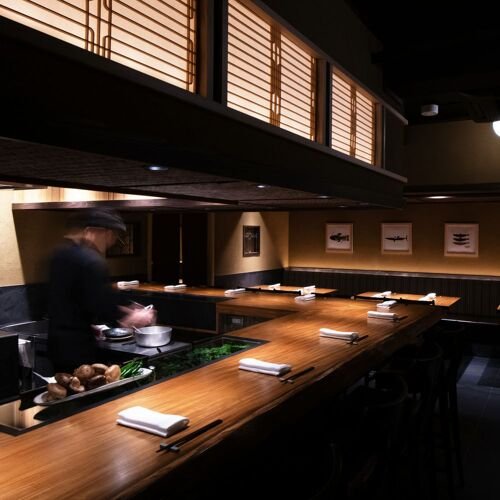
Aoyama Ototo is a basement (B1) restaurant , expect a compact, enclosed dining room rather than a street-level view. The visual focal point here is what arrives at the table: char-grilled fish with the char marks and rendered skin that come from a serious grill setup, rice cooked to order in an iron pot, and pickled Nanko-ume apricots sourced from Wakayama prefecture. The apricots are a detail worth noting for first-timers , they are not a garnish but a considered regional pairing that cuts through rich rice and grilled fish.
Lunch and dinner work differently here, and which one you choose will shape the entire experience. At lunch, the kitchen leads with set menus: salt-grilled mackerel and sablefish saikyo-yaki (white miso-marinated fish, grilled) are the anchors. These are structured, affordable meals with a clear sequence. In the evening, the format opens up considerably , guests select from a range of meats and vegetables to grill, and the à la carte list extends far enough to build a longer, more exploratory session around sake or wine. If you are visiting for the first time and want to understand what the kitchen does leading, the lunch set is the more direct answer. If you want flexibility and a longer evening, the dinner format rewards that approach.
Why This Venue Matters in Jingumae
The Aoyama-Jingumae area is dense with high-concept restaurants, international brands, and multi-course tasting menus aimed at destination diners. Aoyama Ototo operates differently. Its ¥¥ pricing and emphasis on grilled fish, rice, and regional Japanese produce make it a genuine neighbourhood option in an area that does not have many of those. For anyone staying nearby or spending time around Omotesando and Harajuku, it fills a gap that the area's more formal dining options do not: a competent, Michelin-recognised kitchen you can walk into without a month's advance planning or a significant budget commitment. Nearby, Jingumae Higuchi operates in the same neighbourhood with a different register, and both are worth knowing about if you are spending time in this part of Shibuya ward.
For broader context on what Tokyo's Japanese dining scene offers across formats and price points, Myojaku, Azabu Kadowaki, and Kagurazaka Ishikawa represent progressively more formal and expensive options. Ginza Fukuju is another reference point at a higher tier. Aoyama Ototo sits firmly below all of them in price while holding its own on credential.
Leading Time to Visit
Lunch is the optimal first visit. The set menus reduce decision-making, keep the bill manageable, and give you a clear read on the kitchen's strengths. Weekday lunches in Tokyo tend to move faster and seat more easily than weekend slots, and at a venue with Michelin recognition at this price point, competition for weekend tables is real. If you are planning an evening visit, arriving earlier in the evening rather than later gives you more time to work through the à la carte list without feeling rushed. The sake and wine pairing format that works well here benefits from a relaxed pace.
Tokyo's restaurant scene rewards early booking even for accessible venues. Given the ¥¥ price point and Michelin Plate status, Aoyama Ototo can fill quickly despite not requiring the weeks-out lead time of the city's top-tier restaurants. Booking a few days ahead for lunch and a week or more ahead for dinner evenings is a sensible baseline. See our full Tokyo restaurants guide for broader planning context, or check our Tokyo hotels guide if you are still arranging a base in the city.
Practical Details
Reservations: Bookable in advance; easy difficulty relative to Tokyo's Michelin tier , book a few days ahead for lunch, a week or more for dinner. Dress: No dress code data available, but the neighbourhood and Michelin Plate context suggest smart-casual is appropriate , avoid resort wear; a neat, put-together look fits the room. Budget: ¥¥ pricing tier; lunch sets offer the most predictable spend, evening à la carte will run higher depending on how far you extend into sake and wine. Location: B1 level, BELL TOWN Aoyama, Jingumae 3-chome, Shibuya , a short walk from Omotesando station. Group size: The format suits couples and small groups; the à la carte evening structure works well for groups of three or four who want to share across the grill menu.
If your Tokyo itinerary extends beyond the city, the same framework of accessible, serious Japanese cooking appears at different registers around Japan: HAJIME in Osaka, Gion Sasaki in Kyoto, akordu in Nara, Goh in Fukuoka, 1000 in Yokohama, 6 in Okinawa, Isshisoden Nakamura in Kyoto, and Kashiwaya Osaka Senriyama are all worth cross-referencing depending on your route. For everything else in Tokyo, our guides to bars, wineries, and experiences cover the full picture.
Compare Aoyama Ototo
| Venue | Price | Booking Difficulty | Value |
|---|---|---|---|
| Aoyama Ototo | ¥¥ | Easy | — |
| Harutaka | ¥¥¥¥ | Unknown | — |
| RyuGin | ¥¥¥¥ | Unknown | — |
| L'Effervescence | ¥¥¥¥ | Unknown | — |
| HOMMAGE | ¥¥¥¥ | Unknown | — |
| Florilège | ¥¥¥ | Unknown | — |
Side-by-side comparison to help you decide where to book.
Frequently Asked Questions
Does Aoyama Ototo handle dietary restrictions?
The menu centres on fish, grilled meats, and rice, so pescatarians and omnivores are well served. Guests with shellfish allergies, strict vegetarian requirements, or gluten intolerance should check the venue's official channels before booking, as the core dishes — salt-grilled mackerel, sablefish saikyo-yaki, and miso-marinated preparations — are fish-forward by design. No allergy policy is documented in available venue data, so confirming in advance is the practical step.
What should a first-timer know about Aoyama Ototo?
Start with lunch. The set menus — built around salt-grilled mackerel and sablefish saikyo-yaki — keep costs low and give you a direct read on the kitchen's strengths before committing to an evening visit. The restaurant is in a basement (B1 of BELL TOWN 青山 in Jingumae), so don't confuse it for a ground-floor spot. Back-to-back Michelin Plate recognition in 2024 and 2025 confirms the cooking is consistent; the ¥¥ price range means the bar for satisfaction is fair.
What should I wear to Aoyama Ototo?
No dress code is documented for Aoyama Ototo. Given its ¥¥ price point and basement neighbourhood-restaurant format in Jingumae, neat casual is a safe call — clean, presentable clothing without needing to dress for a formal tasting room. Aoyama runs polished but not stiff; overpacking on formality is unnecessary here.
Is the tasting menu worth it at Aoyama Ototo?
Aoyama Ototo does not operate a tasting menu format. Lunch runs as set menus built on grilled fish; evenings shift to à la carte, where guests select meats and vegetables to grill and pair with sake or wine. If you want a multi-course tasting format in this neighbourhood, RyuGin or L'Effervescence are the appropriate alternatives. Aoyama Ototo's strength is flexible, ingredient-led à la carte dining at a price that doesn't require a special-occasion budget.
Is Aoyama Ototo worth the price?
At ¥¥ with Michelin Plate recognition two years running, Aoyama Ototo offers strong value for its category. The cooking — charcoal-grilled fish, iron-pot rice, sablefish saikyo-yaki, and Nanko-ume pickles from the chef's home prefecture of Wakayama — reflects a kitchen with a clear point of view, not a generic crowd-pleaser. For what it charges, it over-delivers relative to most restaurants at this price level in the Aoyama-Jingumae area.
What are alternatives to Aoyama Ototo in Tokyo?
For higher-commitment Japanese dining, Harutaka (omakase sushi) and RyuGin (modern kaiseki) both operate at significantly higher price points with corresponding prestige. L'Effervescence and Florilège are the natural comparisons if French-influenced tasting menus are your format rather than grilled fish and rice. HOMMAGE sits closer to the French fine-dining end. Aoyama Ototo is the right call when you want Michelin-recognised Japanese cooking at a price that allows for sake pairings without a three-figure bill.
Recognized By

More restaurants in Tokyo
- SézanneOccupying the seventh floor of the Four Seasons Hotel Tokyo at Marunouchi, Sézanne earned its first Michelin star within months of opening in July 2021 and now holds three. British chef Daniel Calvert applies French technique to Japanese ingredients, producing a prix-fixe format that Tabelog has recognised with Silver awards every year from 2023 through 2026. It ranked 4th in Asia's 50 Best Restaurants in 2025 and 15th globally in 2024.
- SazenkaSazenka is the address for Chinese cuisine in Tokyo at its most technically demanding. Chef Tomoya Kawada's wakon-kansai approach — Japanese seasonal ingredients applied through Chinese culinary technique — has earned consecutive Tabelog Gold Awards from 2019 to 2026, a #71 ranking on the World's 50 Best 2025, and 99 points from La Liste 2026. At JPY 50,000–59,999 per head, it is one of the hardest tables in the city to book and worth the effort.
- NarisawaNarisawa is Tokyo's most credentialled innovative tasting menu restaurant — two Michelin stars, Asia's 50 Best number 12, and a Tabelog Silver award — running at JPY 80,000–99,999 per head. Book for a milestone occasion, confirm vegetarian or vegan needs in advance, and reserve at least two to three months out. With 15 seats and reservation-only access, this is one of Tokyo's hardest tables to secure.
- FlorilègeFlorilège delivers two Michelin stars and an Asia's 50 Best #17 ranking at a dinner price of ¥22,000 — competitive for Tokyo at this level. Chef Hiroyasu Kawate's plant-forward tasting menus around an open-kitchen counter at Azabudai Hills make this the strongest choice for contemporary French dining in Tokyo if theatrical, produce-led cooking is what you want. Book well in advance; availability is near-impossible at short notice.
- DenDen holds two Michelin stars, a World's 50 Best top-25 Asia ranking, and a Tabelog Silver Award running back to 2017 — and it books out within hours of the two-month reservation window opening. Chef Zaiyu Hasegawa's daily-changing seasonal omakase runs JPY 30,000–39,999 at dinner in a relaxed house-restaurant setting near Gaiemmae. Book by phone only, noon–5 PM JST. Lunch is irregular; plan around dinner.
- MyojakuMyojaku is a 2-Michelin-star, 14-course French-leaning omakase in Nishiazabu holding a 4.47 Tabelog score, Tabelog Silver 2025–2026, and Asia's 50 Best #45 (2025). Chef Hidetoshi Nakamura's water-forward, no-dashi approach shifts meaningfully with the seasons — making timing your reservation as important as getting one. Budget JPY 50,000–59,999 per head plus 10% service charge; reservations only, near-impossible to secure.
Similar venues by awards
Related editorial
- Best Fine Dining Restaurants in ParisFrom three-Michelin-star icons to the next generation of Parisian chefs pushing boundaries, these are the restaurants that define fine dining in the world's culinary capital.
- Best Luxury Hotels in RomeFrom rooftop terraces overlooking ancient ruins to Michelin-starred hotel dining, these are the luxury hotels that make Rome unforgettable.
- Best Cocktail Bars in KyotoFrom sleek lounges to hidden speakeasies, Kyoto's cocktail scene blends Japanese precision with global influence in ways you won't find anywhere else.
Save or rate Aoyama Ototo on Pearl
Keep this venue in your Pearl passport, rate it after you visit, and track it alongside every other place you collect.