
Restaurant in Tokyo, Japan
Akasaka Watanabe
290ptsAccessible Michelin Japanese. Book it soon.

About Akasaka Watanabe
Akasaka Watanabe is a Michelin Plate counter restaurant in Akasaka, Tokyo, where the host and the kitchen work in equal measure. At ¥¥¥ pricing and Easy booking status, it sits well below the accessibility barriers of Tokyo's starred venues. Counter-side preparations — sesame grinding, karasumi shaving, family-sourced Niigata rice — make this a strong choice for first-timers to serious Japanese counter dining.
Should You Book Akasaka Watanabe?
Getting a table at Akasaka Watanabe is easier than at most Michelin-recognised Japanese restaurants in Tokyo, which makes it one of the more accessible entry points into serious kappo-style dining in the city. Booking difficulty is rated Easy, meaning you are not battling a lottery system or paying a premium for a reservation service. That accessibility matters, because the experience itself is built around something that takes more than one visit to fully appreciate: a host who treats the room as much as the food as the point of the evening.
Yujiro Watanabe has held a Michelin Plate in both 2024 and 2025, a recognition that signals consistent quality without the full-star weight that often inflates prices and crowds out the unhurried pace that makes a place like this worth visiting. At a ¥¥¥ price point, this sits one tier below Tokyo's ¥¥¥¥ category, which includes venues like RyuGin and Harutaka. That gap in price represents a genuine opportunity if you are planning a multi-night Tokyo itinerary and want to spread across different register levels without every meal demanding the same financial commitment.
The Room and What to Expect
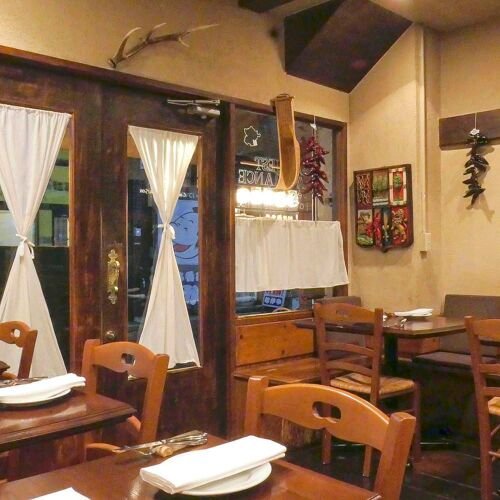
Akasaka Watanabe occupies the second floor of Espoir Akasaka, a low-key address in Minato City's Akasaka neighbourhood. The location is discreet rather than showy, which sets the register correctly before you arrive. The space itself is oriented around counter dining, where the kitchen staging is part of the experience: sesame ground in a large bowl at the counter, karasumi — salted and dried grey mullet roe — shaved directly in front of guests, and rice sourced from Niigata, grown by the chef's sister and her family.
That last detail matters more than it might sound. In kappo and chef's-counter cooking, the sourcing of rice is a statement of culinary intent. Niigata produces some of Japan's most highly regarded short-grain rice, and when the provenance runs through family rather than a distributor, the connection between kitchen and ingredient becomes part of what you are eating. For first-timers, this is the kind of detail to look for during the meal rather than read about afterward.
The spatial experience here is intimate. Counter seating means you are close to the preparation, and the staging of the kitchen is designed to draw you in rather than to separate the chef from the room. Watanabe is known to greet guests in a white outfit with a bow tie, a visual cue that frames service as considered rather than casual. The Michelin notes describe the atmosphere as "delicious, fun and welcoming," with lively conversation and palpable gratitude as characteristic of the evening. For a first-timer, expect to feel engaged rather than observed.
Multi-Visit Strategy
Given the Easy booking status, Akasaka Watanabe rewards a return. A single visit will introduce you to the house signatures: the sesame preparation, the karasumi shaving, and the sea bream chazuke , green tea poured over rice, a dish inherited from Watanabe's mentor and still central to the menu. That legacy dish is worth ordering on a first visit simply to understand the through-line from teacher to student that defines the kitchen's philosophy.
On a second visit, the value of counter dining compounds. You already understand the rhythm of the room, and Watanabe's approach to hospitality means returning guests become part of the conversation rather than newcomers being oriented. This is a place where familiarity is rewarded. If you are planning two or more nights of serious dining in Tokyo, positioning Akasaka Watanabe as your first dinner and returning later in the trip is a practical strategy: the first visit grounds you in the format, the second lets you engage more directly with what is on the pass.
For context on how this fits within broader Tokyo dining, see our full Tokyo restaurants guide. If you are pairing this with other serious Japanese cooking in the city, Myojaku, Azabu Kadowaki, and Kagurazaka Ishikawa each offer distinct register comparisons. For kaiseki-oriented evenings, Ginza Fukuju and Jingumae Higuchi are worth considering alongside.
If your trip extends beyond Tokyo, the same counter-focused, chef-driven format appears at Gion Sasaki in Kyoto, HAJIME in Osaka, and Kashiwaya Osaka Senriyama, all of which offer useful points of comparison once you have a baseline from evenings like this one. For other regional dining worth planning around, akordu in Nara, Goh in Fukuoka, 1000 in Yokohama, 6 in Okinawa, and Isshisoden Nakamura in Kyoto are all worth noting for a longer Japan itinerary.
Google reviews sit at 4.7 from 64 ratings, a score that reflects consistent satisfaction from a small but attentive guest base. The sample size is modest by Tokyo standards, which is itself an indication of how intimate the operation runs. This is not a volume restaurant, and the review count reflects that.
Know Before You Go
- Price tier: ¥¥¥ , one tier below Tokyo's top-end restaurants
- Awards: Michelin Plate 2024 and 2025
- Google rating: 4.7 (64 reviews)
- Booking difficulty: Easy , no lottery system required
- Location: 2F Espoir Akasaka, Minato City, Akasaka
- Format: Counter dining; kitchen staging is part of the experience
- Signature detail: Niigata rice from the chef's family; sea bream chazuke; counter-side sesame and karasumi preparation
- Leading for: First-timers to serious counter dining; multi-visit Tokyo itineraries; diners who want engagement over ceremony
- Also explore: Tokyo hotels guide, Tokyo bars guide, Tokyo experiences guide, Tokyo wineries guide
Frequently Asked Questions
- Is the tasting menu worth it at Akasaka Watanabe? At ¥¥¥ pricing with a Michelin Plate across two consecutive years, the value is strong by Tokyo standards. You are paying for counter engagement and craft rather than a multi-hour ceremony. If kaiseki formality is what you want, RyuGin is a better fit at higher cost. Watanabe is the call if you want the food and the host in equal measure.
- Can I eat at the bar at Akasaka Watanabe? The format is counter-based, which means the counter is the primary seating arrangement rather than a secondary option. This is how the kitchen staging , sesame grinding, karasumi shaving , is designed to be experienced. Sitting at the counter here is the point, not an alternative to a table.
- Is Akasaka Watanabe worth the price? Yes, particularly relative to Tokyo peers at ¥¥¥¥. You get intimate counter service, a Michelin-recognised kitchen, and a host-driven experience that sits above average in the ¥¥¥ bracket. The 4.7 Google score across its (admittedly small) review base supports this.
- What should I order at Akasaka Watanabe? The sea bream chazuke is the dish most directly connected to the restaurant's culinary history , it comes from Watanabe's mentor and is a consistent fixture. On a first visit, do not skip it. The sesame and karasumi preparations are counter-side and part of the experience rather than dishes you select; they arrive as part of the progression.
- Can Akasaka Watanabe accommodate groups? No phone or booking system data is available in the public record, but given the intimate counter format and small review base, this is not a high-volume group venue. For larger parties in Tokyo, confirm capacity directly before planning an event around it.
- Does Akasaka Watanabe handle dietary restrictions? No specific policy is confirmed in available data. As with most counter-format restaurants in Tokyo, advance communication is the practical approach. Contact the venue before booking if you have specific requirements.
- How far ahead should I book Akasaka Watanabe? Booking difficulty is rated Easy, which means you are unlikely to face the 2–3 month lead times common at starred Tokyo restaurants. A few weeks should be sufficient for most dates. Weekend evenings may require slightly more lead time given the limited seating format.
- What should a first-timer know about Akasaka Watanabe? This is counter dining where the host is as much the experience as the food. Watanabe's approach , formal in dress, warm in manner , sets a tone that rewards attentiveness. Watch the counter preparations, engage with the room, and book the sea bream chazuke as a baseline. If you enjoy it, the Easy booking status makes a return visit a practical decision rather than a logistical challenge.
Compare Akasaka Watanabe
| Venue | Price | Booking Difficulty | Value |
|---|---|---|---|
| Akasaka Watanabe | ¥¥¥ | Easy | — |
| Harutaka | ¥¥¥¥ | Unknown | — |
| RyuGin | ¥¥¥¥ | Unknown | — |
| L'Effervescence | ¥¥¥¥ | Unknown | — |
| HOMMAGE | ¥¥¥¥ | Unknown | — |
| Florilège | ¥¥¥ | Unknown | — |
Key differences to consider before you reserve.
Frequently Asked Questions
Is the tasting menu worth it at Akasaka Watanabe?
Yes, if theatrical tableside preparation is part of what you're paying for. The sesame grinding and karasumi shaving are done in front of guests, and the rice used is sourced from the chef's family farm in Niigata — these details give the meal a personal quality that justifies the ¥¥¥ price point. If you want pure technical precision without the hospitality warmth, RyuGin is the more demanding experience.
Can I eat at the bar at Akasaka Watanabe?
The venue data describes kitchen staging as a shared moment with guests, which suggests counter or open-kitchen seating is part of the format. Confirm specifics directly when reserving, as seating arrangements at this scale of Japanese restaurant often vary by sitting.
Is Akasaka Watanabe worth the price?
At ¥¥¥ with two consecutive Michelin Plates (2024 and 2025), Akasaka Watanabe sits at the approachable end of Tokyo's recognised Japanese dining. You get Niigata family-farmed rice, tableside karasumi shaving, and a host who personally greets guests — more warmth and ceremony than you'd get at a similarly priced izakaya, without the intimidation of an omakase counter at twice the price.
What should I order at Akasaka Watanabe?
The sea bream chazuke is a house signature and a direct legacy from the chef's mentor, making it the dish with the most context behind it. The sesame preparation and karasumi shaving are also part of the experience rather than optional extras — don't skip either. Beyond those, the format is set, so ordering is less a decision than a sequence.
Can Akasaka Watanabe accommodate groups?
The venue is on the second floor of a small building in Akasaka, which typically means limited capacity. Groups of four or more should check the venue's official channels to confirm availability and whether a private or semi-private arrangement is possible. For larger private group dining in Tokyo, HOMMAGE or L'Effervescence may offer more flexible room configurations.
Does Akasaka Watanabe handle dietary restrictions?
Nothing in the available venue data confirms specific dietary accommodation policies. Given the set-menu format and the theatricality of dishes like the karasumi shaving, restrictions that affect core preparations may be difficult to work around. Contact the restaurant in advance and be specific — this is standard practice at Japanese restaurants of this style.
How far ahead should I book Akasaka Watanabe?
Akasaka Watanabe is easier to book than most Michelin-recognised Japanese restaurants in Tokyo, but that does not mean it's a walk-in option. One to two weeks out is a reasonable target for most dates; aim for three weeks if you have a fixed travel window or need a specific day of the week.
Recognized By

More restaurants in Tokyo
- SézanneOccupying the seventh floor of the Four Seasons Hotel Tokyo at Marunouchi, Sézanne earned its first Michelin star within months of opening in July 2021 and now holds three. British chef Daniel Calvert applies French technique to Japanese ingredients, producing a prix-fixe format that Tabelog has recognised with Silver awards every year from 2023 through 2026. It ranked 4th in Asia's 50 Best Restaurants in 2025 and 15th globally in 2024.
- SazenkaSazenka is the address for Chinese cuisine in Tokyo at its most technically demanding. Chef Tomoya Kawada's wakon-kansai approach — Japanese seasonal ingredients applied through Chinese culinary technique — has earned consecutive Tabelog Gold Awards from 2019 to 2026, a #71 ranking on the World's 50 Best 2025, and 99 points from La Liste 2026. At JPY 50,000–59,999 per head, it is one of the hardest tables in the city to book and worth the effort.
- NarisawaNarisawa is Tokyo's most credentialled innovative tasting menu restaurant — two Michelin stars, Asia's 50 Best number 12, and a Tabelog Silver award — running at JPY 80,000–99,999 per head. Book for a milestone occasion, confirm vegetarian or vegan needs in advance, and reserve at least two to three months out. With 15 seats and reservation-only access, this is one of Tokyo's hardest tables to secure.
- FlorilègeFlorilège delivers two Michelin stars and an Asia's 50 Best #17 ranking at a dinner price of ¥22,000 — competitive for Tokyo at this level. Chef Hiroyasu Kawate's plant-forward tasting menus around an open-kitchen counter at Azabudai Hills make this the strongest choice for contemporary French dining in Tokyo if theatrical, produce-led cooking is what you want. Book well in advance; availability is near-impossible at short notice.
- DenDen holds two Michelin stars, a World's 50 Best top-25 Asia ranking, and a Tabelog Silver Award running back to 2017 — and it books out within hours of the two-month reservation window opening. Chef Zaiyu Hasegawa's daily-changing seasonal omakase runs JPY 30,000–39,999 at dinner in a relaxed house-restaurant setting near Gaiemmae. Book by phone only, noon–5 PM JST. Lunch is irregular; plan around dinner.
- MyojakuMyojaku is a 2-Michelin-star, 14-course French-leaning omakase in Nishiazabu holding a 4.47 Tabelog score, Tabelog Silver 2025–2026, and Asia's 50 Best #45 (2025). Chef Hidetoshi Nakamura's water-forward, no-dashi approach shifts meaningfully with the seasons — making timing your reservation as important as getting one. Budget JPY 50,000–59,999 per head plus 10% service charge; reservations only, near-impossible to secure.
Similar venues by awards
Related editorial
- Best Fine Dining Restaurants in ParisFrom three-Michelin-star icons to the next generation of Parisian chefs pushing boundaries, these are the restaurants that define fine dining in the world's culinary capital.
- Best Luxury Hotels in RomeFrom rooftop terraces overlooking ancient ruins to Michelin-starred hotel dining, these are the luxury hotels that make Rome unforgettable.
- Best Cocktail Bars in KyotoFrom sleek lounges to hidden speakeasies, Kyoto's cocktail scene blends Japanese precision with global influence in ways you won't find anywhere else.
Save or rate Akasaka Watanabe on Pearl
Keep this venue in your Pearl passport, rate it after you visit, and track it alongside every other place you collect.