
Restaurant in Tokyo, Japan
Akasaka Shimabukuro
440ptsCraft-first kaiseki, easier to book than rivals.

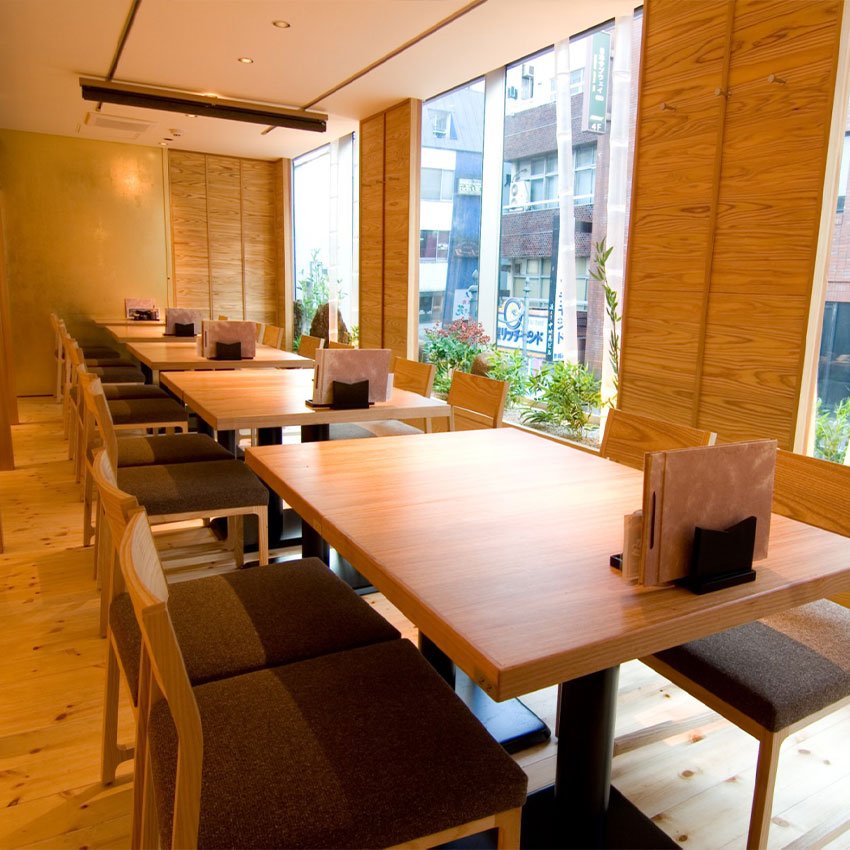
About Akasaka Shimabukuro
Akasaka Shimabukuro holds consecutive Michelin Plates (2024, 2025) and sits at the ¥¥¥¥ tier without the punishing wait lists of Tokyo's starred rooms. The menu is built around technically precise dashi work and native-buckwheat juwari soba, making it a strong choice for food-focused travellers who want genuine Japanese tasting menu craft and can book with shorter lead times.
Verdict: A Michelin-Recognised Kaiseki Course in Akasaka Worth Booking at ¥¥¥¥
At the ¥¥¥¥ price tier, Akasaka Shimabukuro is the kind of restaurant you book when you want a Japanese tasting menu built around genuine craft rather than spectacle. Two consecutive Michelin Plates (2024 and 2025) confirm it sits in respected company without requiring the months-long wait lists that surround Tokyo's three-starred rooms. For food-focused travellers who want depth over prestige, this Motoakasaka address is worth the spend.
The Tasting Menu: How the Meal is Built
The architecture of a meal at Akasaka Shimabukuro follows a logic that is as much philosophical as it is culinary. The Michelin recognition specifically calls out the wanmono course — a clear broth made from shaved bonito flakes — as a defining moment. In kaiseki, the wanmono is considered one of the most technically demanding preparations: a soup that demands precision in dashi construction and temperature, with almost no fat or complexity to mask errors. A clean, mellow broth here is a signal of serious kitchen discipline.
What distinguishes this menu from the standard kaiseki progression is the soba work. Soba with dried mullet roe appears between courses , not as an afterthought but as a deliberate palate interlude , and juwari soba (100% buckwheat, no wheat binder) closes the meal. Both preparations use native buckwheat species, which is a meaningful distinction: juwari soba made with indigenous grain has a more assertive, earthy flavour profile than the blended versions served at most restaurants. It is also structurally fragile and harder to work with, which makes the choice a statement of intent. For a diner interested in tracing the full arc of a Japanese tasting menu, the soba sequence gives Shimabukuro a closing chapter that most comparable rooms do not offer.
The wall calligraphy reading go-en , personal connections , is not decorative philosophy. It describes a hospitality approach that shapes the meal from first course to last. The chef's framing, drawn from the Chinese character for 'food' combining the concepts of 'person' and 'good', positions every dish as an expression of a relationship with the guest. That is language you will find at many high-end Japanese restaurants, but here it maps onto a menu that is genuinely designed around restraint and consideration rather than maximalism.
What to Expect Right Now
Akasaka Shimabukuro is located in Motoakasaka, Minato City , a quieter pocket of central Tokyo that sits between the political weight of Akasaka and the residential calm of Aoyama. For autumn and winter dining, the clear broth preparations and warming soba closer are particularly well-suited to the season. If you are planning a Tokyo trip around the cooler months, this is a menu whose warmth and structure rewards the timing.
With a Google rating of 4.9 from 20 reviews, the sample size is small but the consistency signals a tight, controlled operation rather than a high-volume room. That points to an intimate setting where service attention per table should be high.
Booking
Booking difficulty is rated Easy by Pearl standards. Unlike many of Tokyo's ¥¥¥¥ tasting rooms, Akasaka Shimabukuro does not require weeks of advance planning or a local intermediary. That makes it a practical option if you are building a Tokyo itinerary with shorter lead times. Book directly through standard reservation channels or via a hotel concierge. Phone and website details are not held in the Pearl database at this time, so confirm hours and reservation policy before finalising.
Quick reference: ¥¥¥¥ price tier | Motoakasaka, Minato City | Michelin Plate 2024 and 2025 | Easy to book | Intimate room, small review count suggests limited covers.
How It Compares
See the comparison section below for how Akasaka Shimabukuro sits against RyuGin, Harutaka, and others in Tokyo's leading dining tier.
Pearl Picks: More Tokyo Dining Worth Considering
If Akasaka Shimabukuro is on your list, these Tokyo rooms are worth stacking into the same trip. Myojaku and Azabu Kadowaki both operate in the refined Japanese register. Kagurazaka Ishikawa is the choice if you want a kaiseki room with a longer critical track record. Ginza Fukuju and Jingumae Higuchi round out the mid-to-upper tier for Japanese cuisine across the city. For a broader view of where to eat, drink, and stay, see our full Tokyo restaurants guide, our full Tokyo hotels guide, our full Tokyo bars guide, our full Tokyo wineries guide, and our full Tokyo experiences guide.
If you are travelling beyond Tokyo and want to compare the kaiseki standard across Japan, Gion Sasaki in Kyoto and Isshisoden Nakamura in Kyoto set the benchmark in that city. In Osaka, HAJIME and Kashiwaya Osaka Senriyama are the rooms to consider. Further afield, akordu in Nara, Goh in Fukuoka, 1000 in Yokohama, and 6 in Okinawa each offer a different angle on the fine dining spectrum across Japan.
Compare Akasaka Shimabukuro
| Venue | Price | Booking Difficulty | Value |
|---|---|---|---|
| Akasaka Shimabukuro | ¥¥¥¥ | Easy | — |
| Harutaka | ¥¥¥¥ | Unknown | — |
| RyuGin | ¥¥¥¥ | Unknown | — |
| L'Effervescence | ¥¥¥¥ | Unknown | — |
| HOMMAGE | ¥¥¥¥ | Unknown | — |
| Florilège | ¥¥¥ | Unknown | — |
A quick look at how Akasaka Shimabukuro measures up.
Frequently Asked Questions
What should I order at Akasaka Shimabukuro?
This is a set-menu format, so ordering is not on the table — you eat what the chef serves. The meal is built around a kaiseki progression, with two signature elements worth knowing in advance: the wanmono, a clear broth made with shaved bonito flakes, and the soba courses, which use native buckwheat varieties and appear both mid-meal and at the close. Those two elements are what distinguish Akasaka Shimabukuro from generic ¥¥¥¥ tasting rooms in Minato City.
Does Akasaka Shimabukuro handle dietary restrictions?
No dietary restriction policy is documented for this restaurant. Given the kaiseki format and the chef's evident focus on a fixed culinary vision — including specific broths and native buckwheat soba — significant substitutions may not be accommodated. check the venue's official channels before booking if you have dietary requirements; this is not a venue where you should assume flexibility.
What should a first-timer know about Akasaka Shimabukuro?
The restaurant is in Motoakasaka, Minato City — a quieter central Tokyo neighbourhood, not the dense dining cluster of Ginza or Roppongi. The Michelin Plate recognition in both 2024 and 2025 signals consistent craft at the ¥¥¥¥ price tier without the star pressure that drives booking difficulty at peers like RyuGin. Pearl rates booking difficulty as Easy by Tokyo ¥¥¥¥ standards, which is genuinely unusual. Come with an appetite for philosophy as much as food: the calligraphy on the wall reads 'go-en' (personal connections), and the whole meal is framed around that idea.
Is Akasaka Shimabukuro worth the price?
At ¥¥¥¥, yes — with a specific caveat. The value case here rests on craft and access: you are getting Michelin-recognised kaiseki (Plate, 2024 and 2025) at a venue that does not require weeks of advance planning, unlike RyuGin or Harutaka. If your priority is starred prestige, this is not the room. If your priority is a thoughtfully constructed Japanese tasting menu where signature house dishes — the bonito-broth wanmono, the native-buckwheat soba — carry real intent, the price is justified.
Is the tasting menu worth it at Akasaka Shimabukuro?
For anyone eating in Tokyo's ¥¥¥¥ tier who wants a meal with a coherent identity, yes. The format is kaiseki with two house-specific anchors: the clear bonito broth in the wanmono course and the juwari soba made from native buckwheat, served at the end as a closing statement. That kind of structural specificity is what separates this from generic high-end tasting menus. If you want à la carte flexibility or Michelin stars on the wall, look elsewhere — RyuGin holds two stars and operates in a similar price bracket.
Recognized By

More restaurants in Tokyo
- SézanneOccupying the seventh floor of the Four Seasons Hotel Tokyo at Marunouchi, Sézanne earned its first Michelin star within months of opening in July 2021 and now holds three. British chef Daniel Calvert applies French technique to Japanese ingredients, producing a prix-fixe format that Tabelog has recognised with Silver awards every year from 2023 through 2026. It ranked 4th in Asia's 50 Best Restaurants in 2025 and 15th globally in 2024.
- SazenkaSazenka is the address for Chinese cuisine in Tokyo at its most technically demanding. Chef Tomoya Kawada's wakon-kansai approach — Japanese seasonal ingredients applied through Chinese culinary technique — has earned consecutive Tabelog Gold Awards from 2019 to 2026, a #71 ranking on the World's 50 Best 2025, and 99 points from La Liste 2026. At JPY 50,000–59,999 per head, it is one of the hardest tables in the city to book and worth the effort.
- NarisawaNarisawa is Tokyo's most credentialled innovative tasting menu restaurant — two Michelin stars, Asia's 50 Best number 12, and a Tabelog Silver award — running at JPY 80,000–99,999 per head. Book for a milestone occasion, confirm vegetarian or vegan needs in advance, and reserve at least two to three months out. With 15 seats and reservation-only access, this is one of Tokyo's hardest tables to secure.
- FlorilègeFlorilège delivers two Michelin stars and an Asia's 50 Best #17 ranking at a dinner price of ¥22,000 — competitive for Tokyo at this level. Chef Hiroyasu Kawate's plant-forward tasting menus around an open-kitchen counter at Azabudai Hills make this the strongest choice for contemporary French dining in Tokyo if theatrical, produce-led cooking is what you want. Book well in advance; availability is near-impossible at short notice.
- DenDen holds two Michelin stars, a World's 50 Best top-25 Asia ranking, and a Tabelog Silver Award running back to 2017 — and it books out within hours of the two-month reservation window opening. Chef Zaiyu Hasegawa's daily-changing seasonal omakase runs JPY 30,000–39,999 at dinner in a relaxed house-restaurant setting near Gaiemmae. Book by phone only, noon–5 PM JST. Lunch is irregular; plan around dinner.
- MyojakuMyojaku is a 2-Michelin-star, 14-course French-leaning omakase in Nishiazabu holding a 4.47 Tabelog score, Tabelog Silver 2025–2026, and Asia's 50 Best #45 (2025). Chef Hidetoshi Nakamura's water-forward, no-dashi approach shifts meaningfully with the seasons — making timing your reservation as important as getting one. Budget JPY 50,000–59,999 per head plus 10% service charge; reservations only, near-impossible to secure.
Similar venues by awards
Related editorial
- Best Fine Dining Restaurants in ParisFrom three-Michelin-star icons to the next generation of Parisian chefs pushing boundaries, these are the restaurants that define fine dining in the world's culinary capital.
- Best Luxury Hotels in RomeFrom rooftop terraces overlooking ancient ruins to Michelin-starred hotel dining, these are the luxury hotels that make Rome unforgettable.
- Best Cocktail Bars in KyotoFrom sleek lounges to hidden speakeasies, Kyoto's cocktail scene blends Japanese precision with global influence in ways you won't find anywhere else.
Save or rate Akasaka Shimabukuro on Pearl
Keep this venue in your Pearl passport, rate it after you visit, and track it alongside every other place you collect.