
Restaurant in Madrid, Spain
Zalacaín
340ptsFormal Madrid dining, classical technique, easy to book.


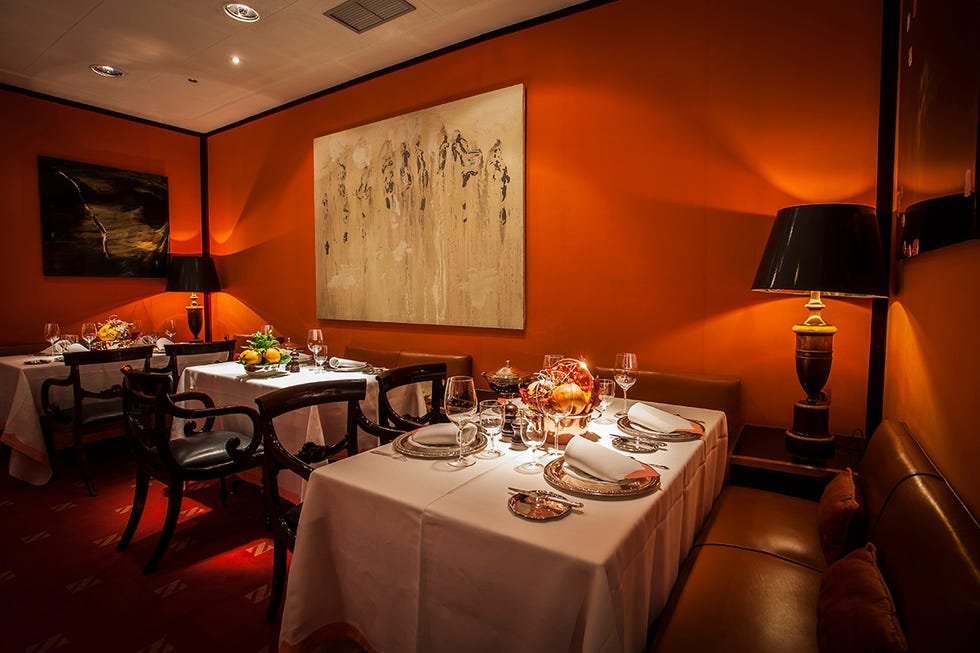
About Zalacaín
Zalacaín is Madrid's clearest expression of French-Basque classical cooking, with a historic dish roster — Tellagorri cod, Búcaro "Don Pío", steak tartare — that no modernist competitor in the city can replicate. Michelin Plate (2025) and OAD Classical Europe-ranked (#190, 2024), it is easier to book than DiverXO or DSTAgE and the right call for a formal occasion dinner grounded in technique over spectacle.
Who Should Book Zalacaín — and When
If you are planning a formal celebratory dinner in Madrid and want a kitchen rooted in French-Basque classicism rather than avant-garde experimentation, Zalacaín is the right call. This is the restaurant for first-time visitors to Madrid's high-end dining scene who want to understand where Spanish fine dining came from before exploring where it is going. It suits couples marking a significant occasion, business dinners where a composed, traditional room matters, and anyone who finds the theatrical shock of, say, DiverXO less appealing than precise, disciplined cooking served without spectacle.
A Major Reference Point, Recently Renewed
Zalacaín is one of the defining addresses in Spain's restaurant history, a place where the French-Basque classical tradition was first applied at the highest level in Madrid. The venue now operates under chef Julio Mirailles, and this transition marks the meaningful recent evolution worth understanding before you book. Mirailles has retained the historic dishes that gave Zalacaín its reputation — the Búcaro "Don Pío" with smoked salmon, quail's egg and caviar; the Tellagorri cod; the steak tartare , while introducing a tasting menu format alongside the à la carte. This dual structure is practically important: you can eat here in a format that suits you, whether you want to order around the classics or let the kitchen sequence the meal.
The 2025 Michelin Plate recognition and the Opinionated About Dining Classical in Europe ranking of #190 (2024) confirm that the kitchen is producing food worth the journey. The OAD recognition is particularly telling , it places Zalacaín within a specific tradition of classical European cooking, not the modernist Spanish category. That distinction should guide your expectations. You are not coming here for fermentation experiments or tableside theater. You are coming for technique applied to recognisable forms: sauced fish, cured seafood, properly made tartare.
What This Kitchen Does Well
The cuisine sits at the intersection of French classical method and Basque ingredient sensibility, a combination that historically defined the most serious restaurants in Spain before the Ferran Adrià era. At Zalacaín, that means saucing and preparation discipline are the measures of quality, not novelty. The Tellagorri cod, a signature that has remained on the menu through multiple generations of the restaurant, represents this approach: a product-driven dish where the cooking method is the skill on display. The Búcaro "Don Pío" , smoked salmon, quail's egg, and caviar , is the kind of composed starter where every element has to earn its place through balance, not decoration.
For a first-timer, the à la carte is the more instructive choice. It lets you build a meal around the historic dishes that made the restaurant's reputation rather than surrendering the sequence to the tasting menu. If you want to understand what Zalacaín means as a reference point in Spanish fine dining, ordering the classics is the more direct route. Think of it the way you might approach a first visit to Arzak in San Sebastián , the point is to eat the dishes that established the kitchen's identity, then decide whether the tasting menu warrants a return visit.
The Google rating of 4.6 from 974 reviews suggests consistent execution at a level of volume that tends to expose inconsistency. That is a positive signal for a venue operating in a formal classical register, where consistency is the benchmark rather than inspired variation.
Practical Details
Zalacaín is located at C. de Álvarez de Baena, 4, in the Chamartín district of Madrid. Price range: €€€€ , expect this to sit in the upper tier of Madrid dining, comparable in spend to Coque or DSTAgE. Reservations: Booking difficulty is rated Easy, which is a practical advantage over venues like DiverXO where securing a table requires months of planning. Book a week or two ahead for most nights; a few days may suffice mid-week. Dress code: No dress code is specified in available data, but the room's classical register and price point mean smart to formal attire is the appropriate assumption for a first visit. Arrive dressed as you would for a serious occasion dinner. Format: À la carte and tasting menu both available. For a first visit, the à la carte gives you more control over which historic dishes you eat.
How It Compares
Madrid's €€€€ dining tier has several distinct personalities. DiverXO is the hardest to book and the most theatrically ambitious , three Michelin stars and a format that has nothing in common with Zalacaín's classical register. If you want Madrid's most talked-about table, that is where to go, but the experience is maximalist and polarising. DSTAgE occupies a modern Spanish creative position, two Michelin stars, and suits diners who want contemporary technique without DiverXO's full spectacle. Coque is the closest in formality and classical ambition to Zalacaín, though it skews more inventive. Paco Roncero sits in the creative tasting menu format. Zalacaín's specific value is that it offers something none of these do: a direct line to the French-Basque classical tradition that shaped serious Spanish cooking. If that tradition interests you, or if you are building a wider picture of Spain's dining history alongside visits to El Celler de Can Roca in Girona, Azurmendi in Larrabetzu, or Martin Berasategui in Lasarte-Oria, Zalacaín belongs on the list.
Pearl's Verdict
Book Zalacaín if classical French-Basque technique in a formal Madrid setting is what you want. The combination of easy reservations, a strong historical dish roster, and Michelin and OAD recognition makes this a low-risk, high-reward choice for the right diner. If you are after modernist experimentation or want the biggest name in the city, look elsewhere. If you want to eat the dishes that defined Madrid fine dining before the creative revolution, this is the right table.
Explore More in Madrid
Planning a wider trip? See our full Madrid restaurants guide, our full Madrid hotels guide, our full Madrid bars guide, our full Madrid wineries guide, and our full Madrid experiences guide.
Frequently Asked Questions
- Is Zalacaín worth the price? For the classical register it operates in, yes. The €€€€ price point is comparable to every serious competitor in Madrid's leading dining tier, and the combination of Michelin Plate recognition, OAD Classical Europe ranking (#190, 2024), and a 4.6 Google rating from nearly 1,000 reviews suggests consistent delivery. If you are comparing value against Deessa or DSTAgE, Zalacaín's advantage is the historic dish roster and the classical tradition , not innovation. For that specific offer, the price is justified.
- Is the tasting menu worth it at Zalacaín? It depends on whether you already know the house classics. For a first visit, the à la carte gives you more direct access to the dishes , the Búcaro "Don Pío", the Tellagorri cod, the steak tartare , that established the restaurant's reputation. The tasting menu makes more sense on a return visit once you have a baseline for what the kitchen can do in its signature register. Chef Julio Mirailles introduced the tasting menu format alongside the existing à la carte, so both options are now available.
- What should I order at Zalacaín? Prioritise the historic dishes. The Búcaro "Don Pío" with smoked salmon, quail's egg and caviar, the Tellagorri cod, and the steak tartare are the dishes that have defined the restaurant across its history and represent the French-Basque classical tradition the kitchen is built on. These are the reference points , ordering them on a first visit gives you the clearest picture of what Zalacaín does technically that its more modernist Madrid peers do not.
- What should I wear to Zalacaín? No official dress code is listed, but the room's classical formality and €€€€ price tier make smart to formal attire the practical choice. Treat it as you would any serious occasion dinner in a European capital. Overly casual dress would be out of place.
- How far ahead should I book Zalacaín? Booking difficulty is rated Easy, which puts it in a different category from venues like DiverXO where demand far outstrips supply. A week to two weeks ahead should cover most situations; mid-week tables may be available with shorter notice. If you are visiting during a Madrid event week or booking for a larger group, give yourself more lead time, but this is not a table that requires months of planning.
Compare Zalacaín
| Venue | Price | Booking Difficulty | Value |
|---|---|---|---|
| Zalacaín | €€€€ | Easy | — |
| DiverXO | €€€€ | Unknown | — |
| DSTAgE | €€€€ | Unknown | — |
| Smoked Room | €€€€ | Unknown | — |
| Paco Roncero | €€€€ | Unknown | — |
| Coque | €€€€ | Unknown | — |
Comparing your options in Madrid for this tier.
Frequently Asked Questions
Is Zalacaín worth the price?
At €€€€, Zalacaín sits in Madrid's upper pricing tier, and it justifies that positioning if classical French-Basque cooking is what you are after. The Michelin Plate recognition (2025) and an Opinionated About Dining Classical Europe ranking (#190, 2024) confirm it holds a credible position in the category. For the same spend, DiverXO delivers more theatrical ambition, but Zalacaín offers something DiverXO does not: a composed, formal setting with dishes built from decades of institutional knowledge. If you want avant-garde, look elsewhere; if you want classicism done seriously, the price is fair.
Is the tasting menu worth it at Zalacaín?
The tasting menu is the better choice if you want to cover the kitchen's range in a single sitting. The à la carte keeps historic dishes on the menu — the Búcaro 'Don Pío' with smoked salmon, quail's egg and caviar, Tellagorri cod, and steak tartare — so if there are two or three specific dishes you want, à la carte is a reasonable alternative. For a first visit at this price point, the tasting menu gives you more ground to judge whether the kitchen earns its €€€€ positioning.
What should I order at Zalacaín?
The à la carte features a set of historic dishes that have defined the restaurant across its history: the Búcaro 'Don Pío' with smoked salmon, quail's egg and caviar; Tellagorri cod; and steak tartare. These are the reference points the kitchen is known for and the clearest expression of its French-Basque classical identity. Order from this core rather than treating the menu as an open canvas.
What should I wear to Zalacaín?
Zalacaín is a formally positioned €€€€ restaurant in Madrid's Chamartín district with a long-standing reputation as one of Spain's most serious dining rooms. Formal attire is the sensible call — jacket for men at minimum. This is not the kind of room where dressed-down works, and arriving appropriately signals you understand the format.
How far ahead should I book Zalacaín?
Zalacaín is notably easier to book than Madrid's harder-to-access €€€€ options. For weekday dinners, a week or two of lead time is generally sufficient. For Friday or Saturday evenings, or if you have a specific date fixed around a celebration, book two to three weeks out to be safe. This accessibility is one of its practical advantages over DiverXO, which requires months of planning.
Recognized By


More restaurants in Madrid
- CoqueCoque holds 2 Michelin Stars, a Green Star, and 96 points on La Liste — making it one of Madrid's most credentialled restaurants. Run by the three Sandoval brothers across five distinct spaces, the evening is as much a service experience as a meal. Book well ahead: availability here is near impossible, and this is a venue worth planning a trip around.
- DiverXODiverXO is David Muñoz's three-Michelin-star flagship in Madrid, ranked #4 in the World's 50 Best (2024) and 98 points on La Liste (2026). The single "Flying Pigs Cuisine" tasting menu blends Asian technique with Spanish ingredients in deliberately provocative combinations. Booking difficulty is near-impossible — reserve three to four months out, and only come if you're ready for a long, high-energy evening with no à la carte option.
Similar venues by awards
Related editorial
- Best Fine Dining Restaurants in ParisFrom three-Michelin-star icons to the next generation of Parisian chefs pushing boundaries, these are the restaurants that define fine dining in the world's culinary capital.
- Best Luxury Hotels in RomeFrom rooftop terraces overlooking ancient ruins to Michelin-starred hotel dining, these are the luxury hotels that make Rome unforgettable.
- Best Cocktail Bars in KyotoFrom sleek lounges to hidden speakeasies, Kyoto's cocktail scene blends Japanese precision with global influence in ways you won't find anywhere else.
Save or rate Zalacaín on Pearl
Keep this venue in your Pearl passport, rate it after you visit, and track it alongside every other place you collect.