
Restaurant in Kyoto, Japan
Yusokuryori Mankamero
650ptsThree centuries of court cuisine. Book months ahead.

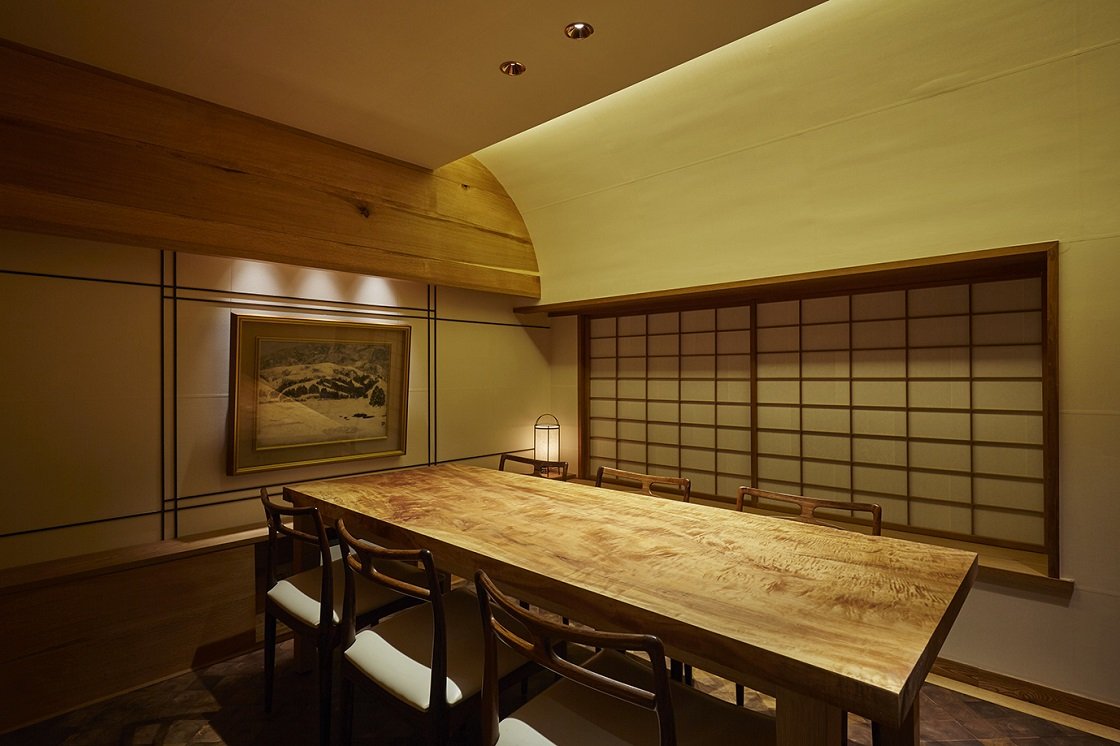
About Yusokuryori Mankamero
Mankamero has operated continuously for three centuries in Kyoto's Kamigyo Ward, preserving yusoku ryori, the banquet cuisine of the imperial court, alongside the Ikama school's ceremonial shikibocho knife ritual. With two Michelin stars in 2024 and 2025, it is among the most historically significant dining experiences in Japan. Book months ahead — this is near-impossible to secure without a concierge.
Verdict
If you are serious about Kyoto's dining heritage, Mankamero belongs on your itinerary — but go in with clear expectations. This is not kaiseki in the contemporary sense. Mankamero preserves yusoku ryori, the banquet cuisine of the imperial court, and it does so with a formality and historical depth that no other restaurant in Kyoto replicates at this level. Holding two Michelin stars in both 2024 and 2025 and a Google rating of 4.7 across 157 reviews, the credentials are consistent. The price is ¥¥¥¥, the booking difficulty is near-impossible, and the experience is unlike anything you will find at Gion Matayoshi or Kikunoi Roan. If you want modern kaiseki craft, look elsewhere. If you want three centuries of unbroken culinary tradition, Mankamero is your only option.
About Mankamero
Mankamero's address in Kamigyo Ward places it in the part of Kyoto that has always sat closest to imperial authority. This is not incidental. The restaurant began as a general store, traded as a sake dealer, and eventually became a ryotei — a trajectory that mirrors Kyoto's own evolution from administrative centre to cultural custodian. Three centuries of continuous operation is not a marketing claim; it is a verifiable historical fact, and it shapes everything about how the restaurant operates today.
The discipline at the core of Mankamero is shikibocho, the ceremonial art of knife handling that belongs to the Ikama school. Shikibocho is not simply a cooking technique , it is a ritual in which the chef processes ingredients using only a knife and chopsticks, never touching the food by hand, while performing prescribed movements that carry the weight of courtly etiquette. Watching a shikibocho demonstration at Mankamero connects you directly to a practice that dates back to the Heian period. No other restaurant in Kyoto's Kamigyo district offers access to this at the table.
The menu follows the logic of yusoku ryori: seasonal ingredients, carefully sourced, presented through the lens of imperial banquet culture. Seasons matter here in a way that goes beyond ingredient selection. The arrangement of dishes, the choice of serving vessels, and even the leaves and natural elements placed beneath the food shift with the calendar. A visit in autumn produces a different table from a visit in early spring. If you are returning to Mankamero , or planning a second trip to Kyoto , timing your visit around the seasonal transition periods (late March into April, or late October into November) gives you the fullest expression of what the kitchen does with the natural world around it.
For a guest who has visited once and wants to go deeper on a second visit, the instruction is simple: pay attention to what is beneath the food, not just what is on it. The underlays, the vessels, the spatial arrangement of each course , these are not decorative choices. They are part of the yusoku ryori language, and reading them changes what the meal communicates. Mankamero rewards the attentive repeat visitor in a way that few restaurants in Japan can match. Comparable depth of culinary tradition exists at Kyokaiseki Kichisen and Isshisoden Nakamura, but neither carries the specific imperial court lineage that defines Mankamero's position in the city.
Kamigyo Ward itself reinforces the experience. The neighbourhood sits north of central Kyoto, away from the tourist concentration of Gion and Higashiyama. The streets around the restaurant are quieter, the architecture older, the pace slower. Dining at Mankamero is an exercise in understanding why Kyoto built its identity around preservation and refinement rather than reinvention. For visitors staying in central Kyoto, see our full Kyoto hotels guide for properties within reasonable distance of Kamigyo. For planning the broader trip, our full Kyoto restaurants guide covers the range from modern kaiseki to casual Kyoto cuisine.
The wider Japan context is worth noting for itinerary planning. Mankamero sits in a different register from HAJIME in Osaka (avant-garde, technique-forward) and Harutaka in Tokyo (precision sushi). It also differs from the refined but more accessible Japanese dining at Myojaku in Tokyo or Azabu Kadowaki. If you are building a Japan itinerary around serious dining, Mankamero fills a slot that nothing else in the country occupies: living imperial court cuisine, still operating on its own terms. For further reference points across Japan, see also akordu in Nara, Goh in Fukuoka, 1000 in Yokohama, and 6 in Okinawa.
Practical Details
Reservations: Near-impossible without advance planning , book as far ahead as your schedule allows, ideally months out; international visitors should consider contacting the restaurant through a hotel concierge or specialist booking service. Budget: ¥¥¥¥ , expect a high per-head cost consistent with two-Michelin-star ryotei dining in Kyoto. Leading time to visit: Late March through April and late October through November, when seasonal transitions are most visible in the menu's presentation and ingredient selection. Address: 387 Ebisucho, Kamigyo Ward, Kyoto 602-8118. Getting around: Kamigyo Ward sits in northern Kyoto; a taxi from central Kyoto or Kyoto Station is the most direct approach. For broader neighbourhood planning, see our Kyoto bars guide, our Kyoto wineries guide, and our Kyoto experiences guide.
Compare Yusokuryori Mankamero
| Venue | Cuisine | Awards | Booking Difficulty | Value |
|---|---|---|---|---|
| Yusokuryori Mankamero | Japanese | This long-serving restaurant was built as a general store and traded as a sake dealer before transforming into a ryotei. In continuous operation since its founding three centuries ago, Mankamero has preserved tradition by constantly changing. Heir to the tradition of ‘yusoku ryori’, banquet fare served at imperial court functions, the restaurant carries on the Ikama school of ‘shikibocho’, the ceremonial art of knife handling that unites cookery with etiquette—faithfully preserved to the present day. Seasons are reflected everywhere, from the elegant Kyoto kaiseki to the arrangements, serving vessels and even the leaves and other underlays beneath the food. A taste of history, handed down in unbroken tradition.; Michelin 2 Stars (2025); Michelin 2 Stars (2024) | Near Impossible | — |
| Gion Sasaki | Kaiseki, Japanese | Michelin 3 Star | Unknown | — |
| cenci | Italian | Michelin 1 Star, World's 50 Best | Unknown | — |
| Ifuki | Kaiseki | Michelin 2 Star | Unknown | — |
| Kyokaiseki Kichisen | Japanese | Michelin 2 Star | Unknown | — |
| Kyo Seika | Chinese | Michelin 1 Star | Unknown | — |
Key differences to consider before you reserve.
Frequently Asked Questions
Can Yusokuryori Mankamero accommodate groups?
Mankamero is a traditional ryotei, meaning private room dining is the standard format — which actually suits groups better than counter-style restaurants. That said, given how far in advance reservations must be made (months out for most visitors), larger parties should lock in numbers early and communicate group size when booking. This is not the kind of venue where a group of six can show up with loose plans.
What should I order at Yusokuryori Mankamero?
There is no à la carte here. Mankamero serves kaiseki rooted in yusoku ryori — the banquet cuisine of the imperial court — so you eat what the season and the kitchen determine. The ceremonial shikibocho knife ritual is part of the experience at certain sittings, not an add-on. Come expecting a set progression built around seasonal ingredients, serving vessels, and presentation underlays, not a menu you select from.
What are alternatives to Yusokuryori Mankamero in Kyoto?
Kyokaiseki Kichisen is the most direct comparison — also Michelin-starred, also rooted in classical Kyoto kaiseki, and similarly demanding to book. Gion Sasaki offers a more chef-driven modern kaiseki at a slightly different price point and is easier to access for first-timers. Ifuki and cenci sit further toward contemporary Japanese cooking if the imperial court format feels too formal. Kyo Seika is a different category altogether and not a substitute for Mankamero's ceremonial depth.
What should a first-timer know about Yusokuryori Mankamero?
Mankamero has been operating continuously for three centuries and holds 2 Michelin stars (2024, 2025), but the experience is defined by ritual as much as food — the shikibocho ceremony and yusoku ryori format are not background colour, they are the point. At ¥¥¥¥ pricing, this is one of Kyoto's most expensive meals, and it rewards visitors who arrive knowing what yusoku ryori is. International visitors in particular should arrange reservations through a hotel concierge or specialist booking service months in advance.
Does Yusokuryori Mankamero handle dietary restrictions?
Yusoku ryori is a highly codified culinary tradition built around specific seasonal ingredients and ceremonial preparation — it does not flex easily around dietary restrictions. Serious allergies or restrictions should be communicated at the time of booking, not on arrival, and visitors with significant dietary requirements should confirm feasibility before reserving, given the ¥¥¥¥ price point and the kitchen's traditional format.
Recognized By

More restaurants in Kyoto
- MizaiMizai holds three Michelin stars and a sustained Tabelog track record across nearly a decade, with dinner running to ¥80,000–¥99,999 per person all-in. Chef Hitoshi Ishihara structures the meal around the spirit of the tea ceremony in a 15-seat room inside Maruyama Park. Book for a serious special occasion; reservations are near-impossible to secure without months of advance planning.
- OgataOgata is a 16-seat kaiseki counter in Shimogyo, Kyoto, holding two Michelin stars and ten years of Tabelog Gold recognition. Dinner runs JPY 60,000–79,999 before drinks and a 10% service charge. Booking is near impossible without months of advance planning, but for serious kaiseki at the counter, it earns its place on any shortlist.
- Kikunoi HontenThree Michelin stars and eight consecutive Tabelog Bronze awards make Kikunoi Honten one of Kyoto's most credentialed kaiseki addresses. Lunch (JPY 20,000–29,999) is the practical first visit; dinner (JPY 30,000–39,999) rewards a return. Booking is near impossible without advance planning — use a hotel concierge or specialist service. Private rooms accommodate groups of 4 to 30-plus.
Related editorial
- Asia's 50 Best Restaurants 2026: The Chairman and Wing Go 1-2 from the Same BuildingThe Chairman takes No. 1 and Wing climbs to No. 2 at Asia's 50 Best Restaurants 2026. Both operate from the same Hong Kong building. Here's what it means.
- Four Seasons Yachts Debut: 95 Suites, 11 Restaurants, and a March 2026 Maiden VoyageFour Seasons I launches March 20, 2026, with 95 suites, a one-to-one staff ratio, and 11 onboard restaurants. Worth tracking if you want hotel-grade service at sea.
- LA Michelin Guide 2026: Seven New Restaurants from Tlayudas to Uzbek DumplingsMichelin's March 2026 California Guide update adds six LA restaurants and one Montecito newcomer, spanning Oaxacan tlayudas, Uzbek manti, and Korean-Italian pasta.
Save or rate Yusokuryori Mankamero on Pearl
Keep this venue in your Pearl passport, rate it after you visit, and track it alongside every other place you collect.